Artwork
Akbar and Jahangir Examine a Ghir Falcon while Prince Khusrau Stands Behind
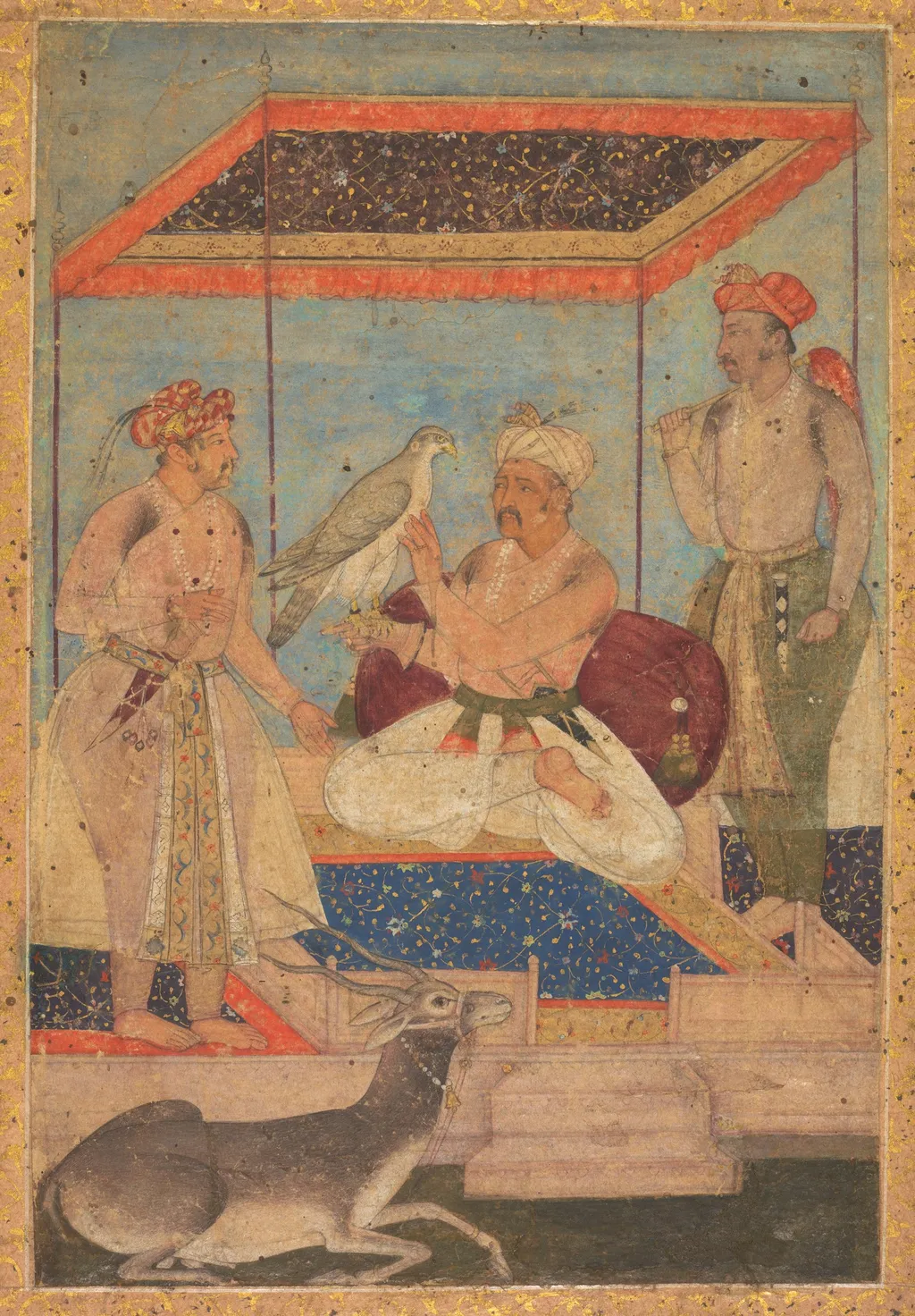
Akbar and Jahangir Examine a Ghir Falcon while Prince Khusrau Stands Behind is an unspecified painting. It dates from 1603 and is held in the collection of the Cleveland Museum of Art. The work portrays a courtly gathering in which three figures attend to a large bird of prey, likely a falcon.
About this work
Overview
The work portrays a courtly gathering in which three figures attend to a large bird of prey, likely a falcon. The central figure sits on a raised platform, cradling the bird, while a second figure reaches toward it and a third observes from behind. A deer lies on the floor before the platform, and the setting is framed by blue walls and an elaborately patterned ceiling.
Subject & Meaning
The composition emphasizes the royal pastime of falconry, a sport associated with power and prestige in Mughal culture. The presence of the deer suggests a hunting context, while the attentive gestures of the attendants highlight the ceremonial care given to the prized bird.
Technique & Style
Executed in vivid pigments, the painting displays meticulous attention to textile patterns, headgear, and architectural details. The use of bright reds, oranges, and whites against a cool blue background creates a striking visual contrast, while the fine rendering of feathers and fur adds realism to the scene.
History & Provenance
The piece belongs to the Mughal tradition of courtly portraiture, where rulers and nobles were often depicted engaging in leisure activities. Its provenance traces back to collections of Indian miniature paintings, though specific ownership records are limited.
Context
Falconry held symbolic significance in the Mughal empire, representing the ruler’s dominion over nature and his martial virtues. Paintings of this type served both as documentation of royal pastimes and as visual affirmations of imperial authority.
Artist & collection

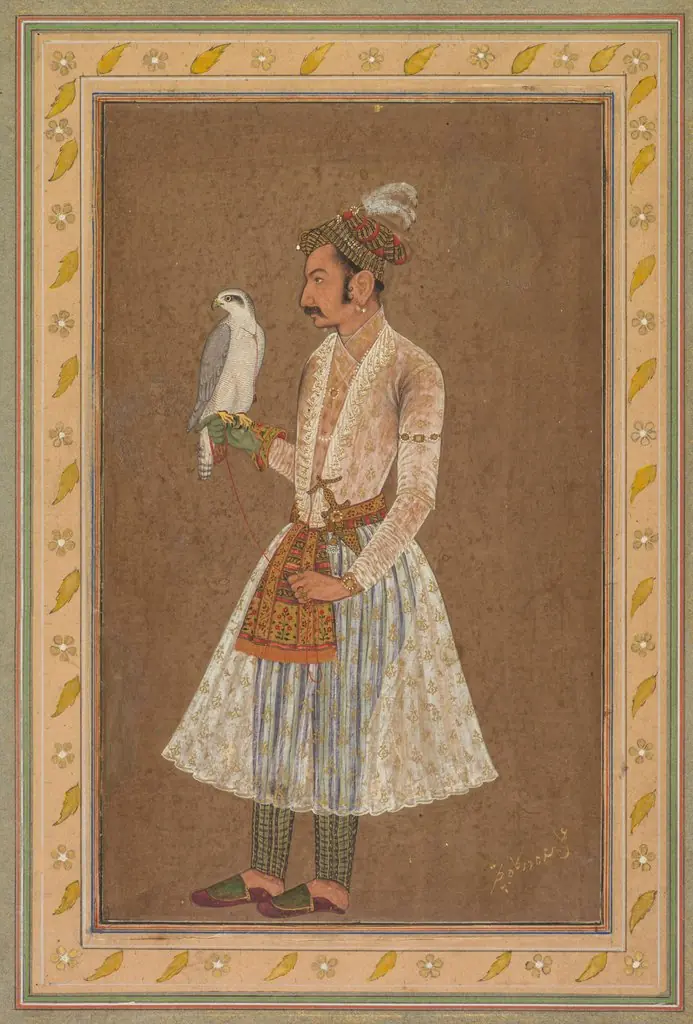 Portrait of Raja Jagat Singh of Nurpur (reigned 1618-46)
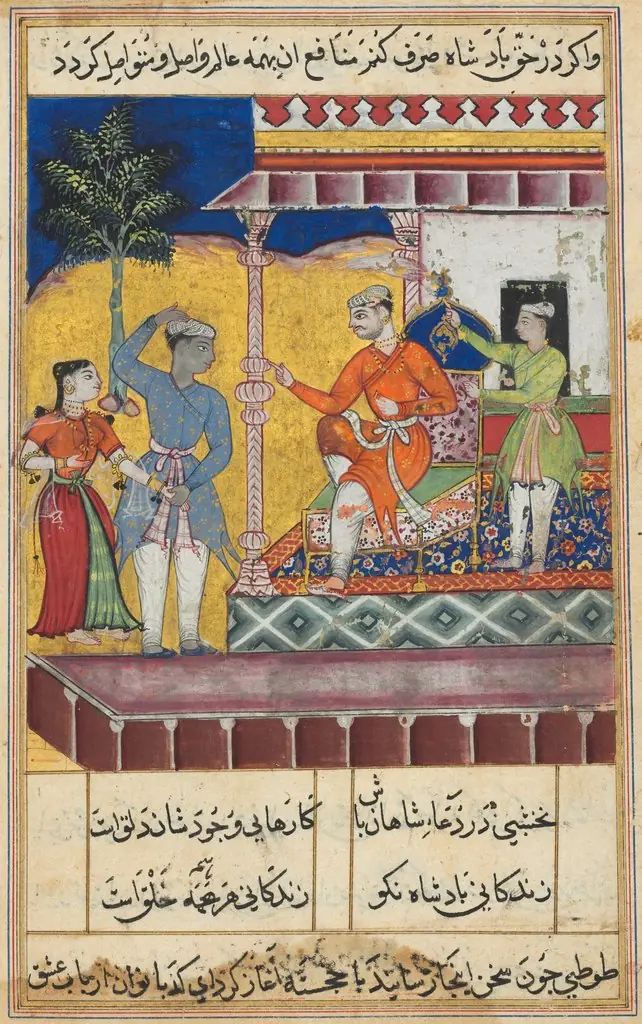 The rejuvenated old man and the daughter of the king of the jinns take leave of the King of Kings, from a Tuti-nama (Tales of a Parrot): Seventh Night
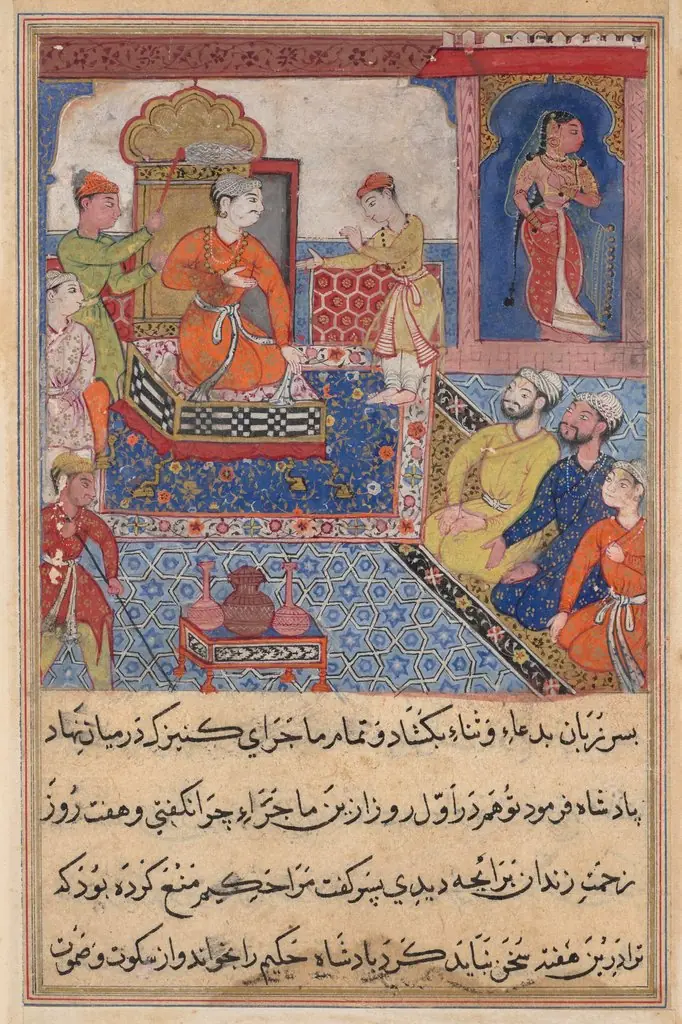 Page from Tales of a Parrot (Tuti-nama): text page
 A Traveler Persuades Lorik to Return Home (top); Chanda Objects (bottom), from a Chandayana (Story of Chanda)