Artwork
Page from Tales of a Parrot (Tuti-nama): text page
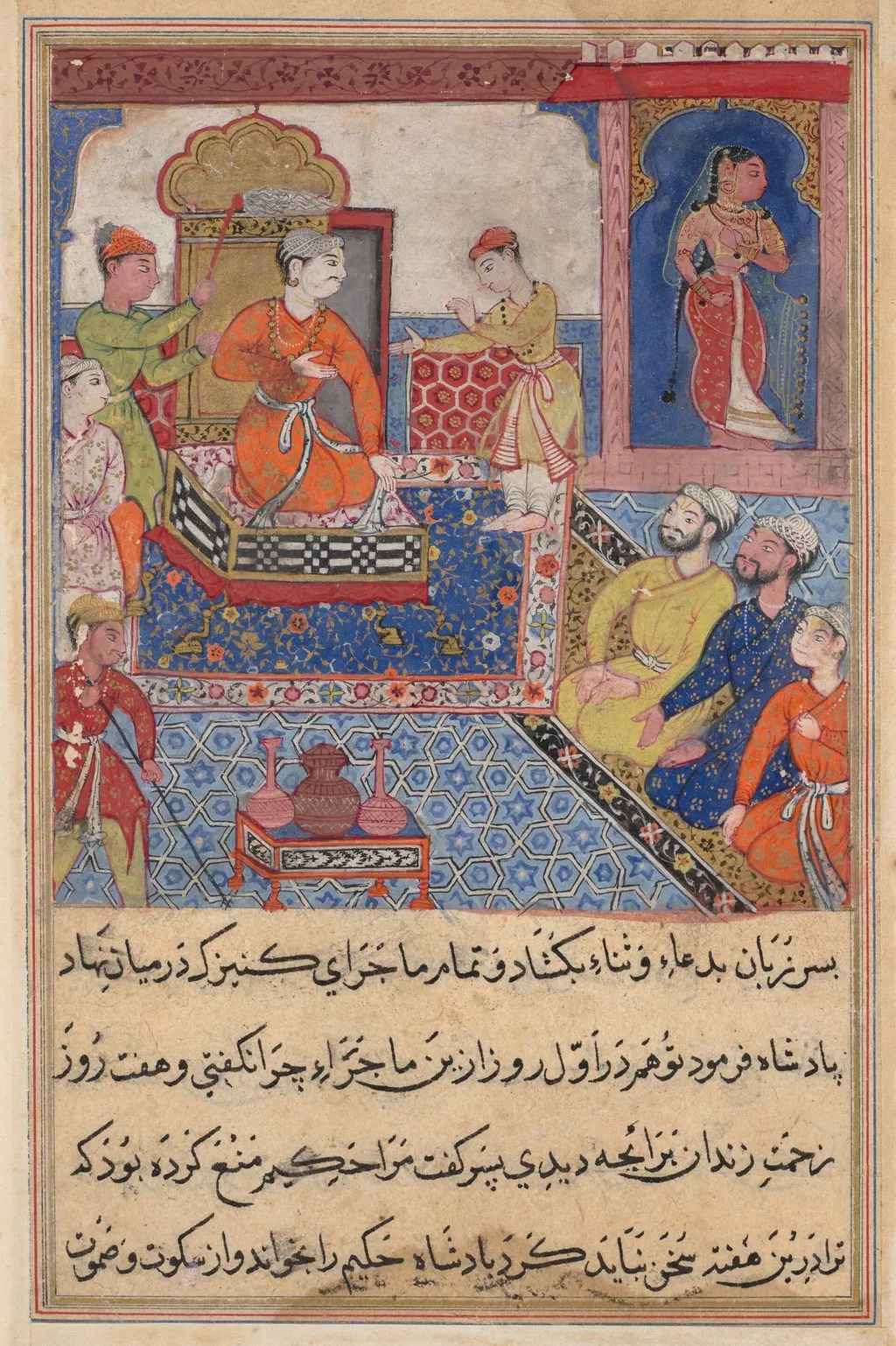
Page from Tales of a Parrot (Tuti-nama): text page is an unspecified painting. It dates from 1560 and is held in the collection of the Cleveland Museum of Art. The work is a painted folio from the illustrated manuscript known as *Tales of a Parrot* (Tuti‑nama).
About this work
Overview
The work is a painted folio from the illustrated manuscript known as *Tales of a Parrot* (Tuti‑nama). Executed on paper, the page functions as both narrative illustration and decorative object, featuring a crowded interior scene rendered in vivid pigments and intricate ornamentation.
Subject & Meaning
The composition depicts a gathering of figures around a seated dignitary on an elevated chair. A standing attendant in a green robe flanks the central figure, while several participants recline on the floor in blue and yellow garments, suggesting a communal or ceremonial occasion recorded in the text.
Technique & Style
The artist employed opaque water‑based pigments to achieve saturated reds, greens, blues, and yellows, outlined with fine brushwork. Gold leaf or powdered gold accents highlight the background, which is divided into a blue‑white field enlivened by geometric motifs, creating a richly patterned surface typical of Persian miniature traditions.
History & Provenance
The folio originates from an early modern Persian manuscript, likely produced in the 16th or 17th century. It entered the collection of the Cleveland Museum of Art through acquisition in the 20th century, where it is catalogued as a representative example of illustrated literary works from the region.
Context
*Tuti‑nama* is a collection of moral tales narrated by a parrot, a popular genre in Persian literature that combined didactic storytelling with lavish visual accompaniment. The page reflects the manuscript’s function as both a teaching tool and a status object for elite patrons.
Legacy
As a surviving example of miniature painting on paper, the folio offers insight into the materials, aesthetic preferences, and narrative conventions of its cultural milieu, informing contemporary scholarship on Persian book arts.
Artist & collection

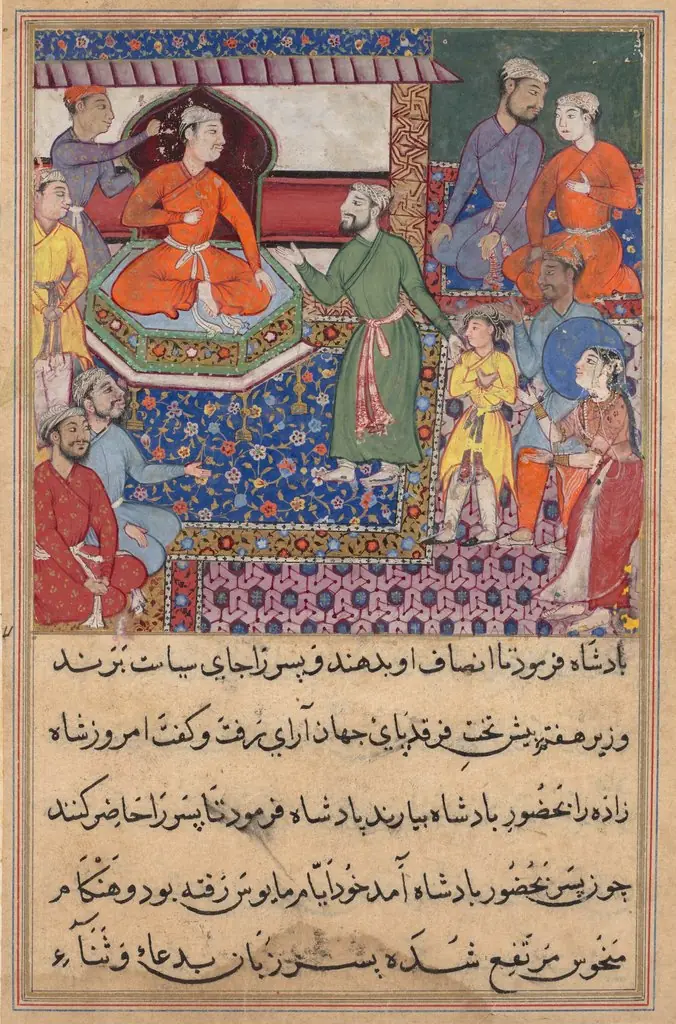 Page from Tales of a Parrot (Tuti-nama): text page
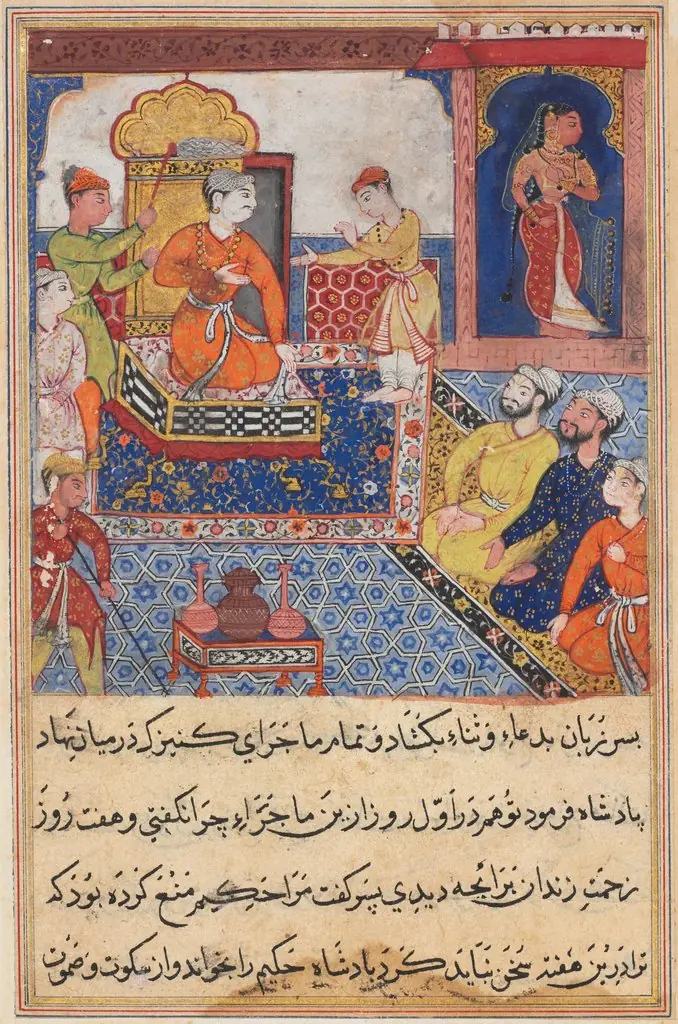 The young prince recounts his experiences to his father, the king, from a Tuti-nama (Tales of a Parrot): Eighth Night
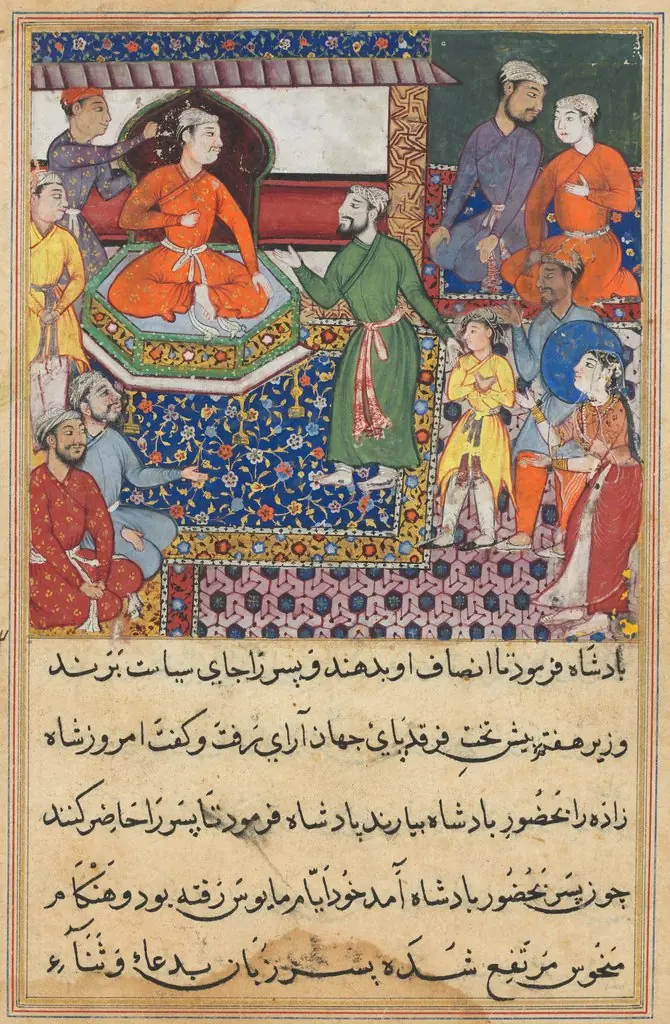 The handmaiden again pleads for the death of the prince, from a Tuti-nama (Tales of a Parrot): Eighth Night
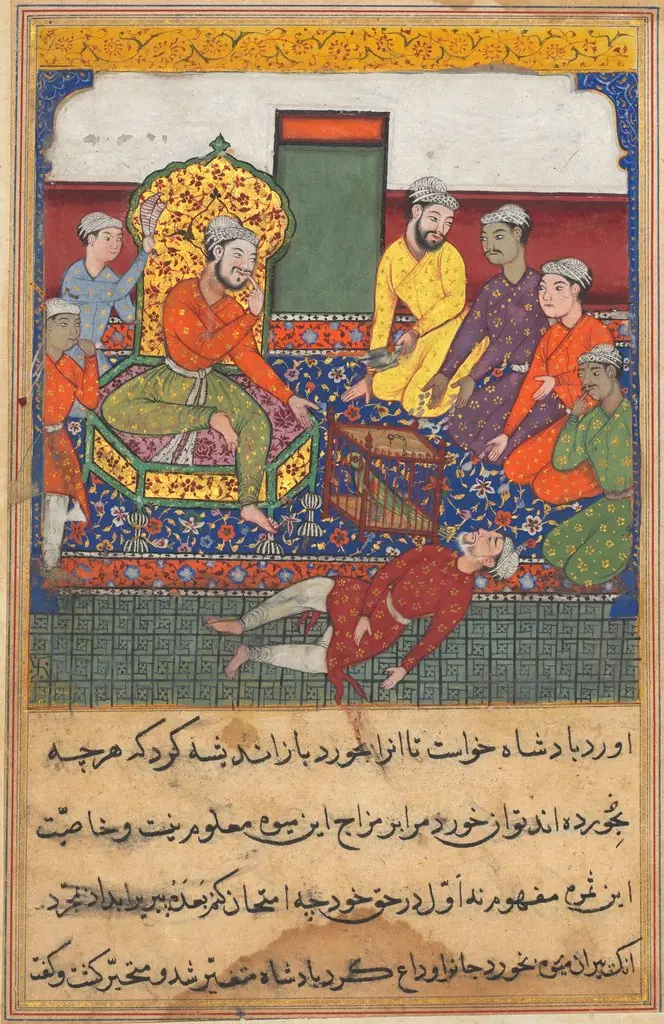 The old man eats of the fruit of the Tree of Life, but drops dead, from a Tuti-nama (Tales of a Parrot): Ninth Night
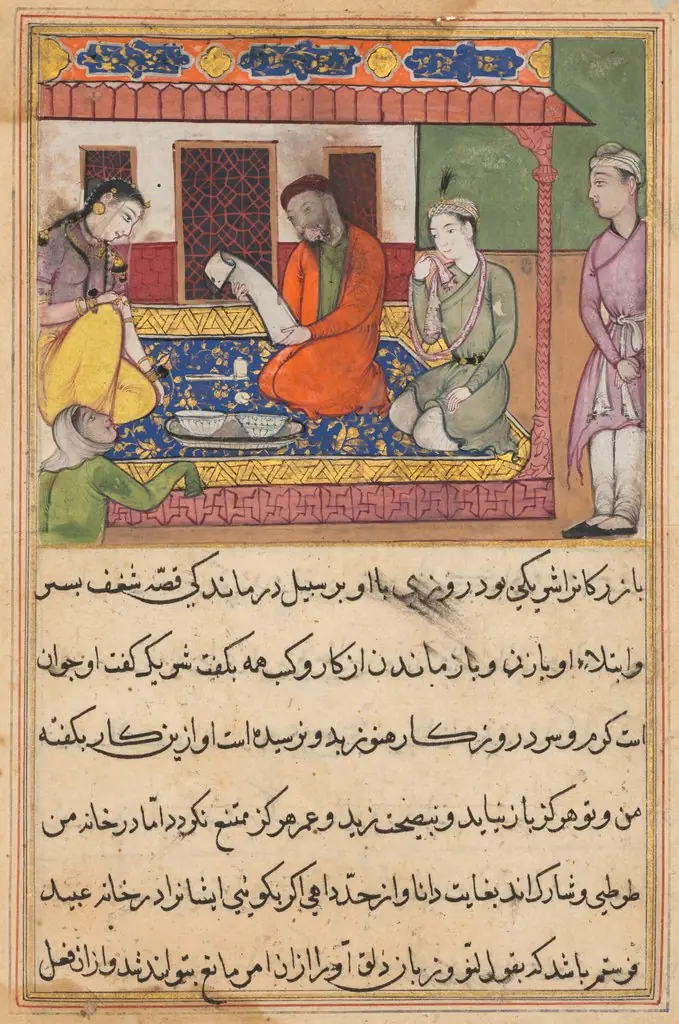 The marriage of ‘Ubaid, son of a merchant of Tirmiz, from a Tuti-nama (Tales of a Parrot): Forty-second Night
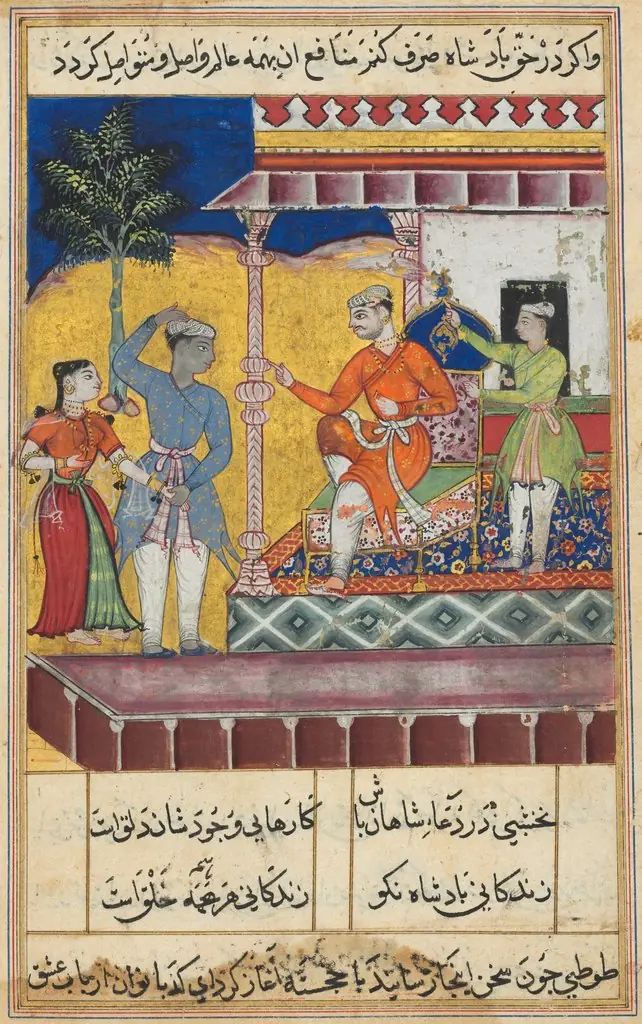 The rejuvenated old man and the daughter of the king of the jinns take leave of the King of Kings, from a Tuti-nama (Tales of a Parrot): Seventh Night
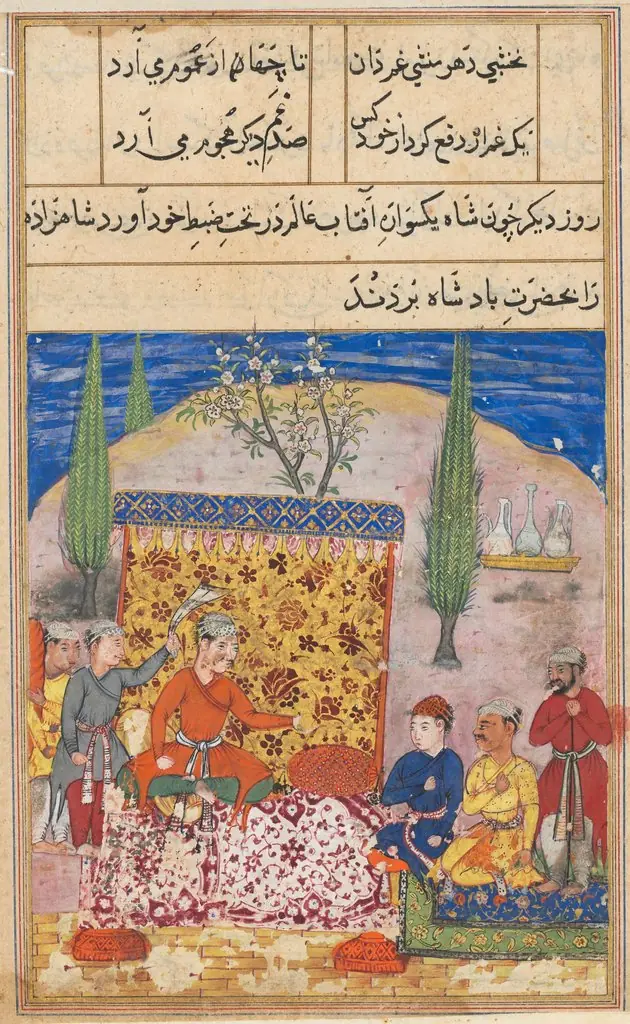 The young prince is presented to the king, his father, by his teacher, but refuses to speak, from a Tuti-nama (Tales of a Parrot): Eighth Night
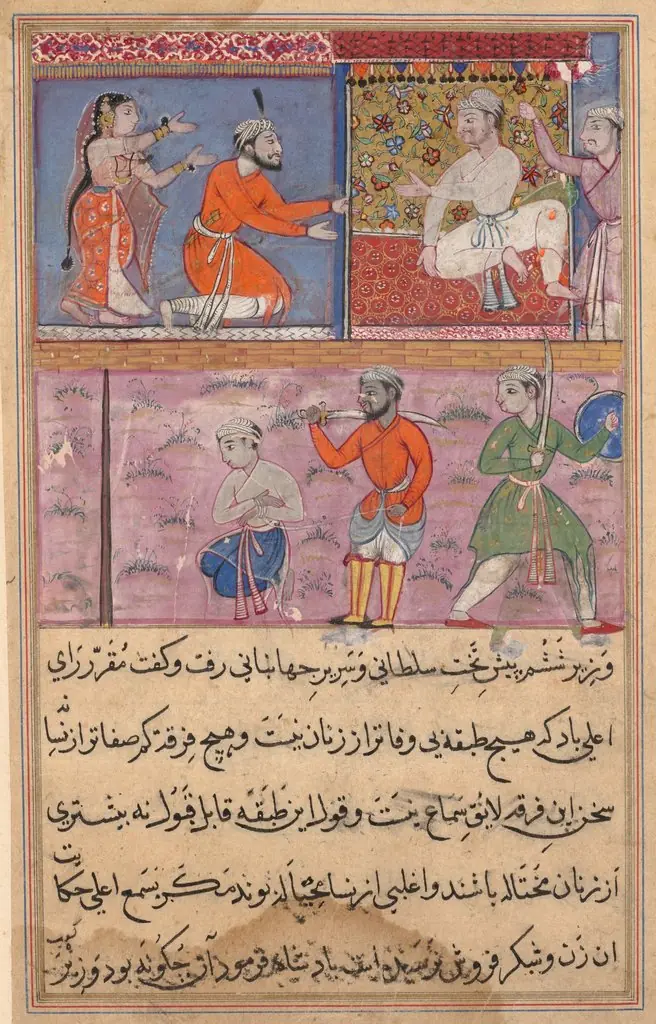
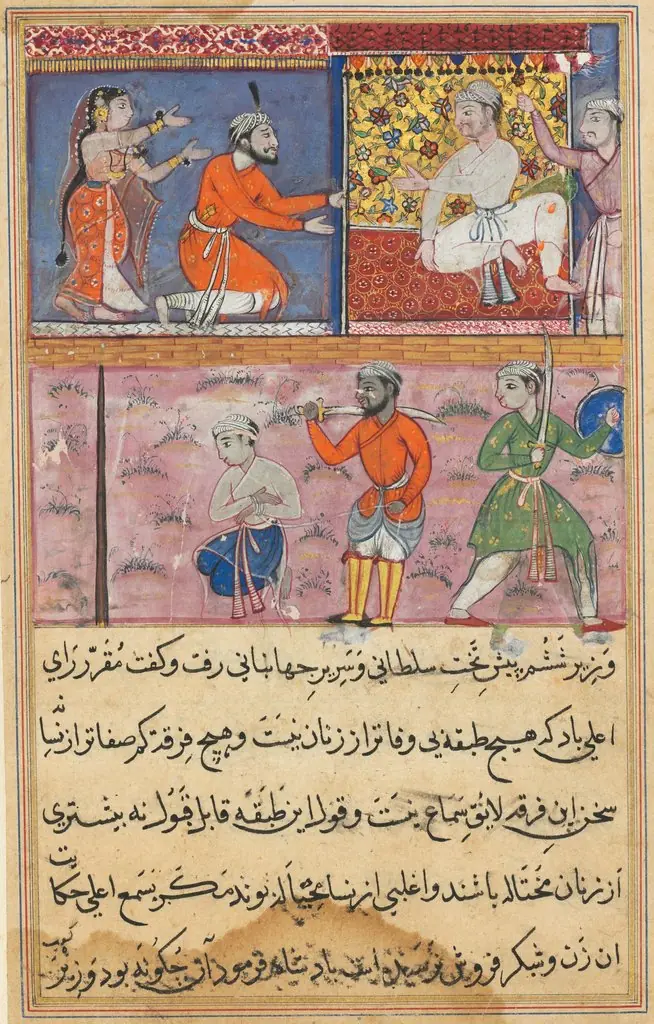 The prince sent back to the place of execution for the sixth time, from a Tuti-nama (Tales of a Parrot): Eighth Night
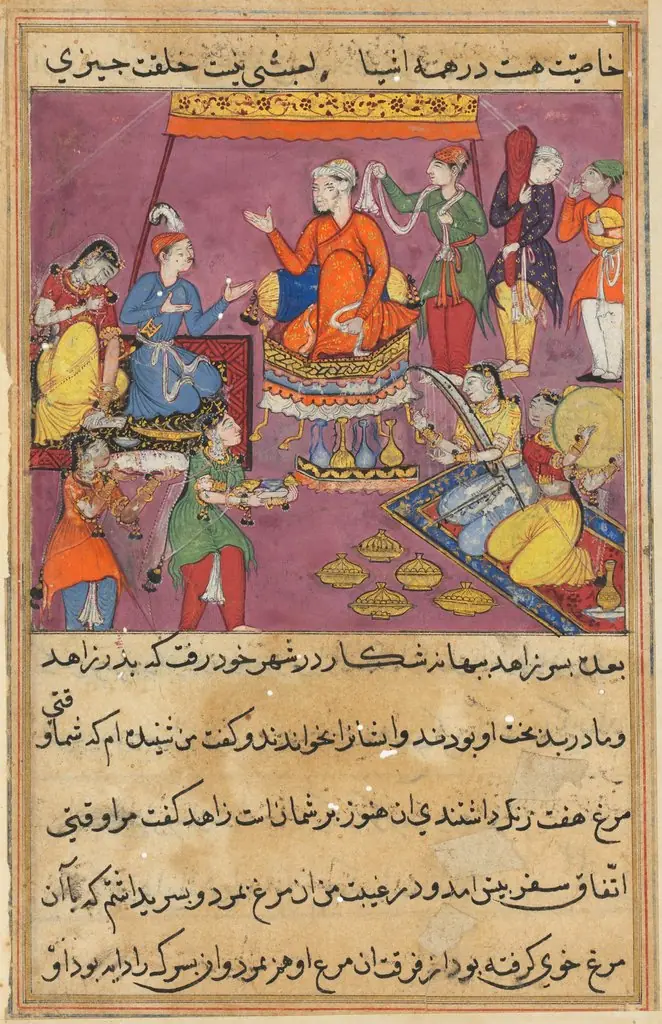 The king gives his daughter in marriage to the pious man’s son, from a Tuti-nama (Tales of a Parrot): Fifty-second Night
 Page from Tales of a Parrot (Tuti-nama): text page