Artwork
Page from Tales of a Parrot (Tuti-nama): text page
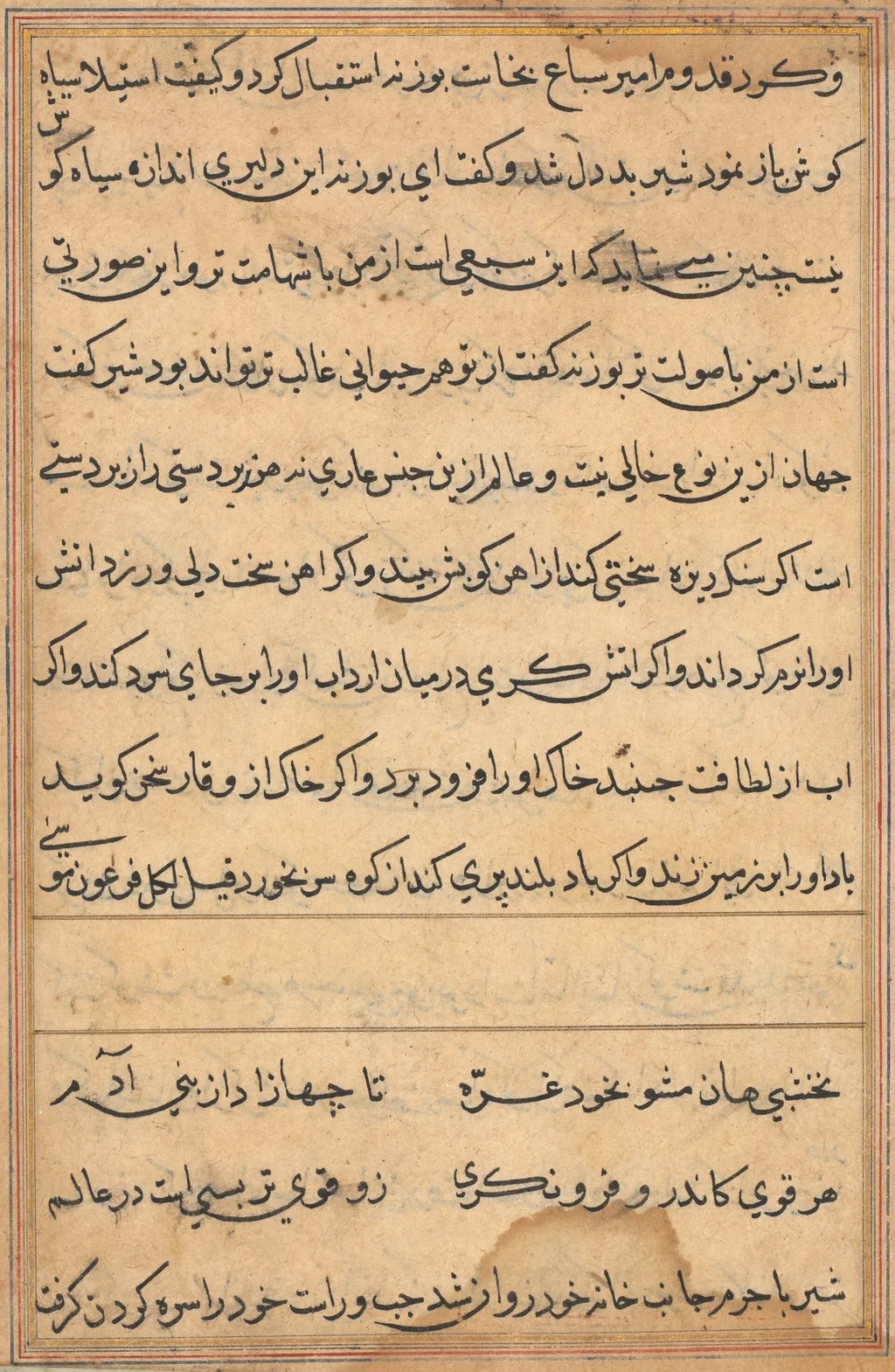
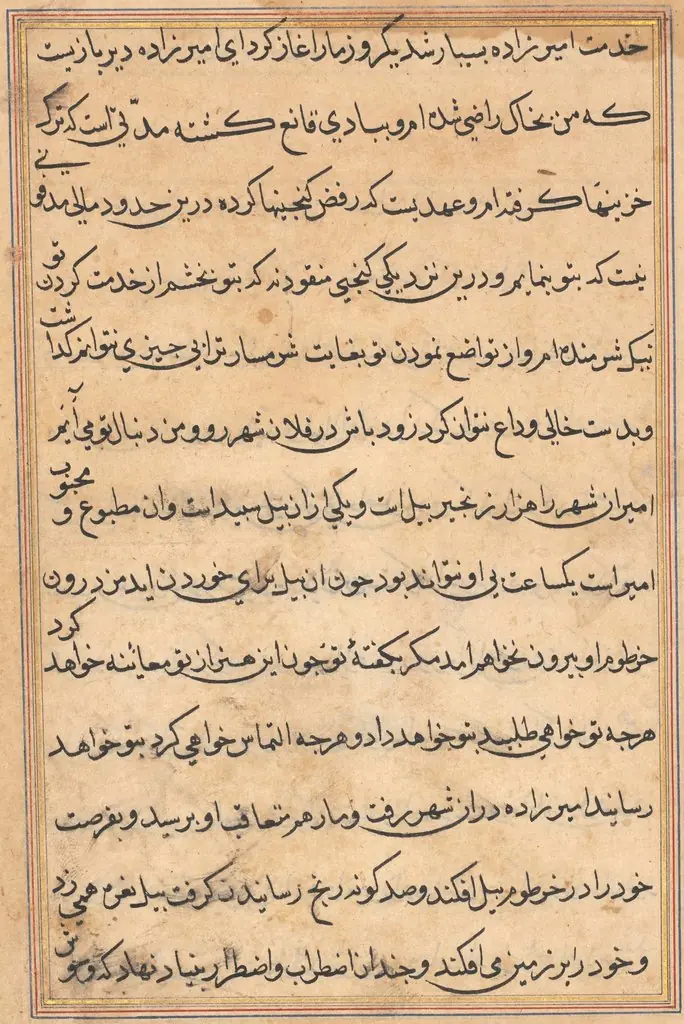
Page from Tales of a Parrot (Tuti-nama): text page is an unspecified painting. It dates from 1560 and is held in the collection of the Cleveland Museum of Art. This object is a single sheet from the illustrated manuscript *Tales of a Parrot* (Tuti‑nama).
About this work
Overview
This object is a single sheet from the illustrated manuscript *Tales of a Parrot* (Tuti‑nama). The paper bears dense black calligraphic script arranged in orderly horizontal lines, framed by a thin red border. The surface shows a warm, slightly yellowed tone, indicating age, while subtle variations in ink density create a gentle visual rhythm.
Subject & Meaning
The page contains only text, presenting a segment of the narrative that the *Tales of a Parrot* collection conveys. The story unfolds through the written word rather than pictorial illustration, emphasizing the literary tradition of Persian storytelling in which a parrot often serves as a narrator or moral commentator.
Technique & Style
The script appears to be hand‑written, with slight irregularities in stroke width that suggest a skilled calligrapher at work. Ink application is uneven, producing areas of deeper saturation alongside lighter washes, a characteristic of traditional brush‑fed ink on paper. The thin red border frames the text, a decorative element common in Persian codices.
History & Provenance
The manuscript page originates from a Persian literary tradition, likely produced in the early modern period when illustrated books were common. It now resides in the collection of the Cleveland Museum of Art, where it is displayed as part of the museum’s holdings of Asian manuscripts.
Context
*Tales of a Parrot* belongs to a broader genre of Persian moral and didactic literature, where animal protagonists convey ethical lessons. Such works were often copied by hand for private circulation among literate elites, reflecting the cultural value placed on literary art as well as visual embellishment.
Legacy
While the page contains no illustrations, its preservation illustrates the enduring interest in Persian narrative forms and the craft of manuscript production. The piece contributes to scholarly understanding of textual transmission and the aesthetic conventions of Persian book art.
Artist & collection

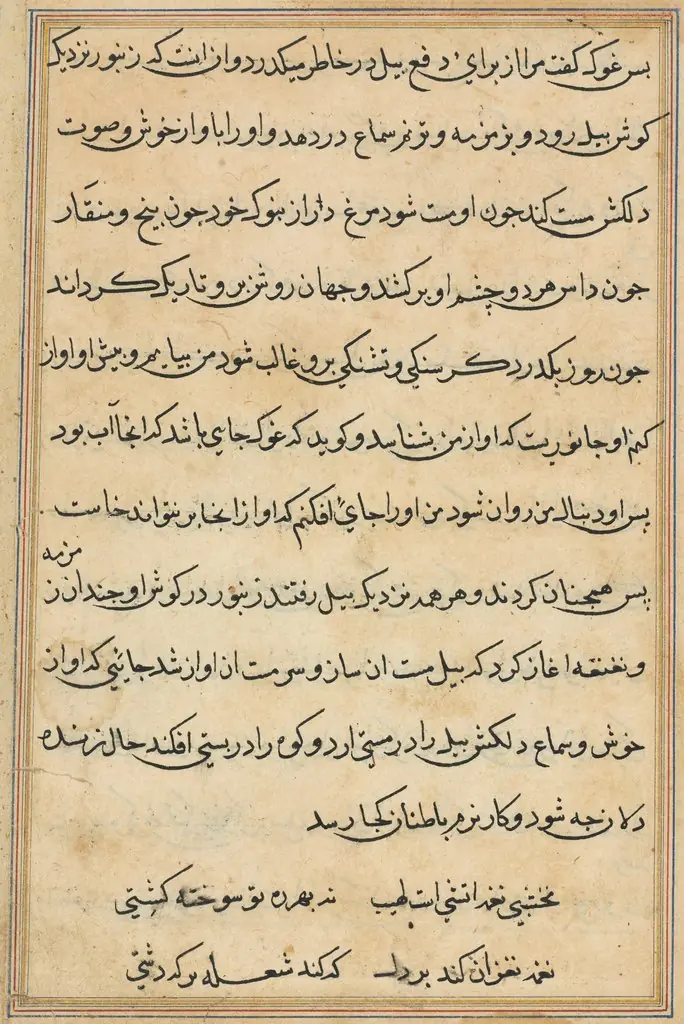 Page from Tales of a Parrot (Tuti-nama): text page
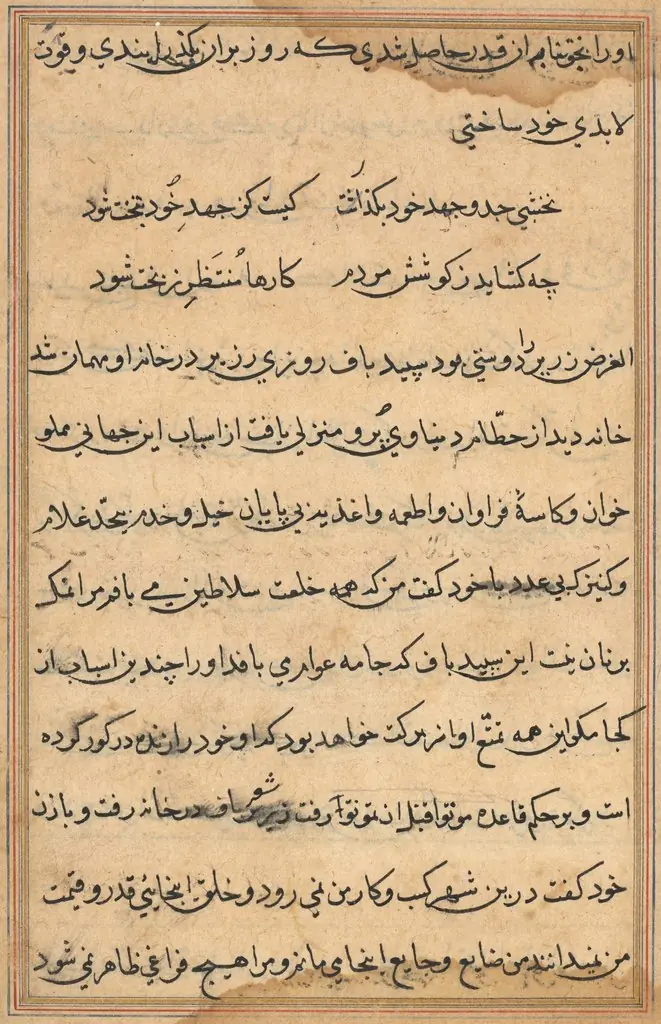 Page from Tales of a Parrot (Tuti-nama): text page
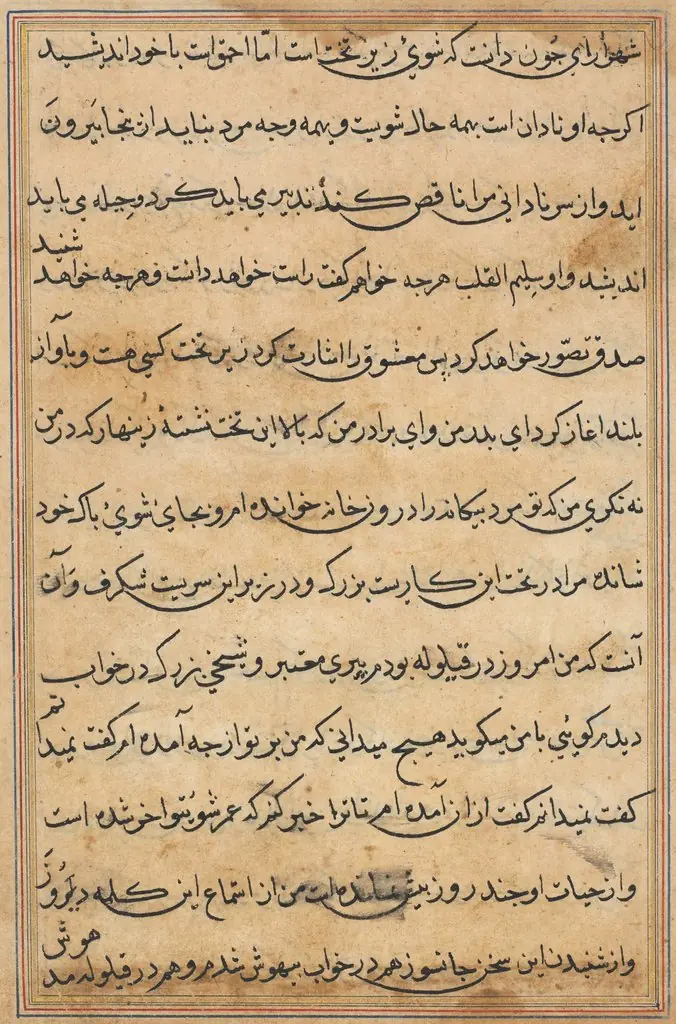 Page from Tales of a Parrot (Tuti-nama): text page
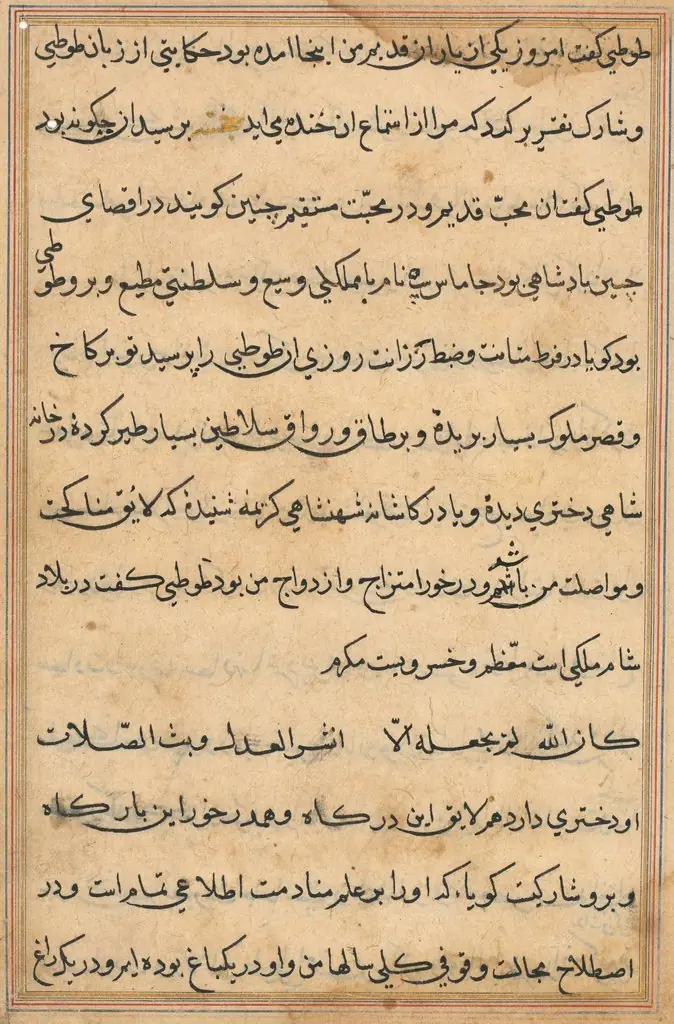 Page from Tales of a Parrot (Tuti-nama): text page
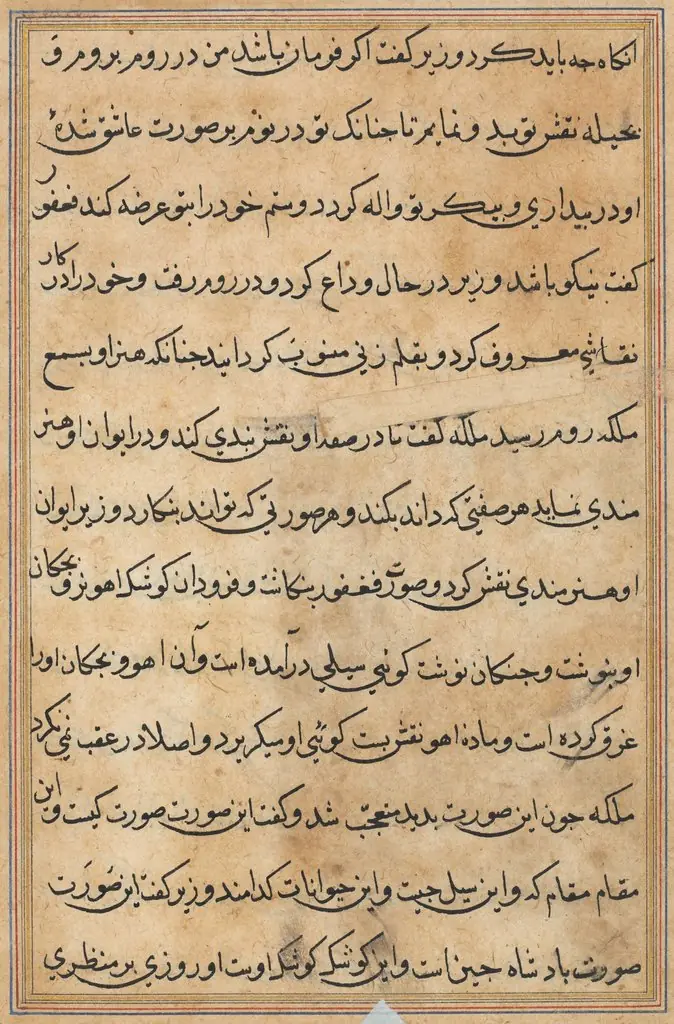 Page from Tales of a Parrot (Tuti-nama): text page
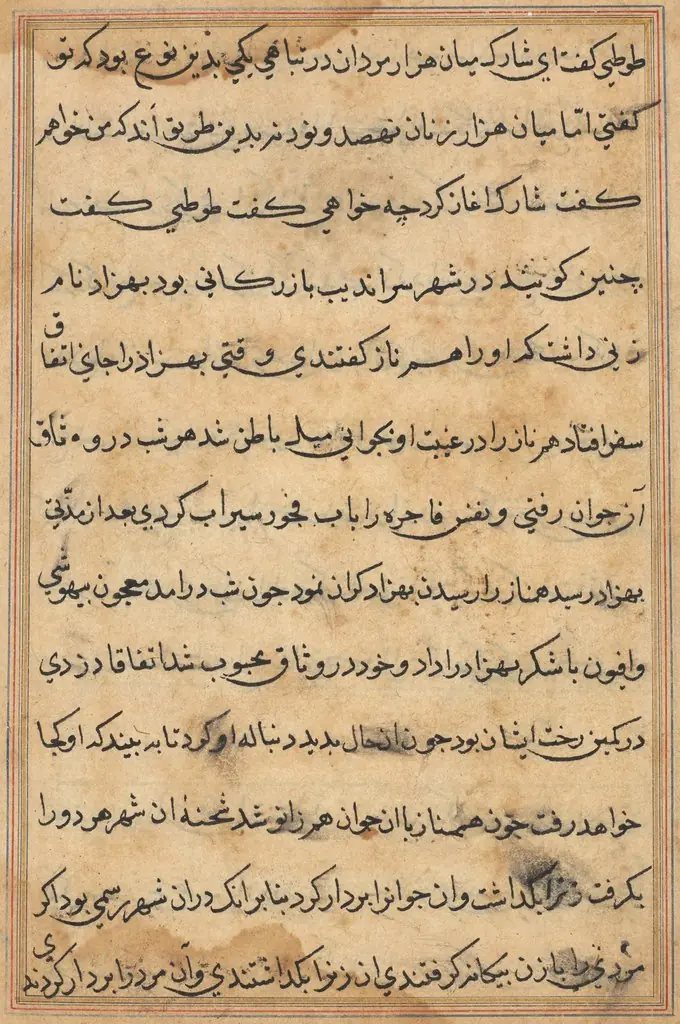 Page from Tales of a Parrot (Tuti-nama): text page
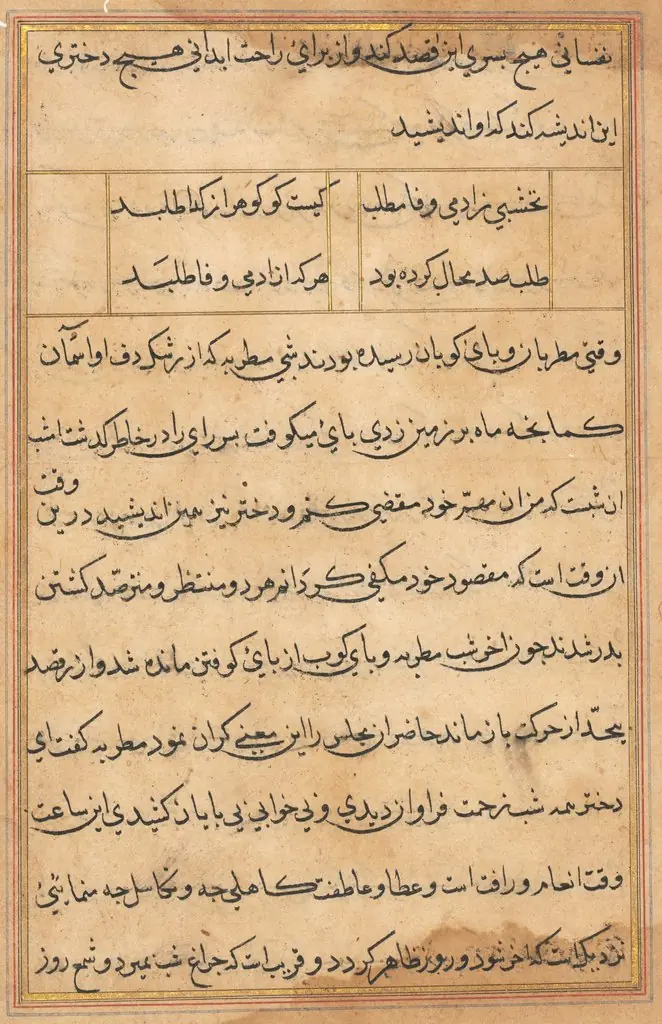 Page from Tales of a Parrot (Tuti-nama): text page
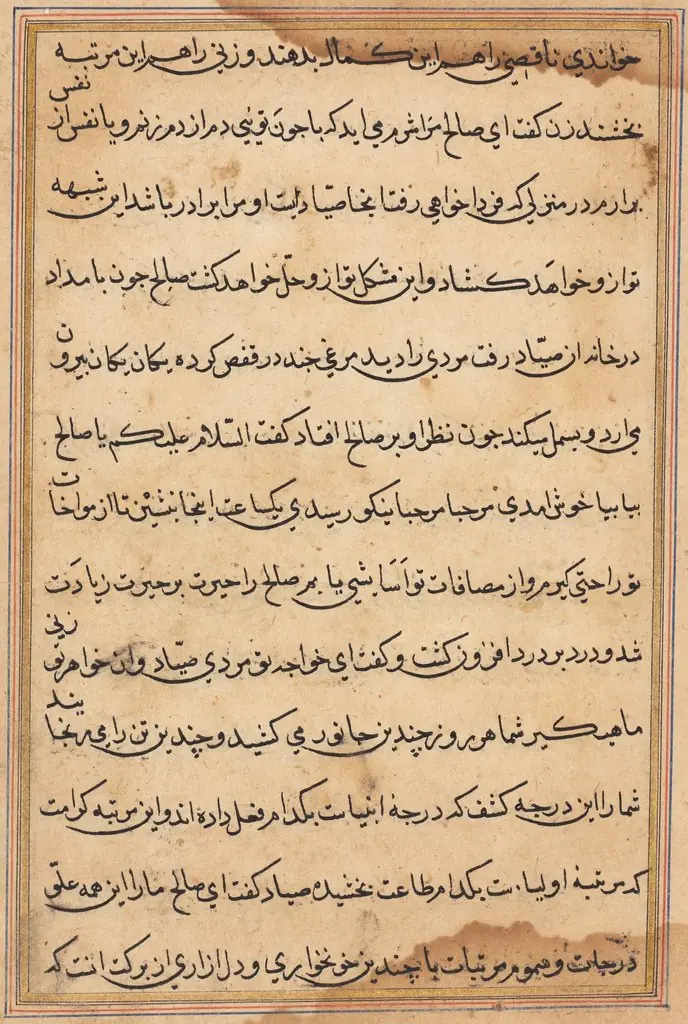 Page from Tales of a Parrot (Tuti-nama): text page
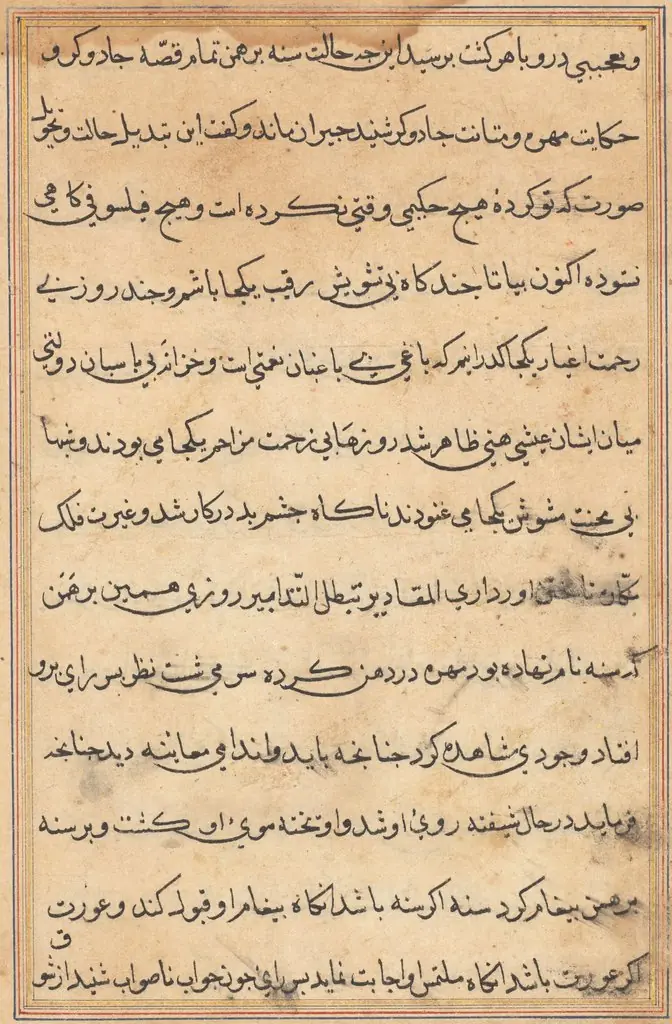 Page from Tales of a Parrot (Tuti-nama): text page
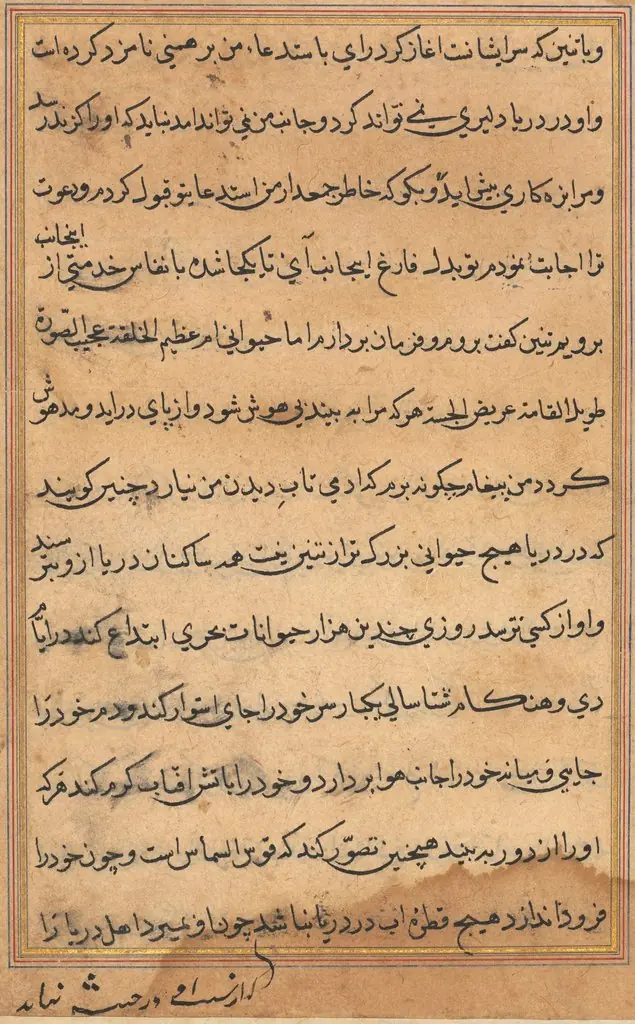 Page from Tales of a Parrot (Tuti-nama): text page
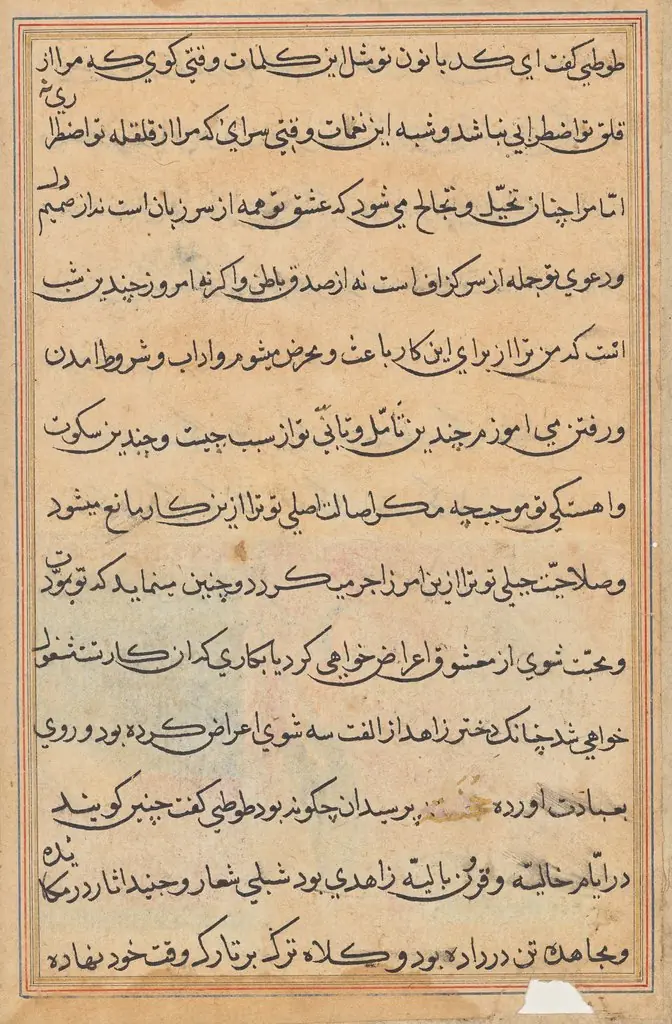 Page from Tales of a Parrot (Tuti-nama): text page
 Page from Tales of a Parrot (Tuti-nama): text page