Artwork
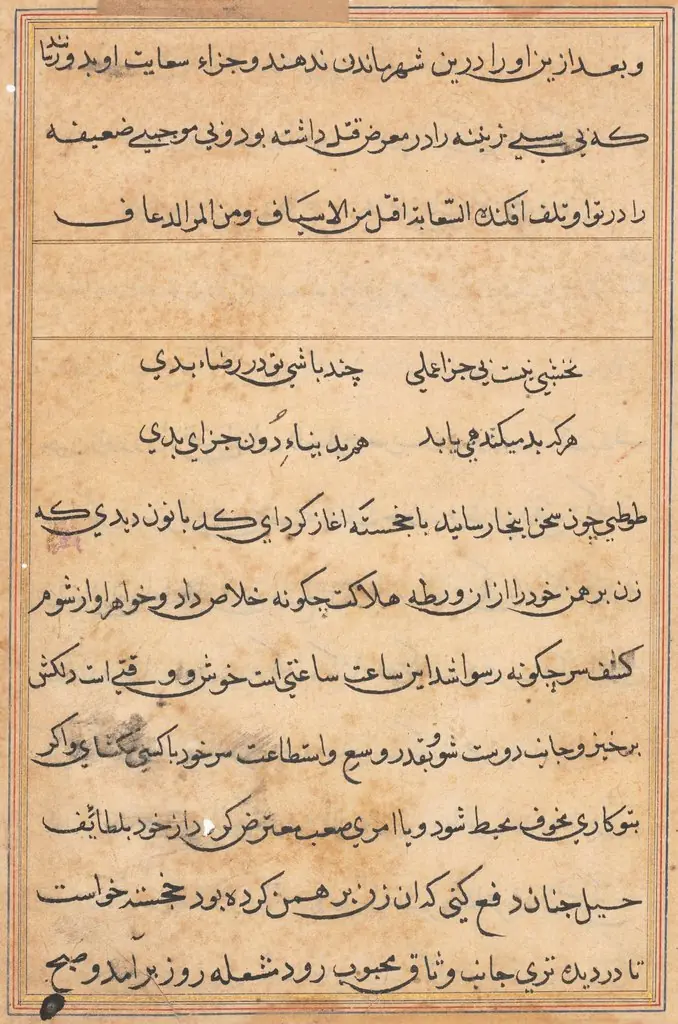
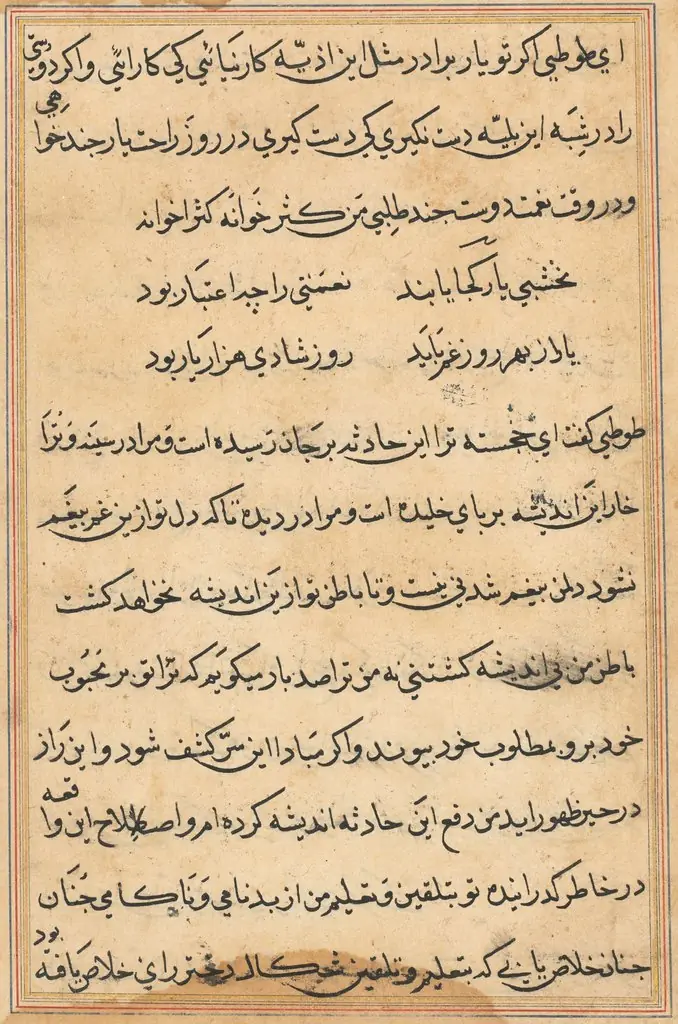
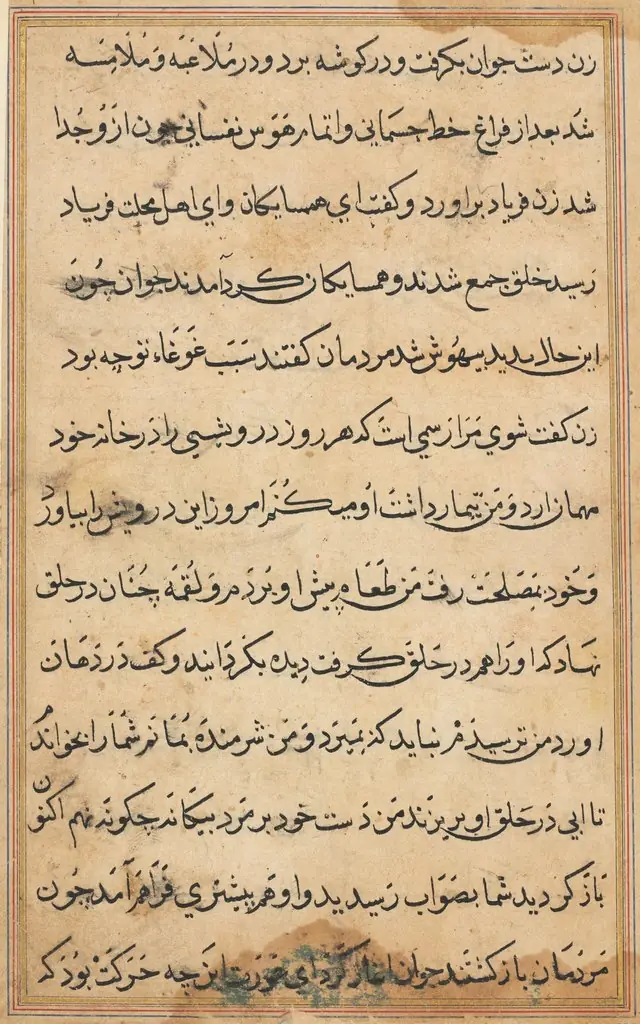
Page from Tales of a Parrot (Tuti-nama): text page
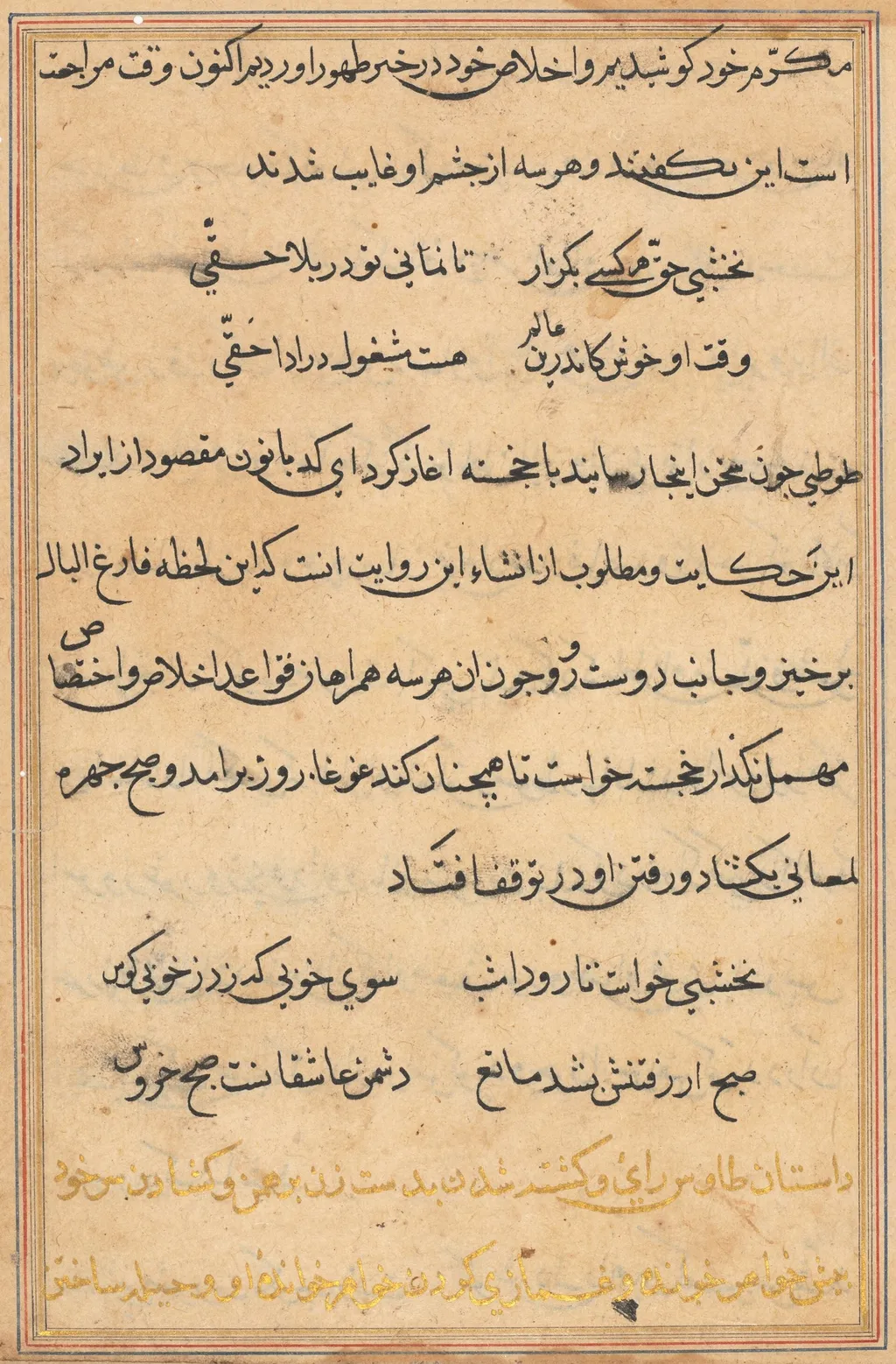
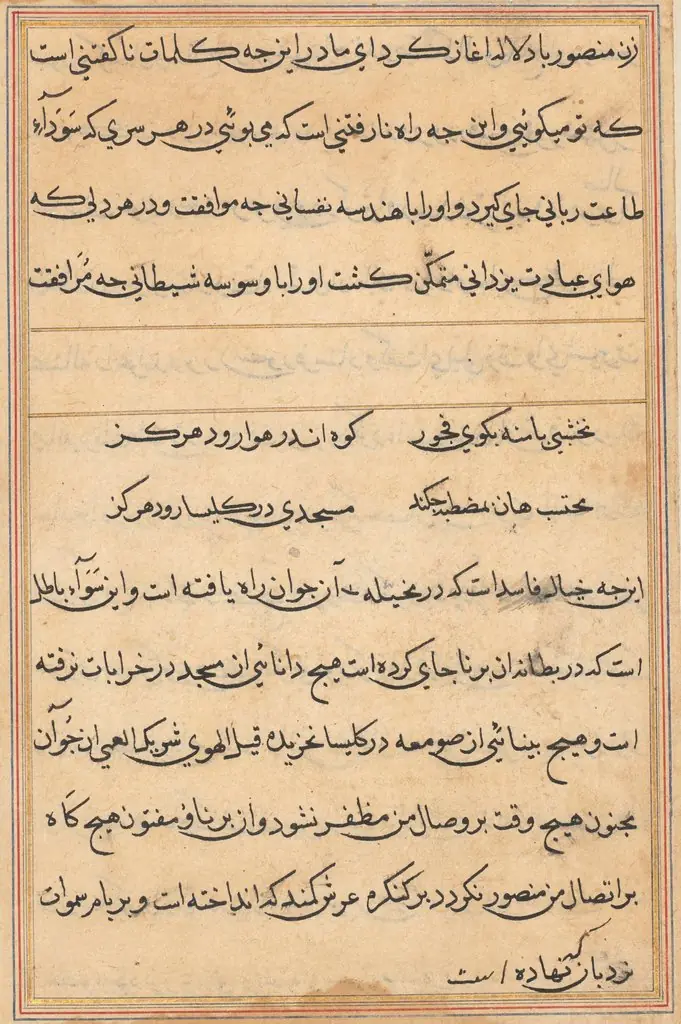
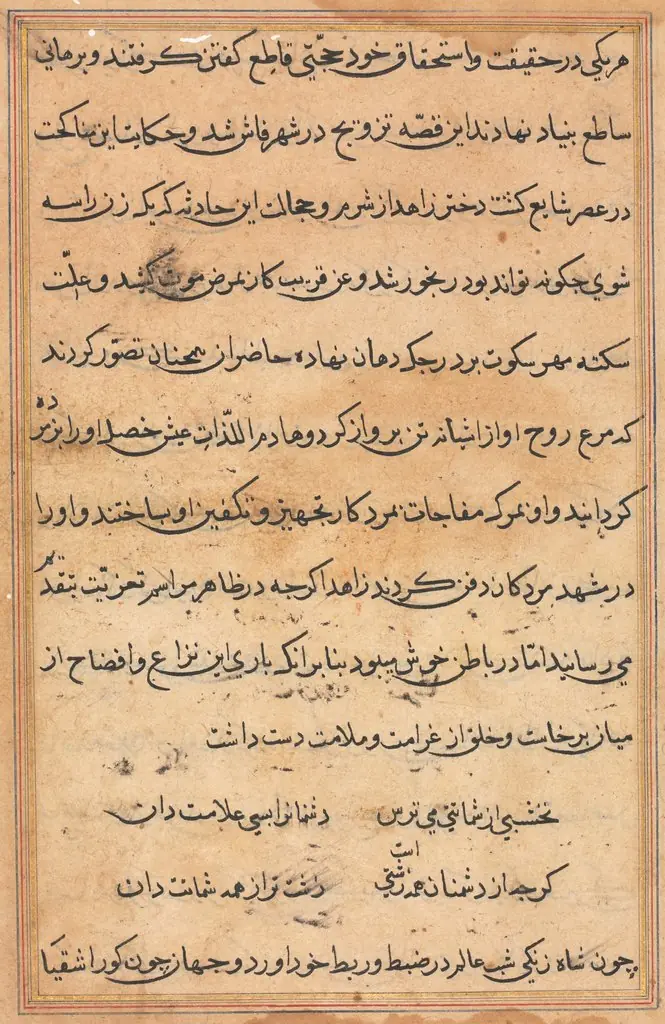
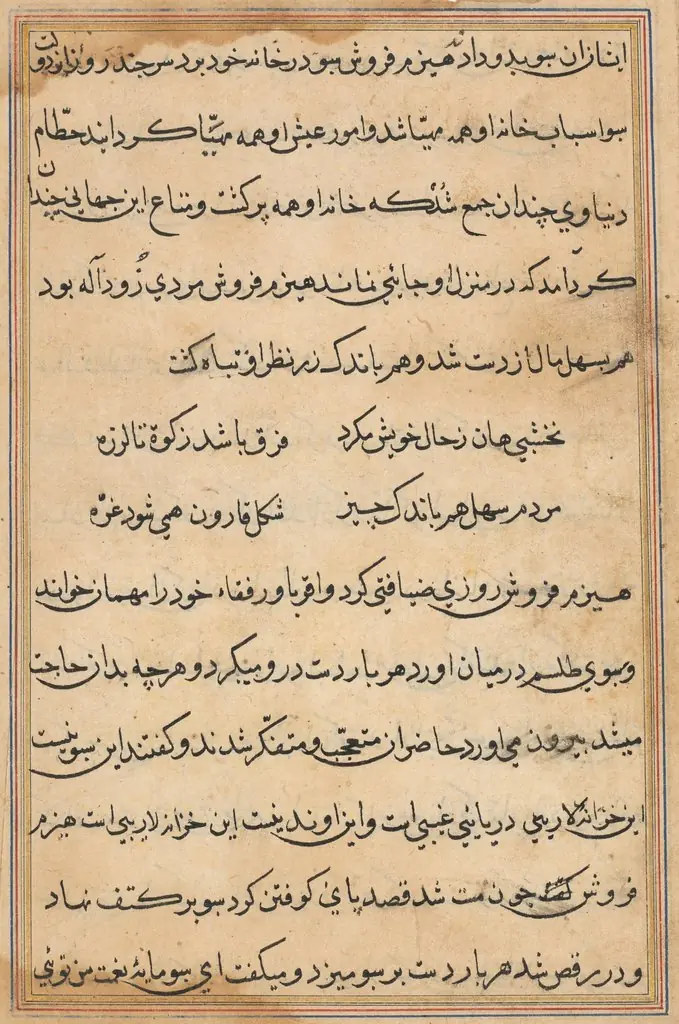
Page from Tales of a Parrot (Tuti-nama): text page is an unspecified painting. It dates from 1560 and is held in the collection of the Cleveland Museum of Art. This object is a single page from the illustrated manuscript known as *Tuti‑nama* or *Tales of a Parrot*.
About this work
Overview
This object is a single page from the illustrated manuscript known as *Tuti‑nama* or *Tales of a Parrot*. Executed as a painted page, it consists of densely packed Arabic calligraphy rendered in black ink, surrounded by a narrow red border and accented with a faint gold line along the lower edge.
Subject & Meaning
The script contains a narrative addressed to Prince Salim, a member of the Mughal royal family, recounting the moral and entertaining episodes of a parrot’s adventures. The text functions both as literary entertainment and as a vehicle for courtly instruction, reflecting the patron’s interest in didactic storytelling.
Technique & Style
The calligraphic work is hand‑written, with subtle variations in ink density that give certain letters a slightly darker appearance. The flowing, curvilinear Arabic letters are arranged in tight clusters, filling the page from margin to margin, while the thin red border delineates the composition and the gold line provides a decorative terminus.
History & Provenance
Created for Prince Salim, the page originates from a Mughal manuscript production workshop in the early 17th century. Its survival as an individual sheet suggests it was later separated from the codex, though the precise path to its current collection remains undocumented.
Context
Manuscripts of this period often combined literary content with elaborate visual presentation, serving as status objects for elite patrons. The *Tuti‑nama* belongs to a tradition of Persian‑influenced courtly literature that circulated among the Mughal elite, blending Persian poetic forms with local Indian artistic conventions.
Legacy
The page exemplifies the high level of calligraphic skill and decorative restraint characteristic of Mughal manuscript art. As a fragment, it offers scholars insight into the material culture of royal patronage and the aesthetic choices that shaped literary manuscripts in early modern South Asia.
Artist & collection

 Page from Tales of a Parrot (Tuti-nama): text page
 Page from Tales of a Parrot (Tuti-nama): text page
 Page from Tales of a Parrot (Tuti-nama): text page
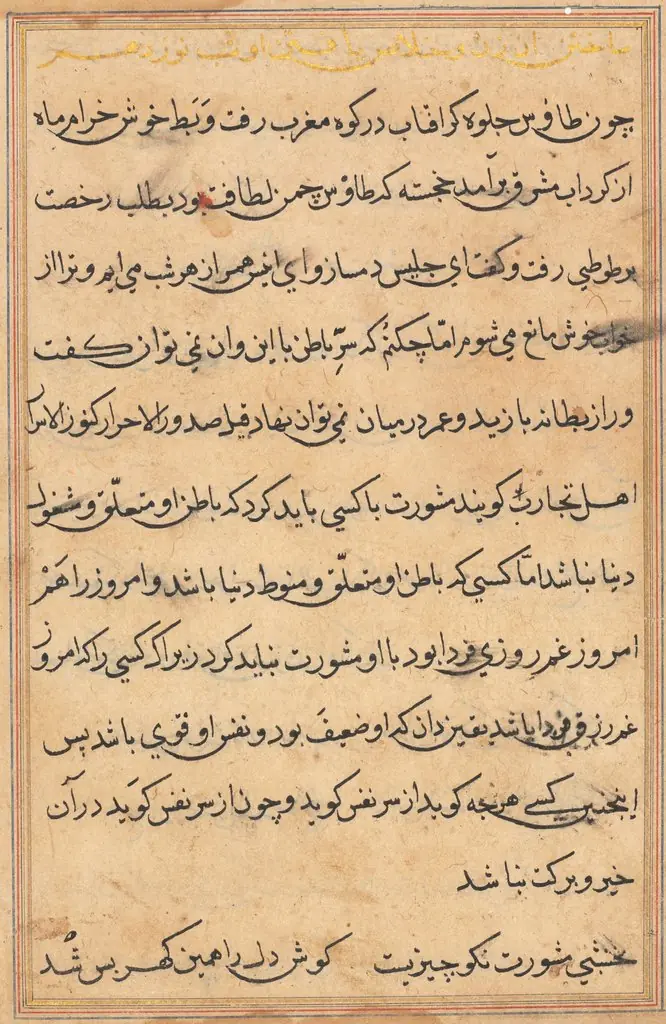 Page from Tales of a Parrot (Tuti-nama): text page
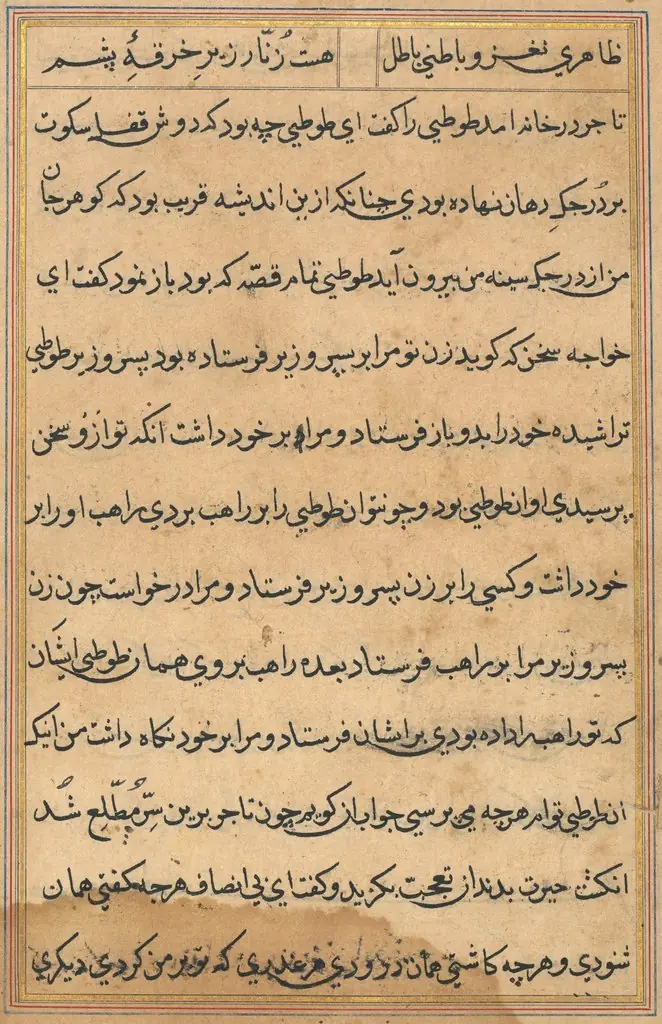 Page from Tales of a Parrot (Tuti-nama): text page
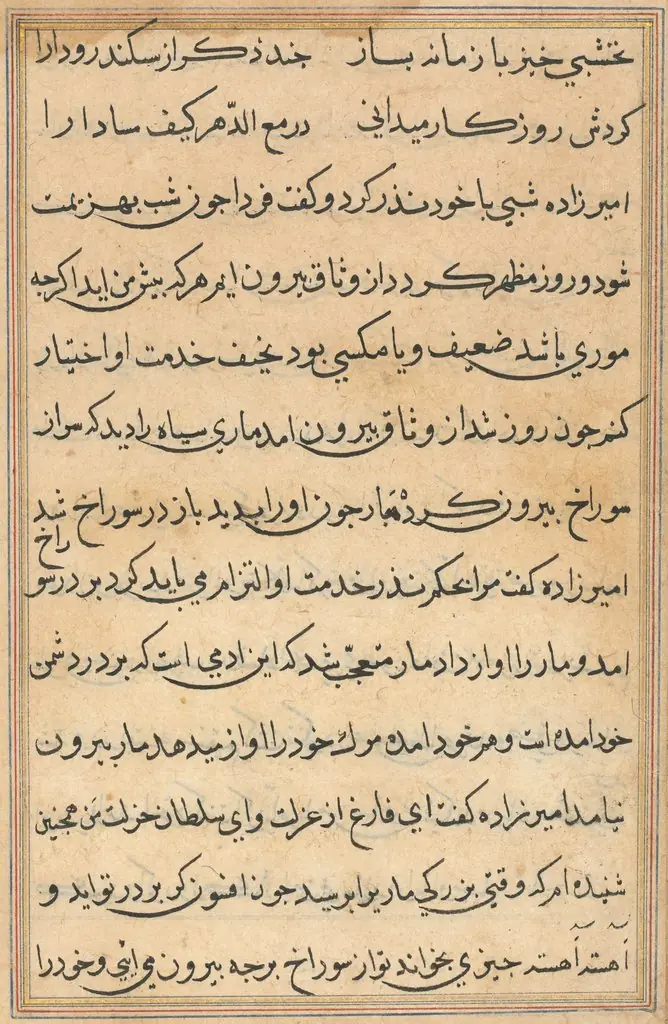 Page from Tales of a Parrot (Tuti-nama): text page
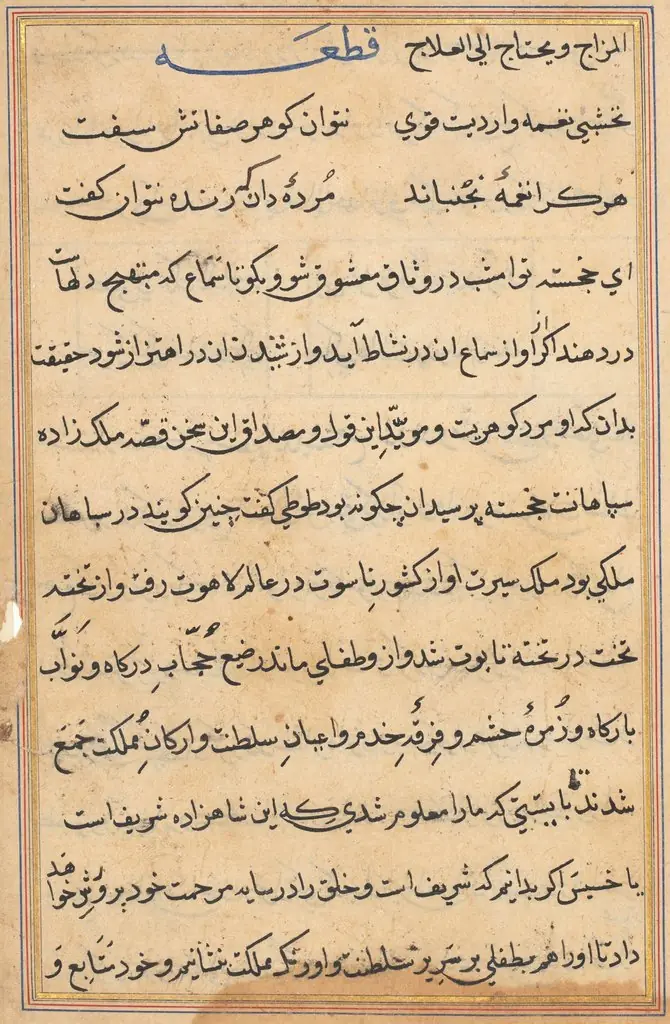 Page from Tales of a Parrot (Tuti-nama): text page
 Page from Tales of a Parrot (Tuti-nama): text page
 Page from Tales of a Parrot (Tuti-nama): text page
 Page from Tales of a Parrot (Tuti-nama): text page