Artwork
Bodhisattva Jijang (Ksitigarbha) and the Ten Kings of Hell
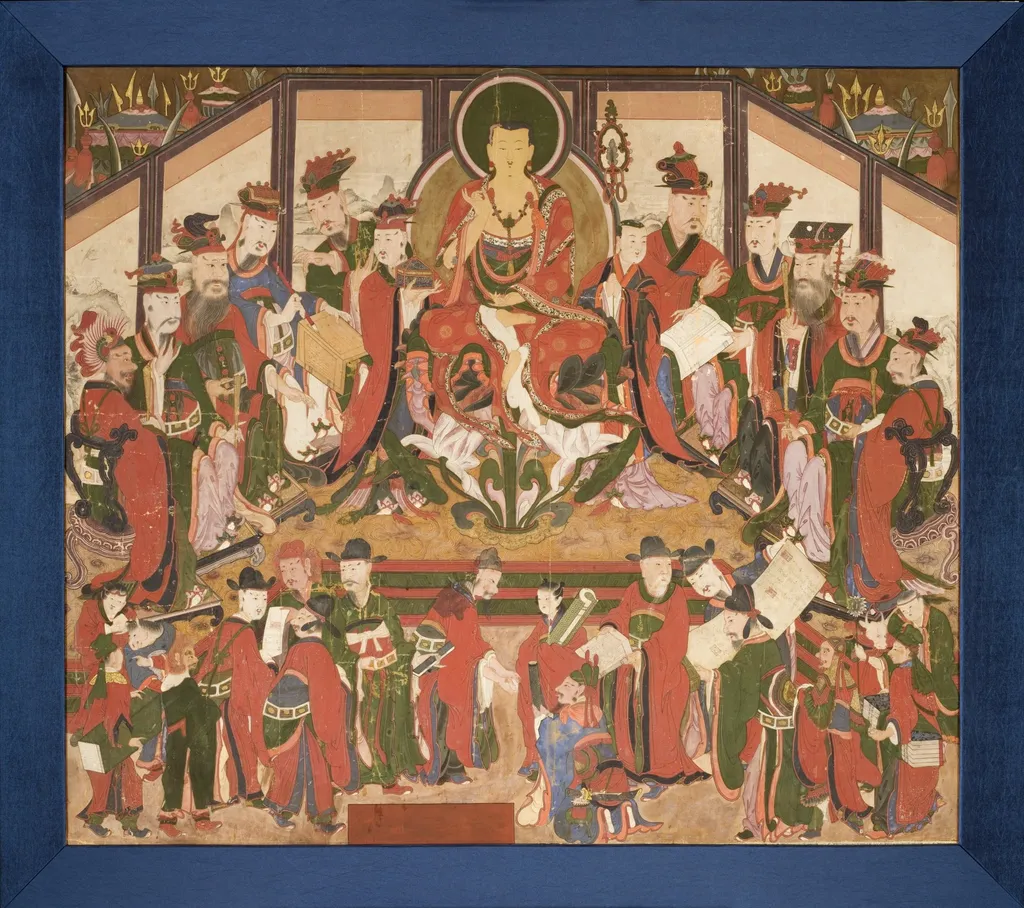
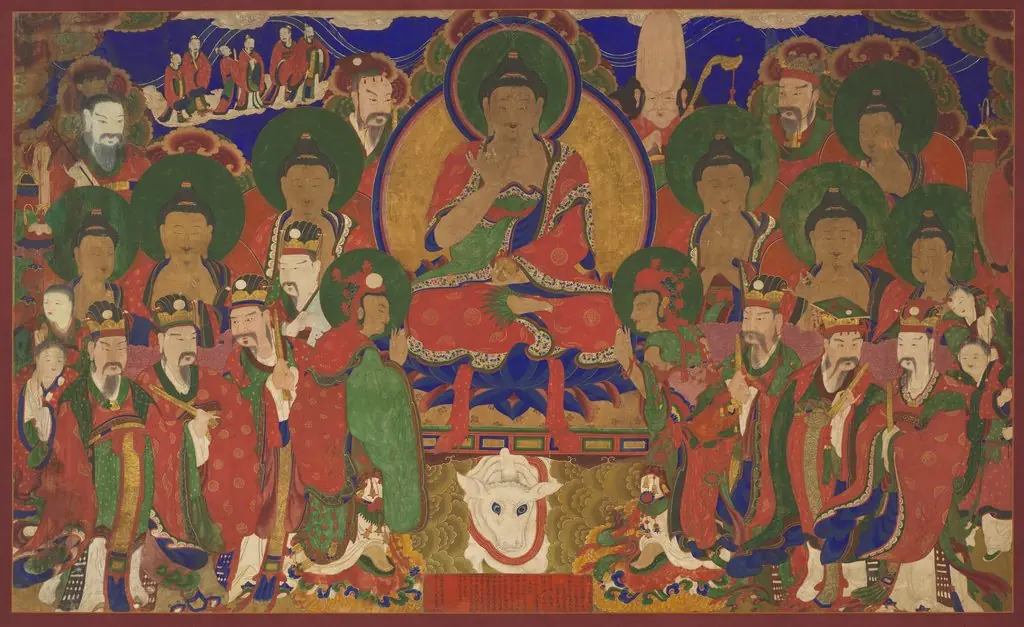
Bodhisattva Jijang (Ksitigarbha) and the Ten Kings of Hell is an unspecified painting by the Ming dynasty painting artist Unknown. It dates from 1841 and is held in the collection of the Los Angeles County Museum of Art. The work depicts Bodhisattva Jijang, known in Sanskrit as Ksitigarbha, presiding over a procession of the Ten Kings of the Underworld.
About this work
Overview
The work depicts Bodhisattva Jijang, known in Sanskrit as Ksitigarbha, presiding over a procession of the Ten Kings of the Underworld. Central to the composition is the bodhisattva seated on an elaborate throne, haloed, while surrounding figures—clad in vivid robes and holding scrolls, staffs, or books—occupy the foreground and background, creating a dynamic, ceremonial tableau.
Subject & Meaning
The painting illustrates the Buddhist belief that Ksitigarbha guides souls through the after‑life, overseeing the judgment of the Ten Kings who govern the various realms of hell. Each king is identified by distinct attributes, emphasizing their role in adjudicating karmic retribution, while the bodhisattva’s compassionate presence offers salvation and protection to the departed.
Technique & Style
Executed in traditional East Asian brushwork, the piece combines precise line drawing with rich mineral pigments, especially reds, greens, and golds. The use of chiaroscuro—subtle gradations of light and shadow—adds depth to the figures and throne, while the rhythmic arrangement of bodies generates a sense of movement across the silk or paper support.
History & Provenance
Created within the Korean Buddhist tradition, the painting likely dates to the late Joseon period, when devotional images of Ksitigarbha and the Ten Kings were popular in temple rituals. It has been preserved in a private collection before entering a museum setting, where it serves as a representative example of ritualistic courtly art.
Context
During the Joseon dynasty, Buddhist iconography was often employed to reinforce moral order and the impermanence of life. The depiction of the Ten Kings alongside a compassionate bodhisattva reflects contemporary concerns with after‑life judgment, serving both as a didactic tool for monastics and a visual aid for lay worshippers.
Artist & collection

 Domestic Scene
 Giacomo and Cardinal Marco, investing Andrea, Abbot of San Zeno, with his Benefice
 The Nymph of Fontainebleau
 Portrait of a Woman
 Madonna and Child with Saints in the Enclosed Garden
 Venus and Minerva
 Family Group of Four on Sofa
 Wall painting from Room H of the Villa of P. Fannius Synistor at Boscoreale