Artwork
Amitabha
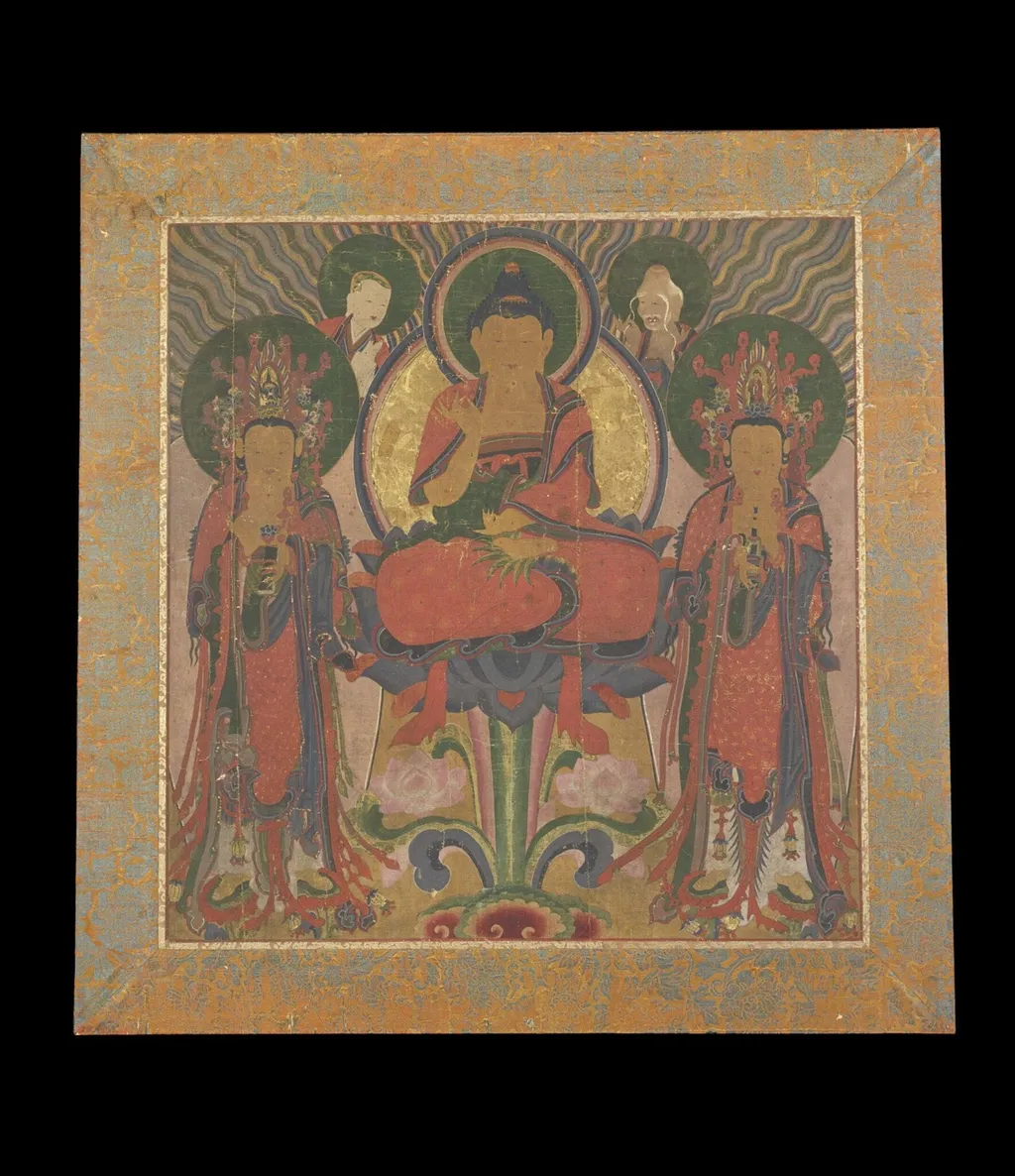
Amitabha is a paint painting by the Romanticist artist Unknown. It dates from 1800 and is held in the collection of the Victoria and Albert Museum.
About this work
Overview
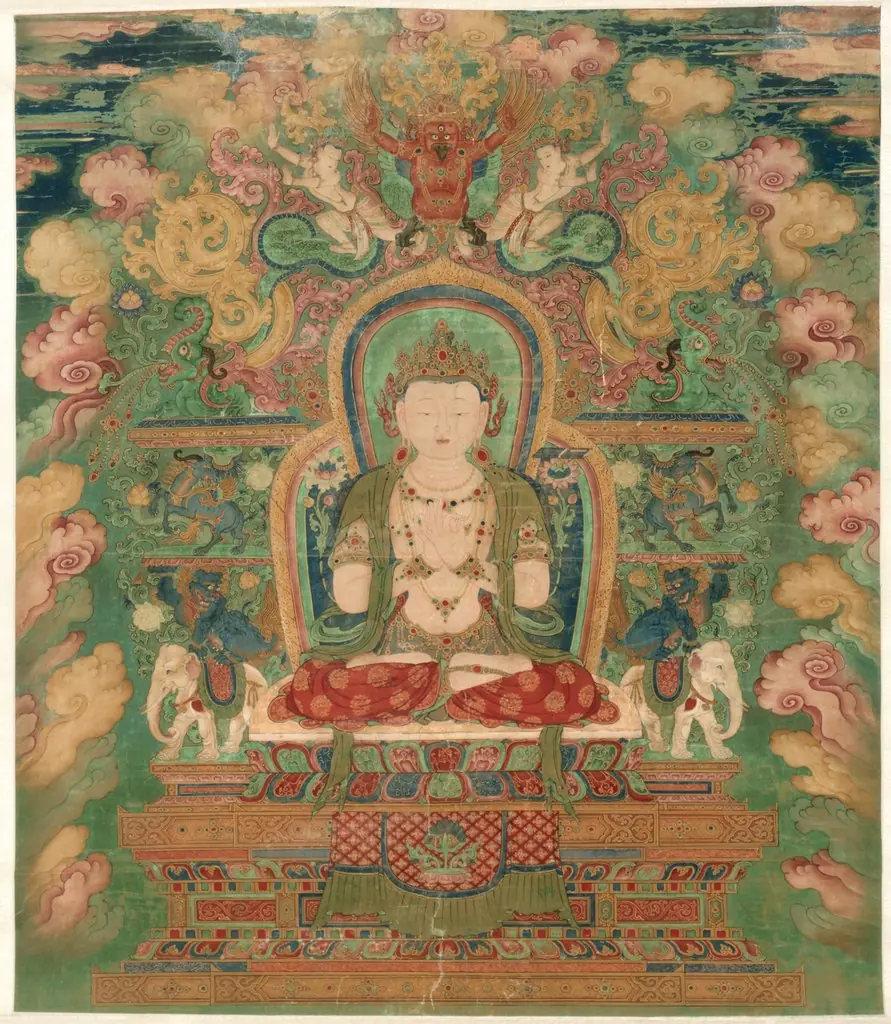
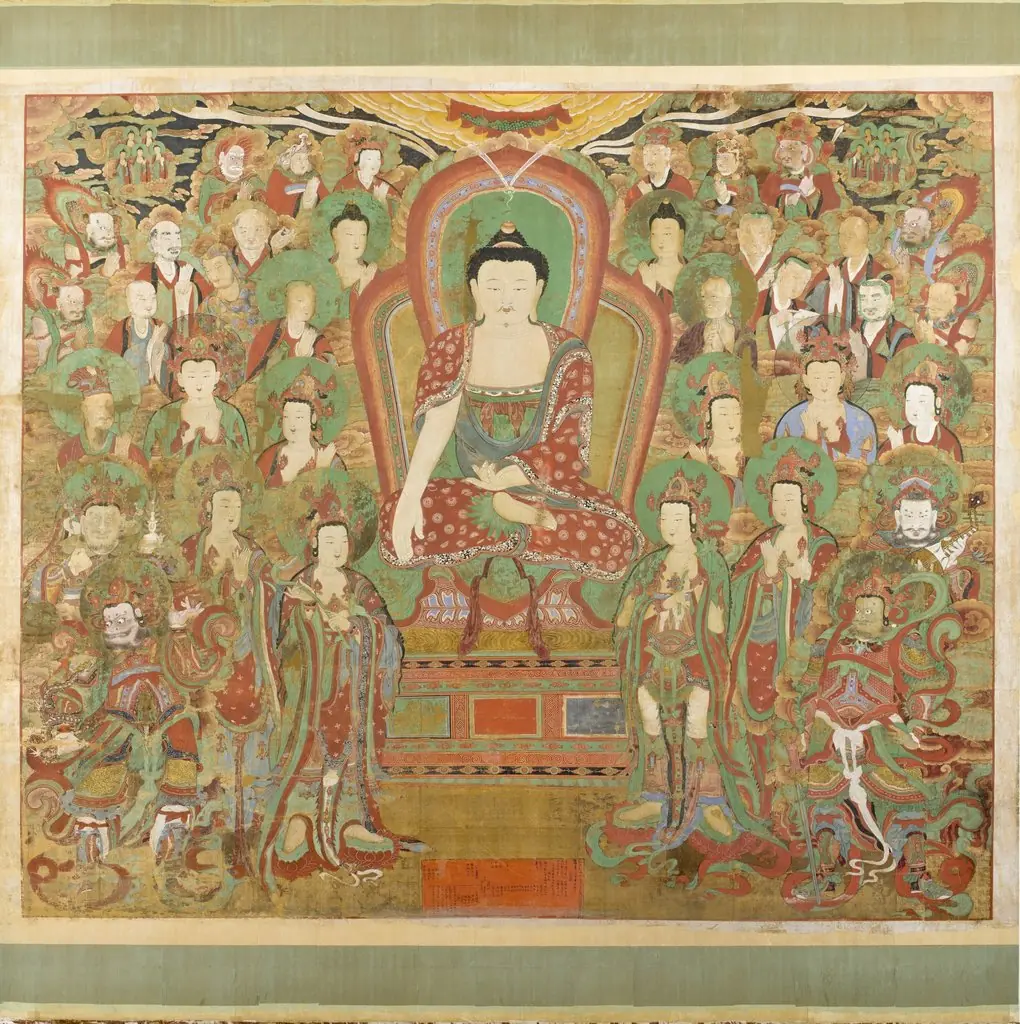
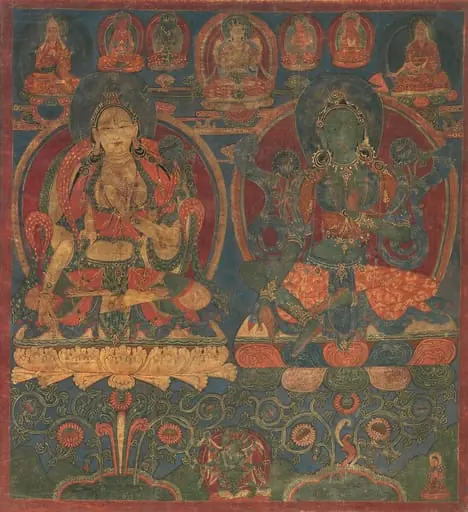
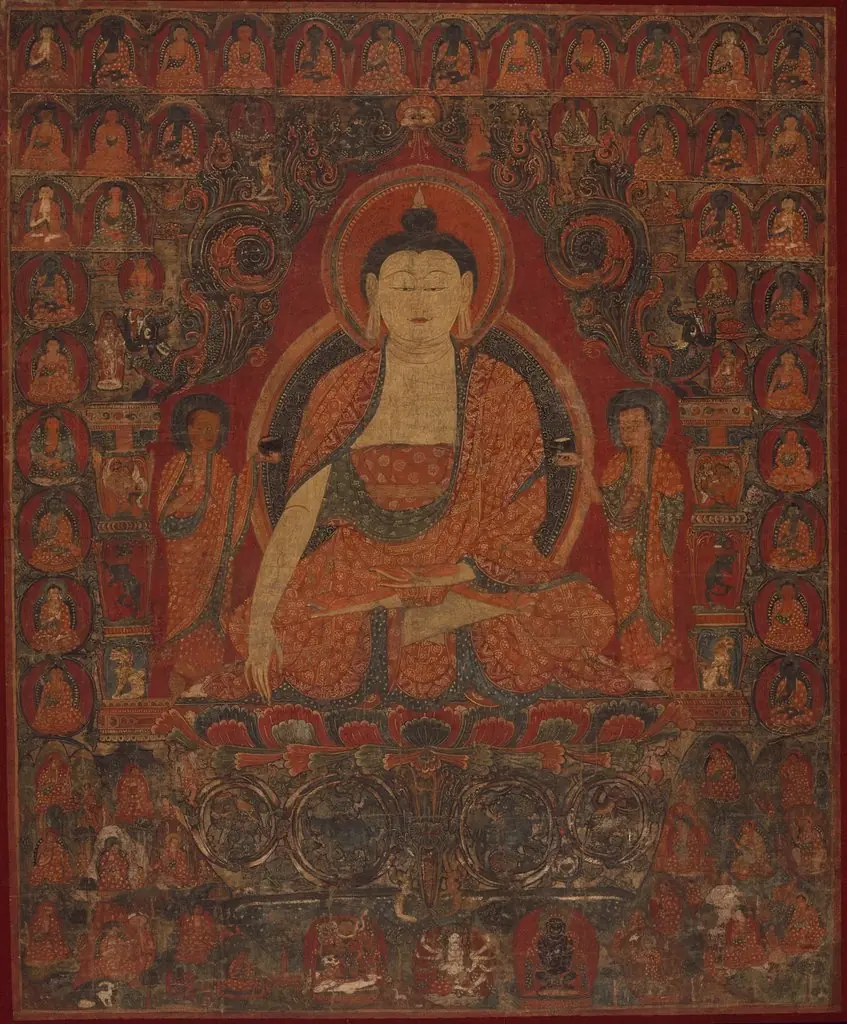
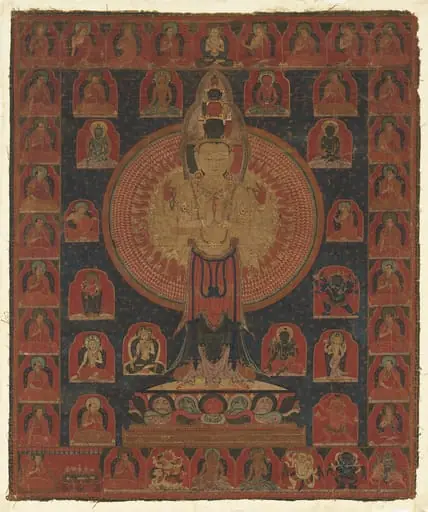
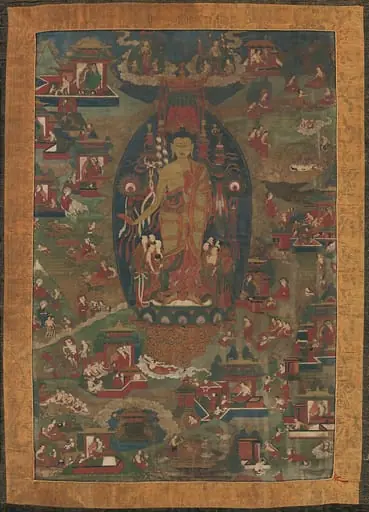
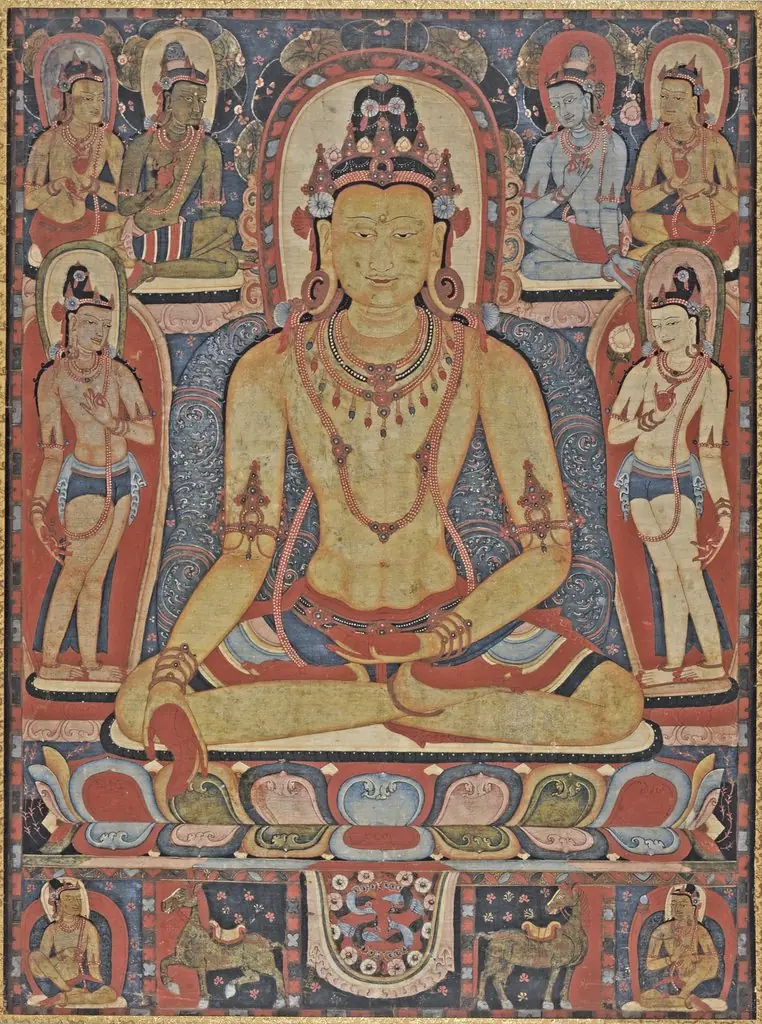
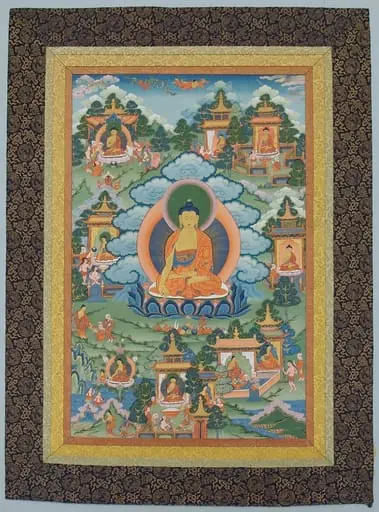
The work presents Amitabha Buddha seated on a blue lotus pedestal, his hands forming the Vitarka teaching gesture. Flanking him are the early disciples Ananda and Mahakasyapa, while the bodhisattvas Avalokitesvara and Mahasthamaprapta stand nearby. A radiant backdrop of five‑coloured auspicious spirits fills the space, and a gold nimbus outlines the Buddha’s head and body.
Subject & Meaning
Amitabha, the Buddha of Infinite Light, is central, embodying the promise of rebirth in the Western Pure Land. The presence of his principal disciples and attendant bodhisattvas underscores the transmission of his teachings, while the surrounding spirits symbolize the manifold blessings and celestial energies invoked in devotional practice.
Technique & Style
Executed on silk with fine brushwork, the painting employs a muted palette of dark green, reddish tones, navy, and yellow, punctuated by gold highlights. The lotus petals and intricate crowns are rendered with delicate detail, and the gold halo around Amitabha creates a luminous effect typical of early nineteenth‑century Buddhist iconography.
History & Provenance
Art historians date the piece to the early nineteenth century, noting its relatively modest number of figures, the pronounced ushnisha on Amitabha, and the serene expressions and traditional flower crowns of the bodhisattvas. Such characteristics align with a period when Amitabha compositions began to expand in width and complexity.
Context
During the late Qing era, devotional paintings of Amitabha proliferated as lay practitioners sought visual aids for Pure Land meditation. This work reflects that devotional climate, integrating established iconographic conventions while maintaining a restrained compositional balance characteristic of earlier models.
Artist & collection

 Domestic Scene
 Giacomo and Cardinal Marco, investing Andrea, Abbot of San Zeno, with his Benefice
 The Nymph of Fontainebleau
 Portrait of a Woman
 Madonna and Child with Saints in the Enclosed Garden
 Venus and Minerva
 Family Group of Four on Sofa
 Wall painting from Room H of the Villa of P. Fannius Synistor at Boscoreale