Artwork
Martyrdom of Saint Sebastian
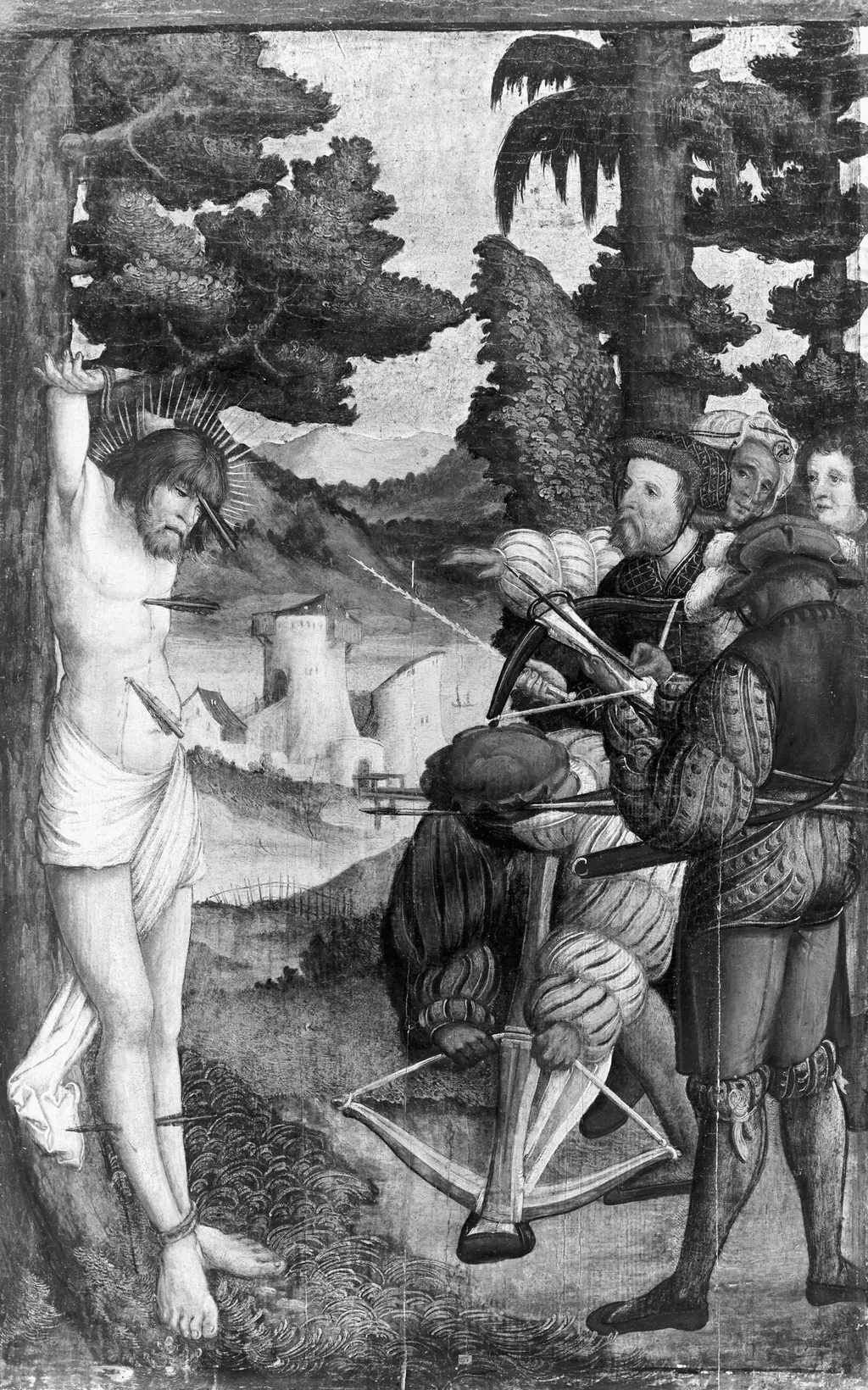
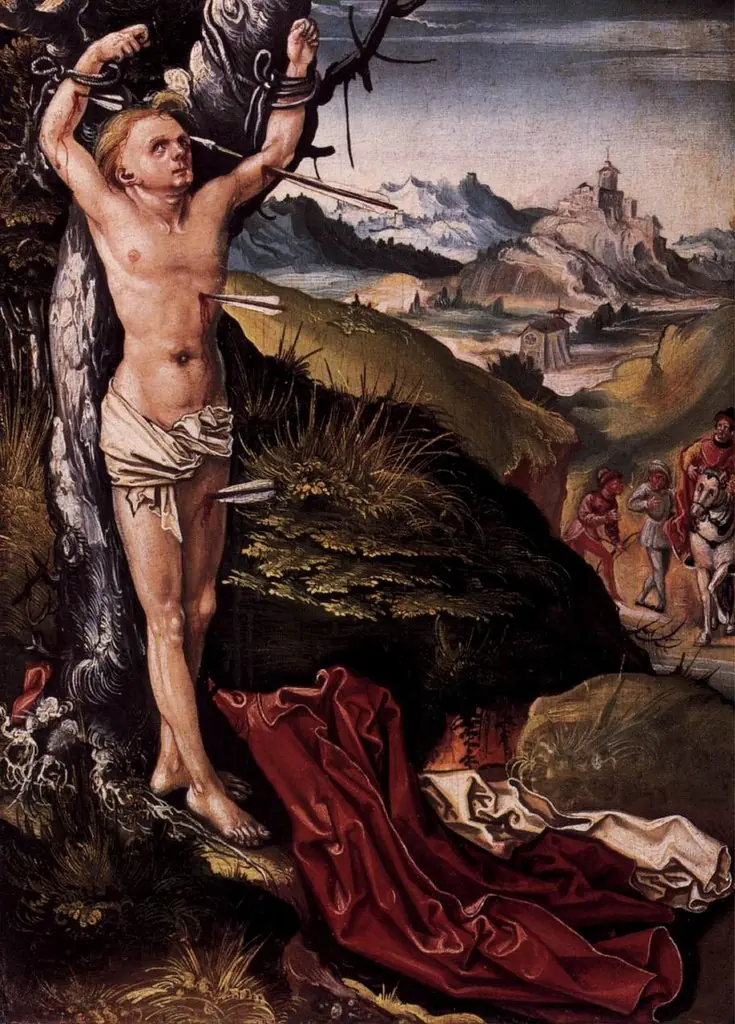
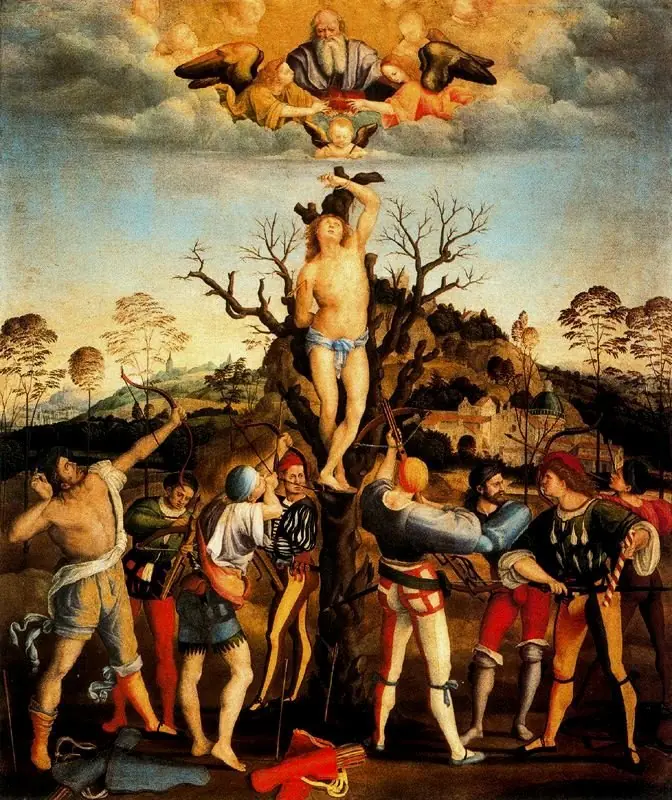
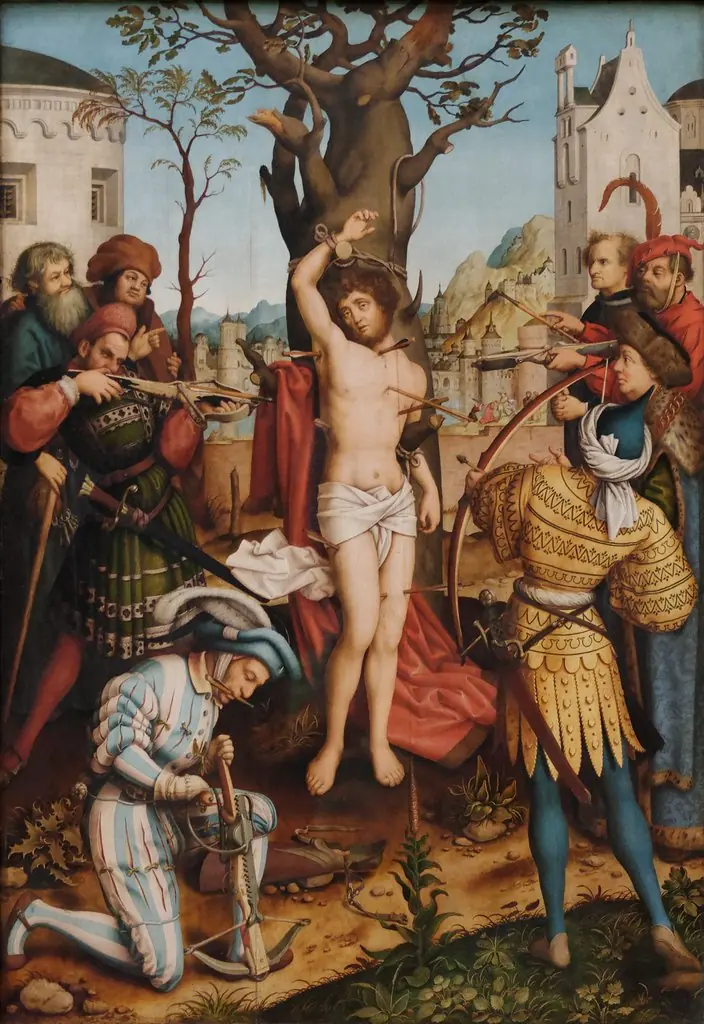
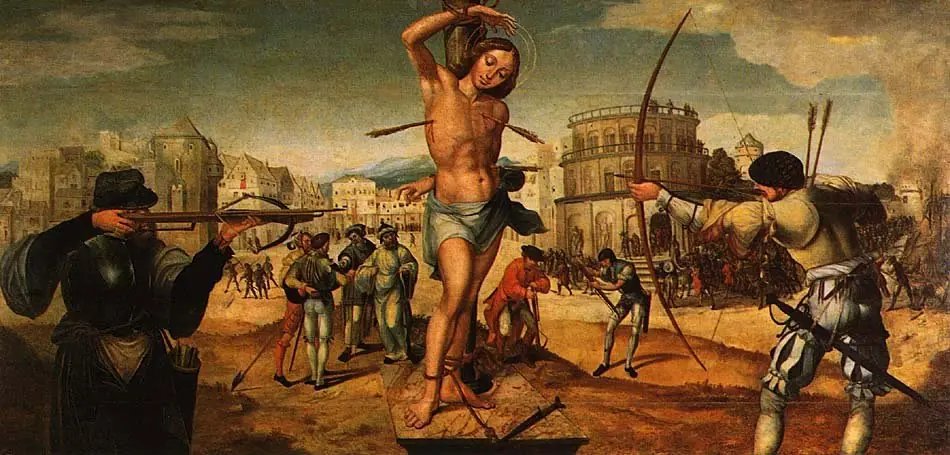
Martyrdom of Saint Sebastian is a paint painting by the Mannerist artist Unknown. It dates from 1520 and is held in the collection of the Gemäldegalerie Berlin.
About this work
Overview
The setting includes a distant architectural structure and wooded landscape, grounding the scene in a naturalistic yet symbolic environment.
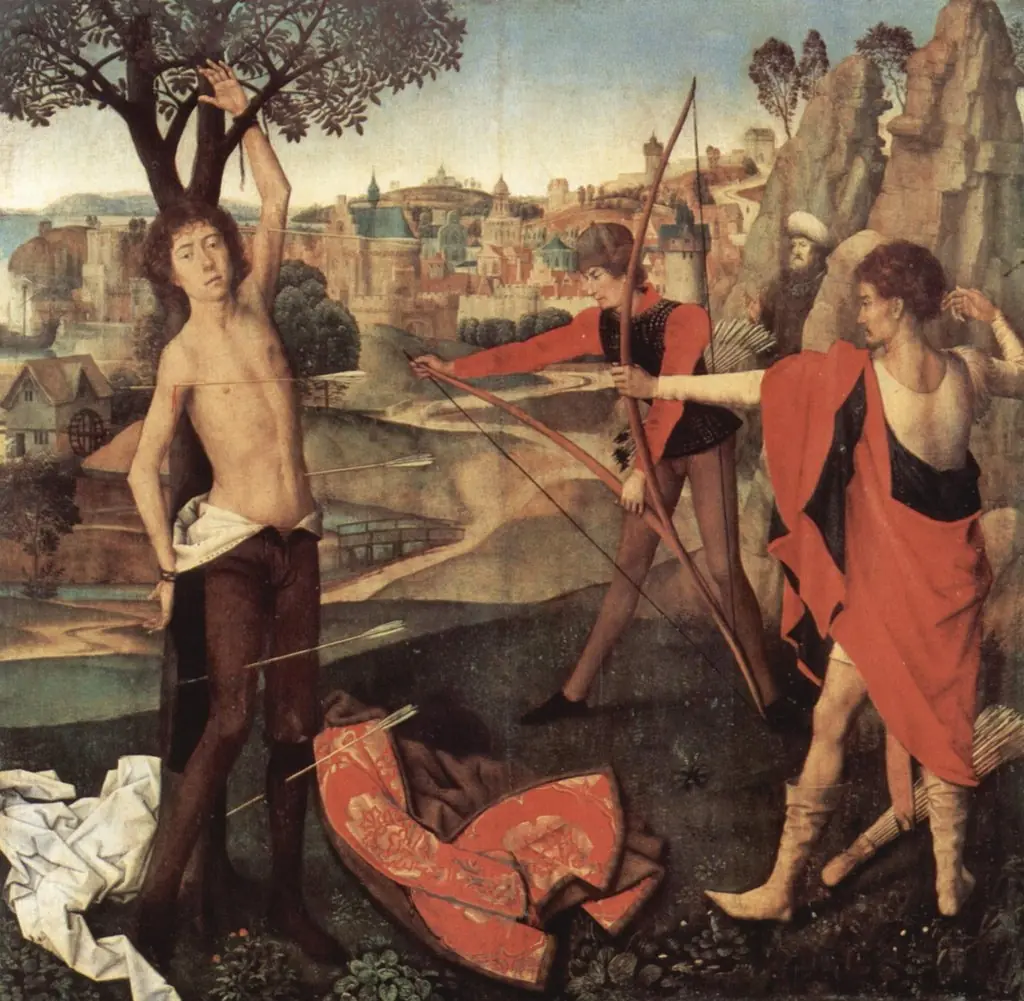
This oil painting depicts the martyrdom of Saint Sebastian, a Christian saint executed under Emperor Diocletian. The figure is bound to a tree, pierced by multiple arrows, and crowned with a halo. Three armored figures stand nearby, armed with bows and crossbows, suggesting the continuation of his execution. The setting includes a distant architectural structure and wooded landscape, grounding the scene in a naturalistic yet symbolic environment.
Subject & Meaning
Saint Sebastian, traditionally venerated as a martyr who survived initial execution by arrows, is shown here at the moment of renewed violence. His white loincloth and halo emphasize his sanctity amid suffering. The armed soldiers represent imperial persecution, reinforcing the narrative of faith tested by state power. The scene reflects early Christian themes of endurance and divine protection, common in Renaissance devotional art.
Technique & Style
The painting employs precise brushwork to render textures of armor, fabric, and foliage. Light falls evenly across the figure, highlighting his form against the muted background. The composition is tightly focused, with the saint as the central axis and the soldiers arranged to direct the viewer’s gaze. Perspective is subtly handled, with architectural elements receding into the distance to suggest depth without dramatic illusionism.
History & Provenance
The work resides in the Gemäldegalerie Berlin, part of its collection since the 19th century. Its origins trace to the late 15th or early 16th century, likely from a Northern European workshop influenced by Italian iconography. No documented patron or artist is definitively linked to the piece, though stylistic traits suggest possible ties to the Rhineland or Low Countries.
Context
During the late Middle Ages and Renaissance, depictions of Saint Sebastian proliferated across Europe, especially during plague outbreaks, as he was invoked as a protector against disease. His image combined physical vulnerability with spiritual resilience, making him a compelling subject for both public devotion and private meditation. This painting aligns with broader trends in religious imagery that emphasized emotional immediacy and moral instruction.
Legacy
Though not attributed to a major master, the painting exemplifies the enduring appeal of Sebastian’s martyrdom in early modern visual culture. Its restrained composition and focus on ritualized violence reflect a shift toward psychological realism in devotional art. It remains a representative example of how sacred narratives were adapted for contemplative viewing in Northern European contexts.
Artist & collection

 Domestic Scene
 Giacomo and Cardinal Marco, investing Andrea, Abbot of San Zeno, with his Benefice
 The Nymph of Fontainebleau
 Portrait of a Woman
 Madonna and Child with Saints in the Enclosed Garden
 Venus and Minerva
 Family Group of Four on Sofa
 Wall painting from Room H of the Villa of P. Fannius Synistor at Boscoreale