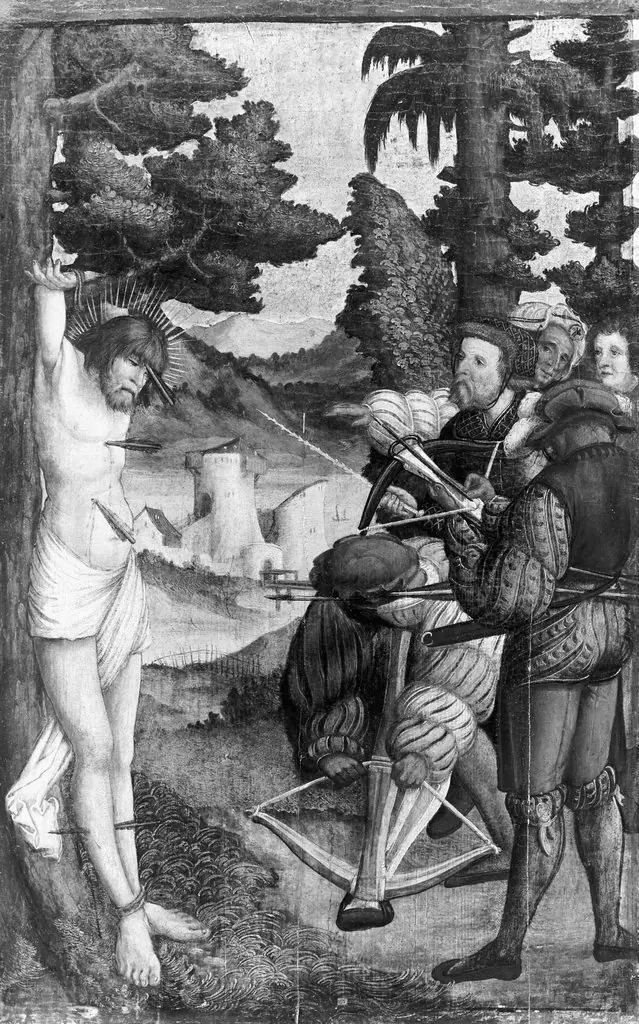
Artwork
The Martyrdom of Saint Sebastian
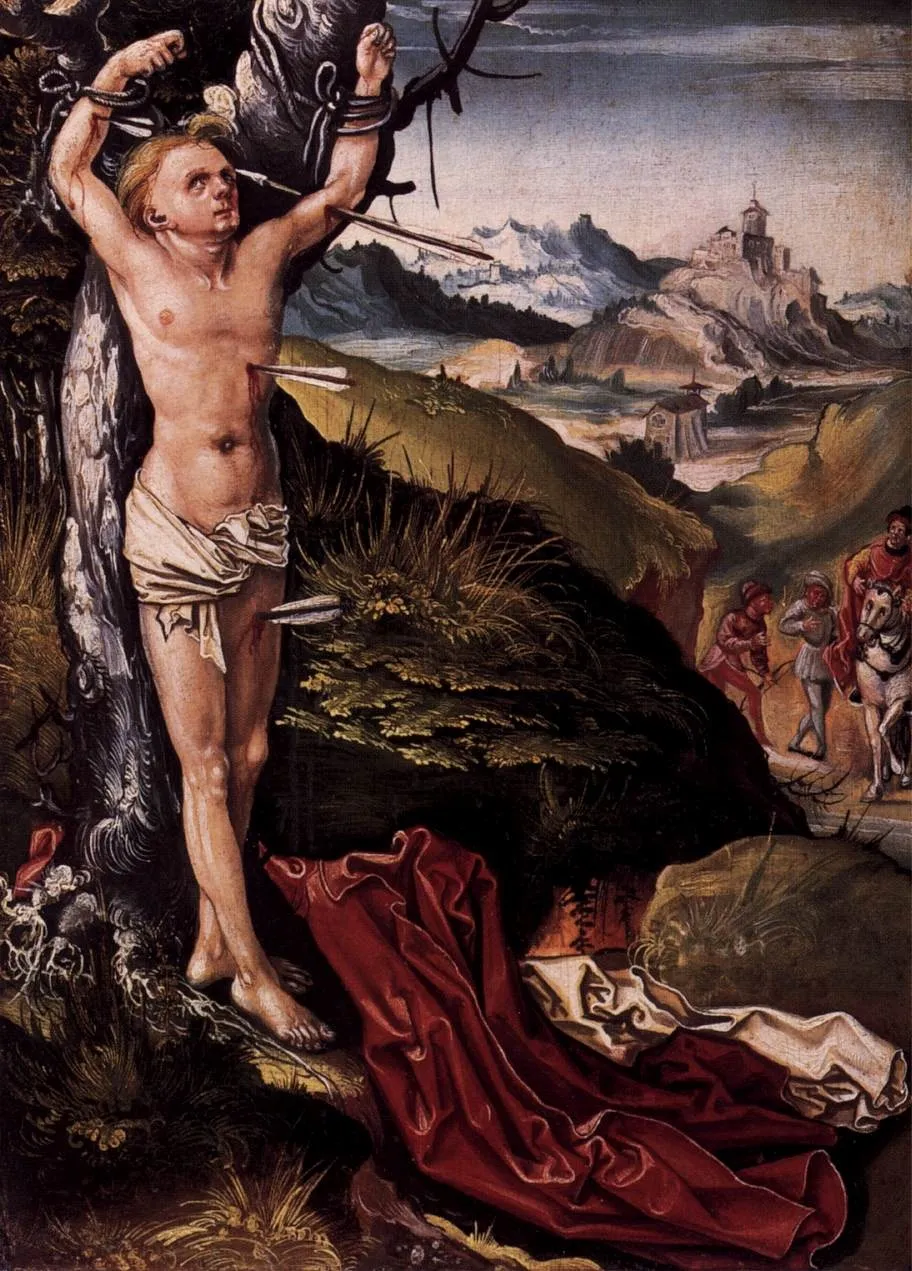
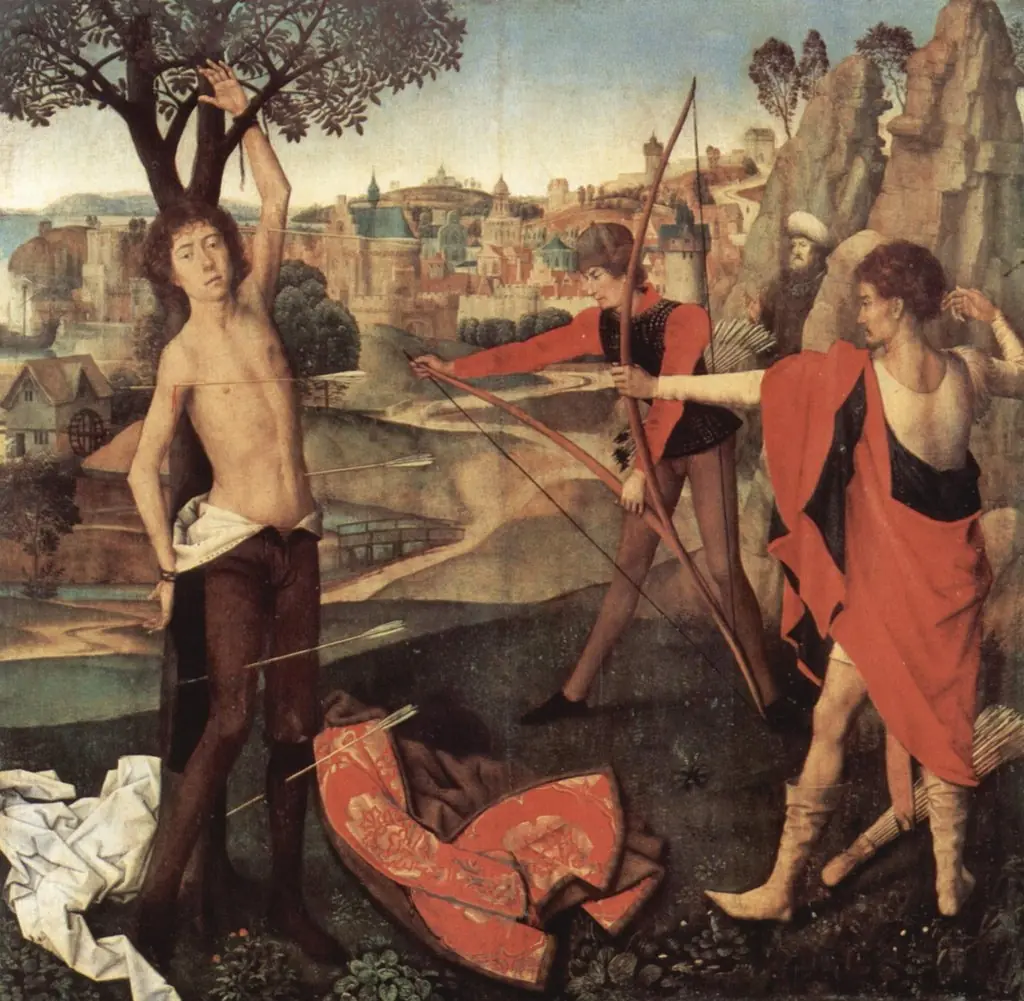
The Martyrdom of Saint Sebastian is a paint painting by the Northern Renaissance artist Master of the Sebastian Diptych. It dates from 1500 and is held in the collection of the Gemäldegalerie Berlin.
About this work
Overview
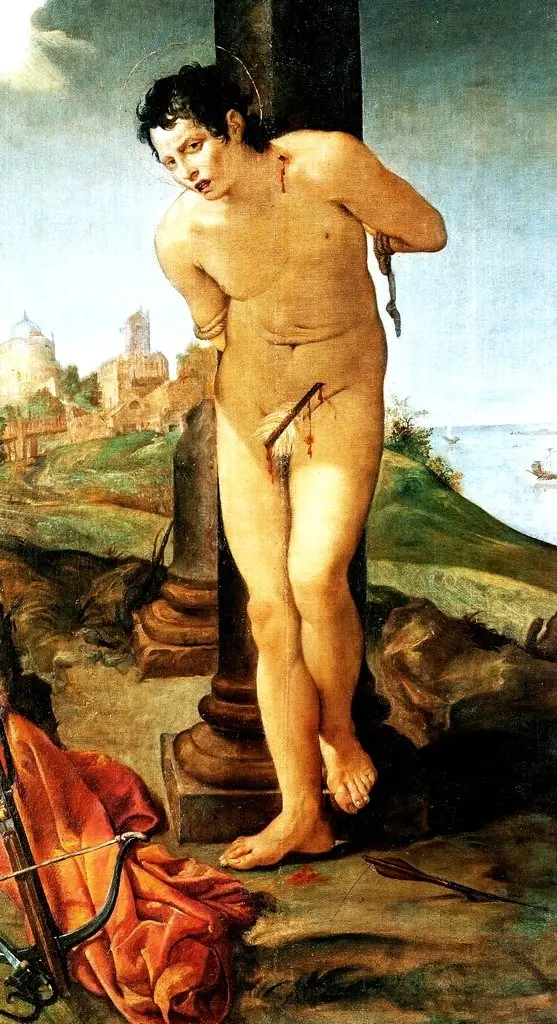
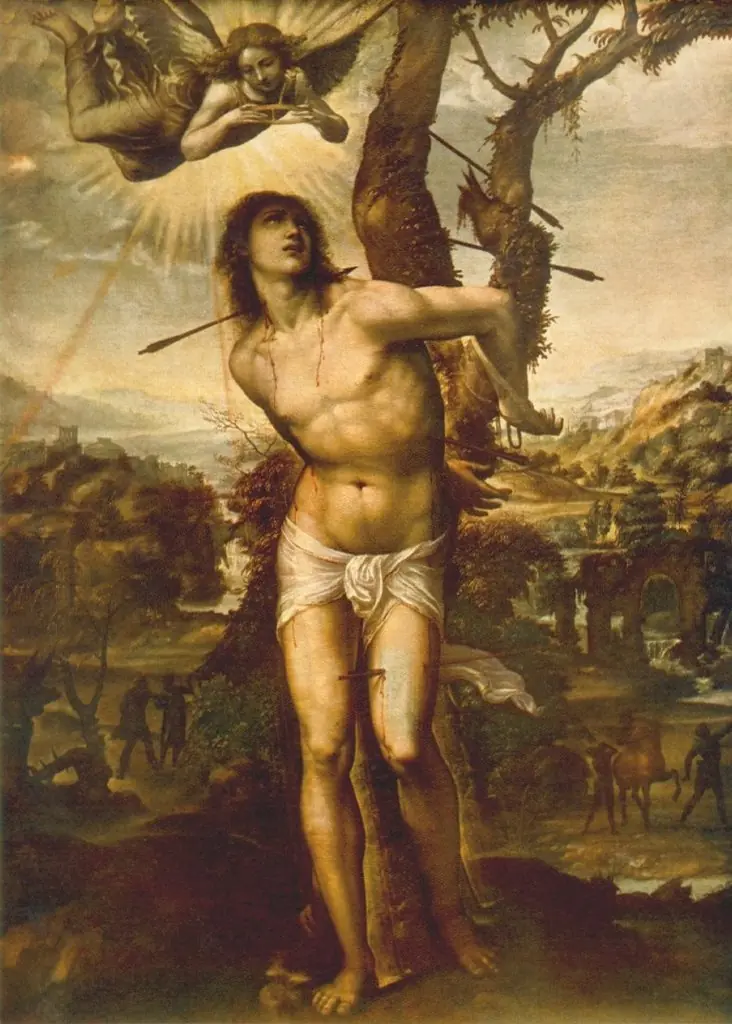
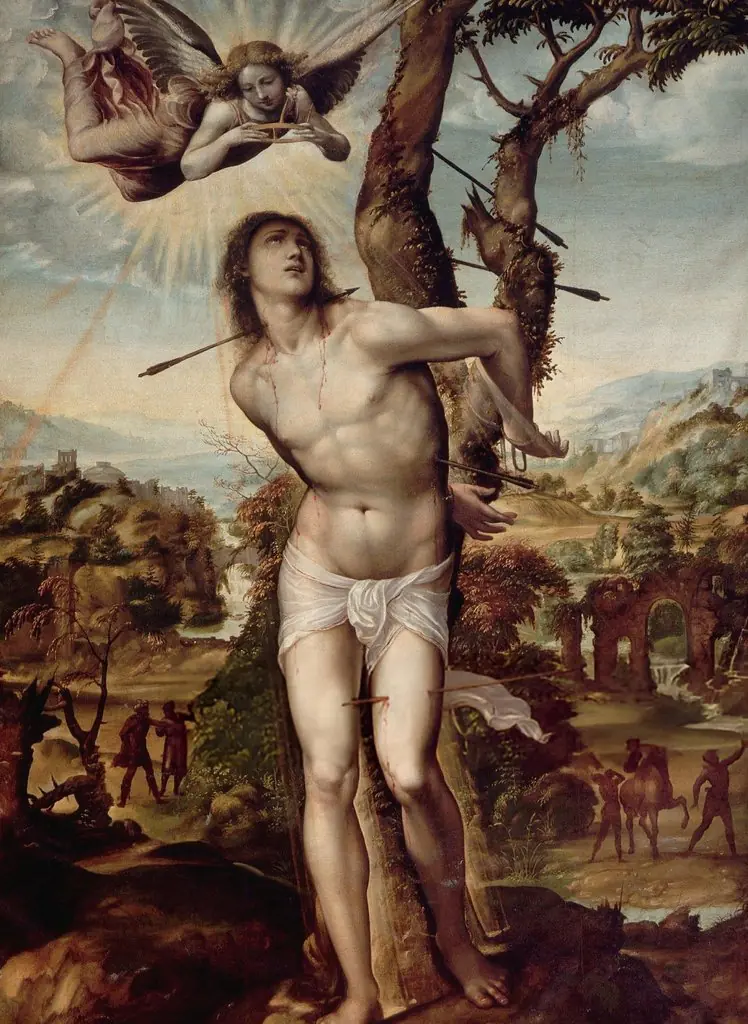
Created around the year 1500, this oil painting portrays the martyrdom of Saint Sebastian. Executed by the anonymous workshop known as the Master of the Sebastian Diptych, the work now belongs to the collection of the Gemäldegalerie in Berlin. The composition centers on a nearly nude figure bound to a tree, his torso riddled with arrows, set against a modest landscape.
Subject & Meaning
The central figure represents Saint Sebastian, a Christian soldier traditionally depicted undergoing execution by archers.
The central figure represents Saint Sebastian, a Christian soldier traditionally depicted undergoing execution by archers. His raised arms and the stark white cloth around his waist emphasize both his vulnerability and his steadfast faith. The surrounding landscape and distant figures suggest a narrative beyond the immediate suffering, hinting at the public nature of his trial and the broader theme of steadfast devotion amid persecution.
Technique & Style
The painting employs a restrained palette, with the flesh tones of the saint contrasted against the deep reds of the fallen cloth and the muted greens of the background hills. The artist renders the arrows with precise linearity, while the foliage and water are suggested through soft, atmospheric brushwork, reflecting a transitional style between late Gothic detail and emerging Renaissance naturalism.
History & Provenance
Attributed to the Master of the Sebastian Diptych, an anonymous painter active in the early sixteenth century, the work entered the Gemäldegalerie Berlin’s holdings in the twentieth century. Its provenance prior to museum acquisition remains undocumented, typical of many works from this period whose ownership records were not systematically kept.
Context
Saint Sebastian’s martyrdom was a popular subject in Northern European art of the late medieval and early Renaissance periods, often serving as a visual exemplar of piety and endurance. This painting aligns with contemporary devotional practices, offering viewers a vivid representation of suffering that could inspire contemplation and intercession.
Artist & collection