Artwork
Tantric Manuscript, "Sangrahani Sutra"
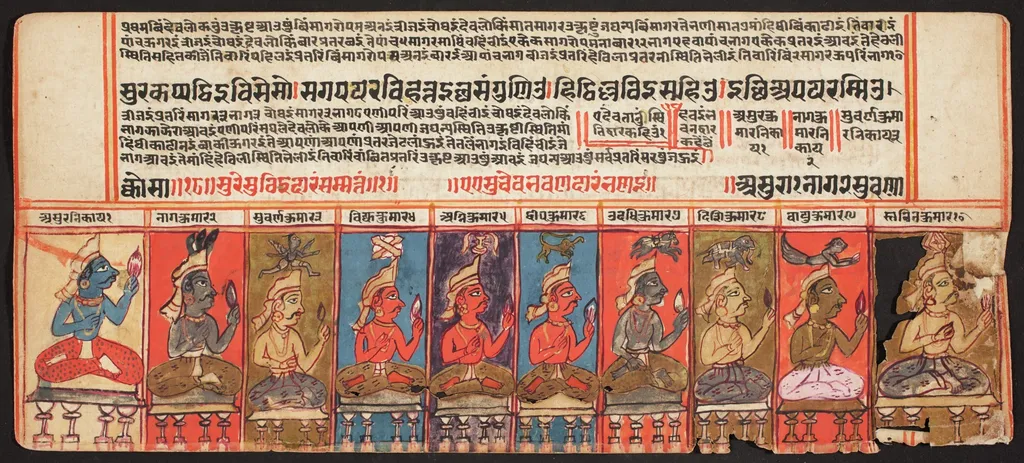
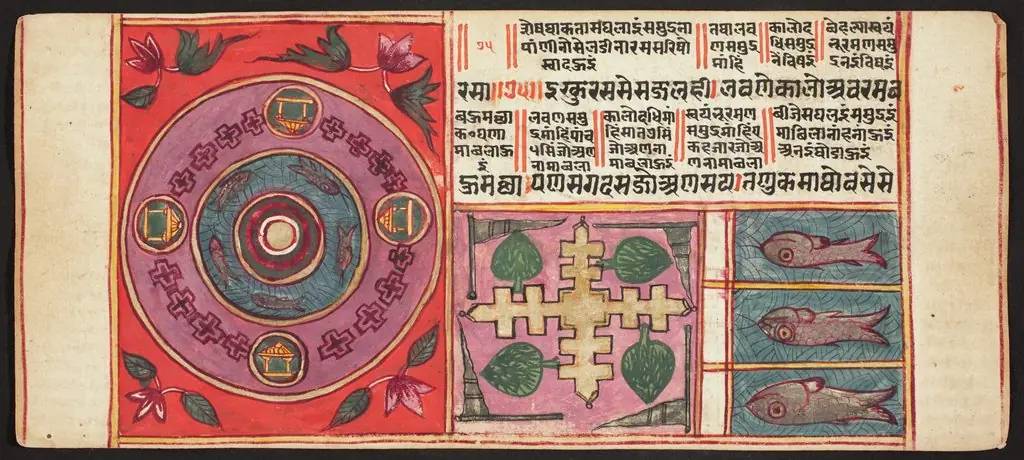
Tantric Manuscript, "Sangrahani Sutra" is an unspecified painting by Unknown. It is held in the collection of the Detroit Institute of Arts.
About this work
Overview
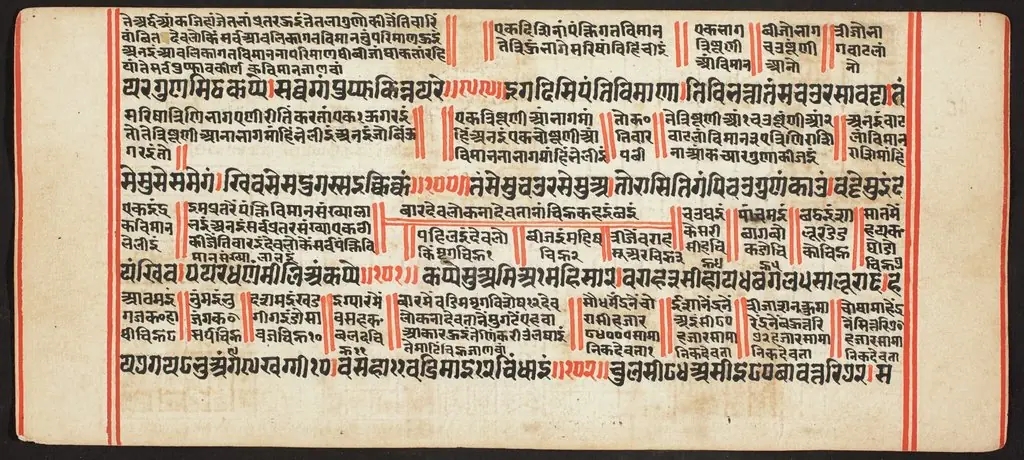
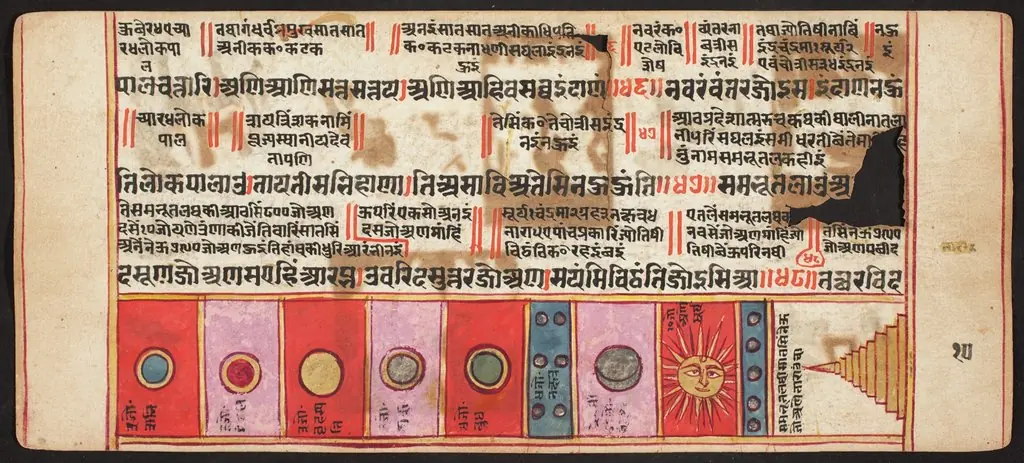
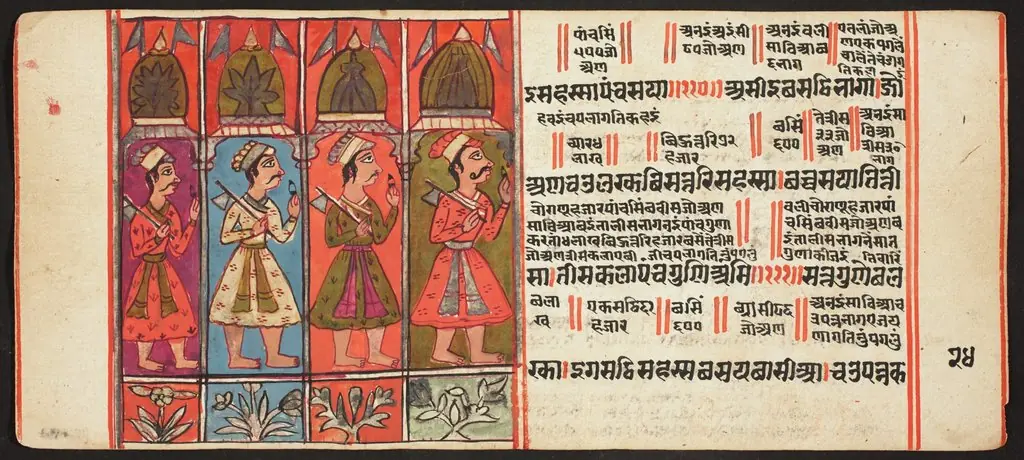
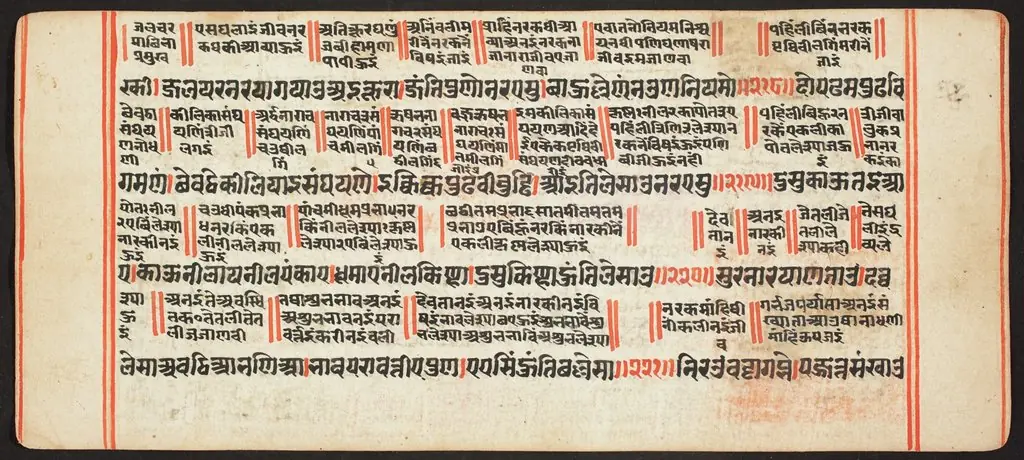
A painted manuscript leaf from the Sangrahani Sutra, produced in medieval India, exemplifies the integration of religious text and visual symbolism in tantric Buddhist traditions. Created on palm leaf or paper, it served as a devotional and instructional object, blending scriptural content with esoteric imagery to guide meditative practice.
Subject & Meaning
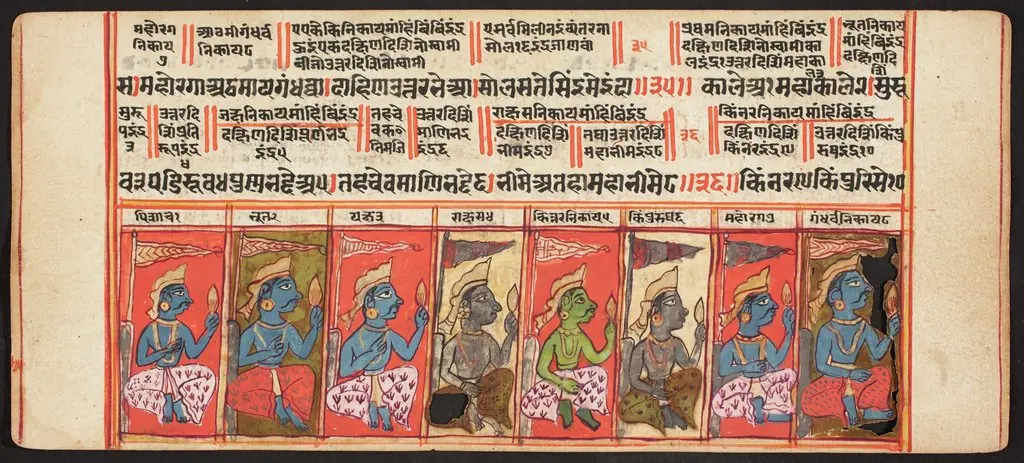
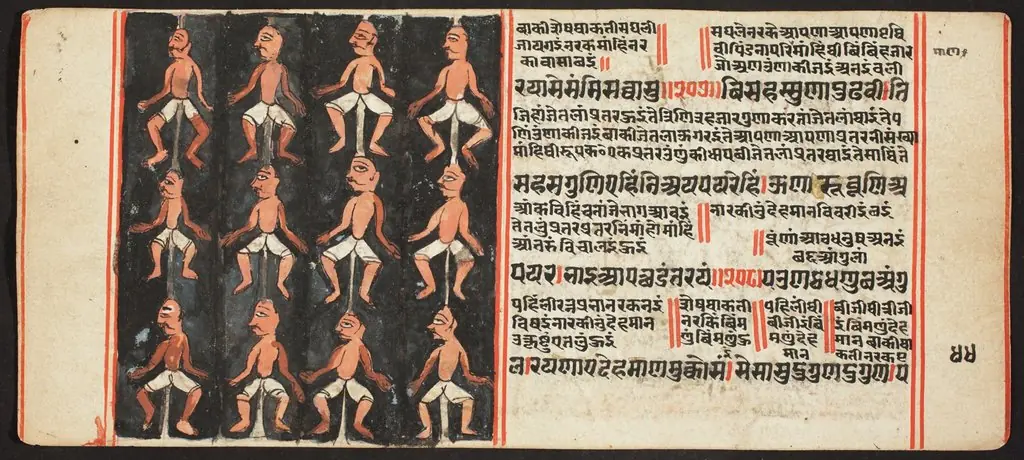
The painting illustrates deities and mandalas associated with the Sangrahani Sutra, a text focused on protective rituals and the accumulation of spiritual power. Figures are arranged in symbolic configurations, representing cosmic order and the practitioner’s inner transformation. Each element functions as a visual mantra, aiding concentration and ritual invocation.
Technique & Style
Executed in mineral pigments and fine brushwork, the composition emphasizes precise lines and flat, saturated colors. Figures are stylized with elongated proportions and intricate ornamentation, reflecting regional conventions of tantric art. The lack of perspective and hierarchical scaling reinforces spiritual rather than naturalistic representation.
History & Provenance
The manuscript likely originated in eastern India or Nepal during the late medieval period, among communities practicing Vajrayana Buddhism. Its survival suggests it was preserved in monastic libraries or private collections, possibly passed down through generations of practitioners before entering modern institutional holdings.
Context
Produced during a time when tantric Buddhism flourished in monastic centers, such manuscripts were used in initiation rites and daily meditation. They existed alongside oral teachings and ritual performance, serving as visual anchors for complex doctrines inaccessible to lay audiences without proper transmission.
Legacy
This manuscript contributes to the understanding of how esoteric Buddhist teachings were transmitted visually in pre-modern South Asia. It remains a key reference for scholars studying the intersection of text, image, and ritual, offering insight into the material culture of tantric practice beyond textual records.
Artist & collection

 Domestic Scene
 Giacomo and Cardinal Marco, investing Andrea, Abbot of San Zeno, with his Benefice
 The Nymph of Fontainebleau
 Portrait of a Woman
 Madonna and Child with Saints in the Enclosed Garden
 Venus and Minerva
 Family Group of Four on Sofa
 Wall painting from Room H of the Villa of P. Fannius Synistor at Boscoreale
 Tantric Manuscript, "Sangrahani Sutra"
 Tantric Manuscript, "Sangrahani Sutra"
 Tantric Manuscript, "Sangrahani Sutra"
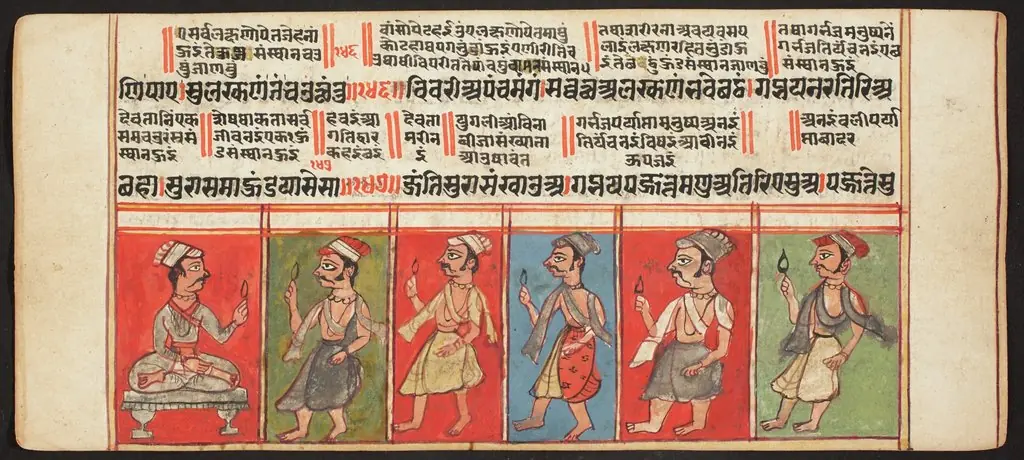 Tantric Manuscript, "Sangrahani Sutra"
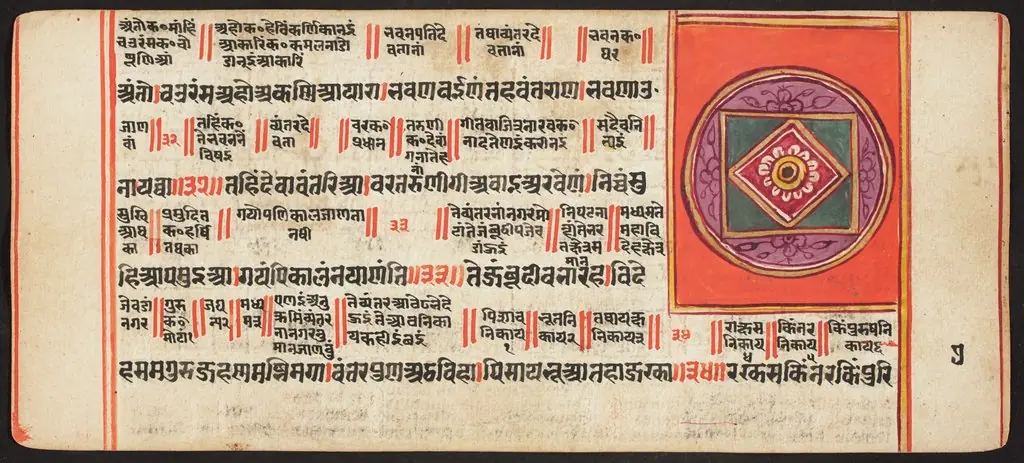 Tantric Manuscript, "Sangrahani Sutra"
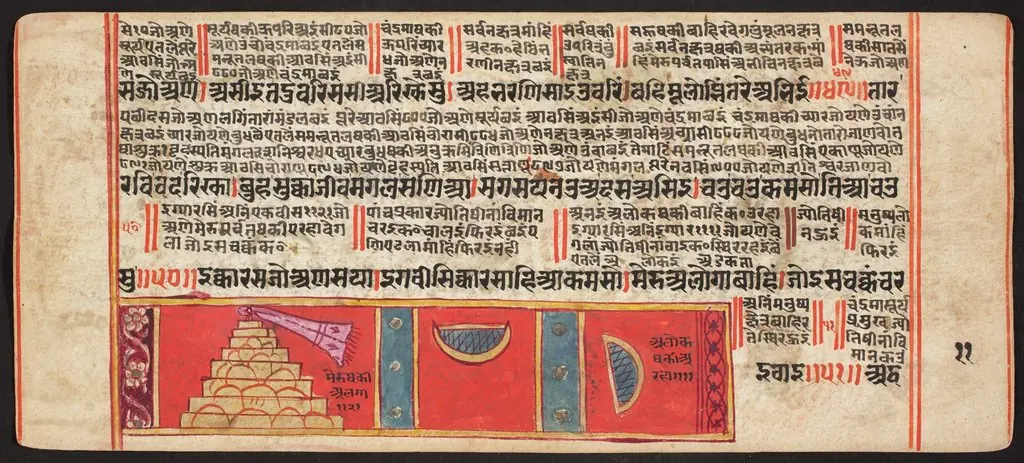 Tantric Manuscript, "Sangrahani Sutra"
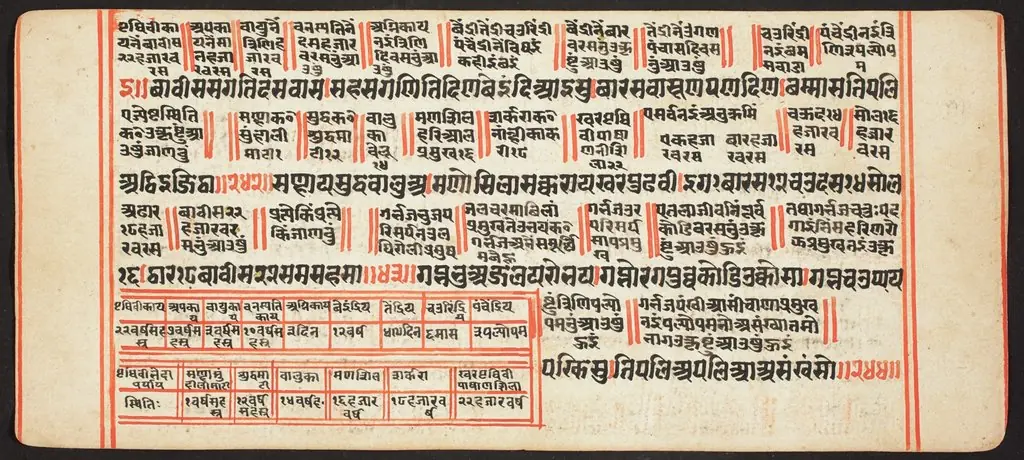 Tantric Manuscript, "Sangrahani Sutra"
 Tantric Manuscript, "Sangrahani Sutra"
 Tantric Manuscript, "Sangrahani Sutra"
 Tantric Manuscript, "Sangrahani Sutra"
 Tantric Manuscript, "Sangrahani Sutra"
 Tantric Manuscript, "Sangrahani Sutra"