Artwork
Tantric Manuscript, "Sangrahani Sutra"
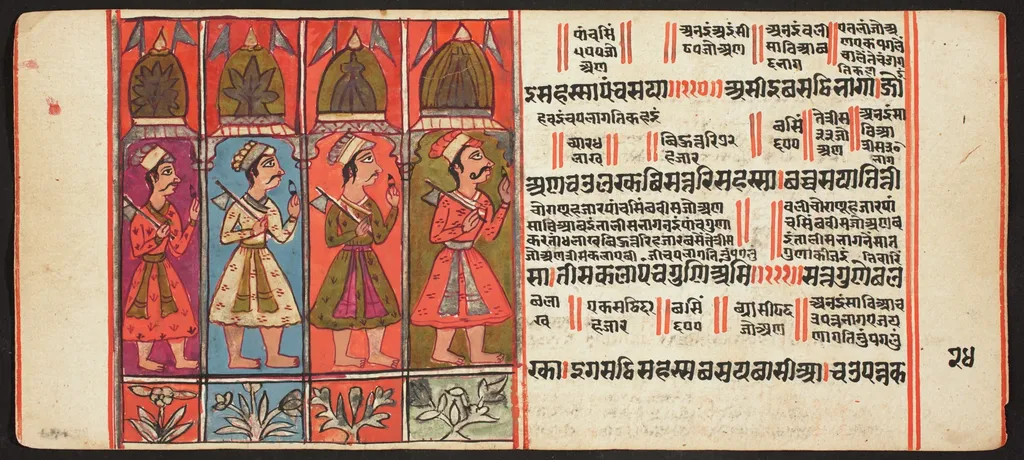
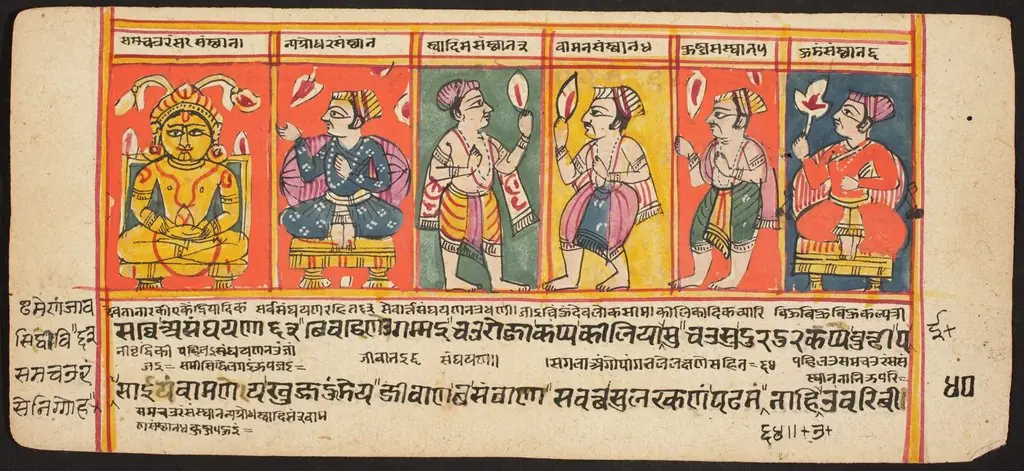
Tantric Manuscript, "Sangrahani Sutra" is an unspecified painting by Unknown. It is held in the collection of the Detroit Institute of Arts. This painted manuscript page contains a section of the Sangrahani Sutra, a Jain text concerned with monastic discipline.
About this work
Overview
This painted manuscript page contains a section of the Sangrahani Sutra, a Jain text concerned with monastic discipline. The imagery is not illustrative in a literal sense but functions as a symbolic representation tied to spiritual teachings. Its composition organizes four figures within distinct, colored compartments, reflecting structured contemplation rather than narrative storytelling.
Subject & Meaning
The four figures, dressed in traditional Indian attire and holding objects possibly symbolic of authority or ritual tools, represent ascetic practitioners.
The four figures, dressed in traditional Indian attire and holding objects possibly symbolic of authority or ritual tools, represent ascetic practitioners. Their placement in a grid suggests order and spiritual hierarchy, aligning with Jain principles of discipline and detachment. The absence of a central focal point reinforces the non-dualistic nature of Jain cosmology, where all enlightened beings are equally significant.
Technique & Style
The painting employs mineral pigments on paper, with bold applications of red, blue, and green to create vivid, flat planes. Outlines are crisp, and decorative elements like floral and leaf motifs frame each figure, enhancing rhythmic repetition. The figures are rendered with minimal modeling, emphasizing symbolic presence over naturalism, consistent with medieval Indian manuscript traditions.
History & Provenance
Produced in western India during the late medieval period, likely between the 15th and 17th centuries, this manuscript page originated in a Jain monastic context. It was part of a larger codex used for ritual study or teaching. Its survival suggests careful preservation within religious communities, though its specific provenance prior to modern collection remains undocumented.
Context
This artwork reflects the Jain tradition of illustrating sacred texts with symbolic imagery rather than literal scenes. Unlike Hindu or Buddhist manuscripts, Jain visual culture often prioritizes geometric order and restrained symbolism to convey doctrinal purity. The use of color and compartmentalization aligns with broader Indian manuscript practices but is uniquely tuned to Jain ascetic ideals.
Legacy
Though not widely known outside specialized collections, this manuscript exemplifies the enduring Jain commitment to preserving doctrinal texts through visual form. Its stylistic features influenced later regional painting traditions in Gujarat and Rajasthan. Today, it serves as a key reference for understanding how spiritual concepts were encoded in pre-modern Indian art beyond narrative representation.
Artist & collection

 Domestic Scene
 Giacomo and Cardinal Marco, investing Andrea, Abbot of San Zeno, with his Benefice
 The Nymph of Fontainebleau
 Portrait of a Woman
 Madonna and Child with Saints in the Enclosed Garden
 Venus and Minerva
 Family Group of Four on Sofa
 Wall painting from Room H of the Villa of P. Fannius Synistor at Boscoreale
 Tantric Manuscript, "Sangrahani Sutra"
 Tantric Manuscript, "Sangrahani Sutra"
 Tantric Manuscript, "Sangrahani Sutra"
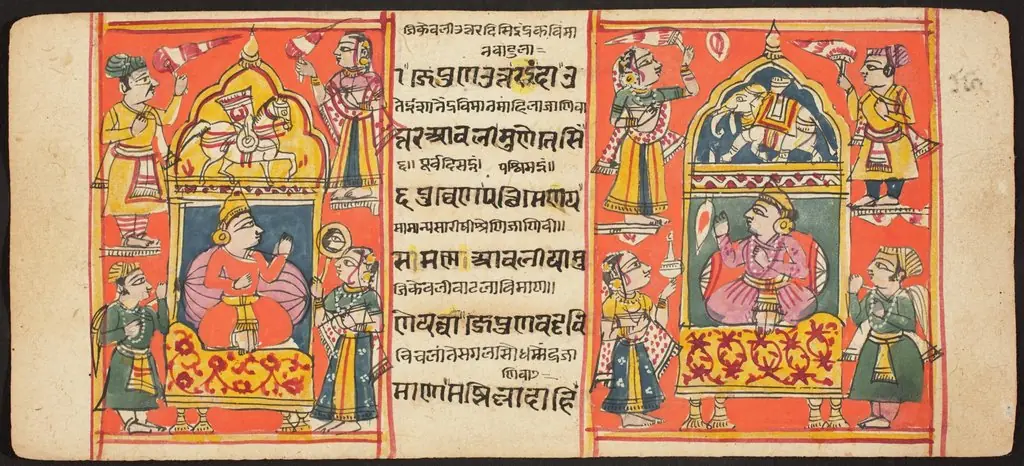 Tantric Manuscript "Sangrahani Sutra"
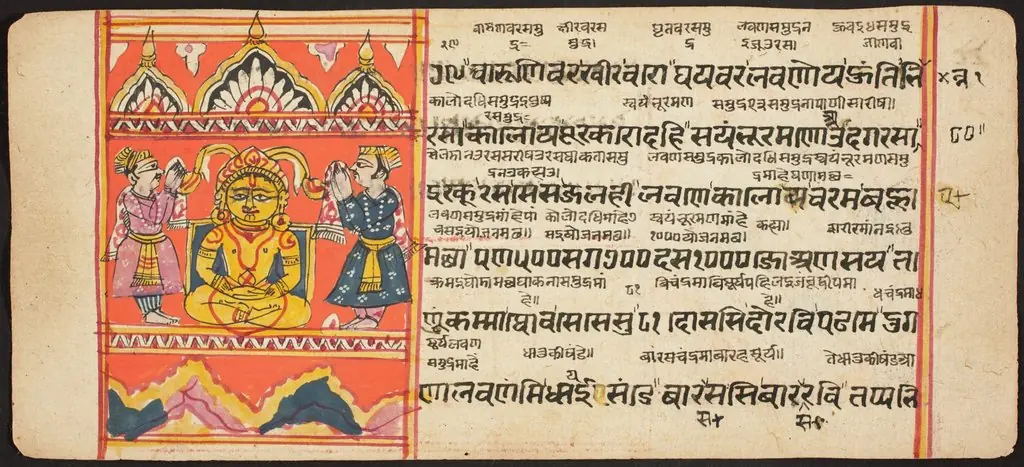 Tantric Manuscript "Sangrahani Sutra"
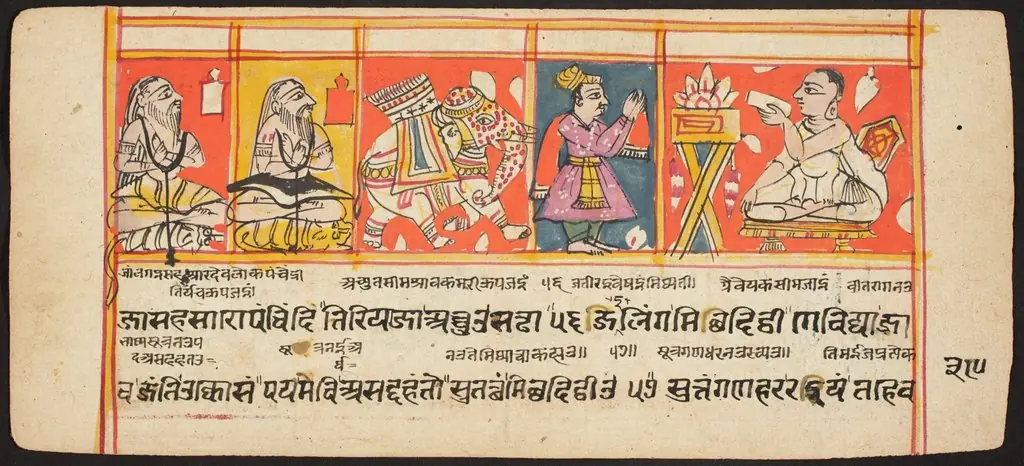 Tantric Manuscript "Sangrahani Sutra"
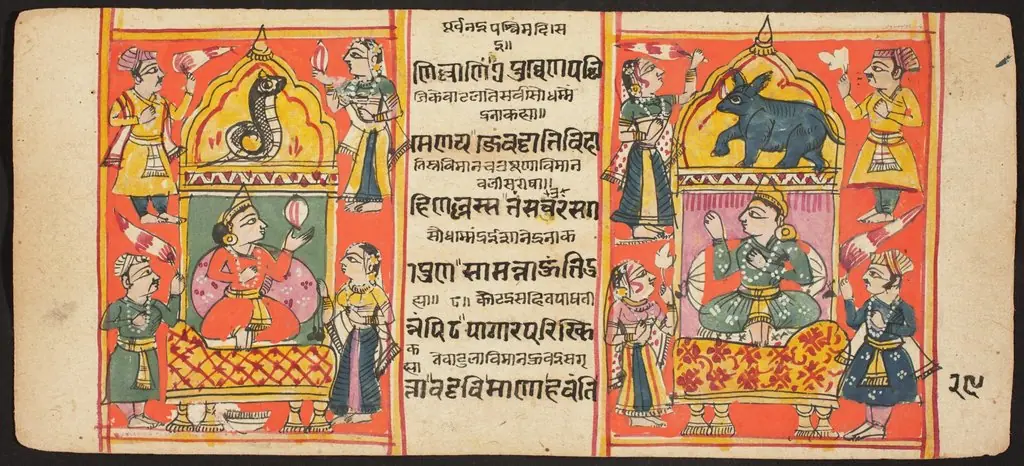 Tantric Manuscript "Sangrahani Sutra"
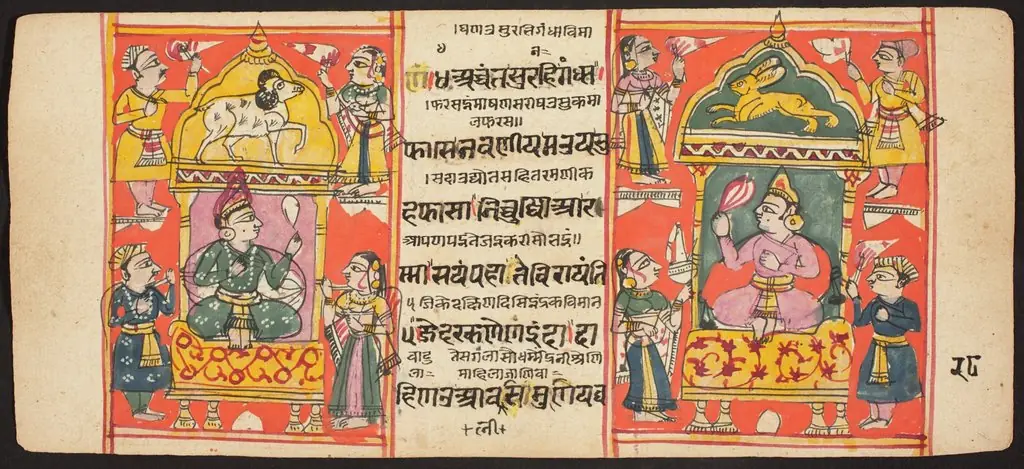 Tantric Manuscript "Sangrahani Sutra"
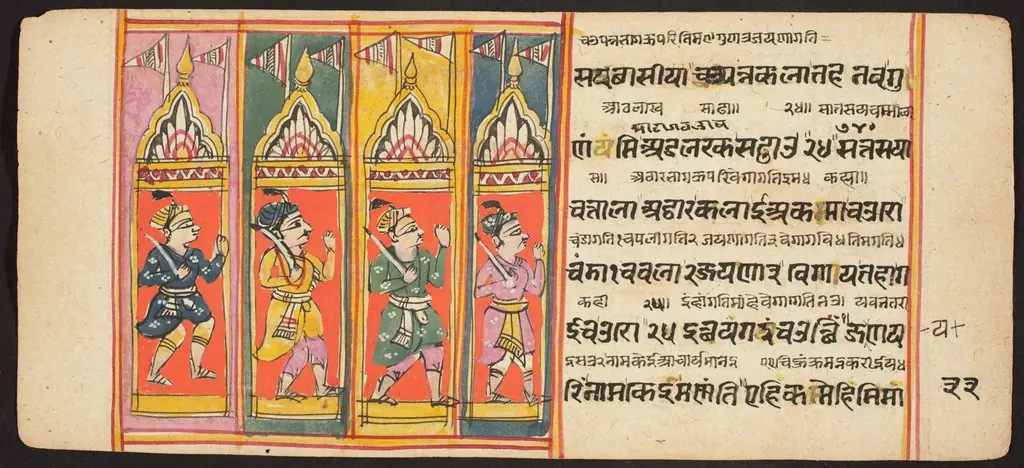 Tantric Manuscript "Sangrahani Sutra"
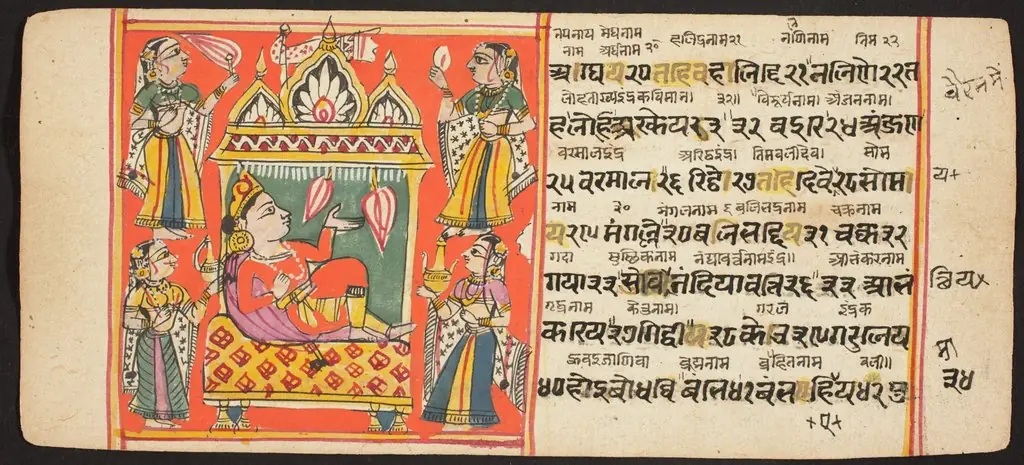 Tantric Manuscript "Sangrahani Sutra"
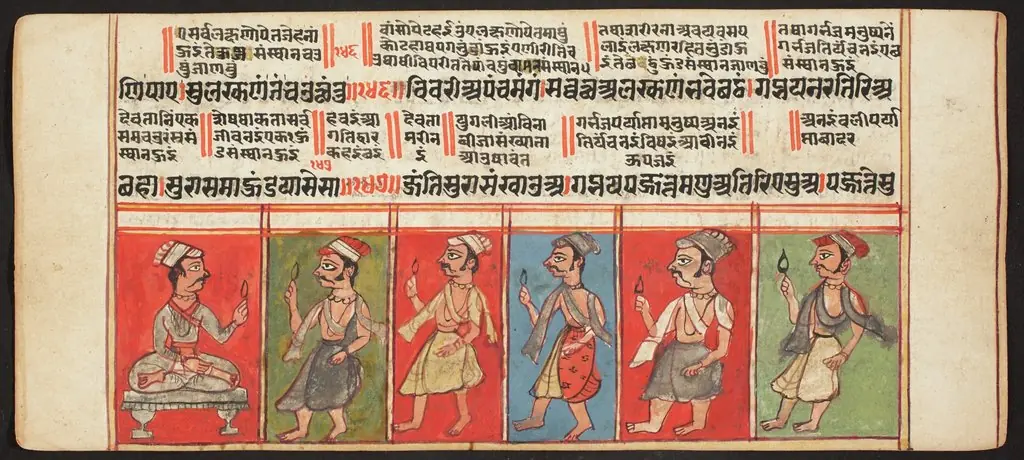 Tantric Manuscript, "Sangrahani Sutra"
 Tantric Manuscript "Sangrahani Sutra"