Artwork
Samantabhadra on an Elephant with Two Attendants
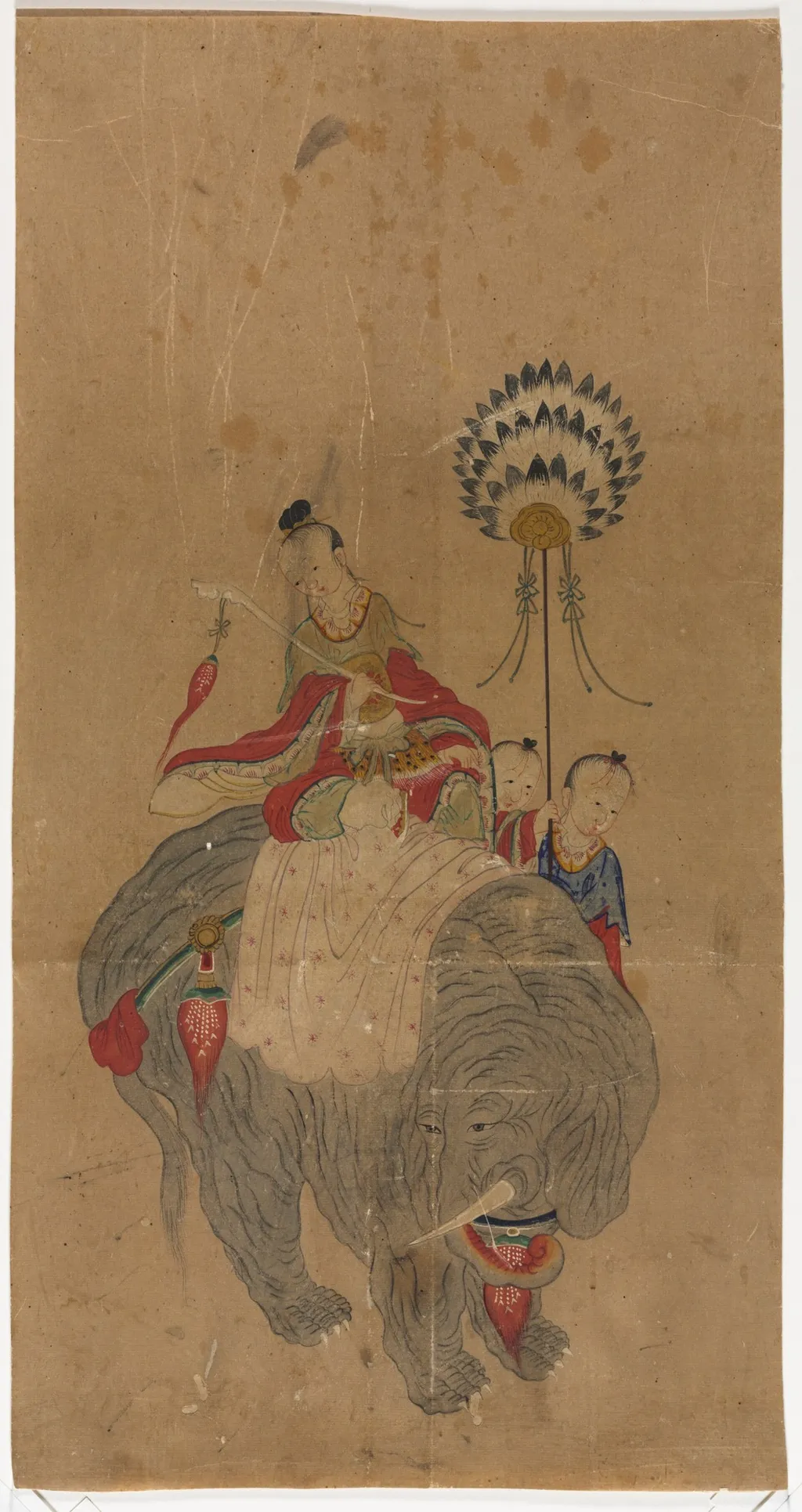
Samantabhadra on an Elephant with Two Attendants is an unspecified painting by Unknown. It dates from 1651 and is held in the collection of the Cleveland Museum of Art.
About this work
Overview
This painting depicts a ceremonial procession featuring Samantabhadra, a key figure in East Asian Buddhism, seated on an elaborately adorned elephant accompanied by two attendants.
Subject & Meaning
Samantabhadra, often associated with wisdom and compassion, is prominently displayed at the front of the elephant, holding a fan-like object, symbolizing their spiritual significance. The two smaller attendants behind emphasize the importance of the central figure in a religious or ceremonial context.
Technique & Style
Executed with bright, vibrant colors against a plain background, the painting highlights the subjects' importance through contrast. The use of red for the front figure's robe and the elephant's decorations signifies dignity and sacredness.
Context
The procession scene suggests a representation of Buddhist ritual or mythology, common in East Asian art, where such images were used for devotional or narrative purposes.
History & Provenance
Originally part of a broader collection, this piece is now housed at The Cleveland Museum of Art, indicating its relocation from its original cultural context to a Western institution for preservation and study.
Artist & collection

 Domestic Scene
 Giacomo and Cardinal Marco, investing Andrea, Abbot of San Zeno, with his Benefice
 The Nymph of Fontainebleau
 Portrait of a Woman
 Madonna and Child with Saints in the Enclosed Garden
 Venus and Minerva
 Family Group of Four on Sofa
 Wall painting from Room H of the Villa of P. Fannius Synistor at Boscoreale
 Daoist Immortal on a Qilin and Two Attendants
 Daoist Immortal on a Qilin and Two Attendants
 Bathing of the Buddha Festival
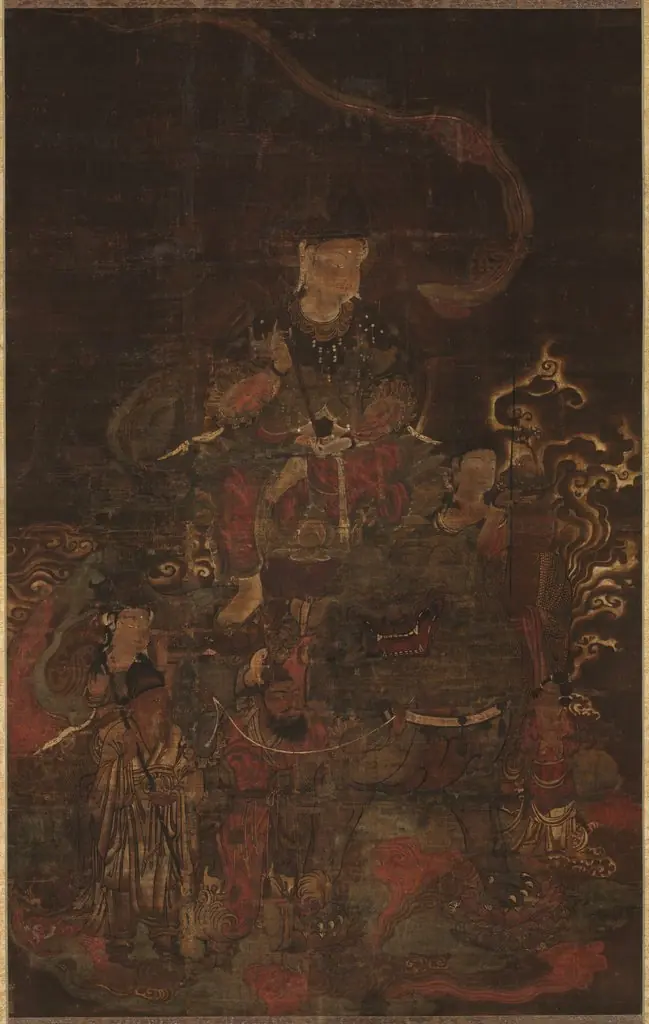 Monju Riding Lion with Attendants
 Buddhist Panel
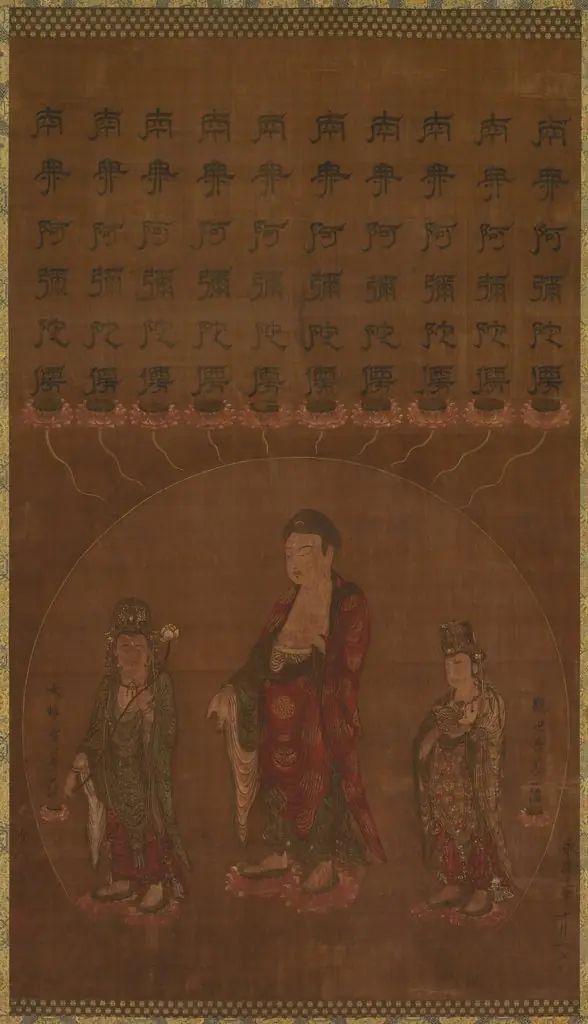 Buddha Amitābha with Two Attending Bodhisattvas
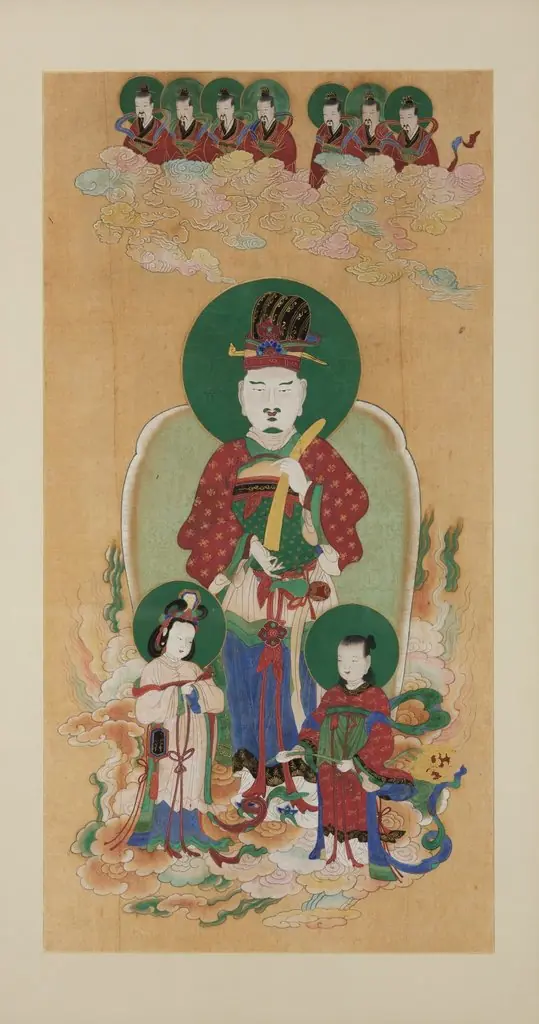 Daoist Official of Heaven with Seven Stars and Jade Maidens
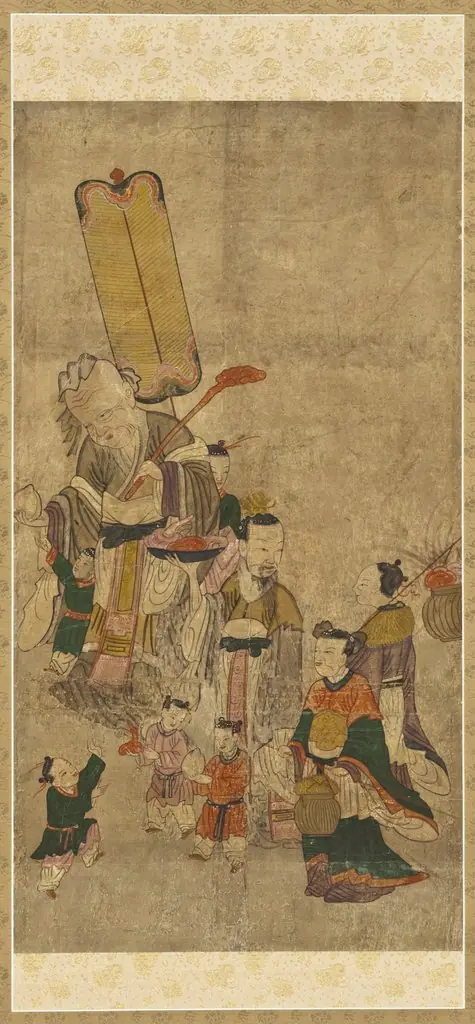 Dongfang Shuo (Tongbang Sak), one of the Eight Chinese Immortals