Artwork
Buddha Amitābha with Two Attending Bodhisattvas
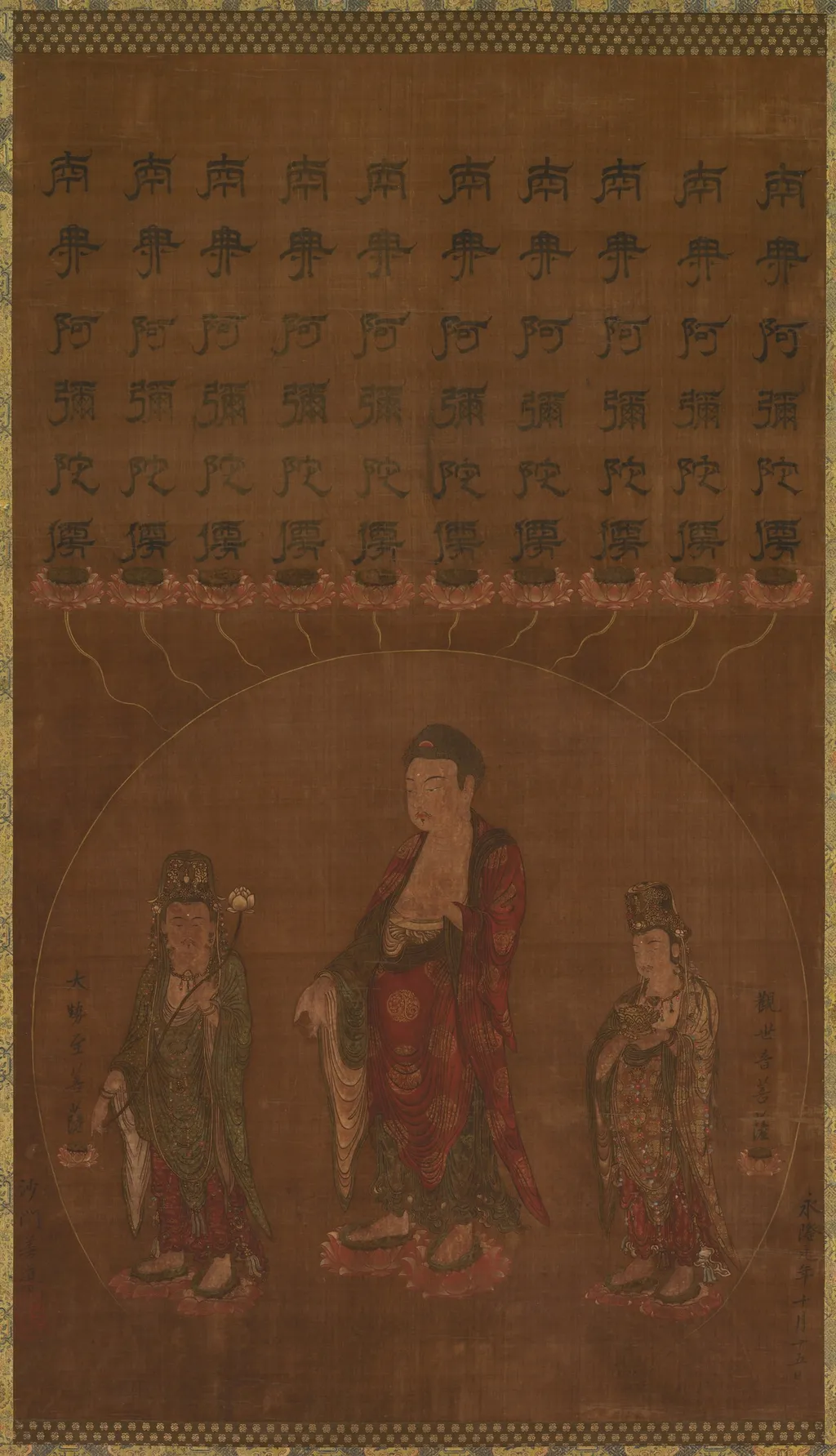
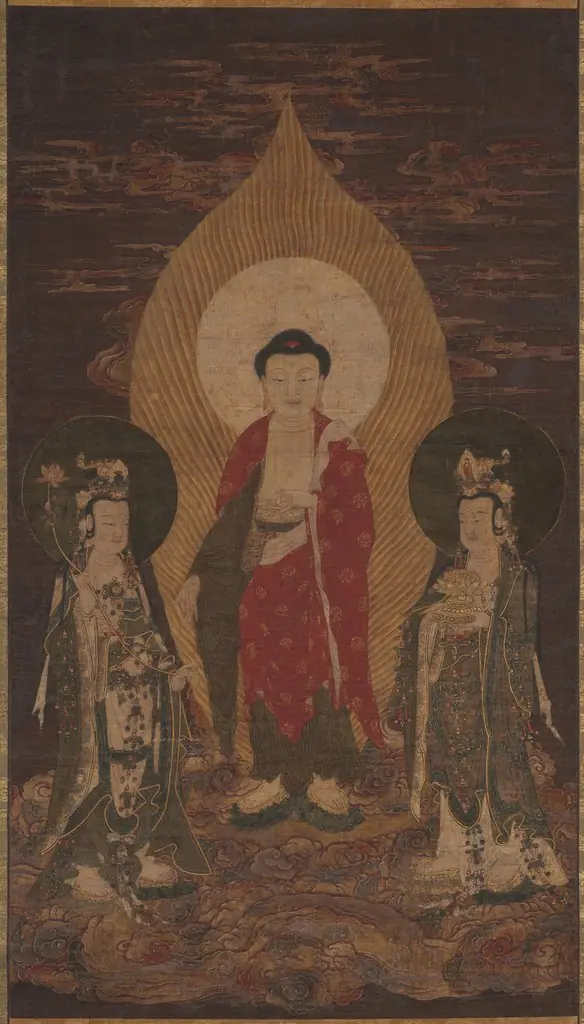
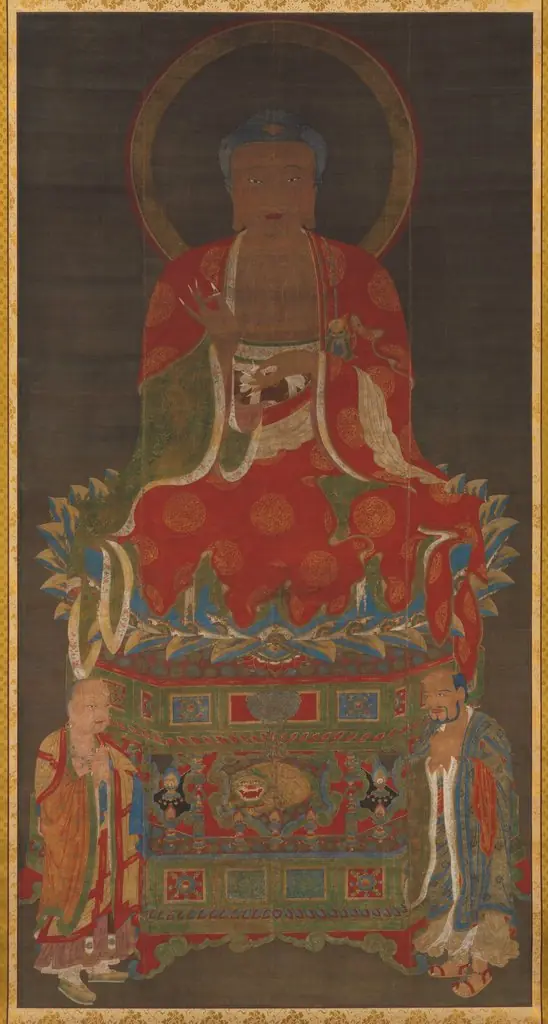
Buddha Amitābha with Two Attending Bodhisattvas is an unspecified painting. It dates from 1249 and is held in the collection of the Cleveland Museum of Art. This painting depicts a central Buddha figure flanked by two attendant bodhisattvas, arranged in a circular composition.
About this work
Overview
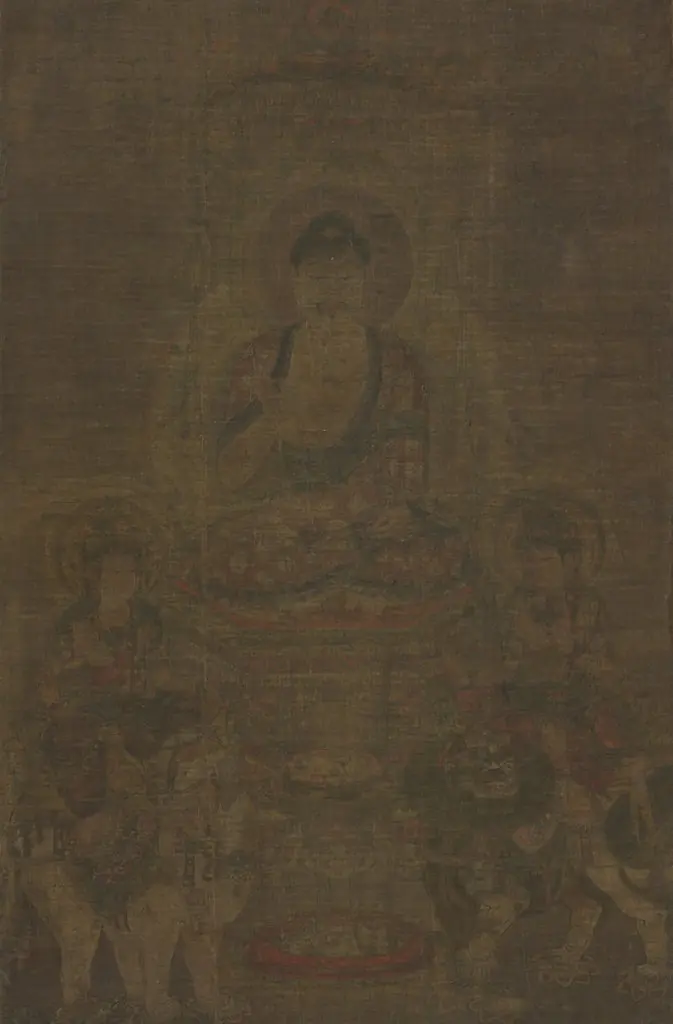
This painting depicts a central Buddha figure flanked by two attendant bodhisattvas, arranged in a circular composition. The artwork is characterized by its vibrant palette and precise draftsmanship, which highlight the sacred figures against a darker ground. Inscriptions in Chinese characters appear at the top, while a border of lotus buds frames the bottom edge, reinforcing the spiritual theme.
Subject & Meaning
He is accompanied by two bodhisattvas, depicted in green and gold attire, one of whom presents a lotus flower.
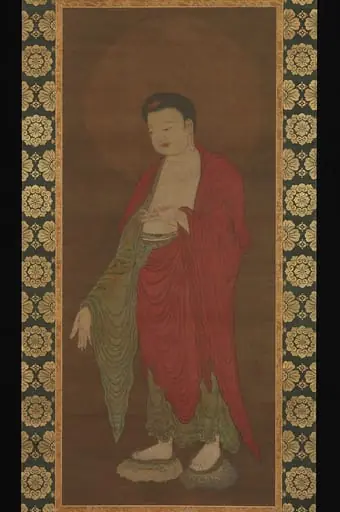
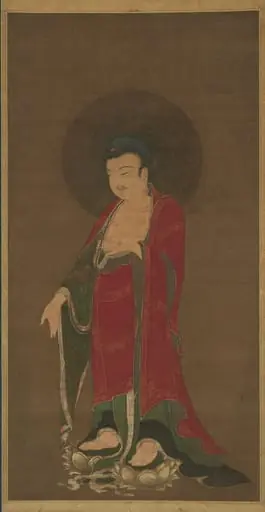
At the center, Buddha Amitābha is identifiable by his serene posture and a radiant golden halo, wearing a red robe adorned with a golden emblem and holding a small item. He is accompanied by two bodhisattvas, depicted in green and gold attire, one of whom presents a lotus flower. These figures serve as spiritual guides or assistants, collectively representing a significant assembly within Buddhist iconography, often associated with the Western Pure Land.
Technique & Style
The artist employed careful linear work and a vivid color scheme to define the forms and drapery of the figures. Bright red, green, and gold robes contrast sharply with the darker background, allowing the sacred personages to emerge prominently. This deliberate use of color and line emphasizes the spiritual significance of the subjects, creating a visually striking and reverent presentation.
Artist & collection