Artwork
Daoist Official of Heaven with Seven Stars and Jade Maidens
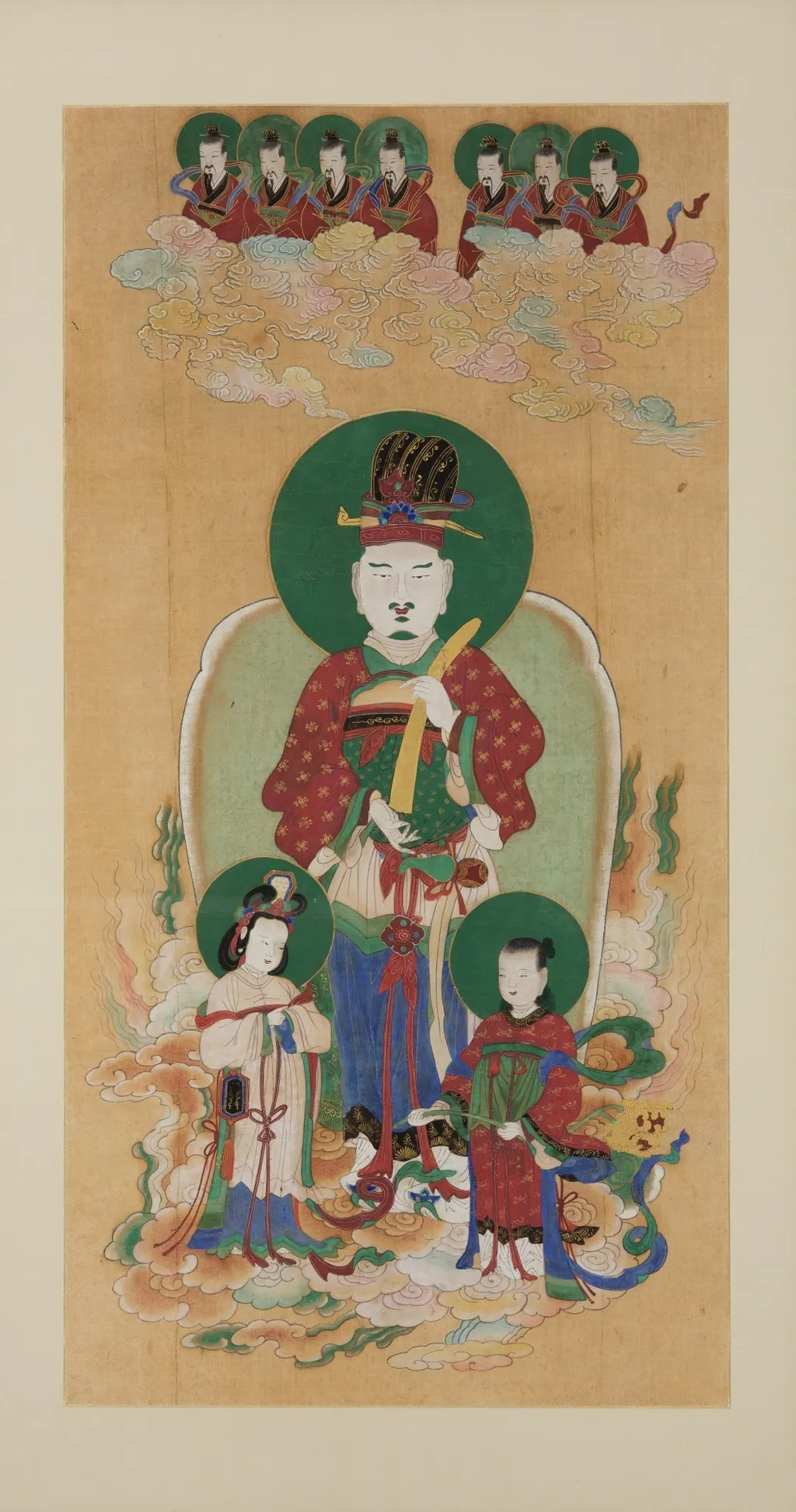
Daoist Official of Heaven with Seven Stars and Jade Maidens is an unspecified painting by Unknown. It is held in the collection of the Detroit Institute of Arts. This painting depicts a celestial Daoist official accompanied by the Seven Stars and jade maidens, figures drawn from Daoist cosmology.
About this work
Overview
This painting depicts a celestial Daoist official accompanied by the Seven Stars and jade maidens, figures drawn from Daoist cosmology. It belongs to a tradition of religious art that visualizes heavenly realms and divine attendants, intended for ritual or devotional use. The composition likely emphasizes hierarchy and spiritual authority through arrangement and symbolism.
Subject & Meaning
The Daoist official represents a high-ranking celestial bureaucrat, overseeing cosmic order. The Seven Stars refer to the Big Dipper, a symbol of destiny and divine governance in Daoist belief. The jade maidens, as celestial attendants, signify purity and service to the divine. Together, they convey the harmony between human ritual and heavenly administration.
Technique & Style
Executed in ink and color on silk, the painting employs fine brushwork and delicate linearity typical of Song or Yuan dynasty religious art. Figures are rendered with precise contours and subdued pigments, emphasizing spiritual serenity over dramatic expression. Background elements are minimal, focusing attention on the central figures and their symbolic presence.
History & Provenance
The work entered the collection of the Detroit Institute of Arts through documented acquisition, likely from a private collection with roots in Chinese imperial or temple holdings. Its preservation suggests continuous reverence, possibly as part of a ritual set or monastic archive. No definitive date or artist is recorded, but stylistic analysis places it between the 12th and 14th centuries.
Context
During the Song and Yuan dynasties, Daoist imagery flourished in court and temple art, reflecting state-sponsored religious practices. Paintings like this were used in ceremonies to invoke celestial protection or to illustrate cosmological texts. The presence of the Seven Stars aligns with astrological rituals central to Daoist liturgy, linking earthly rites to celestial patterns.
Legacy
As a surviving example of Daoist celestial iconography, the painting contributes to understanding how spiritual authority was visually codified in medieval China. It reflects a broader tradition of administrative metaphors in religious art, where heaven mirrored earthly bureaucracy. Its preservation allows ongoing study of Daoist visual theology beyond textual sources.
Artist & collection

 Domestic Scene
 Giacomo and Cardinal Marco, investing Andrea, Abbot of San Zeno, with his Benefice
 The Nymph of Fontainebleau
 Portrait of a Woman
 Madonna and Child with Saints in the Enclosed Garden
 Venus and Minerva
 Family Group of Four on Sofa
 Wall painting from Room H of the Villa of P. Fannius Synistor at Boscoreale
 Amitābha Triad
 Willow Kannon
 Triad of the Medicine Master Buddha Yakushi (Bhaisajya Buddha)
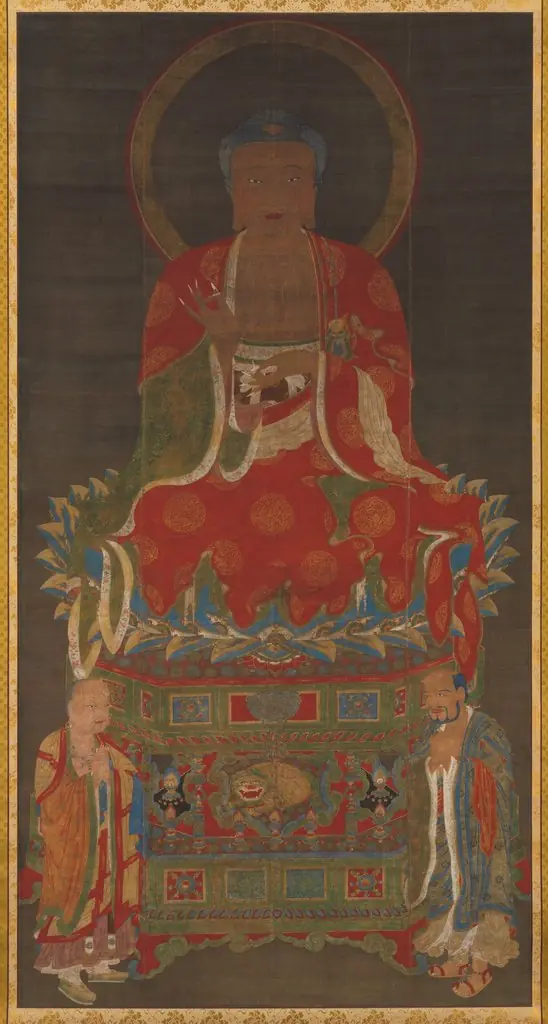 Shakyamuni with two attendants
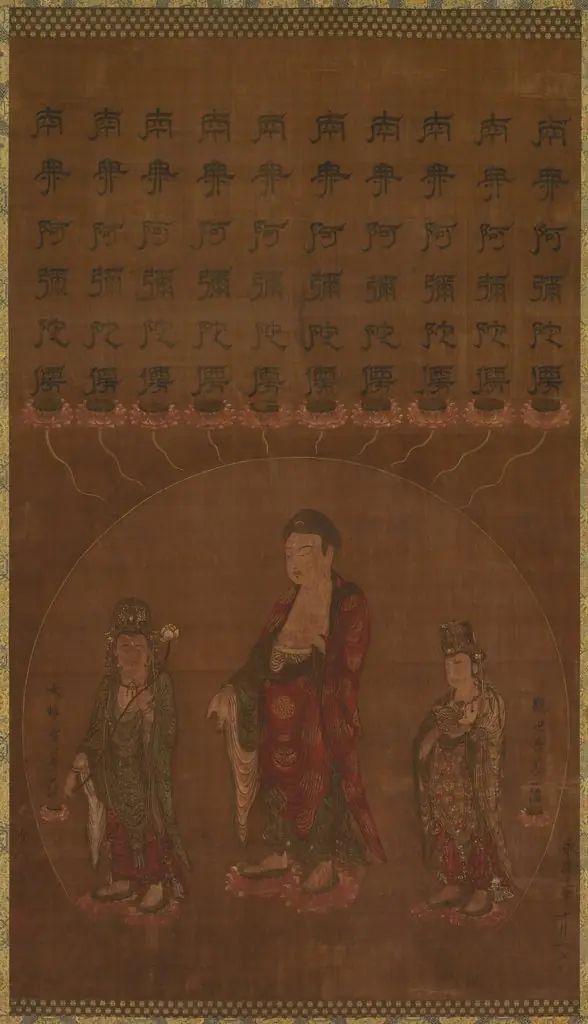 Buddha Amitābha with Two Attending Bodhisattvas
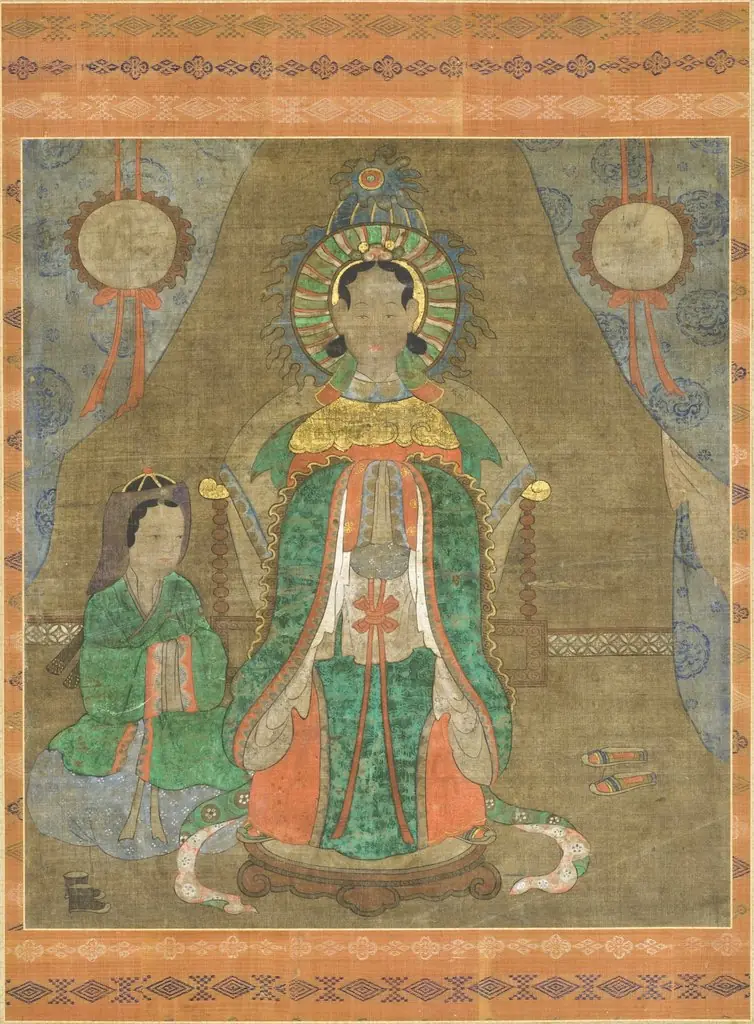 Spirit of a Noble Woman (Probably Princess Pari) and Attendant
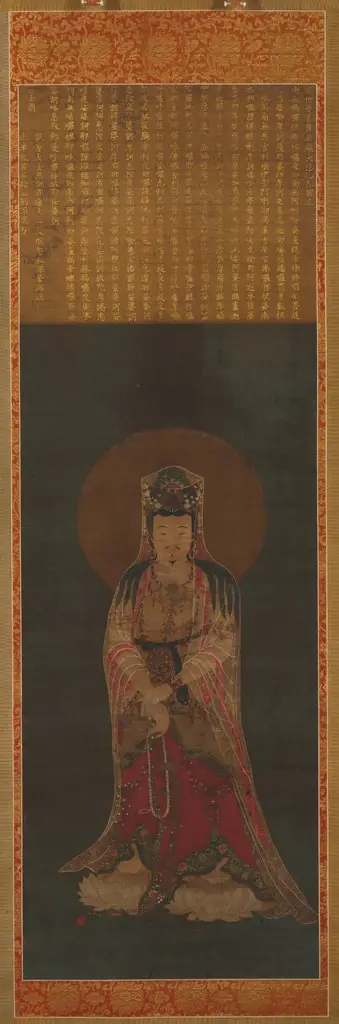 Kannon
 The Four Deities of Mount Kōya
 Mount Kurama Mandala: Bishamonten Triad (Kuramayama mandara: Bishamonten sanzonzō)
 釈迦三尊像|Shaka (Shakyamuni) Triad
 The Eight Hosts of Deva, Naga, and Yakshi
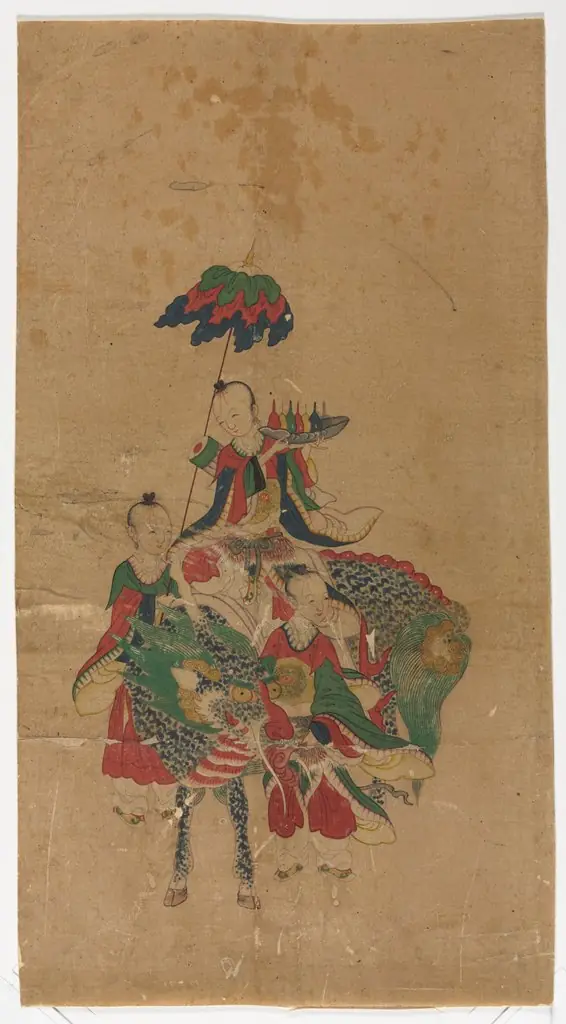 Daoist Immortal on a Qilin and Two Attendants