Artwork
Zal and Rudaba in a Palace, page from a copy of the Shahnama of Firdausi
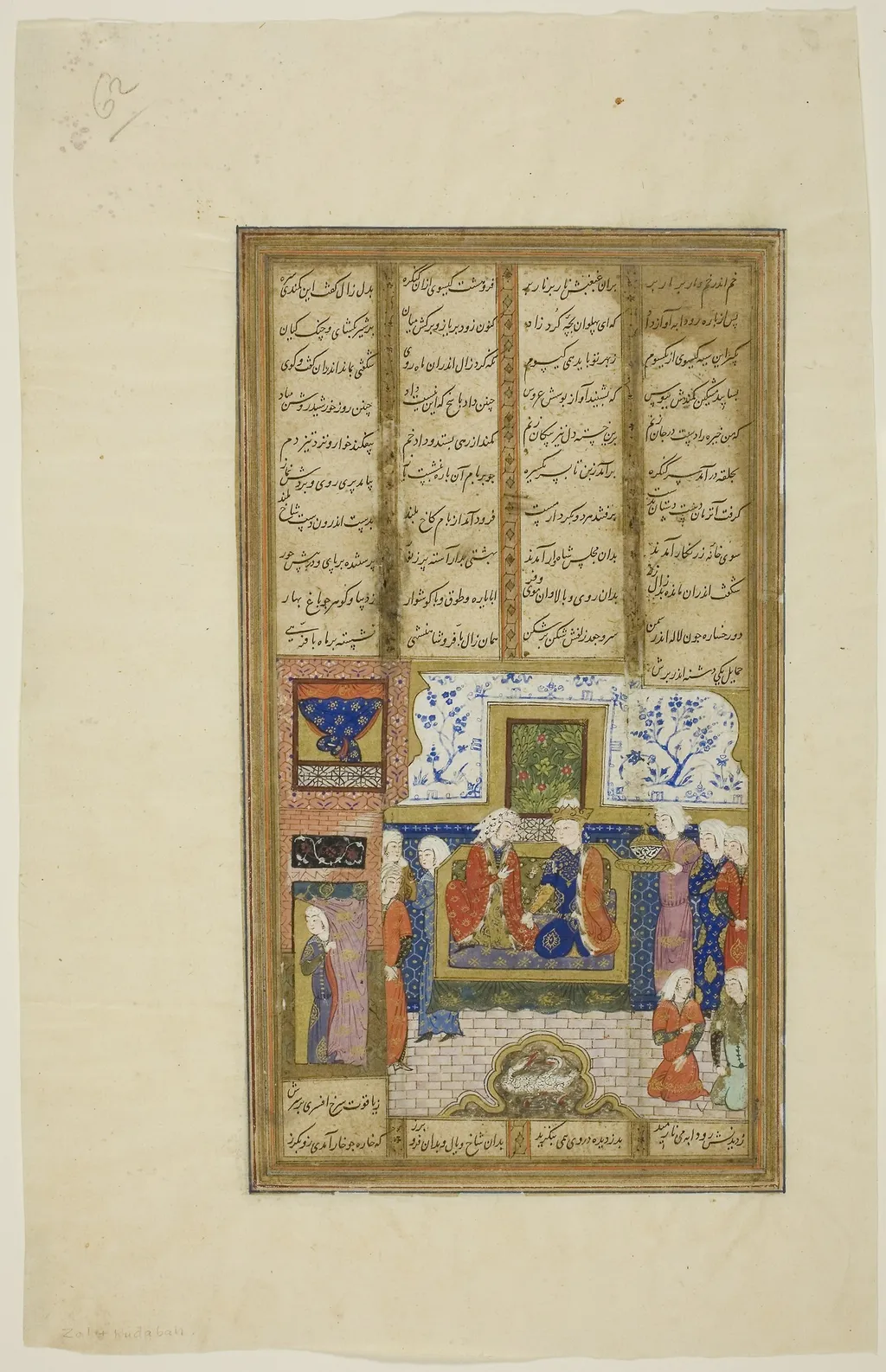
Zal and Rudaba in a Palace, page from a copy of the Shahnama of Firdausi is an unspecified painting by the Persian Miniature artist Unknown. It dates from 1493 and is held in the collection of the Art Institute of Chicago.
About this work
Overview
The miniature illustrates a courtly interior from the Persian epic Shahnameh, depicting the meeting of Zal and Rudaba within a richly appointed palace.
The miniature illustrates a courtly interior from the Persian epic Shahnameh, depicting the meeting of Zal and Rudaba within a richly appointed palace. Figures in vibrant garments occupy the space, while tiled walls, a patterned carpet, and a broad window opening onto a garden complete the composition. The scene is rendered on a single folio of a manuscript produced for Prince Salim, a member of the Mughal court.
Subject & Meaning
The central figures are the legendary heroes Zal and Rudaba, whose union is a pivotal episode in the Shahnameh narrative. Their attentive gaze toward one another conveys the moment of mutual recognition that leads to their marriage, a theme of love and destiny that resonates throughout the epic. Surrounding courtiers observe, emphasizing the public significance of their alliance.
Technique & Style
Executed in the Mughal miniature tradition, the work combines delicate brushwork with vivid mineral pigments. The blue-and-white tile motifs on the walls reflect Persian architectural decoration, while the intricate patterns on the carpets and textiles demonstrate a high level of ornamental detail. The use of perspective in the window view creates a sense of depth uncommon in earlier Persian miniatures.
History & Provenance
This folio belongs to a deluxe copy of the Shahnameh commissioned for Prince Salim, son of Emperor Akbar, in the late 16th century. The manuscript was produced in the imperial workshop of the Mughal court, where Persian literary models were adapted to local artistic conventions. The page has remained within the collection of the original patron’s descendants before entering a public museum collection.
Context
The illustration reflects the cultural synthesis of Safavid Persian literary heritage and Mughal artistic patronage. By portraying a celebrated Persian tale for a Mughal prince, the manuscript underscores the empire’s engagement with the broader Persianate world. The palace setting also mirrors contemporary Mughal court architecture, linking the legendary past with the visual language of the patron’s own environment.
Artist & collection

 Domestic Scene
 Giacomo and Cardinal Marco, investing Andrea, Abbot of San Zeno, with his Benefice
 The Nymph of Fontainebleau
 Portrait of a Woman
 Madonna and Child with Saints in the Enclosed Garden
 Venus and Minerva
 Family Group of Four on Sofa
 Wall painting from Room H of the Villa of P. Fannius Synistor at Boscoreale
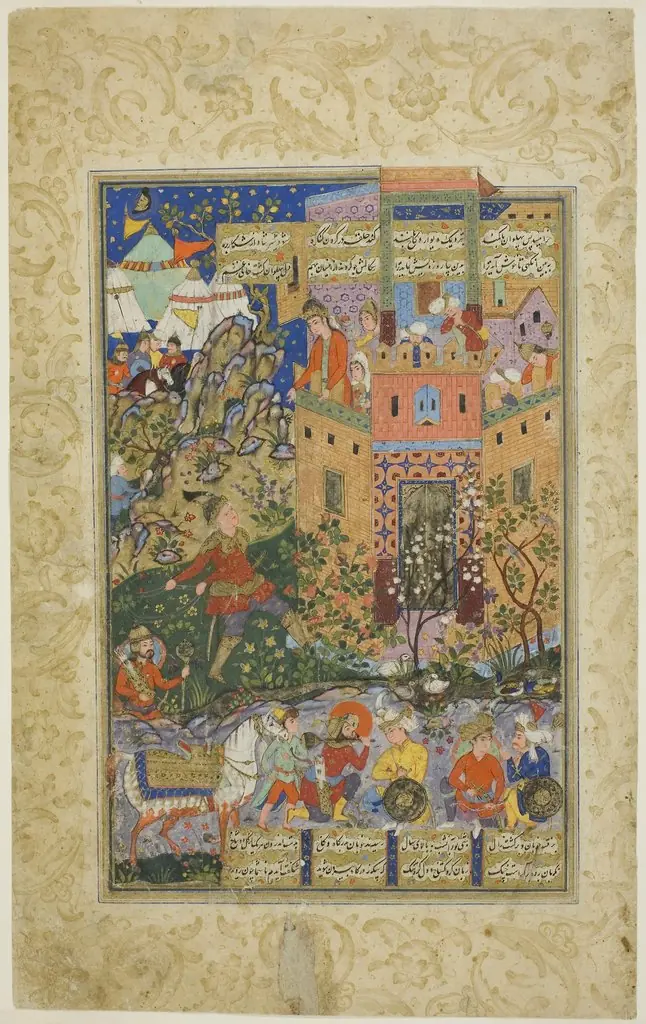 Zal Climbing to Rudaba, page from a copy of the Shahnama of Firdausi
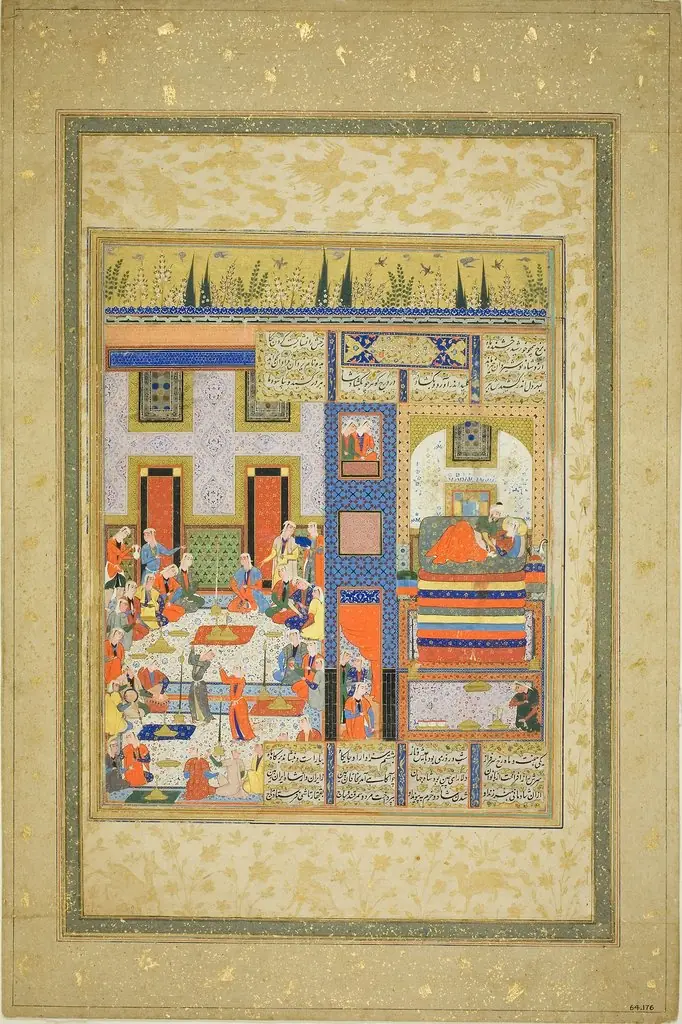 The Wedding Night of Anushirvan and the Khaqan's Daughter (from a copy of Firdausi's Shahnama)
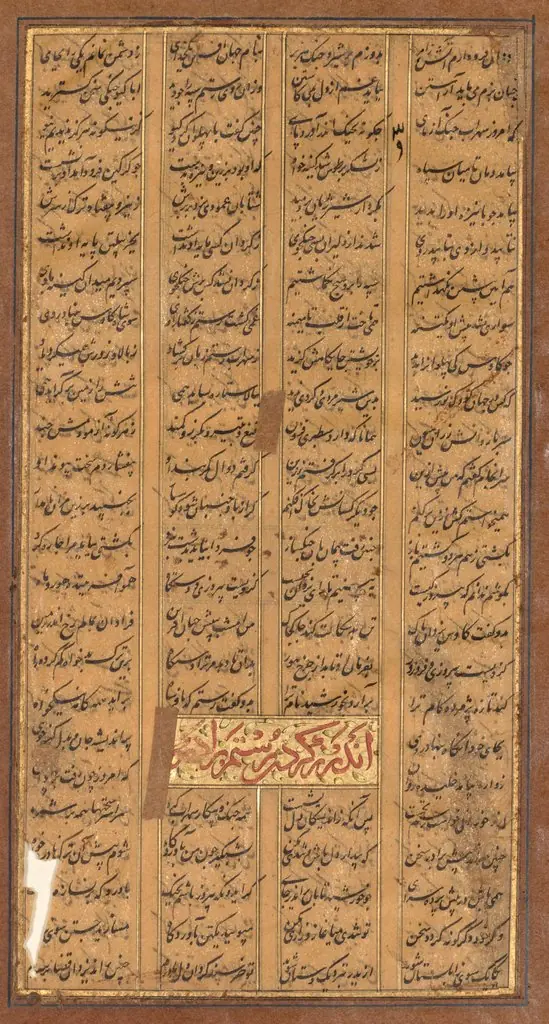 Text of Rustam and Suhrab, from the Shah-nama of Firdausi (Persian, c. 934–1020) (recto)
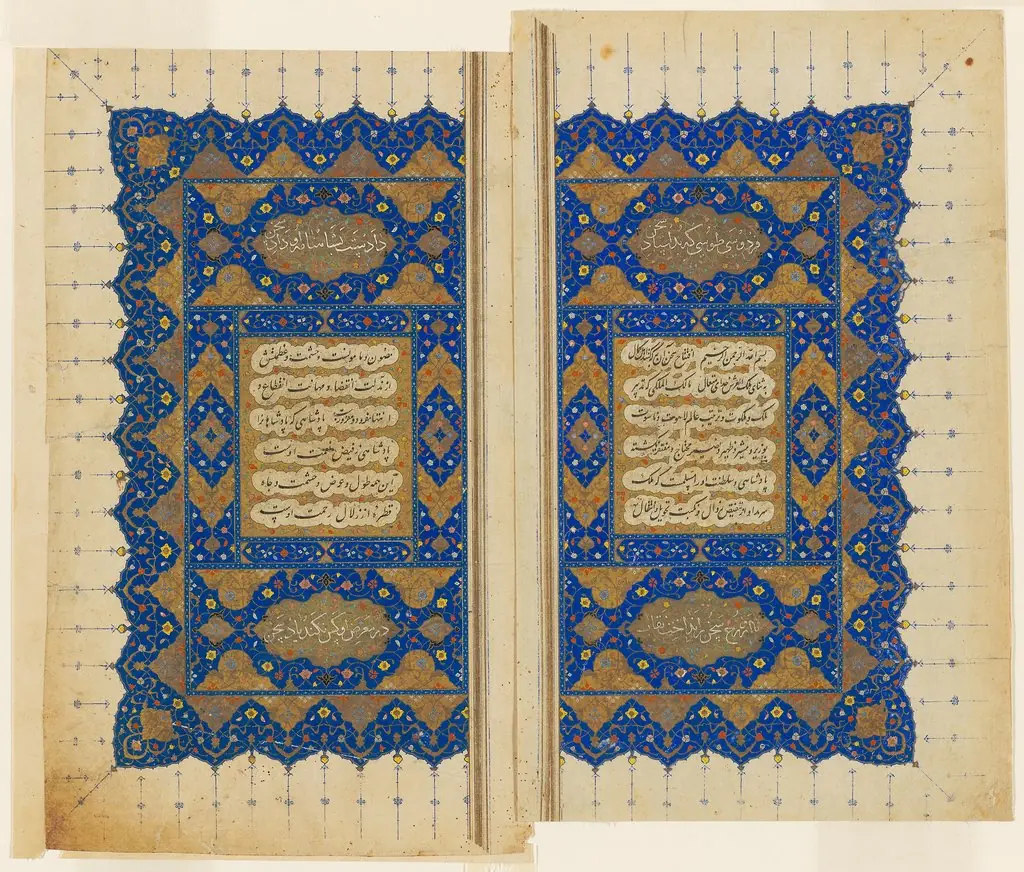 Double Title Page of a copy of the Shahnama of Firdausi
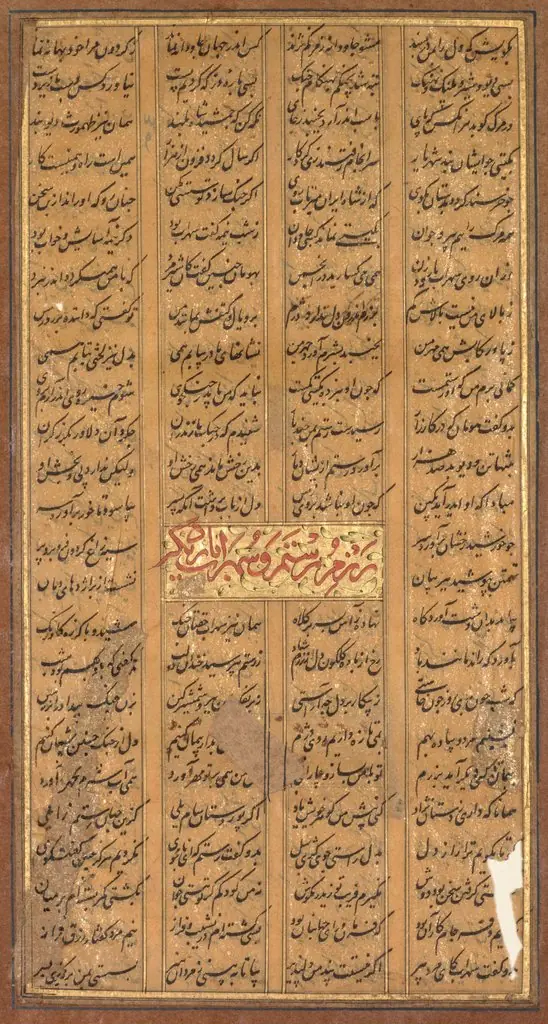 Text of Rustam and Suhrab, from the Shah-nama of Firdausi (Persian, c. 934–1020) (verso)