Artwork
Tantric Manuscript, "Sangrahani Sutra"
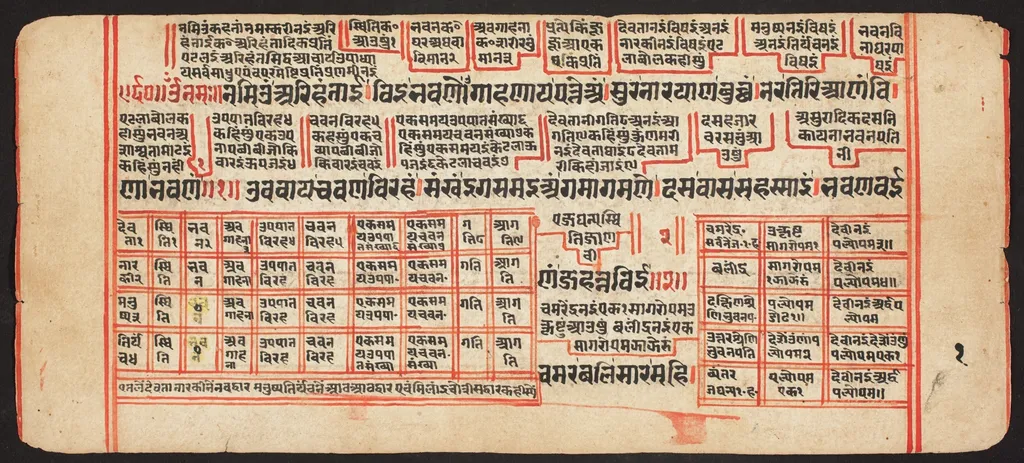
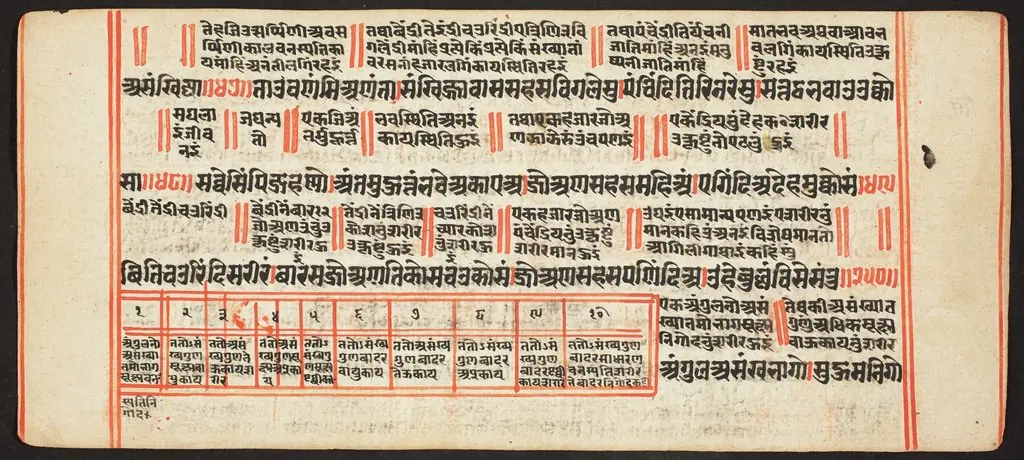
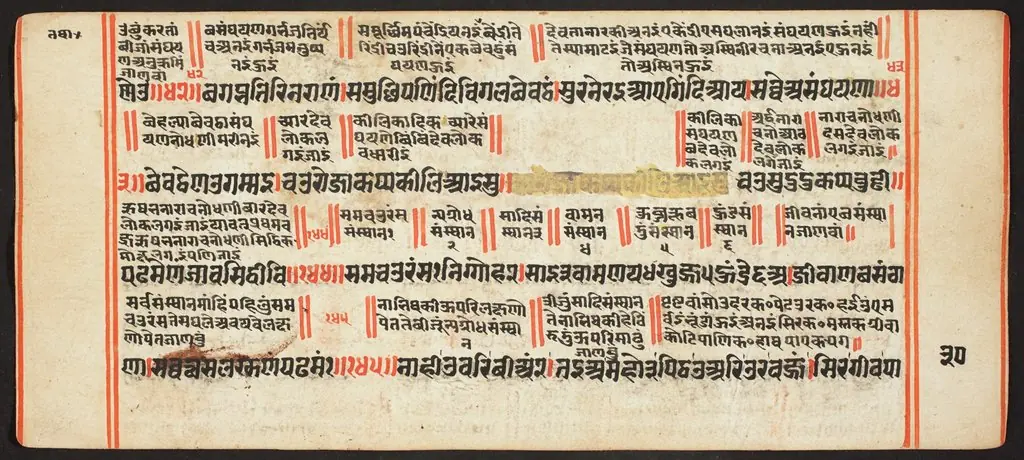
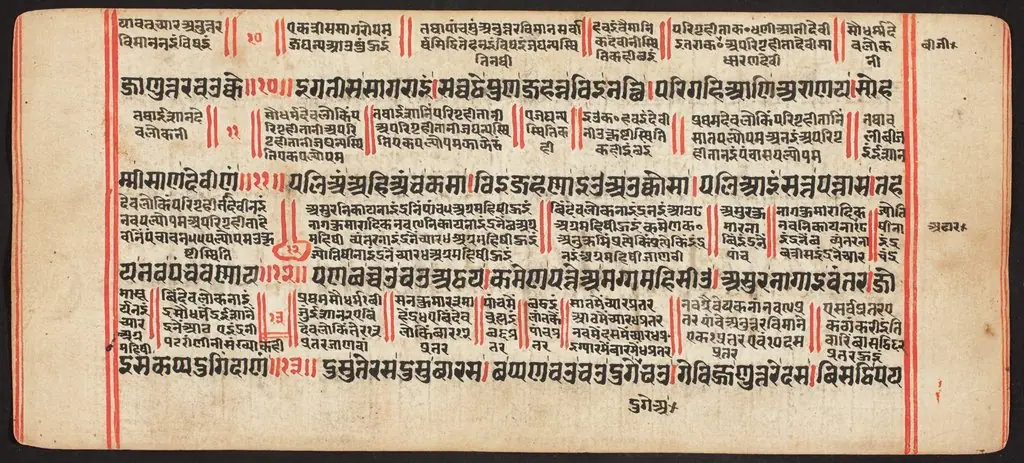
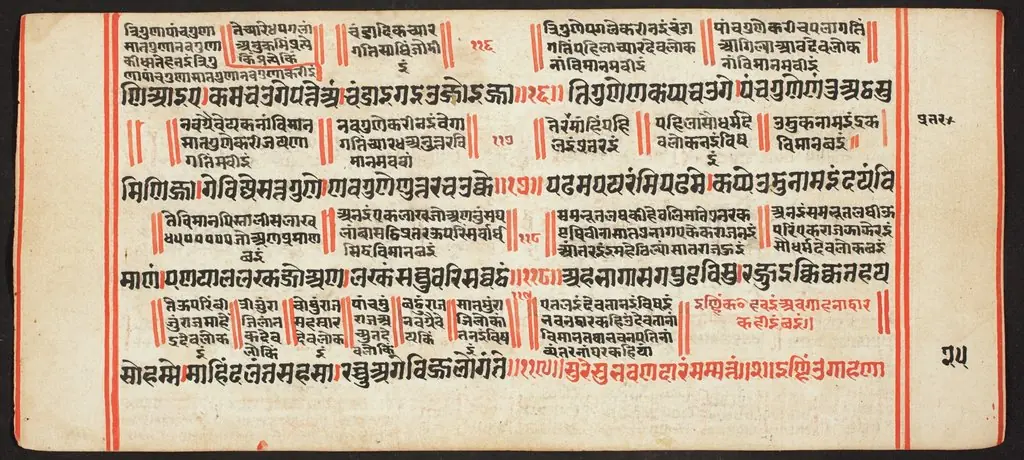
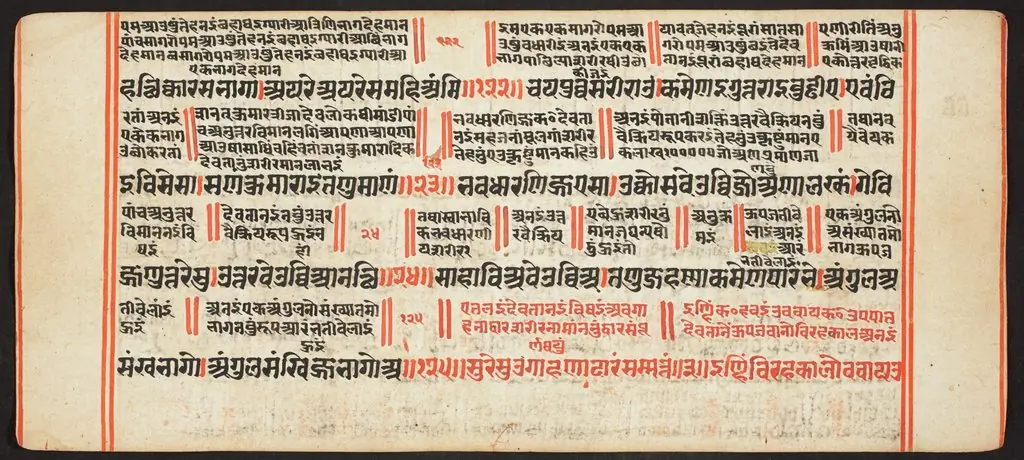
Tantric Manuscript, "Sangrahani Sutra" is an unspecified painting by Unknown. It is held in the collection of the Detroit Institute of Arts. This folio originates from a handwritten Buddhist manuscript known as the Sangrahani Sutra, produced in medieval India.
About this work
Overview
The page reflects the meticulous craftsmanship typical of religious texts intended for ritual use and scholarly transmission within monastic communities.
This folio originates from a handwritten Buddhist manuscript known as the Sangrahani Sutra, produced in medieval India. The text is inscribed in a cursive form of Sanskrit using black ink on aged parchment. Decorative red borders and ruled lines frame the script, signaling its liturgical significance. The page reflects the meticulous craftsmanship typical of religious texts intended for ritual use and scholarly transmission within monastic communities.
Subject & Meaning
The Sangrahani Sutra is a doctrinal compilation within the Mahayana Buddhist tradition, summarizing key teachings on ethical conduct and meditative discipline. Its physical presentation—elaborate script, red accents, and structured layout—emphasizes reverence for the words as sacred vessels of wisdom. The formality of the script suggests it was copied by trained scribes for use in recitation or study, not merely as a record but as an object of contemplative practice.
Technique & Style
The script is executed in a precise, flowing hand with subtle flourishes at character terminals, typical of regional scribal traditions in eastern India. Red ink outlines rectangular frames around each block of text, enhancing legibility and ritual emphasis. Pigments and inks were likely derived from natural sources, with the yellowed parchment indicating prolonged exposure to light and humidity. No illustrations accompany the text, focusing attention solely on the written word.
History & Provenance
The manuscript likely originated in a monastic center in Bengal or Bihar between the 10th and 12th centuries. It entered the Detroit Institute of Arts’ collection through early 20th-century acquisitions of South Asian religious artifacts, possibly via colonial-era networks or private donations. Its condition suggests careful preservation, though minor ink fading and parchment brittleness reflect its age and material fragility.
Context
During the medieval period in India, Buddhist monasteries maintained scriptoria where texts like the Sangrahani Sutra were copied by hand for centuries, even as the religion declined in its homeland. These manuscripts served both pedagogical and devotional functions, often stored in temple libraries or carried by traveling monks. The use of red for framing and emphasis aligns with broader South Asian traditions of marking sacred text, seen also in Hindu and Jain manuscripts.
Legacy
Surviving folios of the Sangrahani Sutra are rare, offering insight into the continuity of Buddhist textual culture beyond its geographic decline. This page contributes to scholarly understanding of scribal practices, linguistic transmission, and the material life of religious texts in pre-modern South Asia. Its preservation in a Western museum underscores the global dispersal of South Asian heritage and the ongoing effort to contextualize such artifacts within their original spiritual frameworks.
Artist & collection

 Domestic Scene
 Giacomo and Cardinal Marco, investing Andrea, Abbot of San Zeno, with his Benefice
 The Nymph of Fontainebleau
 Portrait of a Woman
 Madonna and Child with Saints in the Enclosed Garden
 Venus and Minerva
 Family Group of Four on Sofa
 Wall painting from Room H of the Villa of P. Fannius Synistor at Boscoreale
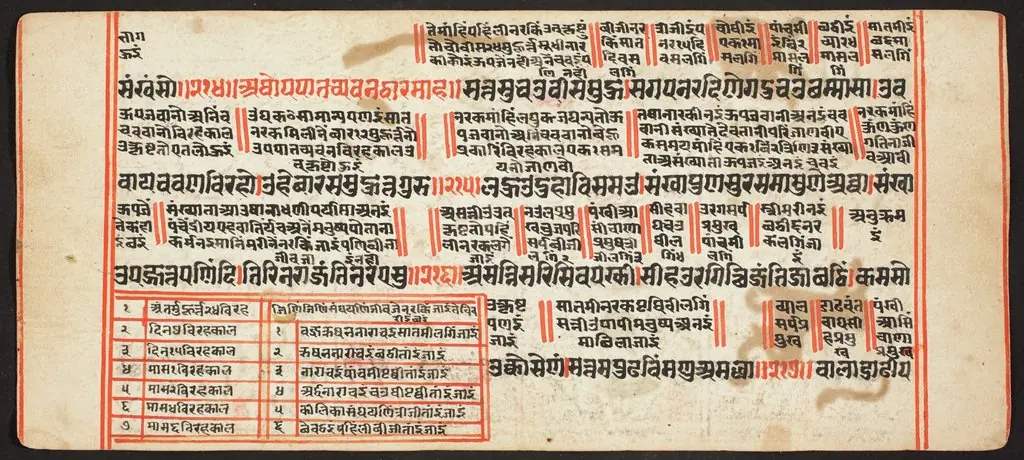 Tantric Manuscript, "Sangrahani Sutra"
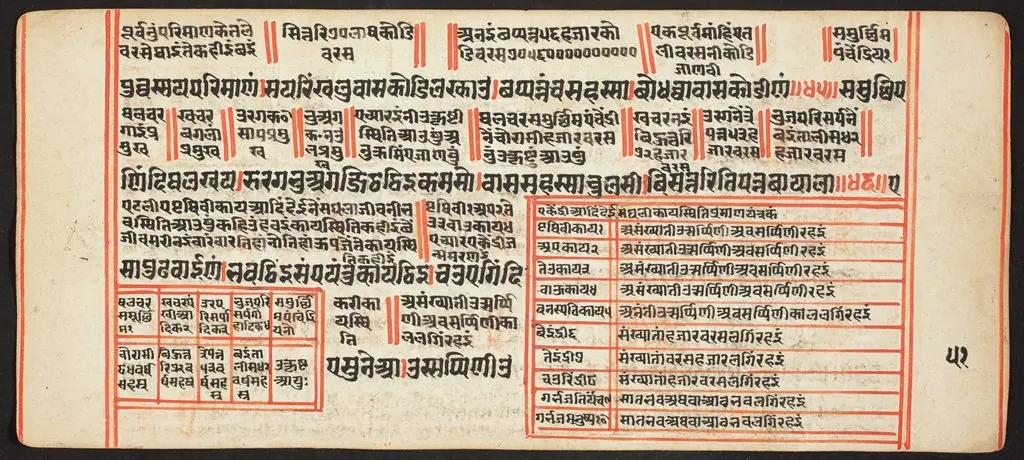 Tantric Manuscript, "Sangrahani Sutra"
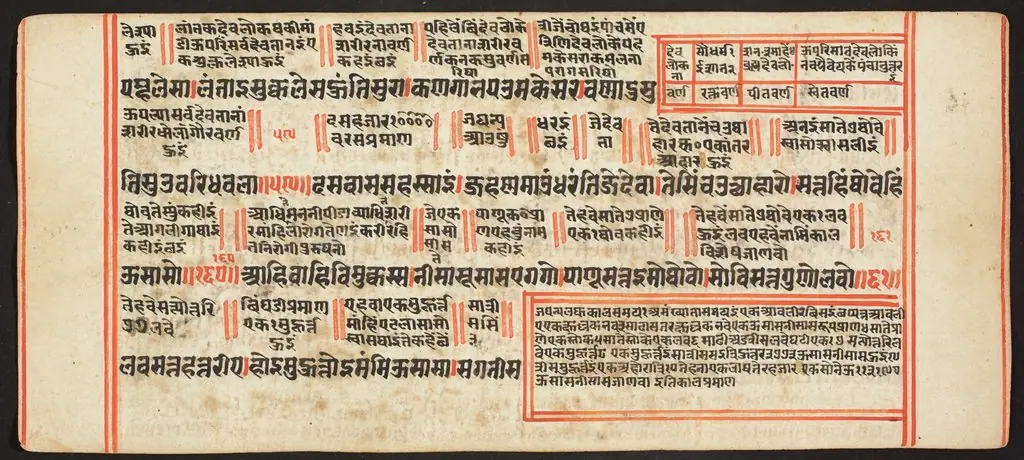 Tantric Manuscript, "Sangrahani Sutra"
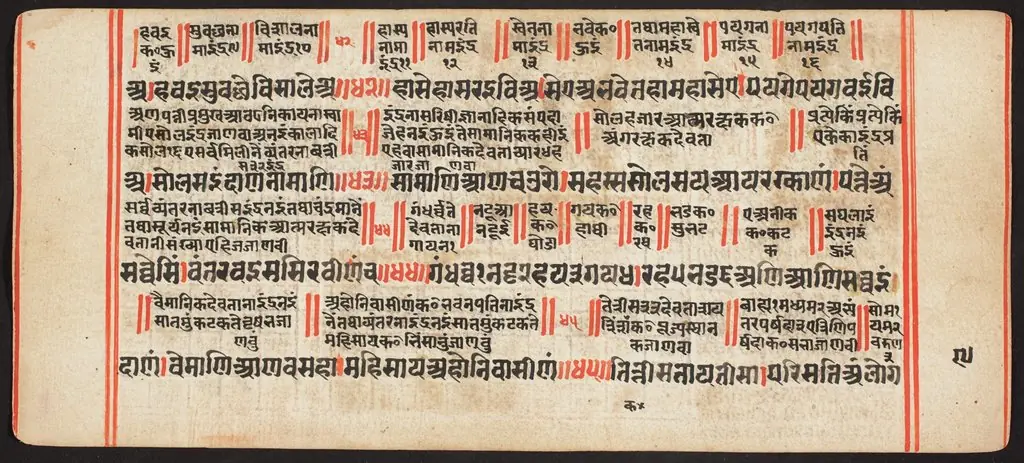 Tantric Manuscript, "Sangrahani Sutra"
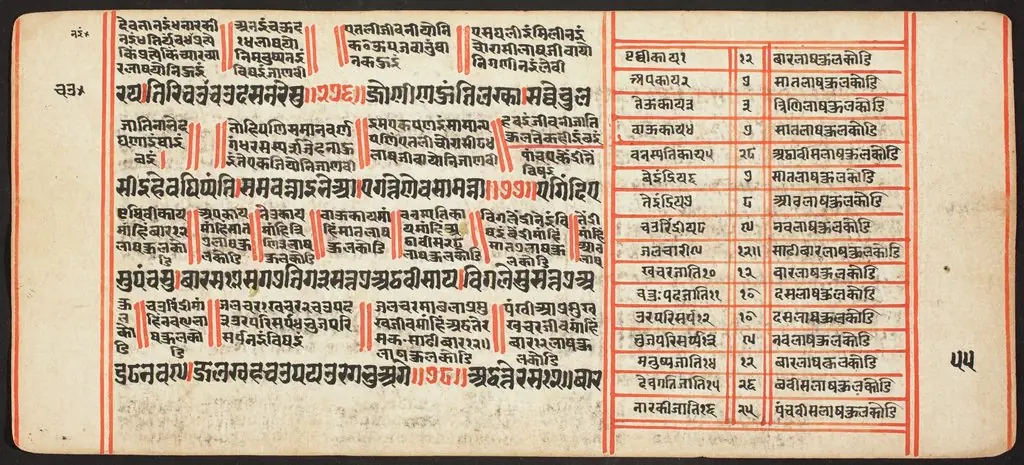 Tantric Manuscript, "Sangrahani Sutra"
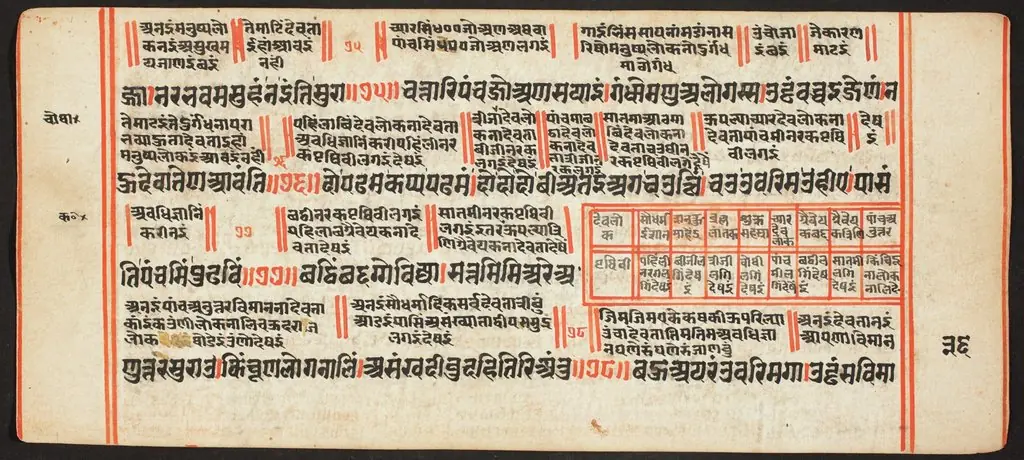 Tantric Manuscript, "Sangrahani Sutra"
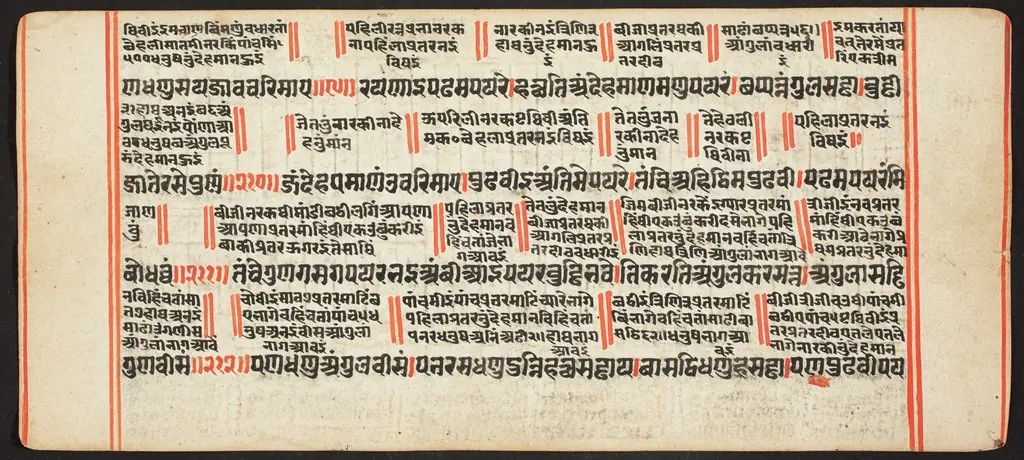 Tantric Manuscript, "Sangrahani Sutra"
 Tantric Manuscript, "Sangrahani Sutra"
 Tantric Manuscript, "Sangrahani Sutra"
 Tantric Manuscript, "Sangrahani Sutra"
 Tantric Manuscript, "Sangrahani Sutra"
 Tantric Manuscript, "Sangrahani Sutra"