Artwork
Tantric Manuscript, "Sangrahani Sutra"
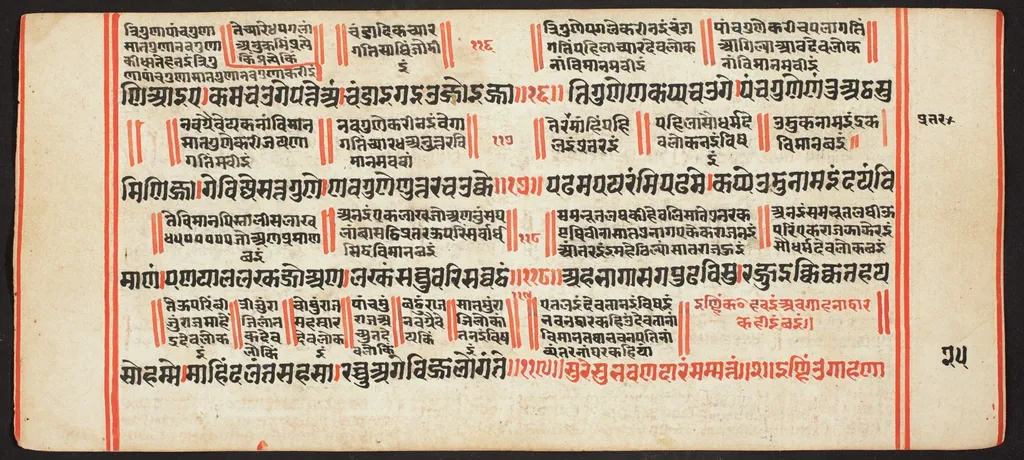
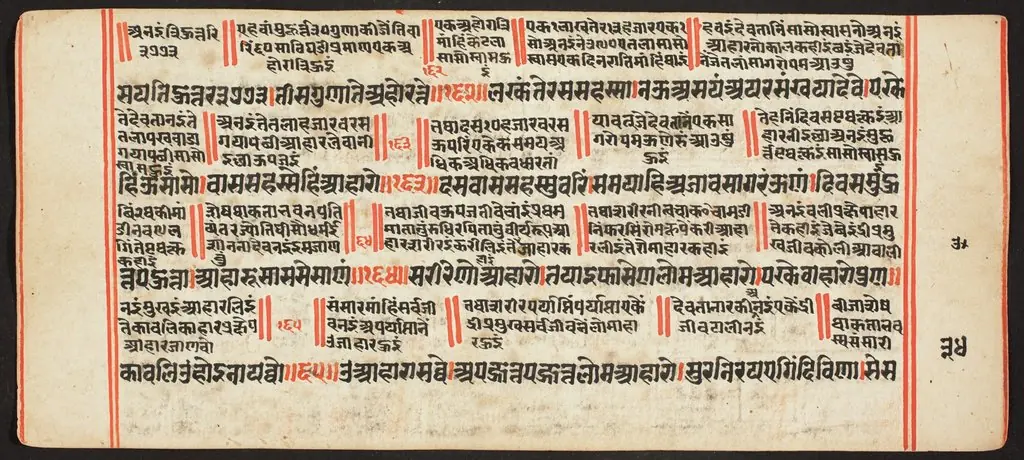
Tantric Manuscript, "Sangrahani Sutra" is an unspecified painting by Unknown. It is held in the collection of the Detroit Institute of Arts. This folio comes from a handwritten Buddhist manuscript known as the Sangrahani Sutra, produced in medieval South Asia.
About this work
Overview
The surface shows signs of age: slight brittleness, uneven discoloration, and minor abrasions from handling over centuries.
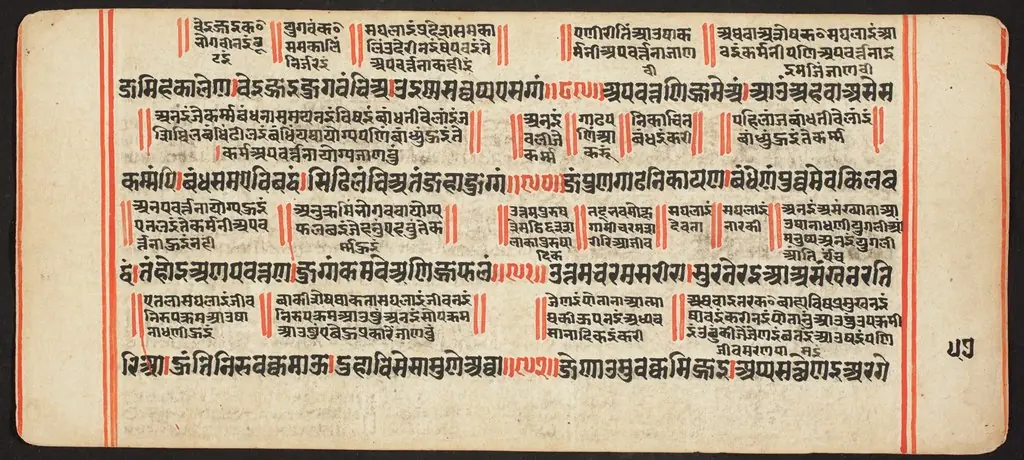
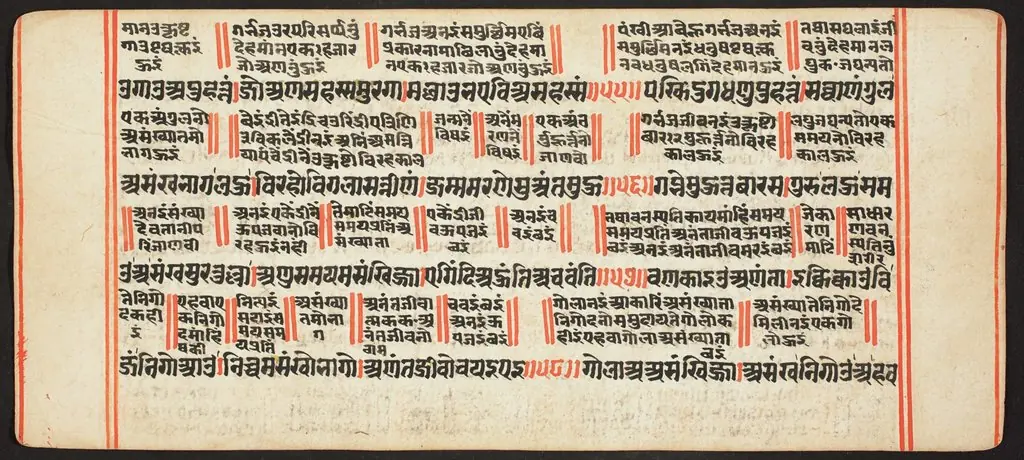
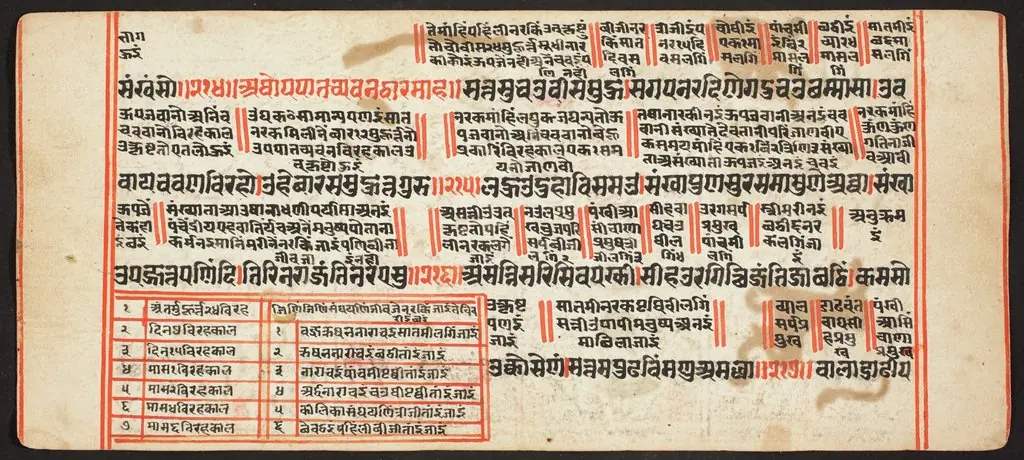
This folio comes from a handwritten Buddhist manuscript known as the Sangrahani Sutra, produced in medieval South Asia. The text is rendered in a regional script no longer in common use, with ink applied in dense, uniform strokes. Red ink lines serve as structural dividers between passages, contrasting with the faded yellowed parchment. The surface shows signs of age: slight brittleness, uneven discoloration, and minor abrasions from handling over centuries.
Subject & Meaning
The Sangrahani Sutra is a doctrinal compilation within the Mahayana Buddhist tradition, organizing key teachings into thematic summaries for study and recitation. Its purpose was pedagogical, intended for monastic use rather than public display. The careful layout and consistent script suggest it was copied by trained scribes within a religious community, emphasizing textual accuracy over ornamental expression.
Technique & Style
The script is executed in black ink with precision, reflecting a standardized scribal practice. Red ink, likely derived from vermilion or cinnabar, was used sparingly to demarcate sections, enhancing readability without distracting from the text. The parchment, possibly made from palm leaf or prepared paper, has warped slightly over time, and the ink has faded unevenly, revealing the material’s organic composition and age.
History & Provenance
The manuscript fragment is held in the collection of the Detroit Institute of Arts, acquired through documented scholarly channels in the 20th century. Its origin is traced to a South Asian Buddhist center, likely in present-day Nepal or eastern India, where such texts were copied and preserved in monastic libraries. No record of earlier ownership exists, suggesting it entered Western collections through colonial-era acquisitions or missionary networks.
Context
During the medieval period, Buddhist communities across the Himalayan and Gangetic regions maintained scribal traditions to preserve canonical texts. Manuscripts like this were produced in controlled environments, often under monastic supervision, using locally available materials. The use of red for section markers aligns with broader South Asian scribal conventions, where color aided navigation in long, unbroken texts.
Legacy
This folio represents a quiet but vital strand of Buddhist intellectual history — the transmission of doctrine through meticulous copying. Though not visually elaborate, its survival offers insight into the material culture of monastic learning. It stands as evidence of sustained textual practice, where the act of writing itself held spiritual significance, independent of aesthetic display.
Artist & collection

 Domestic Scene
 Giacomo and Cardinal Marco, investing Andrea, Abbot of San Zeno, with his Benefice
 The Nymph of Fontainebleau
 Portrait of a Woman
 Madonna and Child with Saints in the Enclosed Garden
 Venus and Minerva
 Family Group of Four on Sofa
 Wall painting from Room H of the Villa of P. Fannius Synistor at Boscoreale
 Tantric Manuscript, "Sangrahani Sutra"
 Tantric Manuscript, "Sangrahani Sutra"
 Tantric Manuscript, "Sangrahani Sutra"
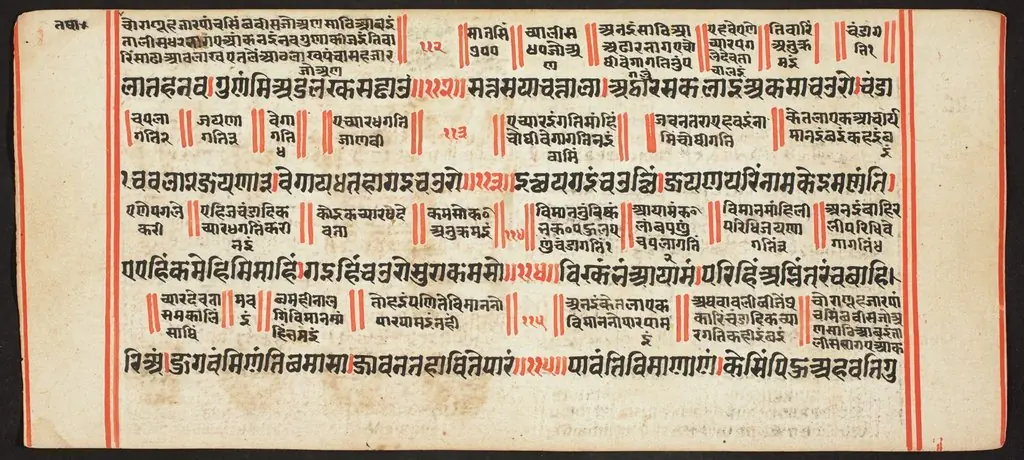 Tantric Manuscript, "Sangrahani Sutra"
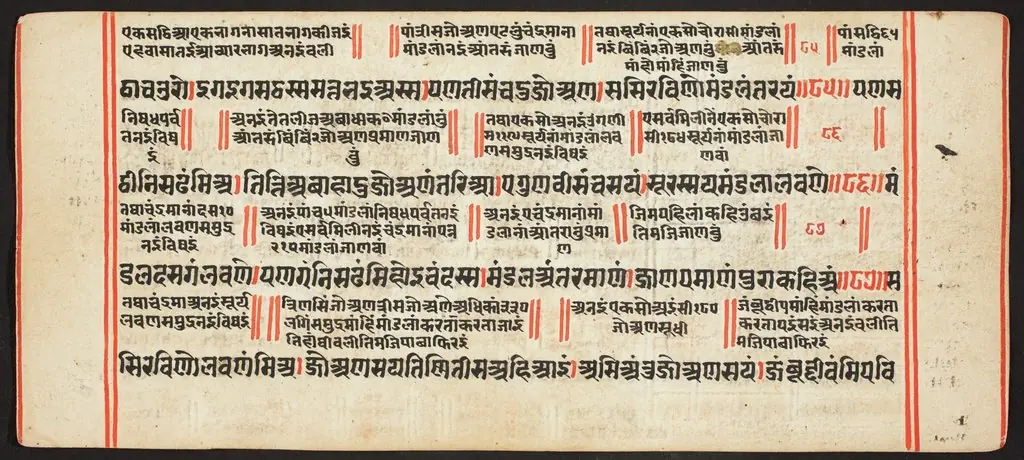 Tantric Manuscript, "Sangrahani Sutra"
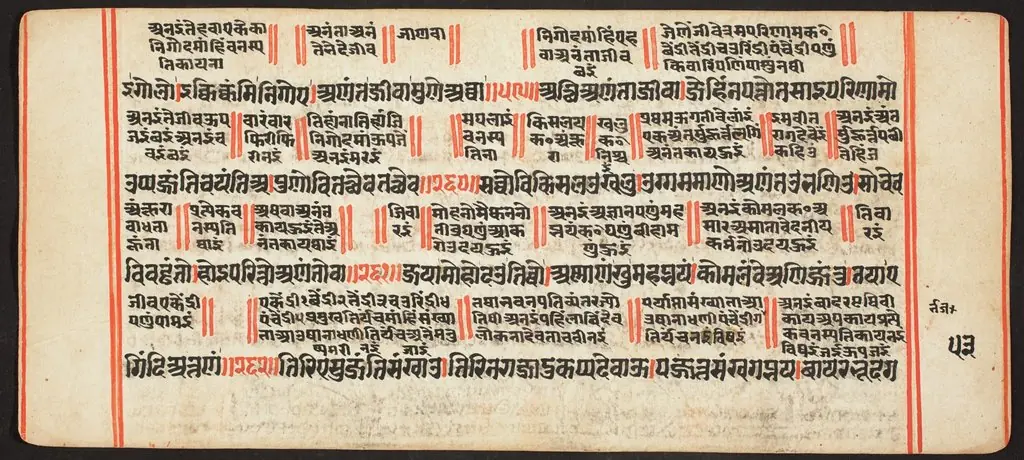 Tantric Manuscript, "Sangrahani Sutra"
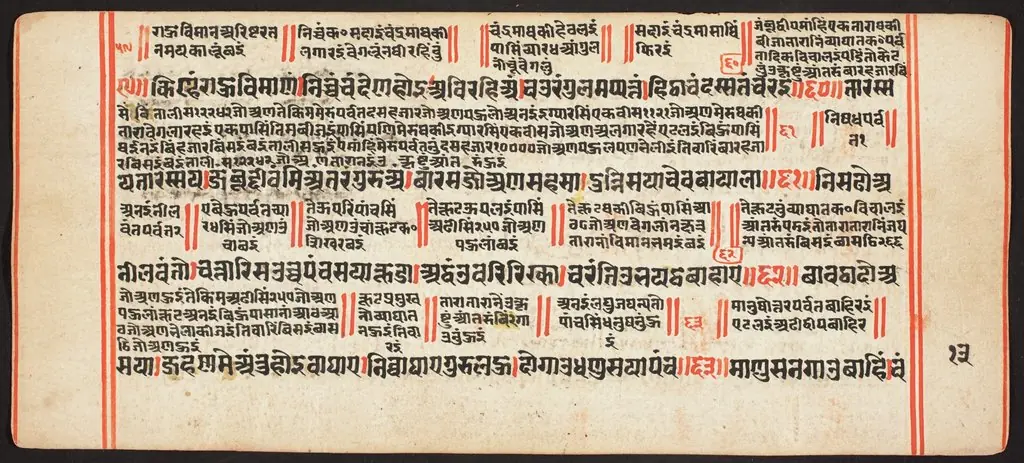 Tantric Manuscript, "Sangrahani Sutra"
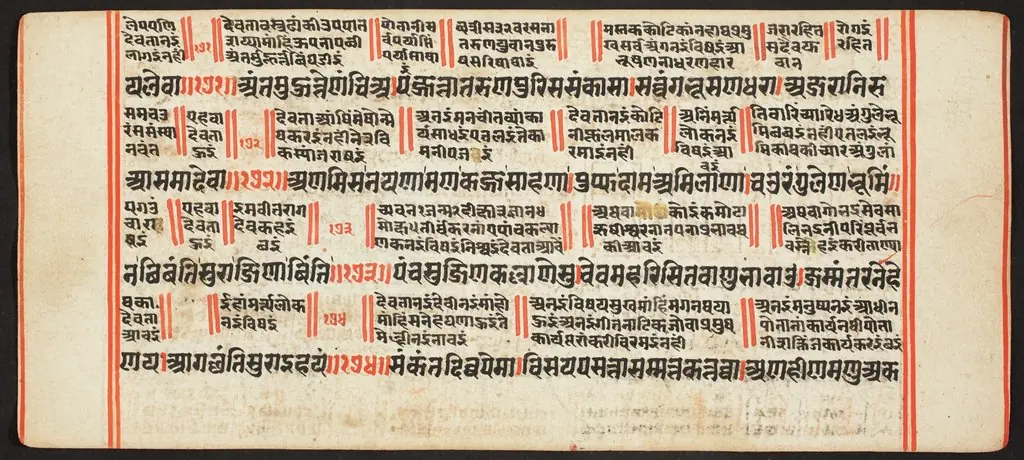 Tantric Manuscript, "Sangrahani Sutra"
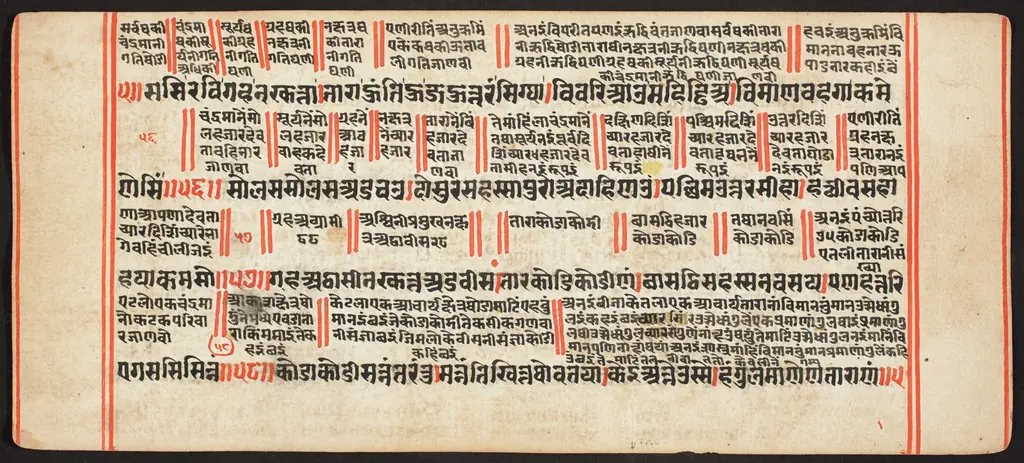 Tantric Manuscript, "Sangrahani Sutra"
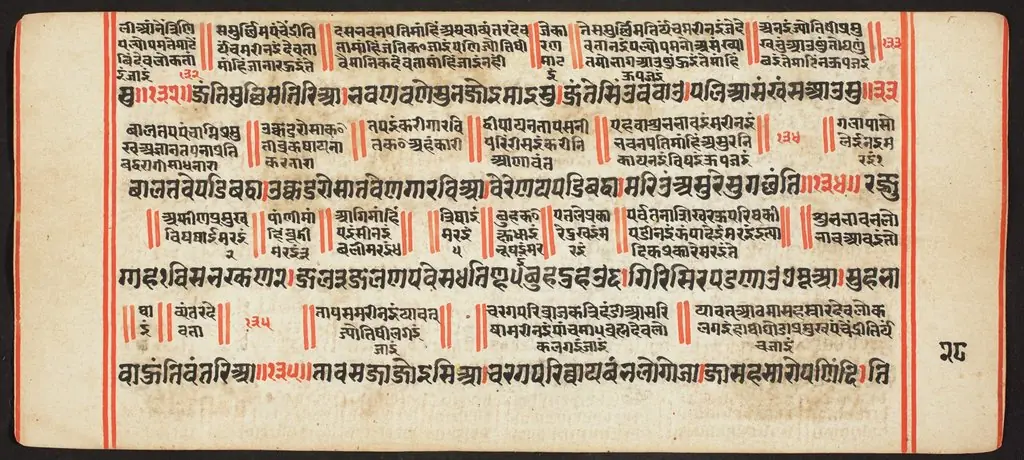 Tantric Manuscript, "Sangrahani Sutra"
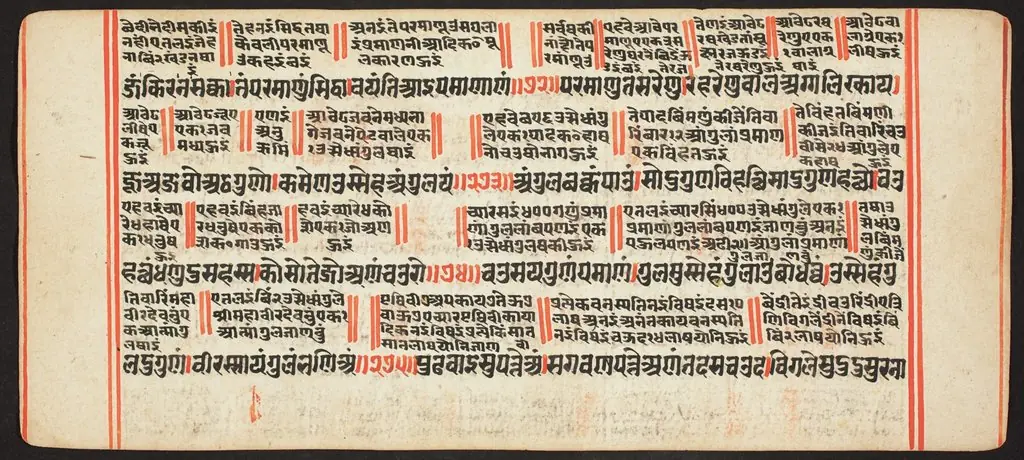 Tantric Manuscript, "Sangrahani Sutra"
 Tantric Manuscript, "Sangrahani Sutra"