Artwork
Pair of Buddhist Manuscript Covers
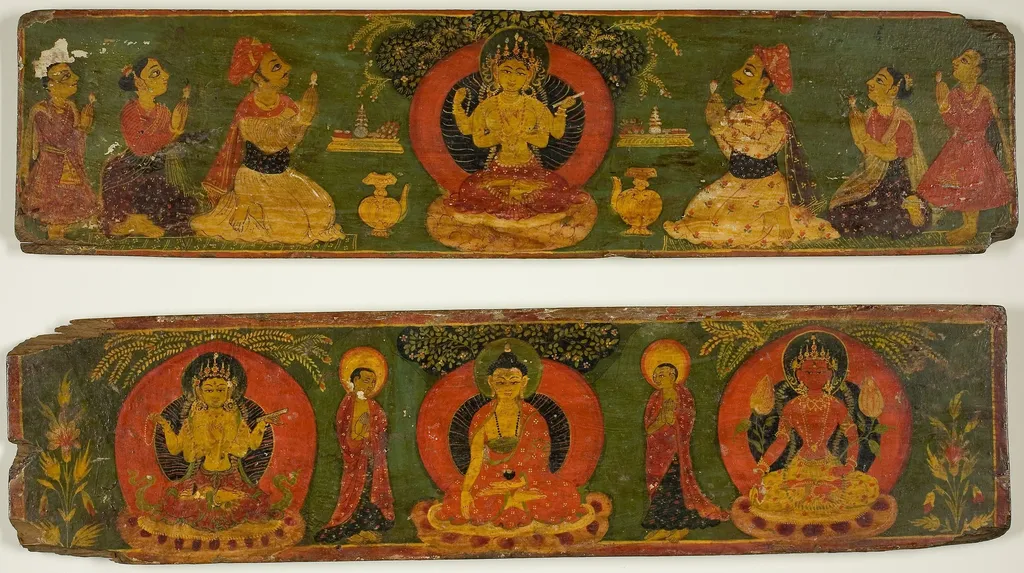
Pair of Buddhist Manuscript Covers is an unspecified painting by Unknown. It dates from 1650 and is held in the collection of the Art Institute of Chicago. These two painted wooden panels served as protective covers for a Buddhist manuscript, likely from the 8th to 9th century.
About this work
Overview
These two painted wooden panels served as protective covers for a Buddhist manuscript, likely from the 8th to 9th century. Crafted in Central Asia, they feature intricate figural scenes rendered in mineral pigments and gold leaf. Their function was both practical and devotional, shielding sacred texts while visually reinforcing their spiritual significance through imagery.
Subject & Meaning
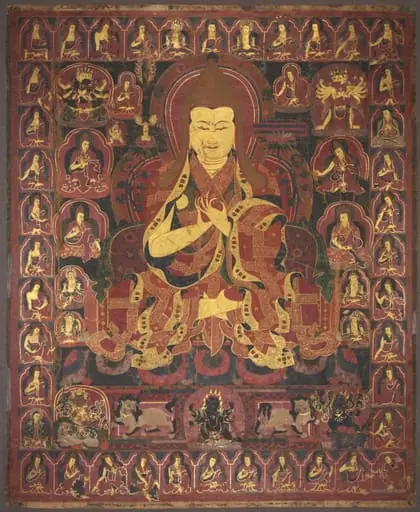
Each panel depicts a bodhisattva in contemplative pose, flanked by attendants and celestial beings. The figures embody compassion and wisdom, central tenets of Mahayana Buddhism. Their serene expressions and flowing drapery suggest inner stillness, guiding the viewer toward meditative focus. The presence of lotus motifs and halos reinforces their sacred status and connection to enlightenment.
Technique & Style
The surfaces were prepared with gesso, then painted using natural pigments such as lapis lazuli and cinnabar, with gold leaf applied for divine radiance. Lines are precise yet fluid, reflecting a synthesis of Indian, Persian, and Chinese artistic traditions. Composition is symmetrical and hierarchical, with larger figures dominating the space to denote spiritual importance.
History & Provenance
The panels were discovered in the Dunhuang caves, a major Buddhist pilgrimage site along the Silk Road. They were sealed within a hidden library chamber around the 11th century, likely to preserve them during periods of political instability. Their survival is attributed to the arid climate and the chamber’s isolation until their rediscovery in the early 20th century.
Context
Created during a time of flourishing cross-cultural exchange along the Silk Road, these covers reflect the blending of Buddhist doctrine with regional aesthetics. Central Asian workshops adapted Indian iconography using local materials and techniques, producing works that served monastic communities while appealing to diverse patrons across ethnic and linguistic boundaries.
Legacy
These covers remain among the few surviving examples of early Buddhist manuscript art from Central Asia. Their preservation has allowed scholars to trace the transmission of Buddhist visual culture across Asia. Today, they are studied for their technical precision and as evidence of how sacred texts were physically and symbolically honored in pre-modern monastic life.
Artist & collection

 Domestic Scene
 Giacomo and Cardinal Marco, investing Andrea, Abbot of San Zeno, with his Benefice
 The Nymph of Fontainebleau
 Portrait of a Woman
 Madonna and Child with Saints in the Enclosed Garden
 Venus and Minerva
 Family Group of Four on Sofa
 Wall painting from Room H of the Villa of P. Fannius Synistor at Boscoreale
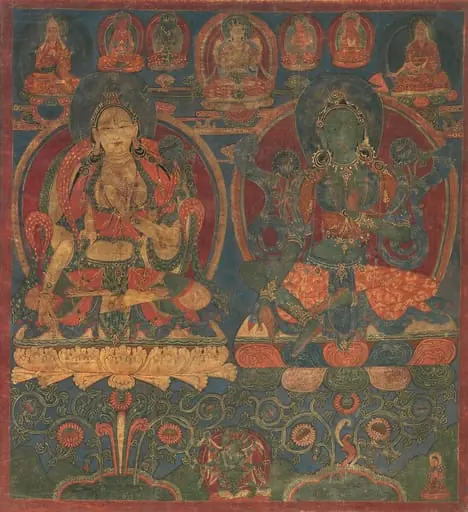 Untitled
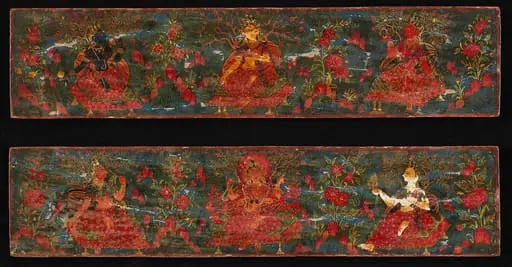 Untitled
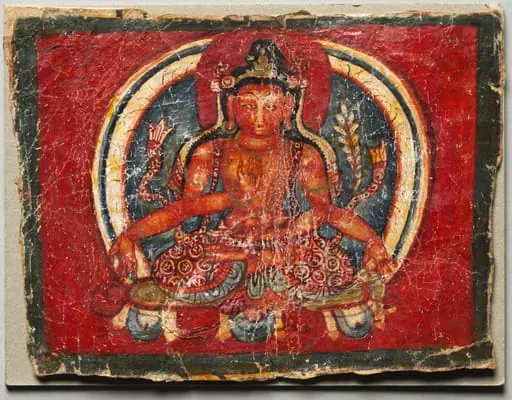 Four-armed Maitreya
 Manuscript of the Perfection of Wisdom in Eight Thousand Lines (Ashtasahasrika Prajnaparamita-sutra)
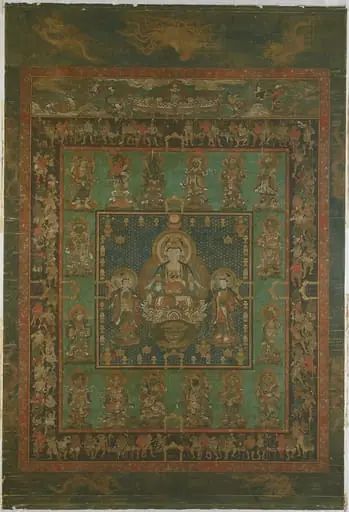 般若菩薩曼荼羅図|Mandala of the Bodhisattva Hannya (Prajnaparamita)
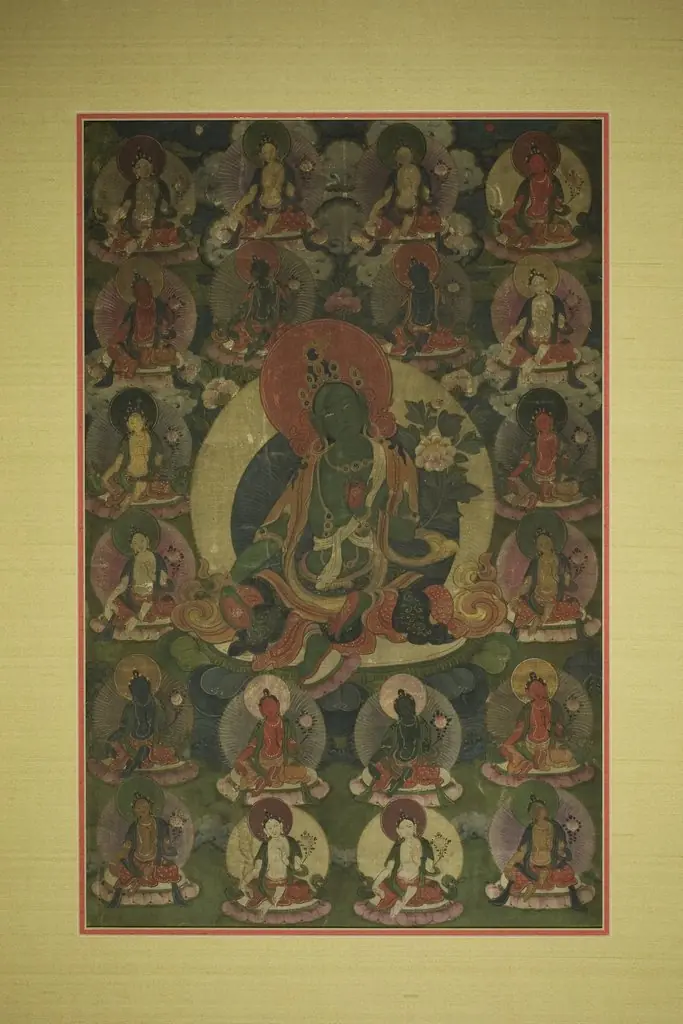 Painted Banner (Thangka) of Green Tara Surrounded by Twenty Manifestations
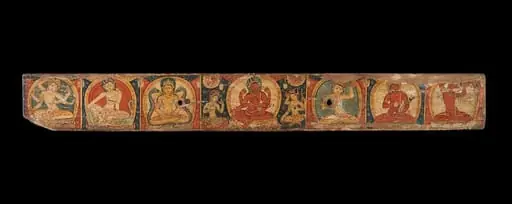 Untitled
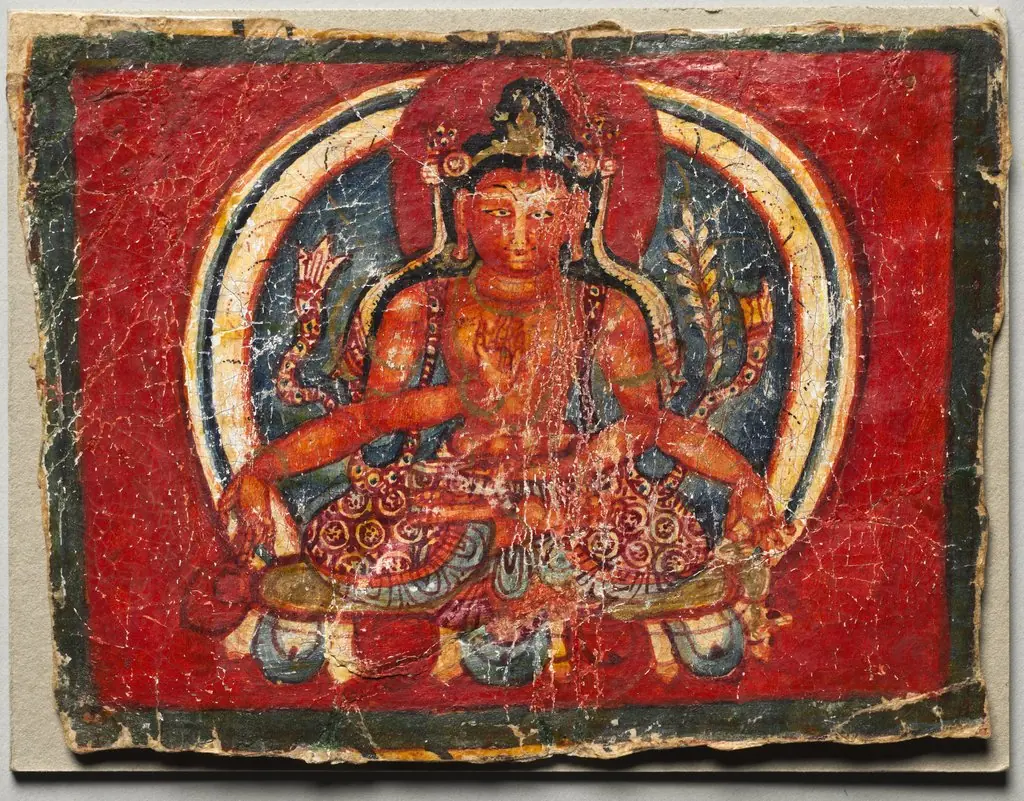 Four-armed Maitreya
 Perfection of Wisdom in Eight Thousand Lines: Ashtasahasrika Prajnaparamita: Back Cover
 Tsong Khapa, Founder of the Geluk Order