Artwork
Four-armed Maitreya
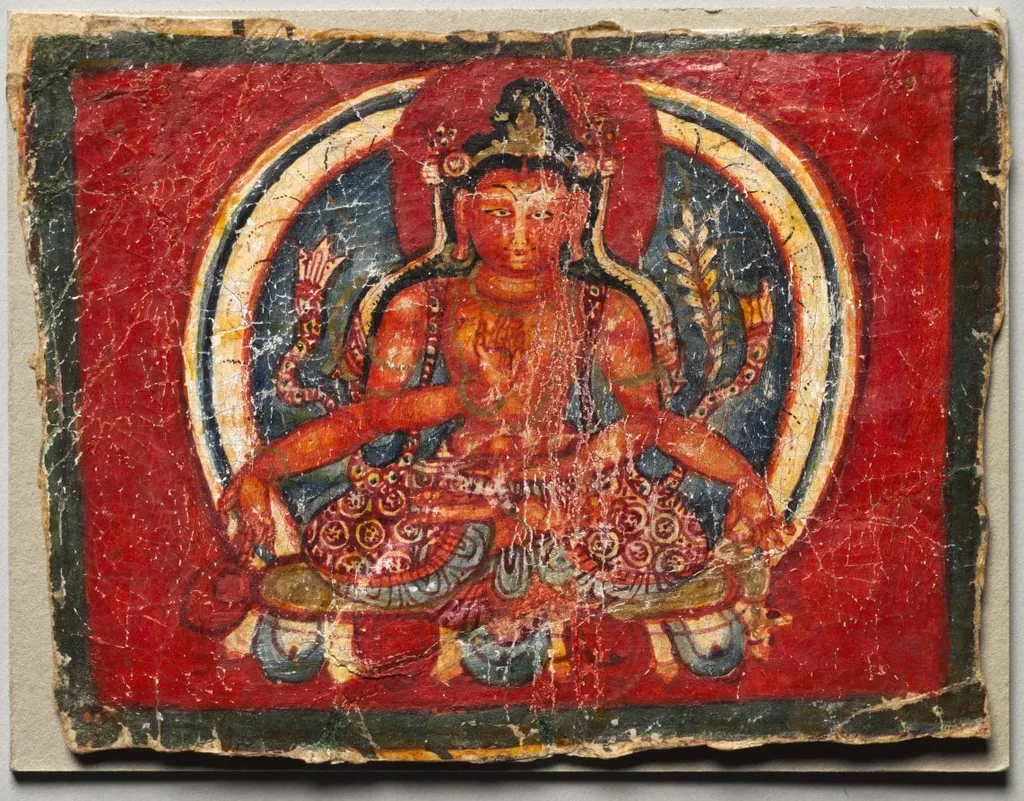
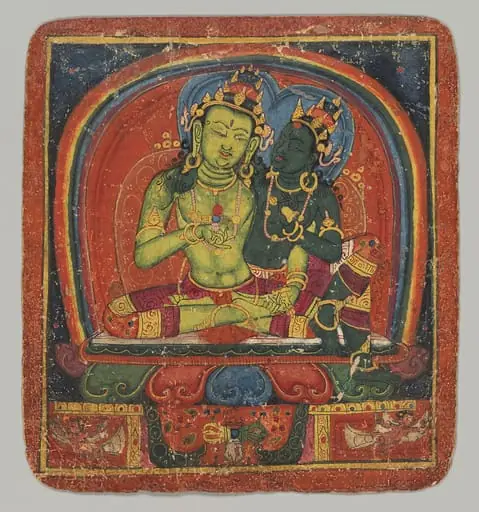
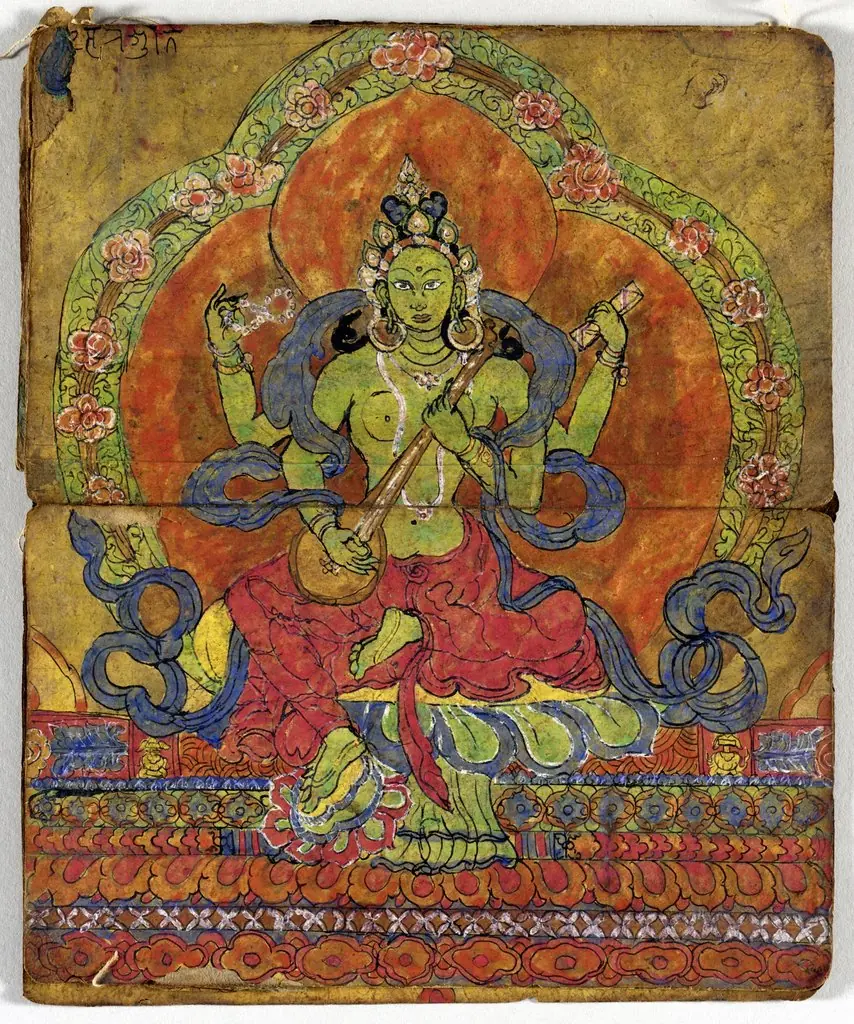
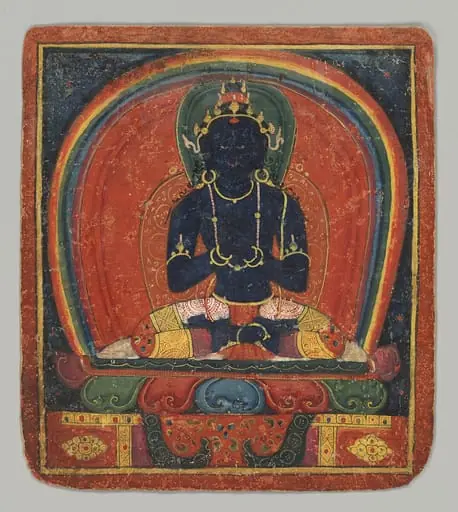
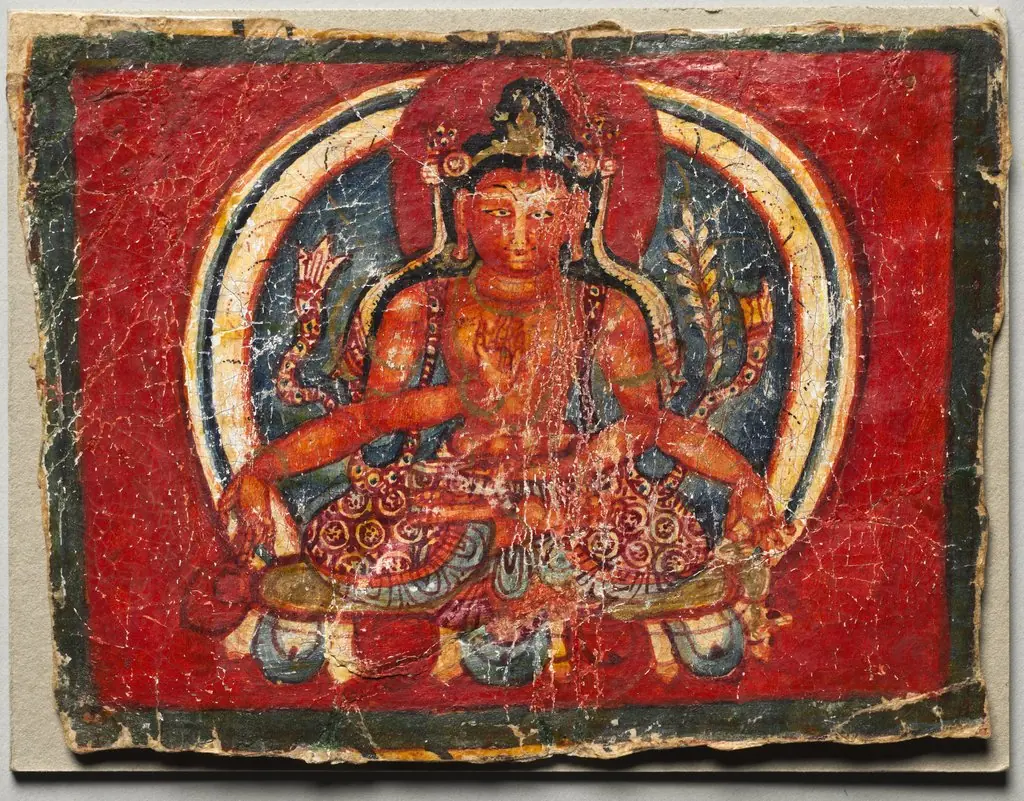
Four-armed Maitreya is an unspecified painting by Unknown. It dates from 1172 and is held in the collection of the Cleveland Museum of Art. The work depicts a seated figure of Maitreya, the future Buddha, rendered with four arms.
About this work
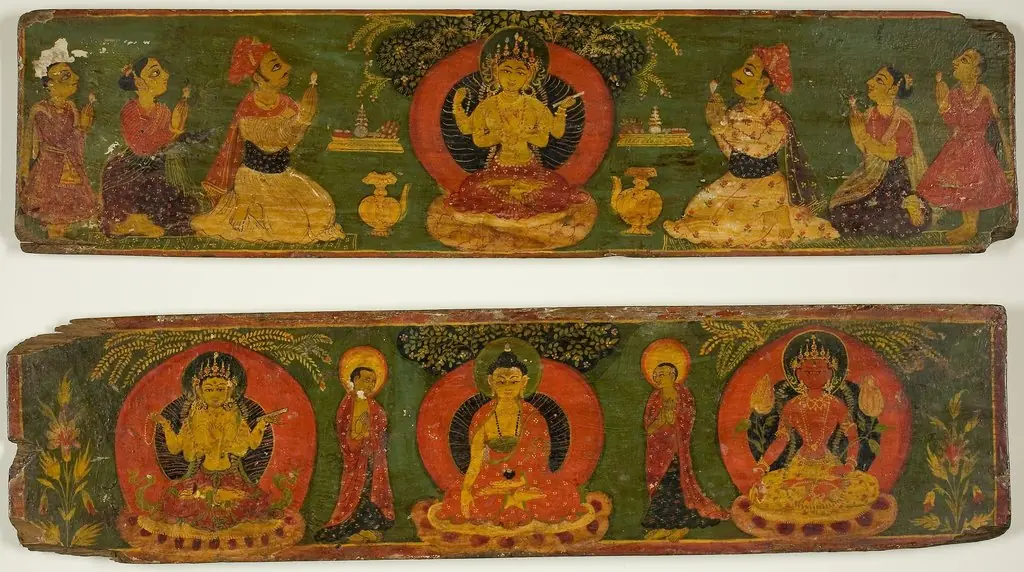
You see a golden statue of a seated Buddha with four arms, each holding a small object—a wheel, a vase, a lotus, and a gesture of teaching.
You see a golden statue of a seated Buddha with four arms, each holding a small object—a wheel, a vase, a lotus, and a gesture of teaching.
This figure is Maitreya, the future Buddha. The extra arms show his power to help many people at once. The style comes from a remote kingdom in western Tibet around 800 years ago, when artists mixed Indian and local traditions.
To see more works like this, look up western tibet [or kashmir (?)], guge school (?), c. early 13th century.
Overview
The work depicts a seated figure of Maitreya, the future Buddha, rendered with four arms. Each hand holds a distinct attribute—a wheel, a vase, a lotus, and a teaching gesture—signifying various aspects of Buddhist doctrine. The composition is dominated by a golden hue that emphasizes the sacred nature of the subject.
Subject & Meaning
Maitreya represents the prophesied Buddha who will appear in the future to renew the Dharma. The four arms convey an ability to assist numerous beings simultaneously, while the specific objects symbolize the wheel of law, purity, enlightenment, and the transmission of teachings, respectively.
Technique & Style
The piece reflects a synthesis of Indian iconographic conventions with local artistic traditions of a western Tibetan kingdom dating to roughly the early 13th century. Gold leaf and mineral pigments are applied in layered washes, creating a luminous surface that echoes the metalwork of the region while retaining a painterly quality.
History & Provenance
Created in a remote western Tibetan realm about eight centuries ago, the work likely originated in a monastic workshop associated with the Guge artistic school. Its survival suggests it was valued within regional religious contexts before entering a broader collection in the modern era.
Context
During the period of its production, western Tibet experienced a flourishing of Buddhist art that blended imported Indian motifs with indigenous styles. This cultural exchange produced distinctive iconography, such as the multi‑armed Maitreya, which served both devotional and didactic functions within the community.
Artist & collection

 Domestic Scene
 Giacomo and Cardinal Marco, investing Andrea, Abbot of San Zeno, with his Benefice
 The Nymph of Fontainebleau
 Portrait of a Woman
 Madonna and Child with Saints in the Enclosed Garden
 Venus and Minerva
 Family Group of Four on Sofa
 Wall painting from Room H of the Villa of P. Fannius Synistor at Boscoreale