Artwork
Het Walplein in Brugge
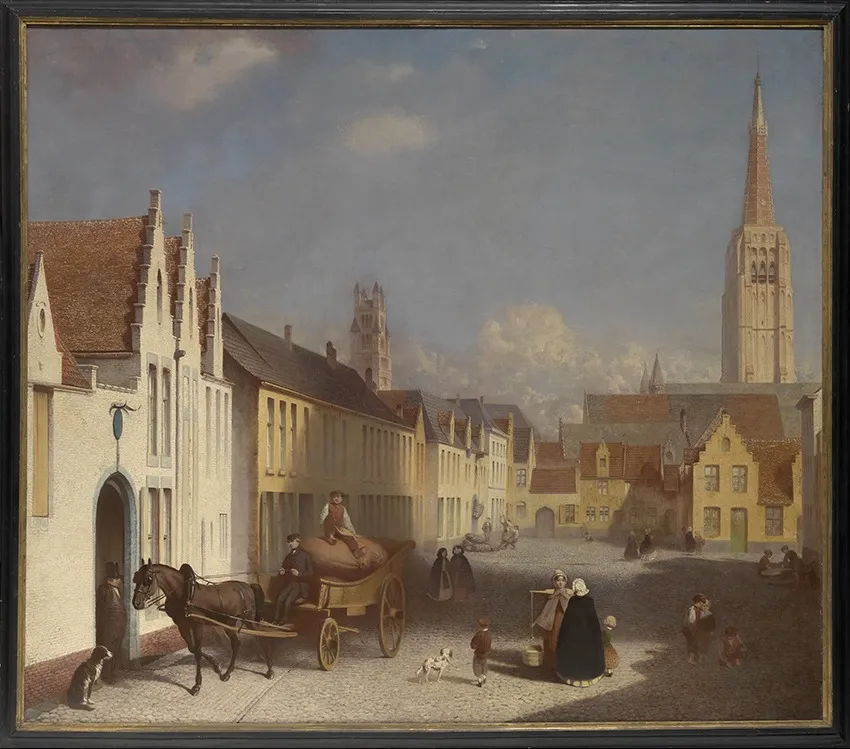
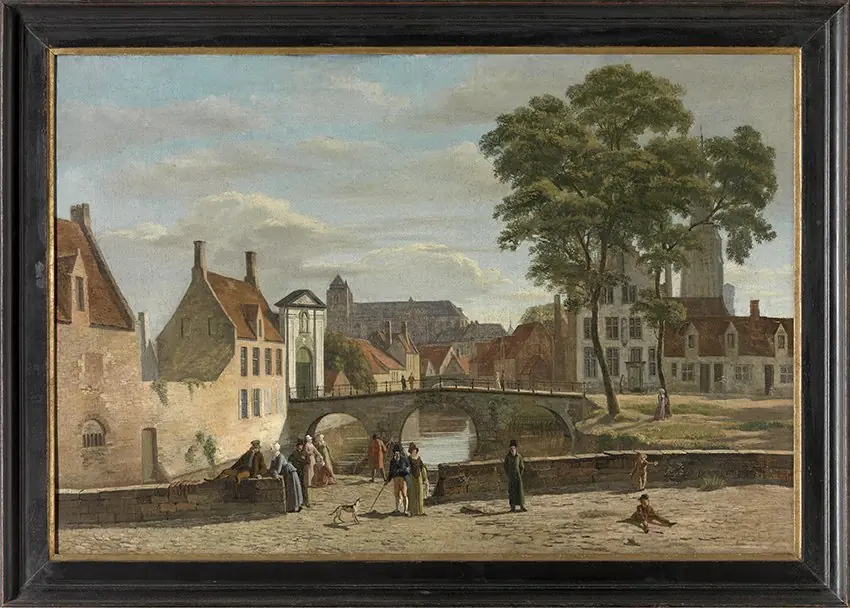
Het Walplein in Brugge is an oil painting by the Barbizon school artist Unknown. It dates from 1858 and is held in the collection of the Groeningemuseum. This oil painting captures a weekday scene on Het Walplein in Bruges, portraying everyday life in a quiet Flemish town.
About this work
Overview
Light and shadow are carefully modulated to suggest midday sun, lending spatial depth and a quiet rhythm to the activity.
This oil painting captures a weekday scene on Het Walplein in Bruges, portraying everyday life in a quiet Flemish town. The composition centers on a parked horse-drawn carriage before a whitewashed building with a tiled roof, surrounded by pedestrians moving through the cobbled square. Light and shadow are carefully modulated to suggest midday sun, lending spatial depth and a quiet rhythm to the activity.
Subject & Meaning
The scene presents ordinary urban life without theatricality—children at play, adults conversing, and individuals engaged in routine tasks. There is no single focal narrative; instead, the painting values the quiet dignity of daily routines. The inclusion of both old and newer architectural elements subtly reflects the town’s evolving character during the period.
Technique & Style
The artist employs chiaroscuro to define form and volume, with strong contrasts between sunlit surfaces and shaded recesses. Brushwork is precise in architectural details—window frames, roof tiles, and stone textures—while figures are rendered with enough expression to suggest individuality without idealization. The palette remains restrained, dominated by earth tones and soft whites, enhancing the scene’s realism.
History & Provenance
The painting has been held in the collection of the Groeningemuseum in Bruges since at least the early 20th century. Its origins trace to a local artist active in the late 19th or early 20th century, though the exact date of creation and artist’s identity remain undocumented in public records. It was likely acquired as part of a broader effort to preserve regional visual culture.
Context
During the period it was painted, Bruges was transitioning from a historic commercial center to a quieter, more residential town. Artists increasingly turned to local scenes as subjects, moving away from grand historical or religious themes. This work reflects a growing interest in documenting everyday urban life with observational accuracy.
Legacy
The painting contributes to a regional tradition of Flemish genre scenes that prioritize authenticity over drama. Though not widely exhibited beyond the museum, it remains a valued example of how local artists captured the texture of provincial life in the decades before industrialization transformed European towns.
Artist & collection

 Domestic Scene
 Giacomo and Cardinal Marco, investing Andrea, Abbot of San Zeno, with his Benefice
 The Nymph of Fontainebleau
 Portrait of a Woman
 Madonna and Child with Saints in the Enclosed Garden
 Venus and Minerva
 Family Group of Four on Sofa
 Wall painting from Room H of the Villa of P. Fannius Synistor at Boscoreale
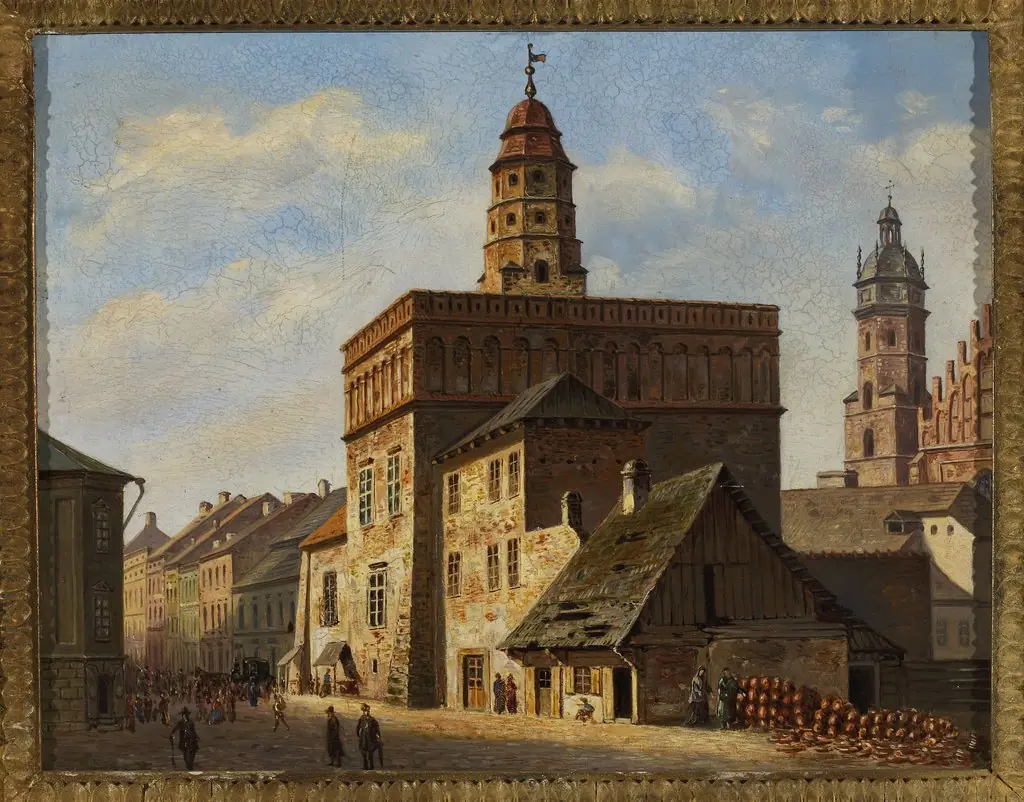 Old town hall at the Wolnica square in Kazimierz, Kraków
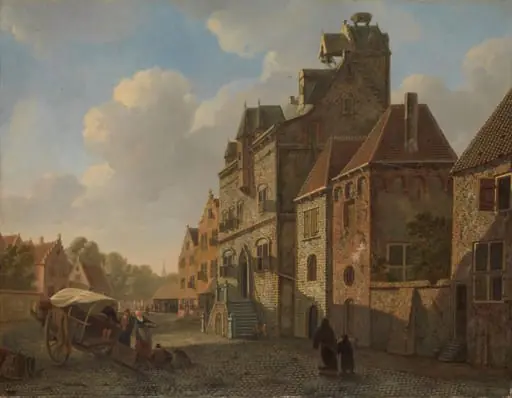 View in Dordrecht
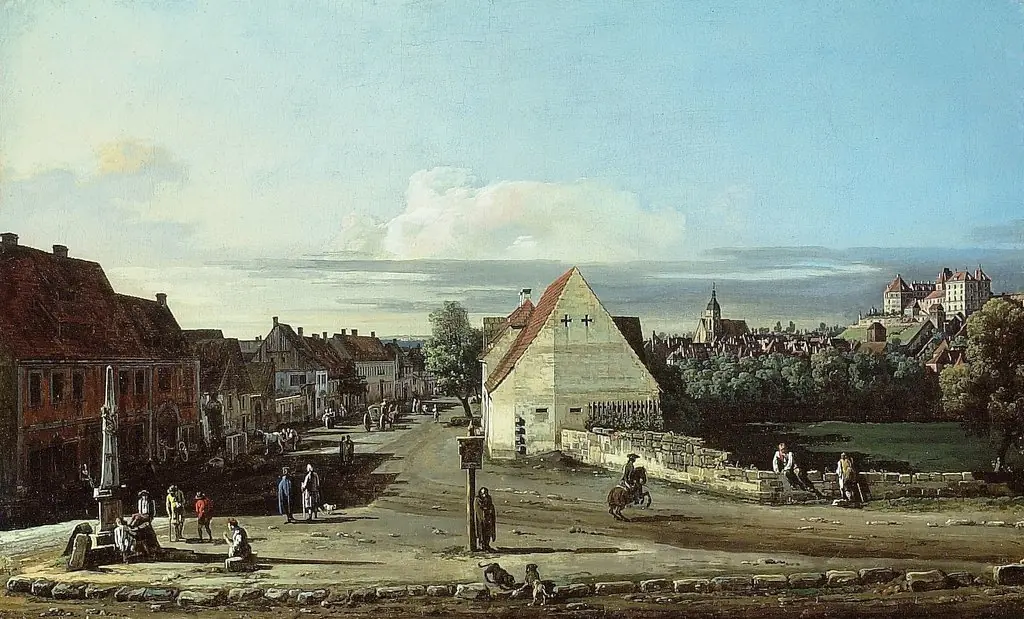 View of Pirna, from Sonnestein Castle
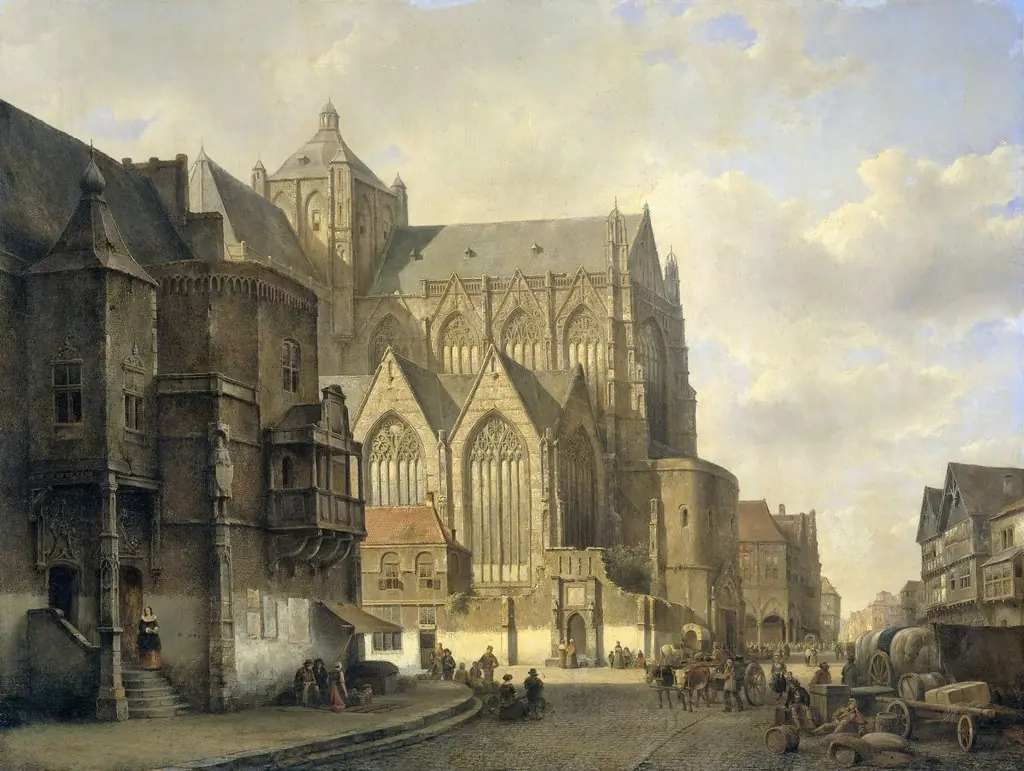 Cityscape, Rijksmuseum
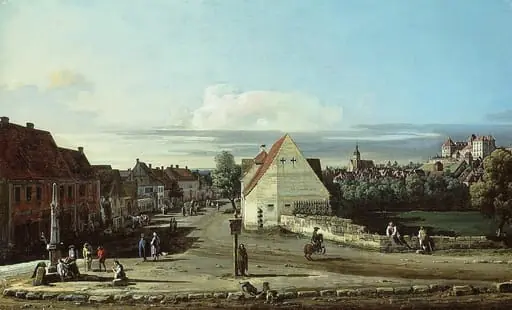 View of Pirna with the Fortress of Sonnenstein
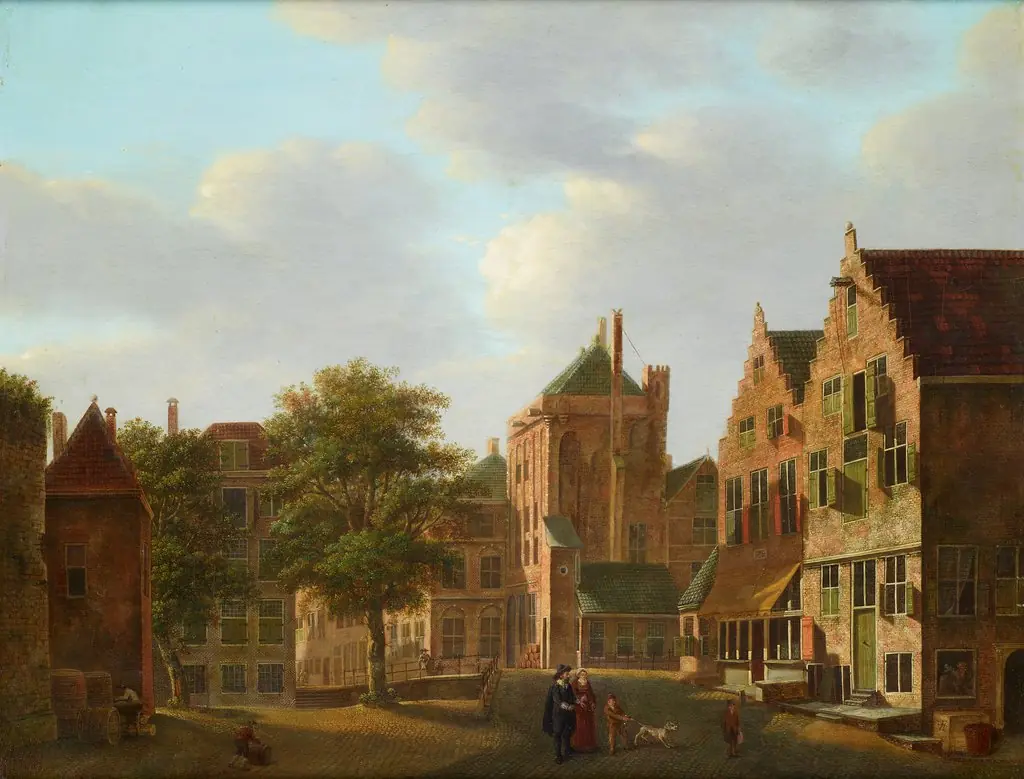 City View with elegant Couple
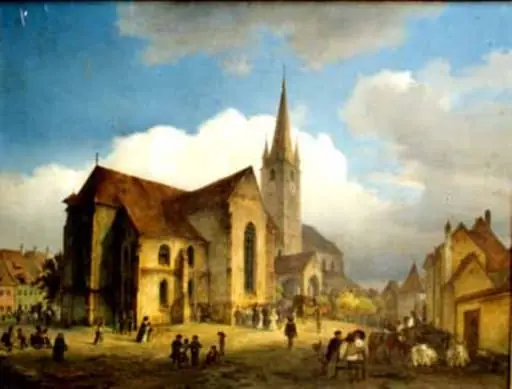 Biserica Evanghelică din Sibiu
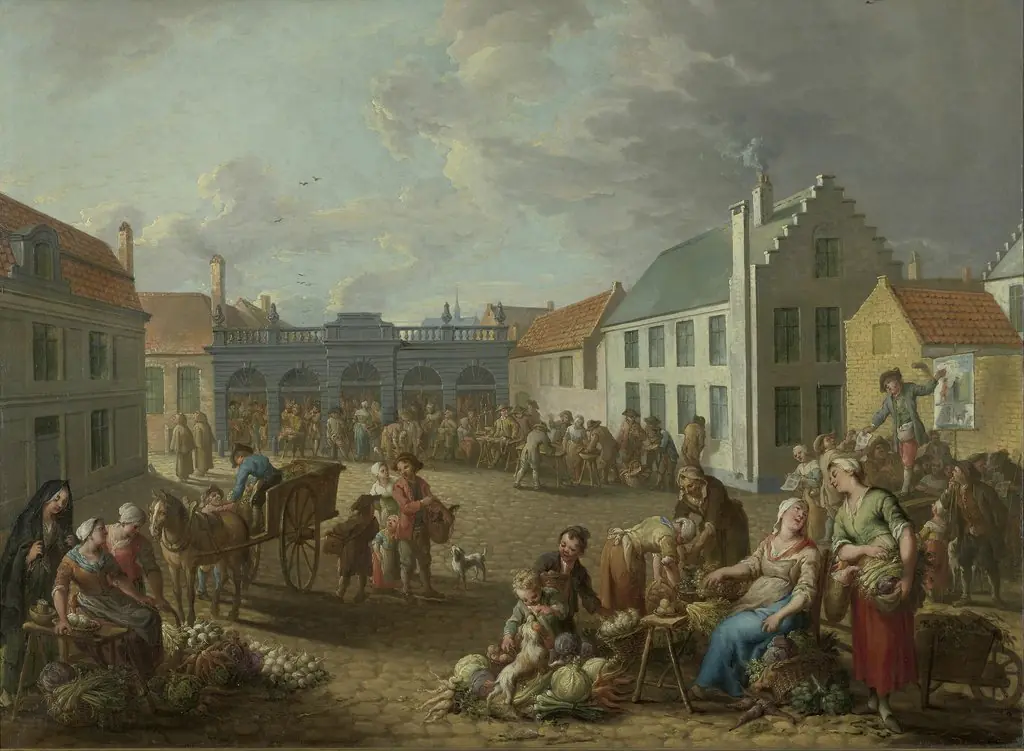 Pandreitje street in Bruges
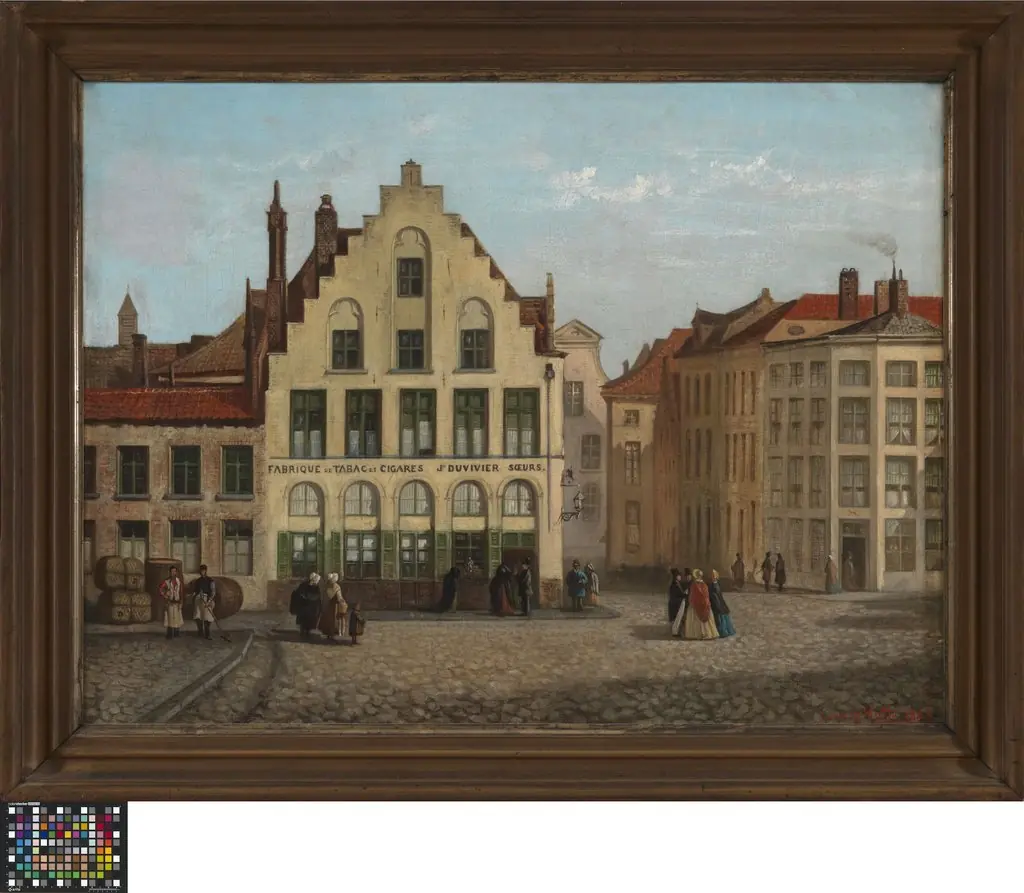 De oude beursplaats in Brugge
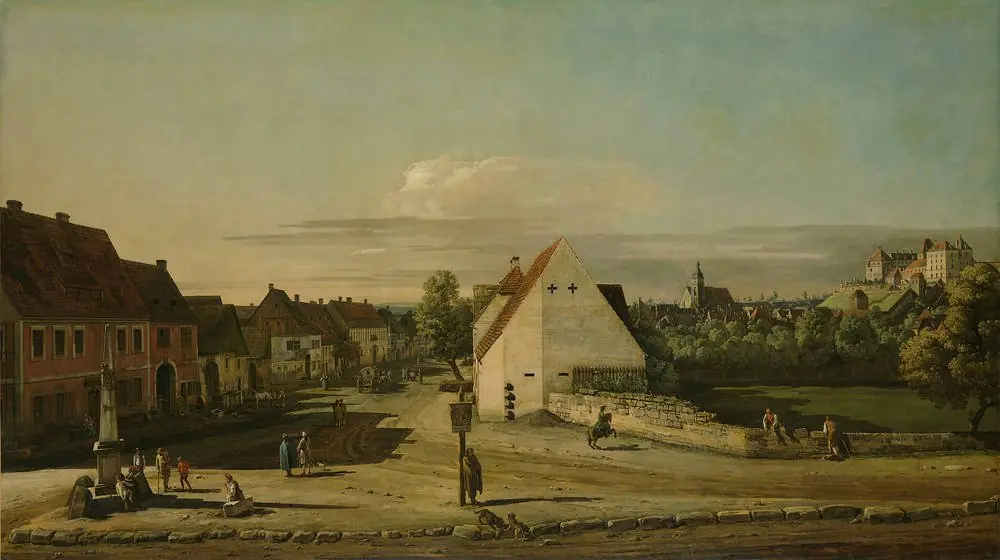 Die Breite Gasse in Pirna
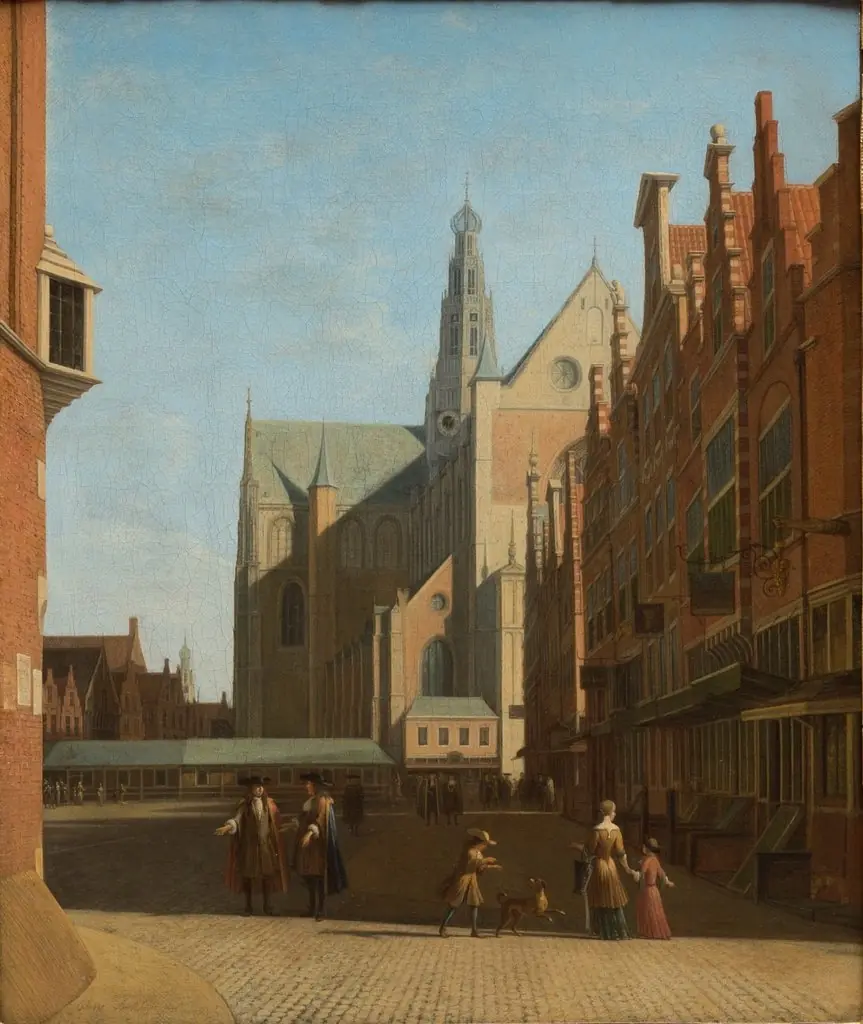 View of the Grote Kerk in Haarlem
 Ingang van het Begijnhof in Brugge