Artwork
Portrait of Willem Lodewijk (1560-1620), Count of Nassau, nicknamed in Frisian 'us heit' (our father)
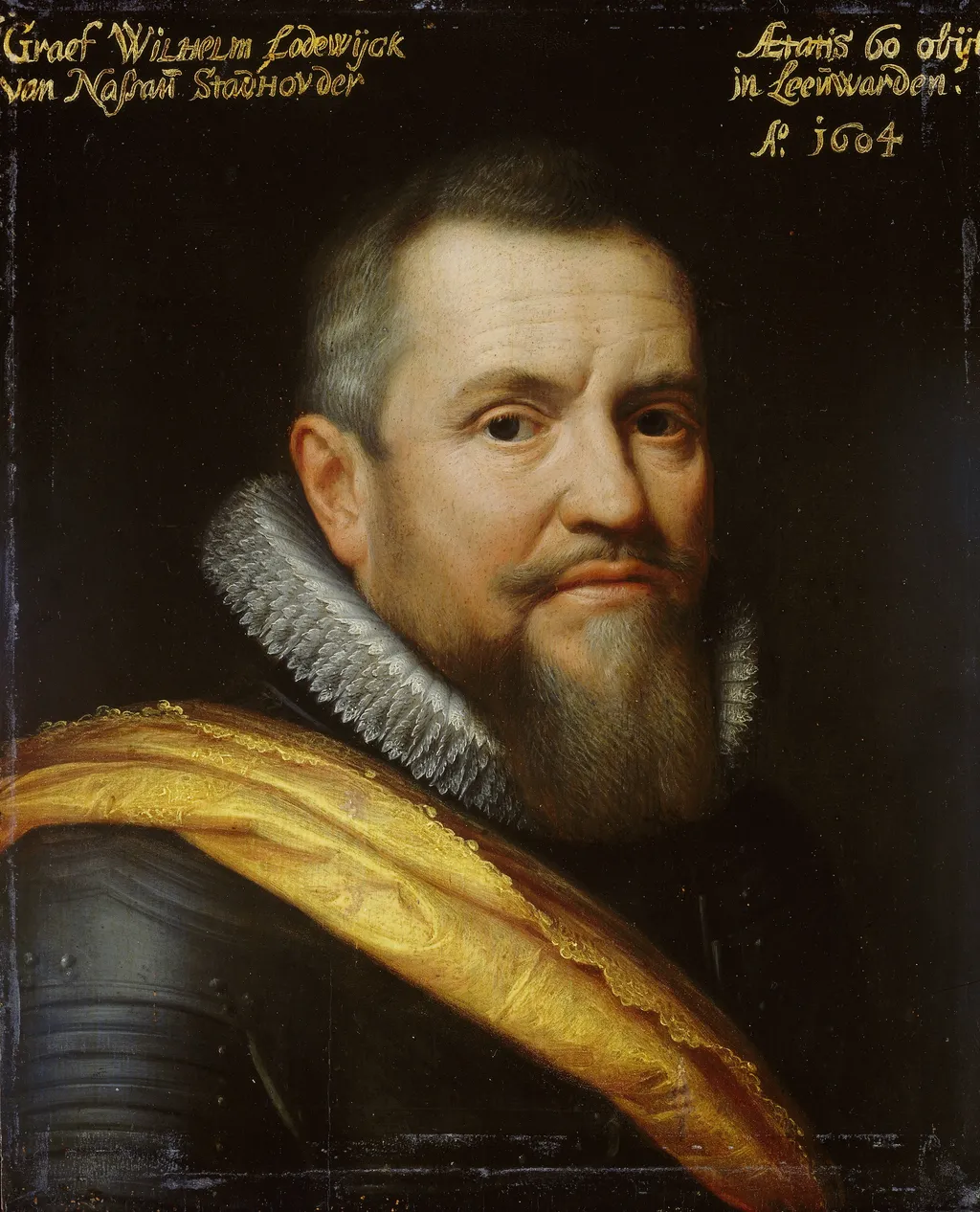
Portrait of Willem Lodewijk (1560-1620), Count of Nassau, nicknamed in Frisian 'us heit' (our father) is an oil painting. It dates from 1609 and is held in the collection of the Rijksmuseum. The oil portrait presents Willem Lodewijk, Count of Nassau (1560‑1620), a noble of the Dutch Republic.
About this work
Overview
The oil portrait presents Willem Lodewijk, Count of Nassau (1560‑1620), a noble of the Dutch Republic. Rendered against a dark backdrop, the sitter faces the viewer with a composed, solemn expression, his gaze directed slightly to the right. His attire—a black, high‑collared shirt accented by a gold sash draped over the left shoulder—identifies his aristocratic status.
Subject & Meaning
Willem Lodewijk, known in Frisian as “us heit” (our father), is depicted with short gray hair, a neatly trimmed beard, and thick, gray eyebrows framing brown eyes. The restrained palette and dignified pose convey authority and gravitas, reflecting the expectations of a high‑ranking family patriarch in the early seventeenth century.
Technique & Style
The artist employs chiaroscuro to model the face and clothing, allowing light to carve out volume from the surrounding darkness. Subtle gradations of tone give the flesh a palpable texture, while the gold writing at the top of the composition adds a decorative, almost heraldic element that balances the otherwise austere setting.
Context
Created during the late Renaissance period in the Dutch lands, the portrait aligns with contemporary conventions for representing nobility: a plain, dark background, minimal props, and emphasis on facial likeness. Such works served both as personal commemoration and as visual affirmation of lineage and status within the politically fragmented Holy Roman Empire.
Artist & collection