Artwork
Portrait of Philips Willem (1554-1618), Prince of Orange
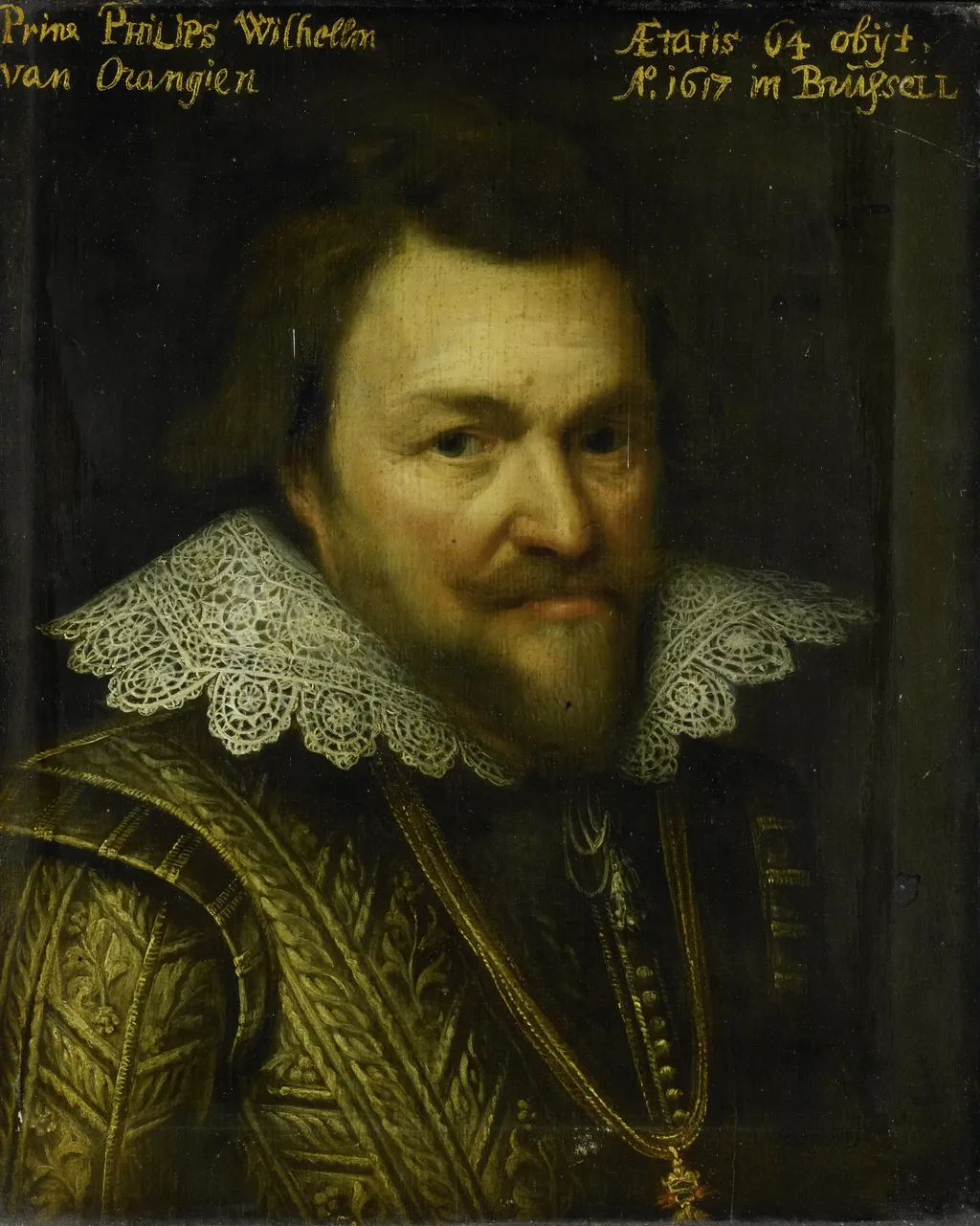
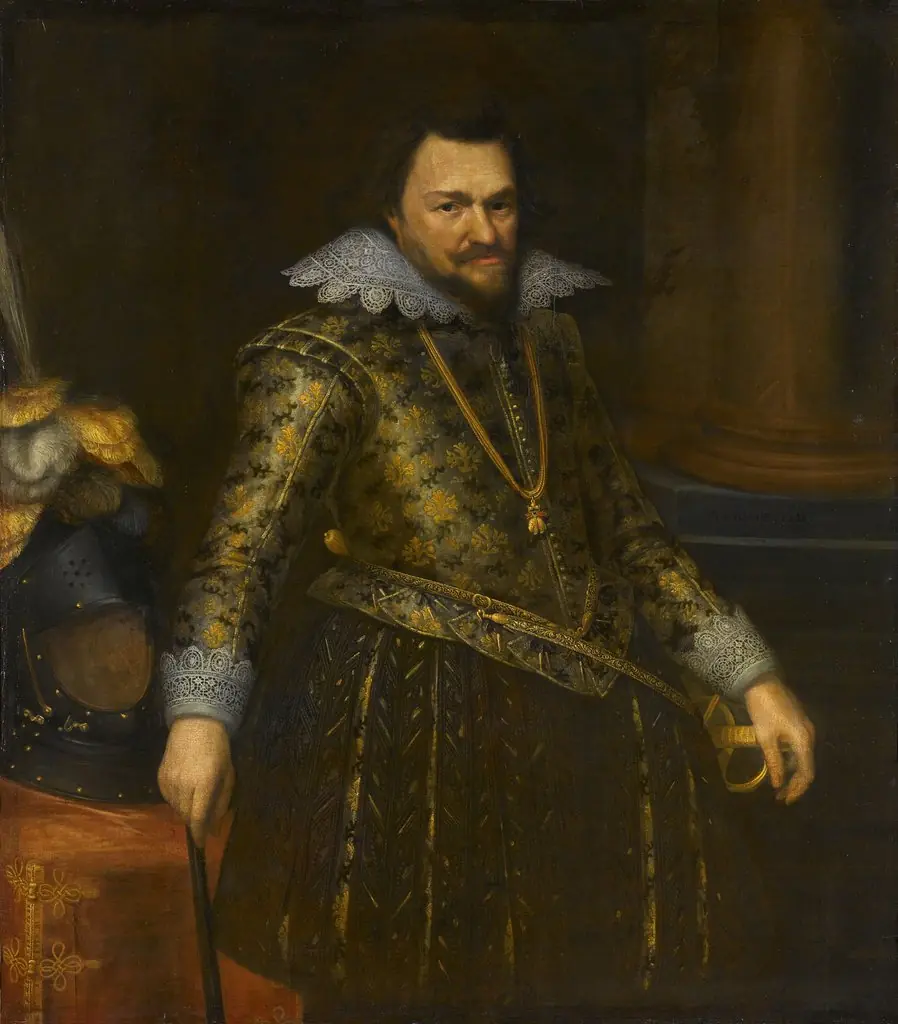
Portrait of Philips Willem (1554-1618), Prince of Orange is an oil painting. It dates from 1621 and is held in the collection of the Rijksmuseum.
About this work
The painting was made after the man’s death, as the text at the top says he died in 1617.
This is a close-up portrait of a man with a serious expression. He’s wearing a dark, gold-trimmed doublet and a white lace collar. His beard is neatly trimmed, and he has a chain around his neck. The background is plain and dark, so all the focus is on his face.
The painting was made after the man’s death, as the text at the top says he died in 1617. His outfit looks fancy, like someone important.
Next, look up chiaroscuro to see how artists use light and shadow like this.
Overview
The oil painting presents a close‑up likeness of Philips Willem, Prince of Orange, rendered with a sober expression and a restrained palette. He is dressed in a dark doublet edged with gold trim, complemented by a white lace collar and a modest chain at his throat. A plain, dark background isolates the figure, directing attention to the facial features and attire.
Subject & Meaning
Philips Willem (1554‑1618) was a notable member of the Dutch House of Orange, a lineage central to the political and military history of the Netherlands. The portrait, created after his death, serves as a commemorative image, emphasizing his status through sumptuous clothing and a dignified demeanor, while the lack of overt symbols suggests a focus on personal remembrance rather than political propaganda.
Technique & Style
The work employs chiaroscuro, using strong contrasts between illuminated facial planes and the surrounding shadow to model the sitter’s features. The brushwork is smooth in the rendering of skin and lace, while the fabric’s texture is suggested through subtle tonal variations. This controlled handling of light and shade reflects the early‑17th‑century Dutch portrait tradition, prioritizing realism and psychological presence.
History & Provenance
The inscription indicating the sitter’s death in 1617 confirms the portrait’s posthumous commission, likely intended for a family collection or a civic institution. Documentation traces its ownership through several Dutch noble estates before entering a public museum collection in the late 19th century, where it has remained accessible to scholars and visitors.
Context
Created during a period when the Dutch Republic was consolidating its independence, the portrait aligns with contemporary practices of memorializing elite figures. The emphasis on sober attire and restrained composition mirrors the Protestant aesthetic preferences of the era, which favored modesty and restraint over overtly lavish display.
Artist & collection