Artwork
Philip II in St. Quentin's Armour
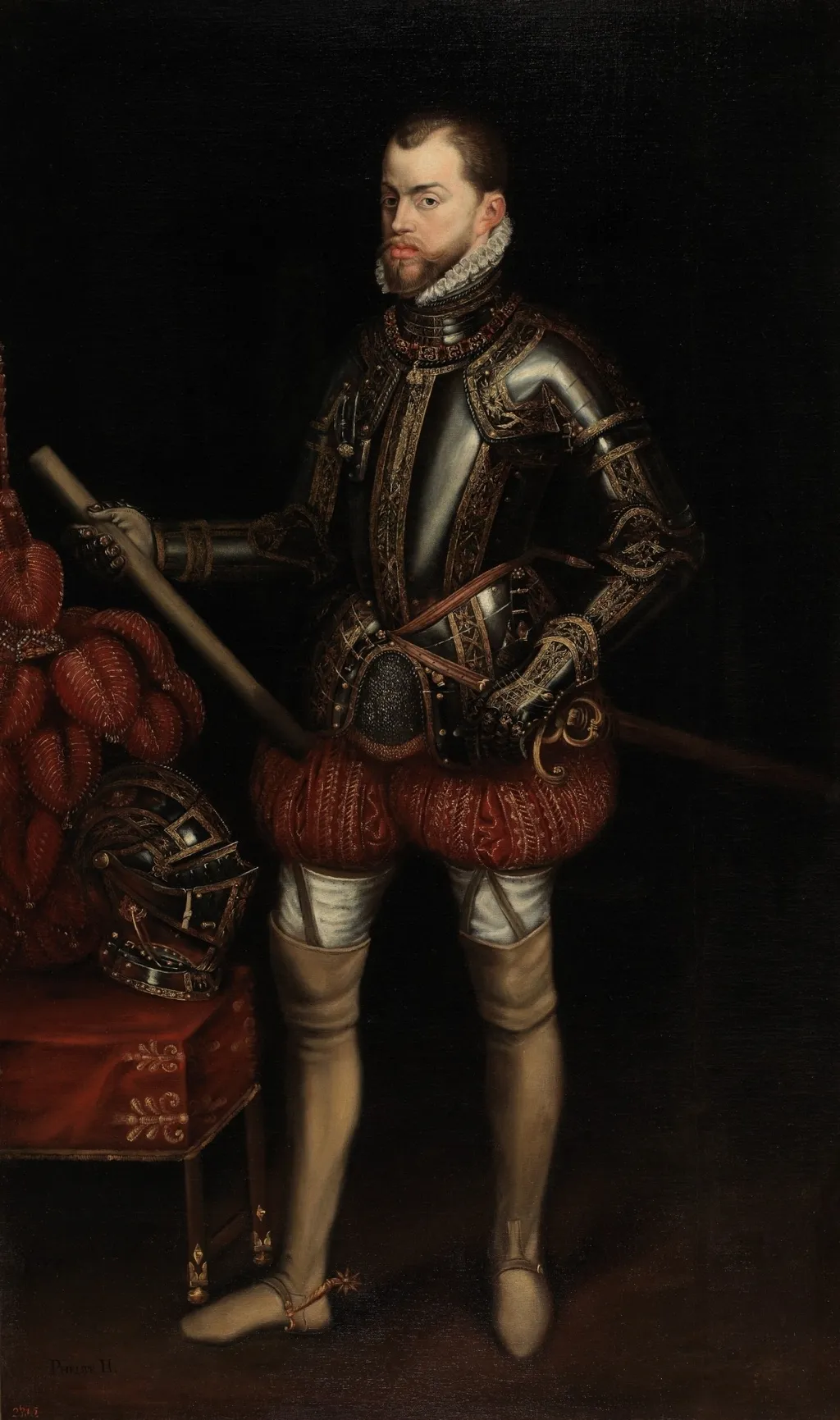
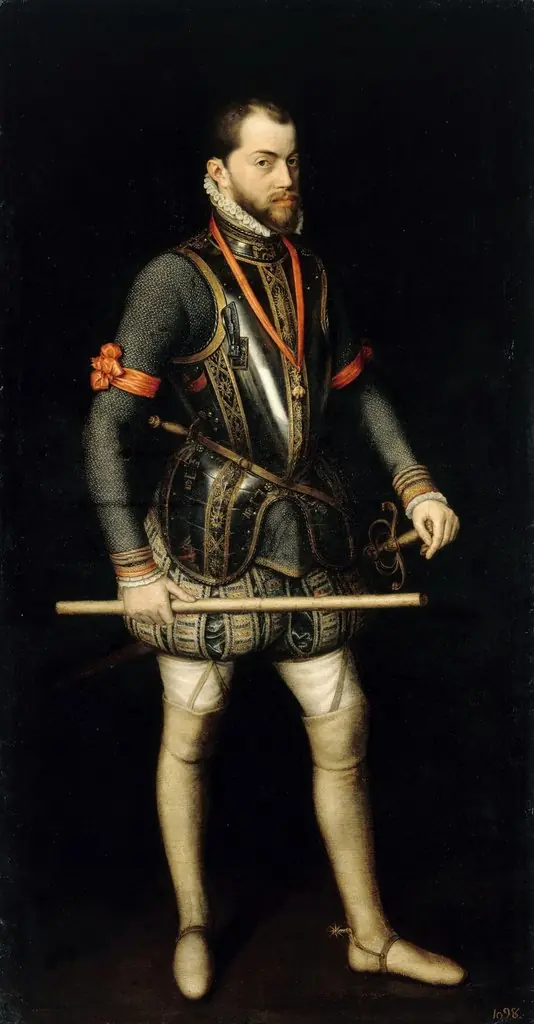
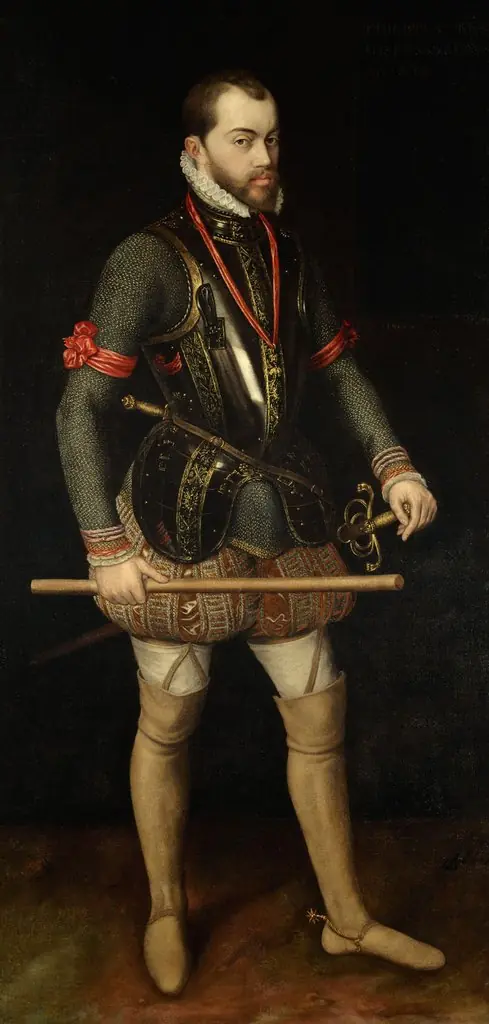
Philip II in St. Quentin's Armour is an oil painting by the Early Baroque Italian artist Unknown. It dates from 1601 and is held in the collection of the Museo del Prado. The work is an oil painting portraying a solitary figure in full armor before a dark backdrop.
About this work
Overview
The work is an oil painting portraying a solitary figure in full armor before a dark backdrop.
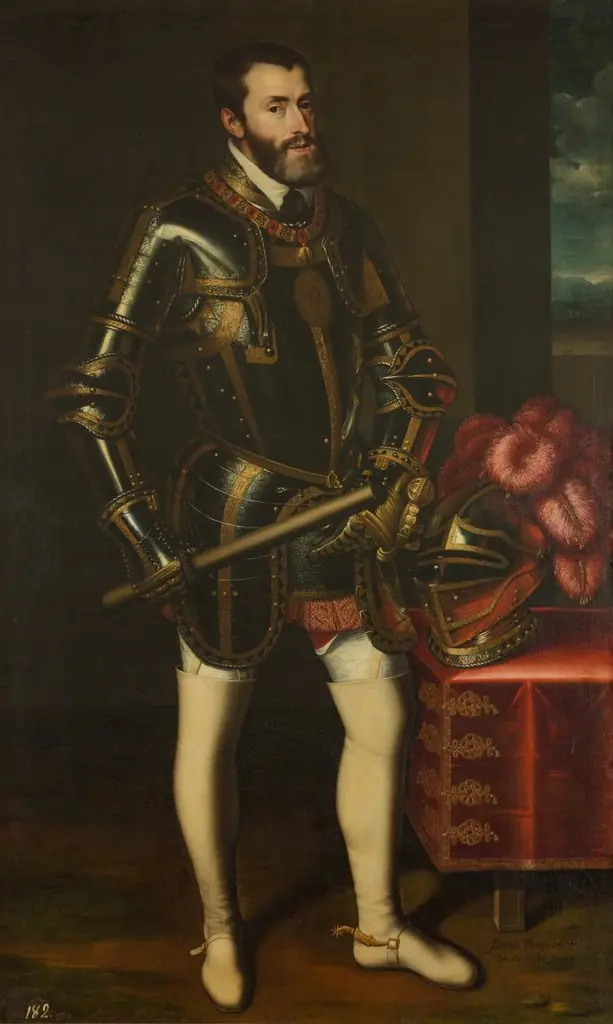
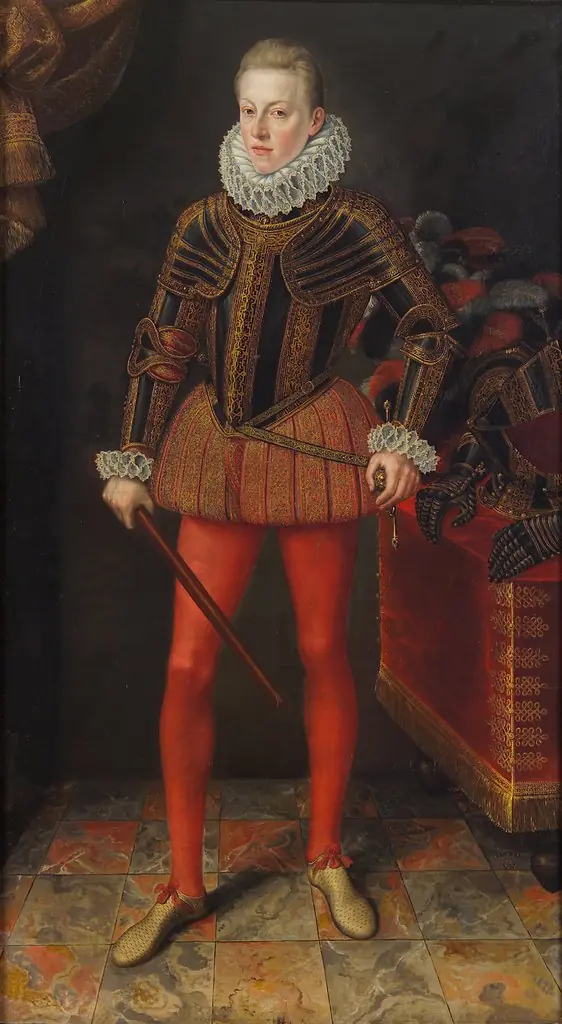
The work is an oil painting portraying a solitary figure in full armor before a dark backdrop. The subject stands upright, sword in his right hand, the left hand resting on the hilt, while a richly draped red and gold cloth hangs over a nearby chair, supporting a helmet. The armor is heavily ornamented with gold detailing and a high, protective collar, and the figure’s gaze is directed straight ahead, conveying a solemn presence.
Subject & Meaning
The portrait represents Philip II of Spain, emphasizing his role as a sovereign and military leader. The elaborate armor and the poised sword serve as visual symbols of authority and martial readiness, while the subdued background removes distractions, focusing attention on the monarch’s dignified demeanor and reinforcing his image as a ruler of formidable power.
Technique & Style
Executed in oil on canvas, the artist employs a limited palette of deep shadows contrasted with the luminous gold accents of the armor, creating a striking chiaroscuro effect. Fine brushwork renders the intricate metalwork and fabric textures, while the smooth modeling of the face and hands conveys a realistic yet idealized portraiture typical of late Renaissance court painting.
History & Provenance
The painting was created as a formal portrait of Philip II, likely commissioned during his reign to affirm his regal status. Over the centuries it has remained within royal or private collections, eventually entering a public institution where it is displayed as part of the broader narrative of Spanish monarchical iconography.
Context
Produced in the era when European monarchs used portraiture to project political legitimacy, the work aligns with contemporary Spanish court art that combined Renaissance realism with the ceremonial grandeur of Habsburg rule. The emphasis on armor reflects the ongoing military conflicts of the 16th century, particularly the defense of Catholic interests across Europe.
Legacy
As a visual record of Philip II’s self‑presentation, the painting contributes to the corpus of royal portraiture that informs modern understandings of Habsburg power dynamics. Its stylistic choices have influenced subsequent depictions of sovereigns, reinforcing the convention of armor-clad monarchs as embodiments of state authority.
Artist & collection

 Domestic Scene
 Giacomo and Cardinal Marco, investing Andrea, Abbot of San Zeno, with his Benefice
 The Nymph of Fontainebleau
 Portrait of a Woman
 Madonna and Child with Saints in the Enclosed Garden
 Venus and Minerva
 Family Group of Four on Sofa
 Wall painting from Room H of the Villa of P. Fannius Synistor at Boscoreale