Artwork
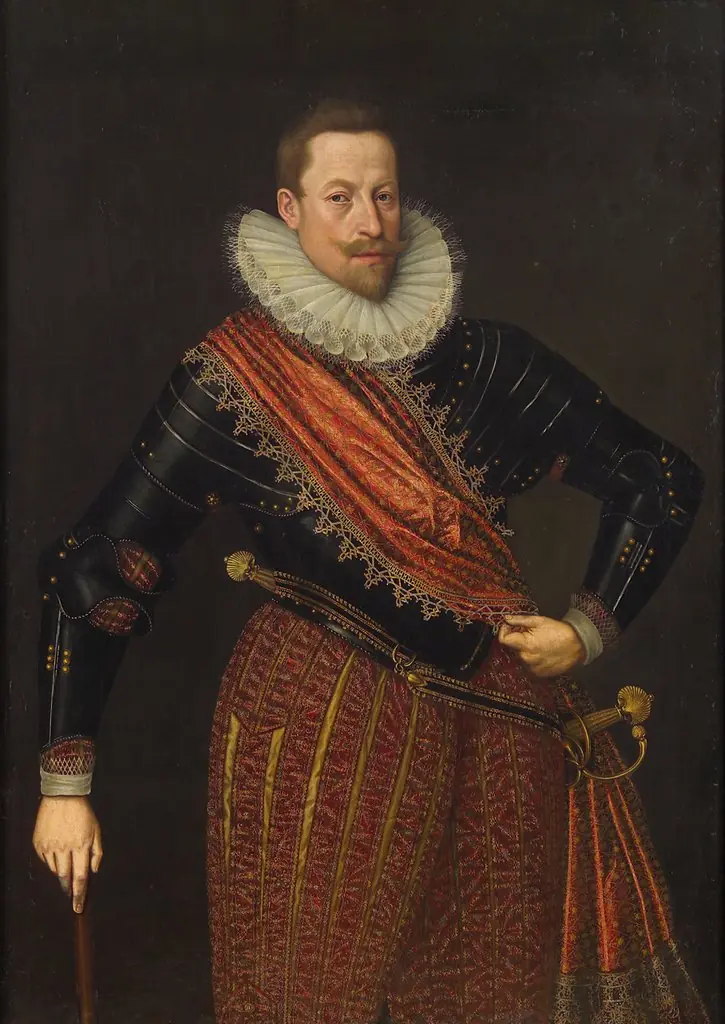
Portrait of Matthias II of Habsburg (1557-1619), the future Holy Roman Emperor
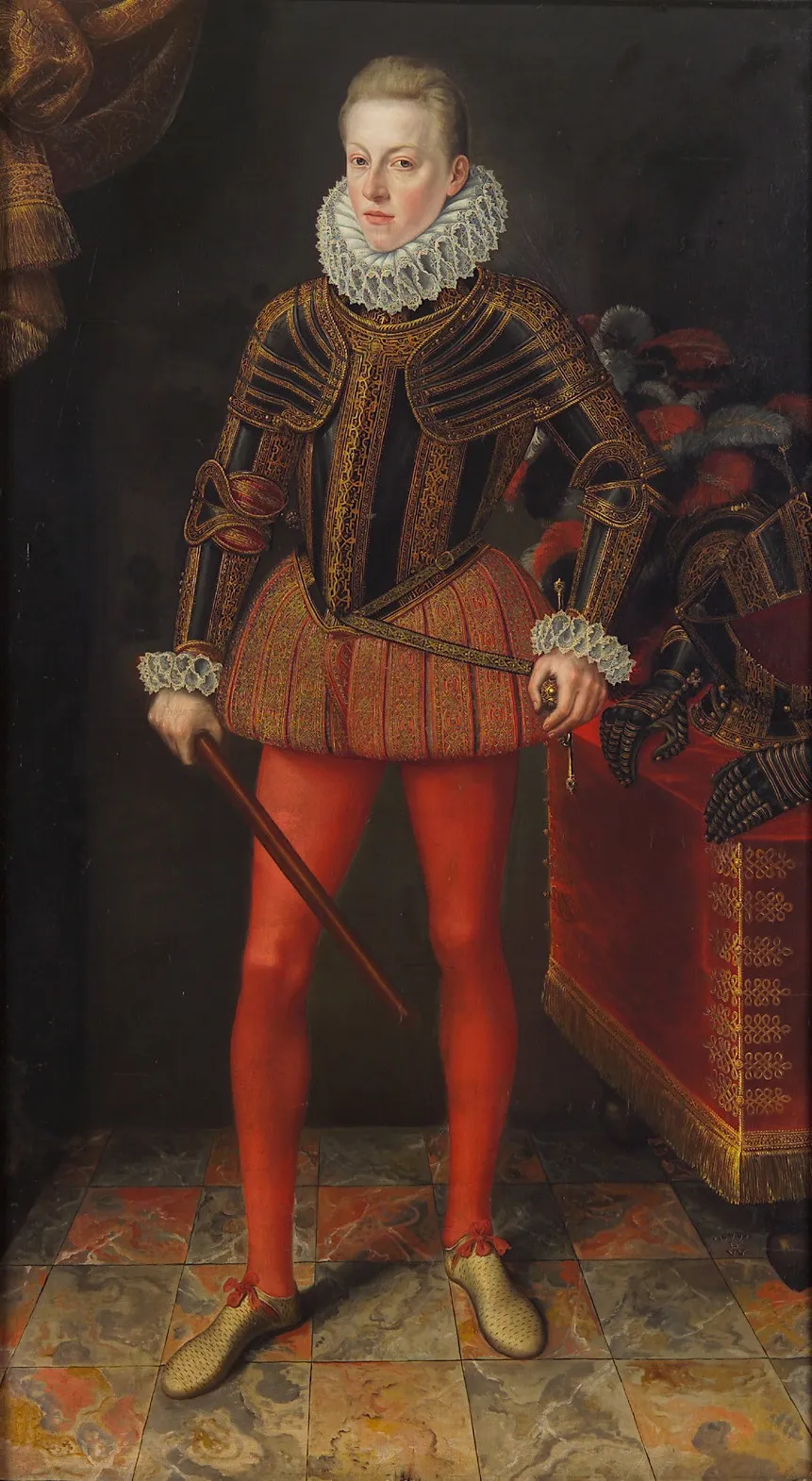
Portrait of Matthias II of Habsburg (1557-1619), the future Holy Roman Emperor is an oil painting by the Dutch Golden Age artist Lucas van Valckenborch. It dates from 1590 and is held in the collection of the Kunsthistorisches Museum.
About this work
Overview
The composition centers the young nobleman in elaborate attire, set against a darkened backdrop that hints at a secondary figure.
Lucas van Valckenborch’s 1590 oil portrait presents the future Holy Roman Emperor Matthias of Habsburg during his service as governor of the Spanish Netherlands. The composition centers the young nobleman in elaborate attire, set against a darkened backdrop that hints at a secondary figure. The work belongs to the collection of the Kunsthistorisches Museum, reflecting the artist’s occasional forays into portraiture alongside his better‑known landscapes.
Subject & Meaning
Matthias, then a member of the Habsburg dynasty, is shown in formal dress that emphasizes his rank and authority. The black jacket with gilded trim, scarlet breeches, and white ruff convey both courtly elegance and military readiness, while the hand‑held staff and the red‑upholstered chair suggest governance and command. The subdued expression and slight smile convey a dignified yet approachable ruler.
Technique & Style
Van Valckenborch employs a restrained palette of deep blacks, reds, and golds, allowing the metallic embroidery to catch light and draw attention to the figure’s garments. The painter renders the stone floor with subtle texture and uses a dark curtain to create depth, a compositional device common in late‑16th‑century portraiture. The overall effect balances detailed surface rendering with a slightly formal, static pose.
History & Provenance
Originally executed while van Valckenborch served as a court painter, the portrait later entered the holdings of the Kunsthistorisches Museum as part of its Dutch Golden Age collection. The artist’s career moved from the Low Countries to Austria and Germany amid religious turmoil, and this work exemplifies his output during his early period in the Spanish Netherlands.
Context
Created at a time when the Habsburgs governed a fragmented empire, the portrait reflects the political importance of visual representation for asserting legitimacy. Van Valckenborch, better known for landscape scenes, applied his meticulous observation of texture and light to a formal court portrait, aligning with contemporary trends that blended personal likeness with symbols of power.
Artist & collection
Artist
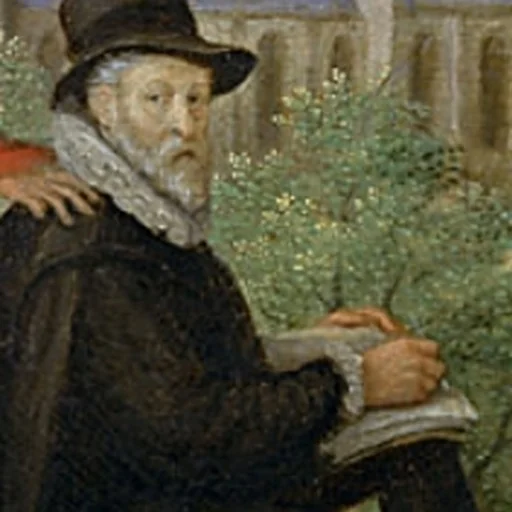
Lucas van Valckenborch or Lucas van Valckenborch the Elder (c. 1535 in Leuven – 2 February 1597 in Frankfurt am Main) was a Flemish painter, mainly known for his landscapes. He also made contributions to portrait…

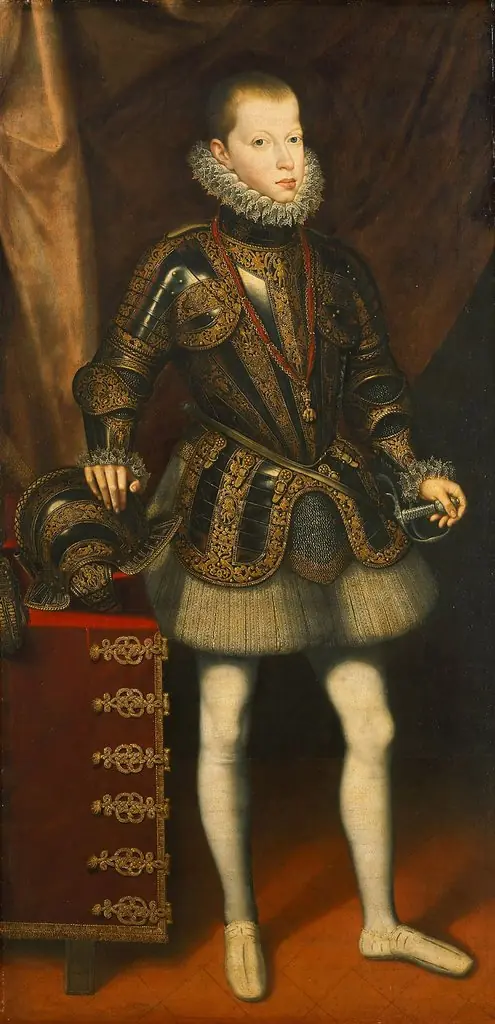 Infant Philipp in einem Harnisch
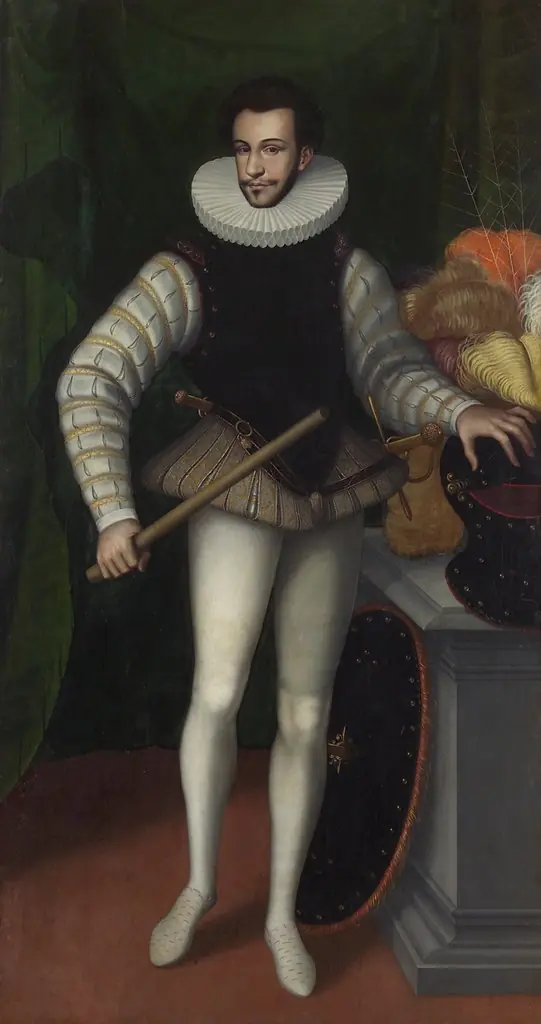 Herzog Francois von Alencon und Anjou (1555-1584)
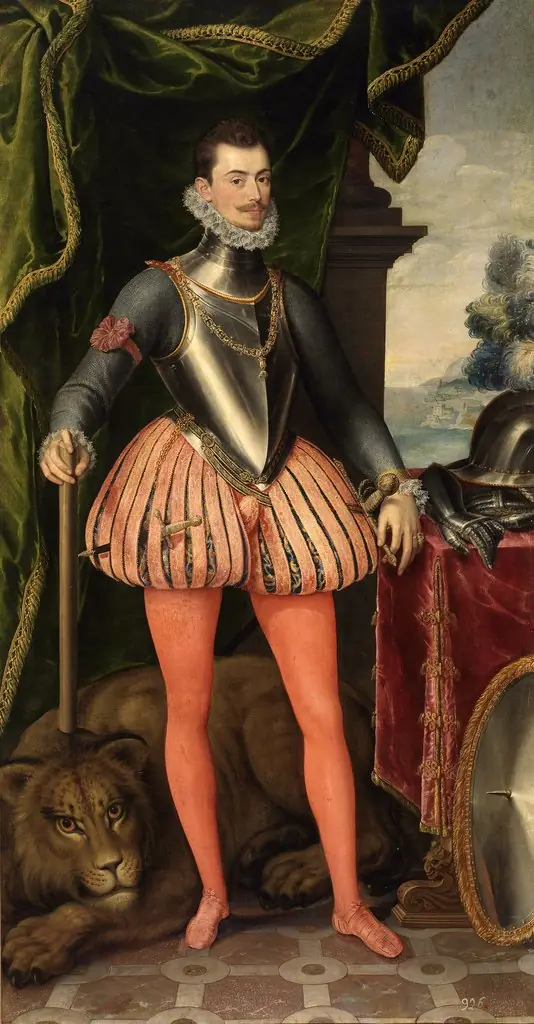 Don Juan de Austria
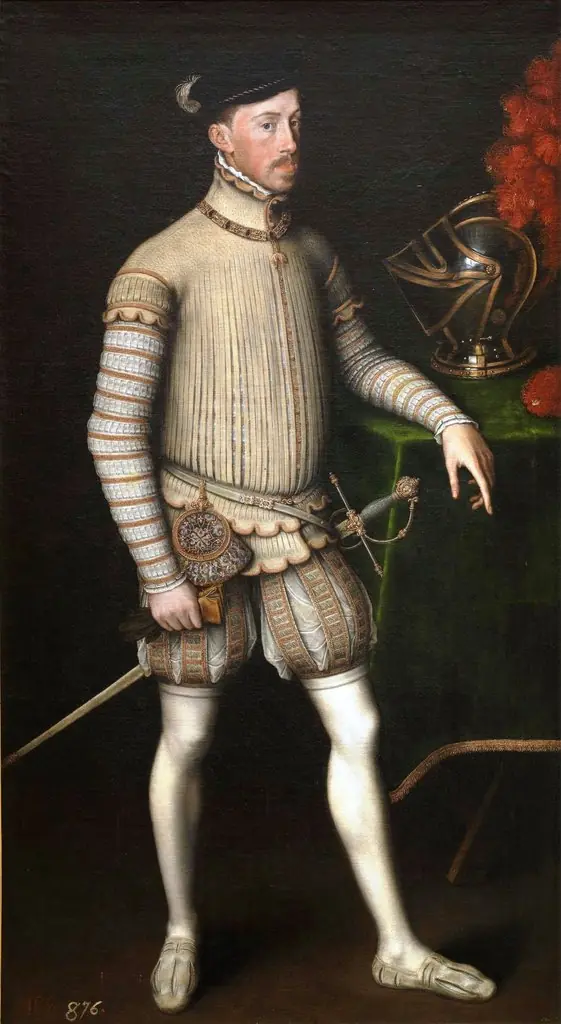 Emperor Maximilian II
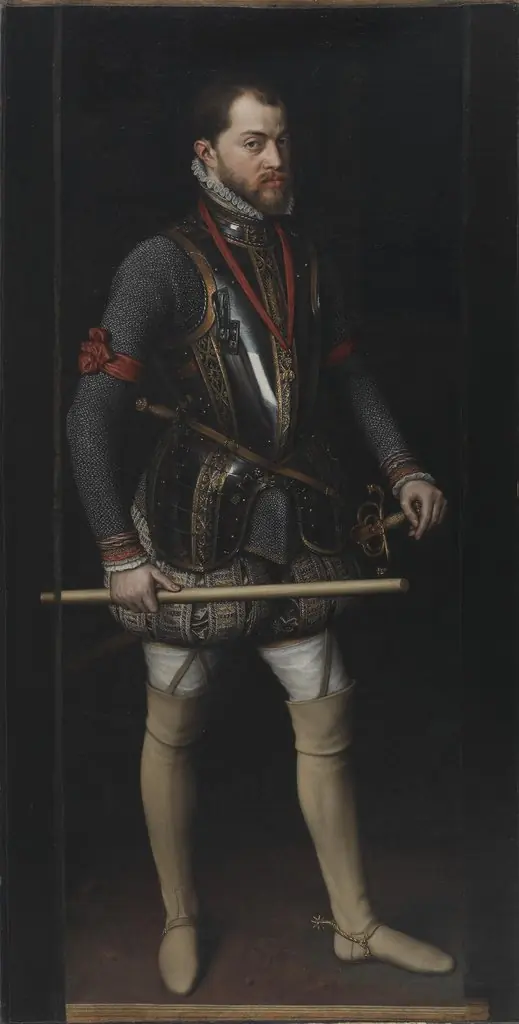 Philip II of Spain
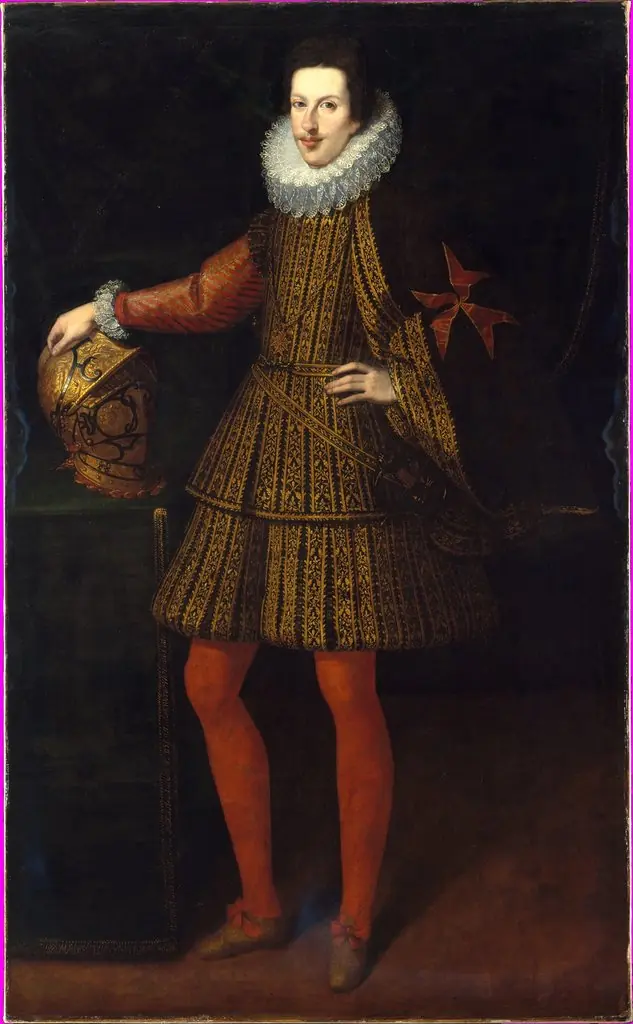 Portrait of Cosimo II de' Medici, Grand Duke of Tuscany
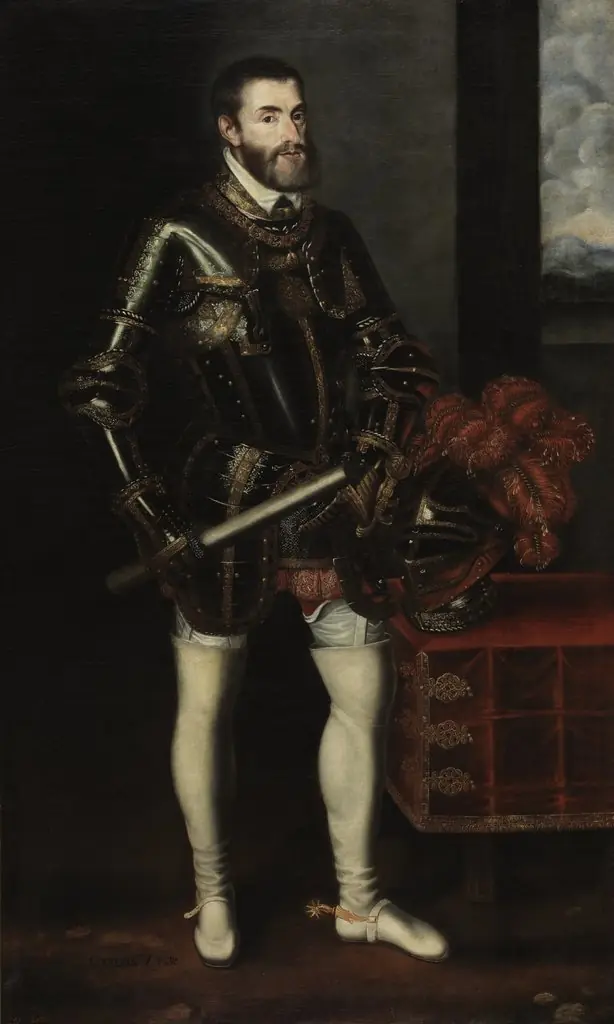 Charles V in Armour
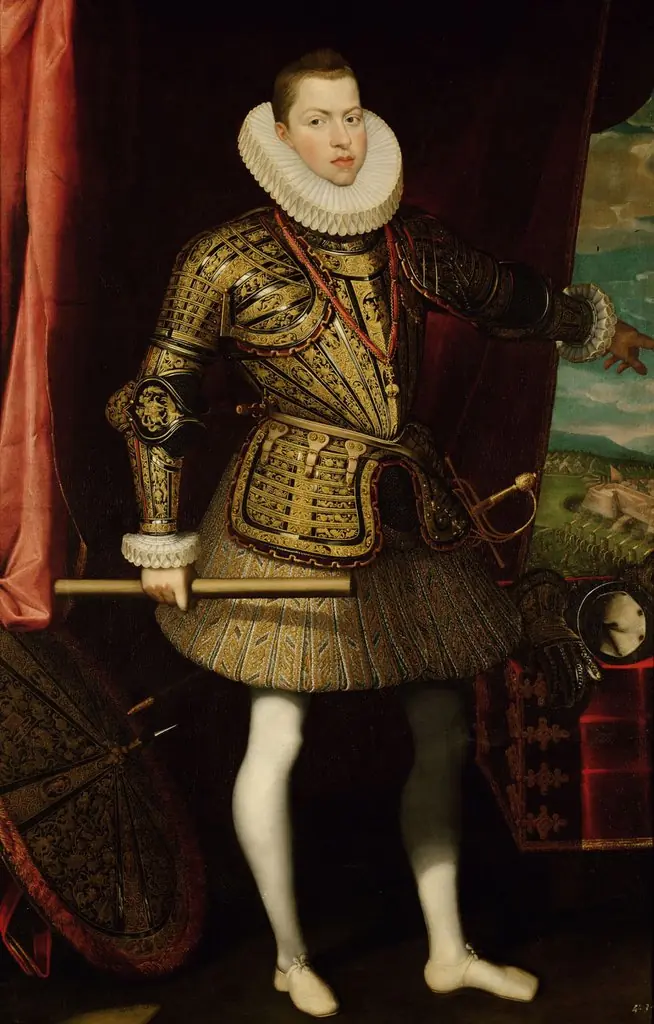 König Philipp III.(1578-1621) von Spanien, Bildnis in ganzer Figur als General der Infanterie (Im Hintergrund: Die Belagerung von Ostende 1601-1604)