Artwork
Portrait of Viram Deva
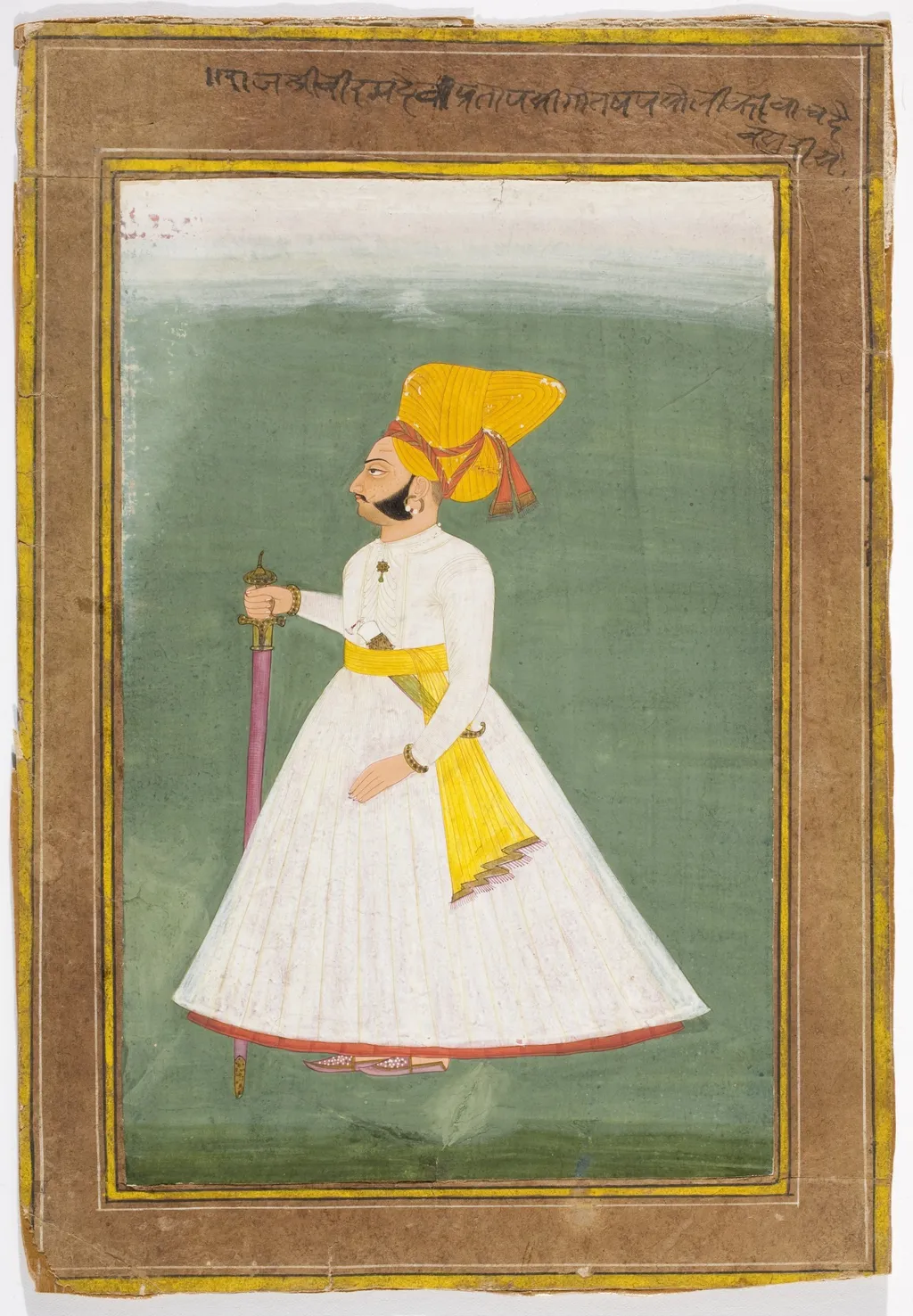
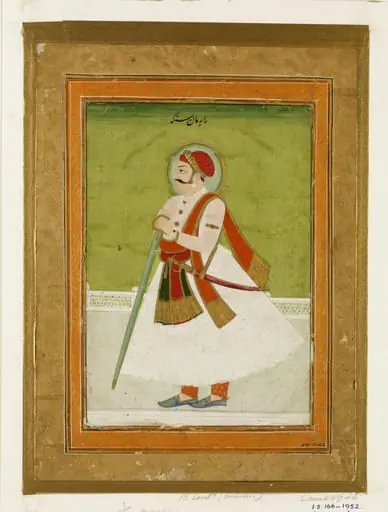
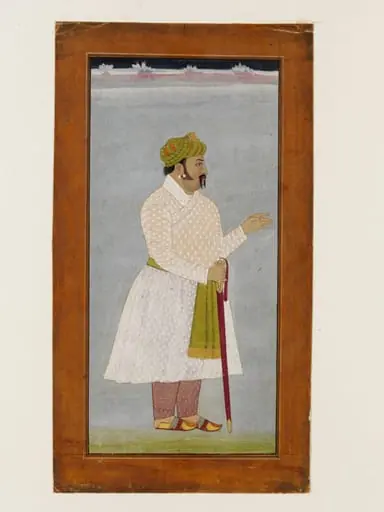
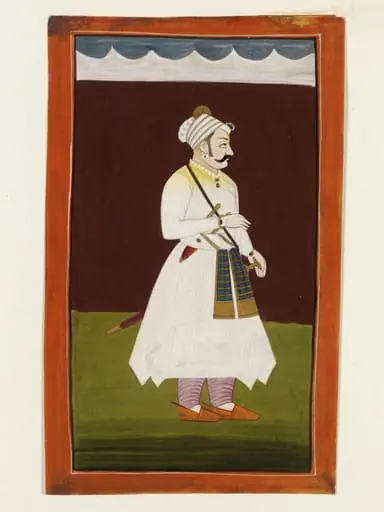
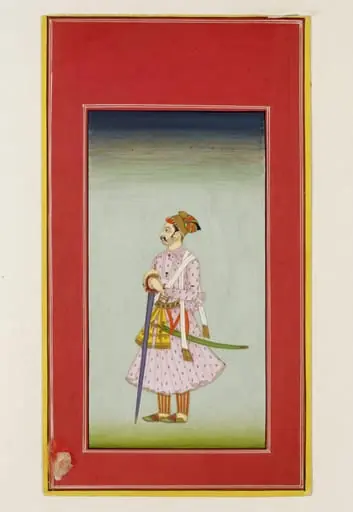
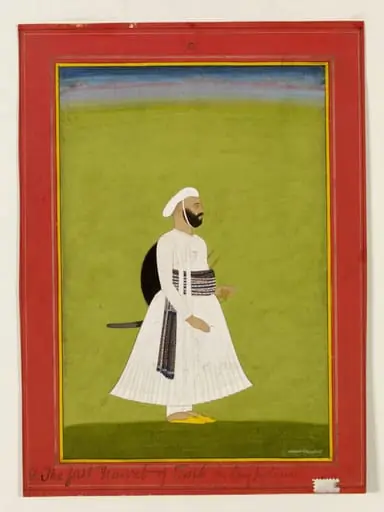
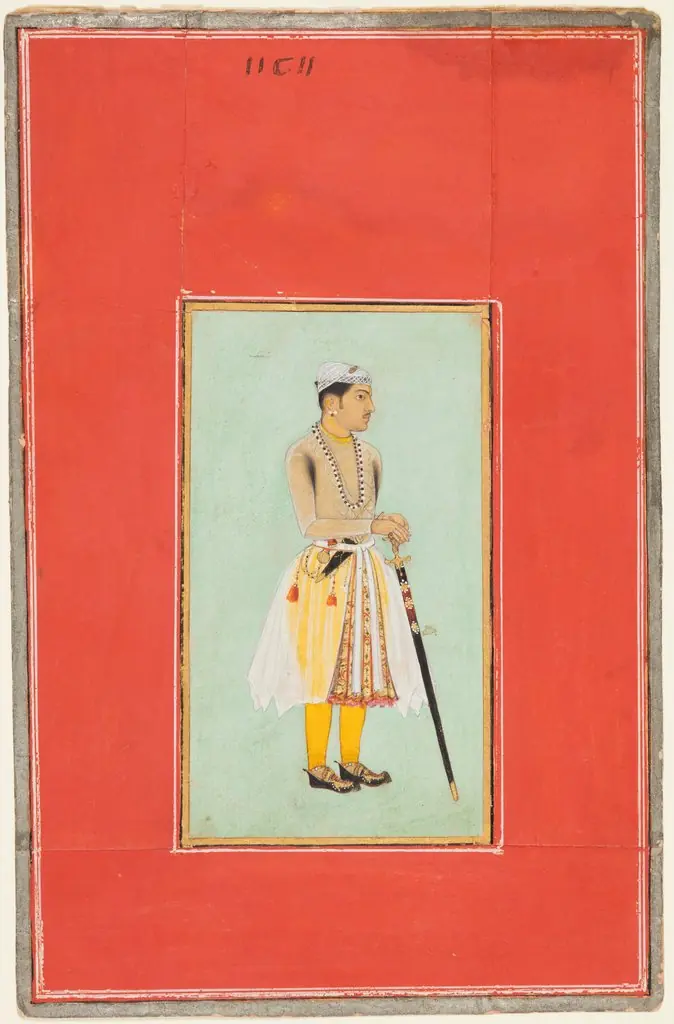
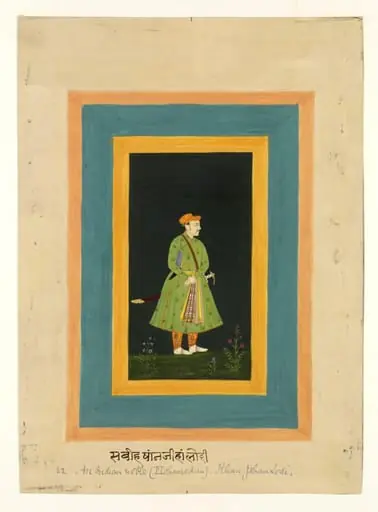
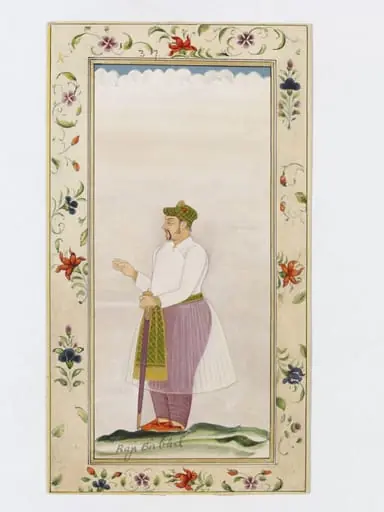
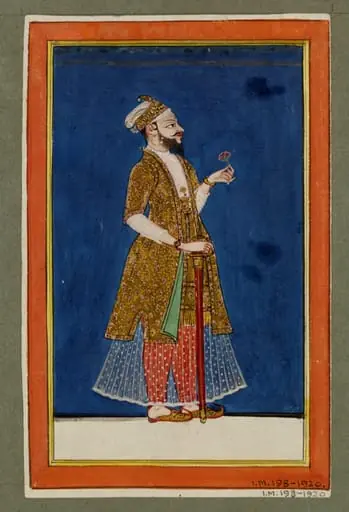
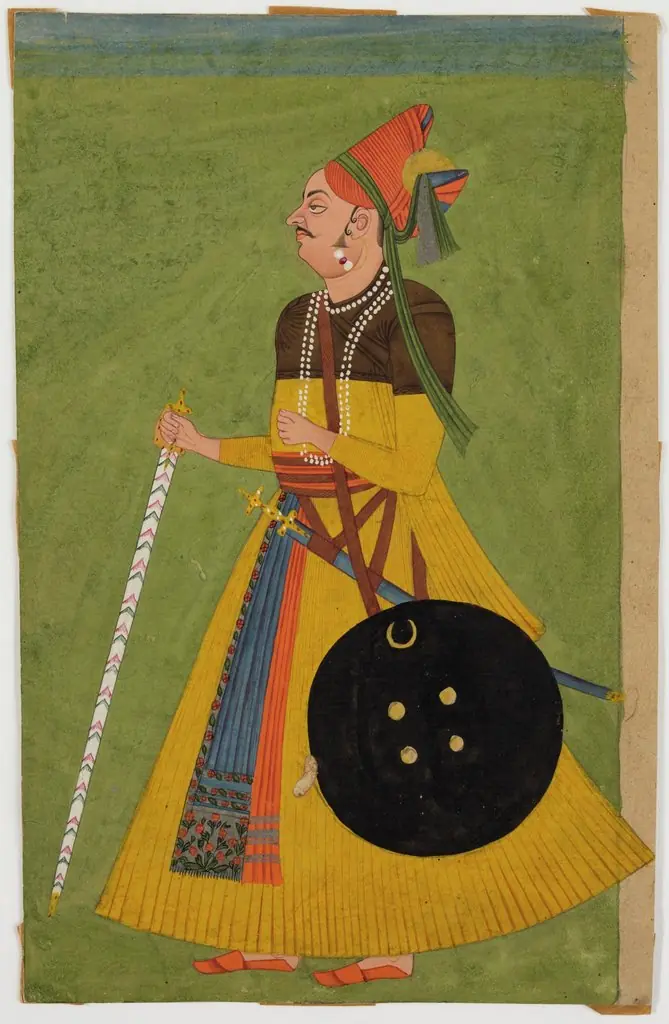
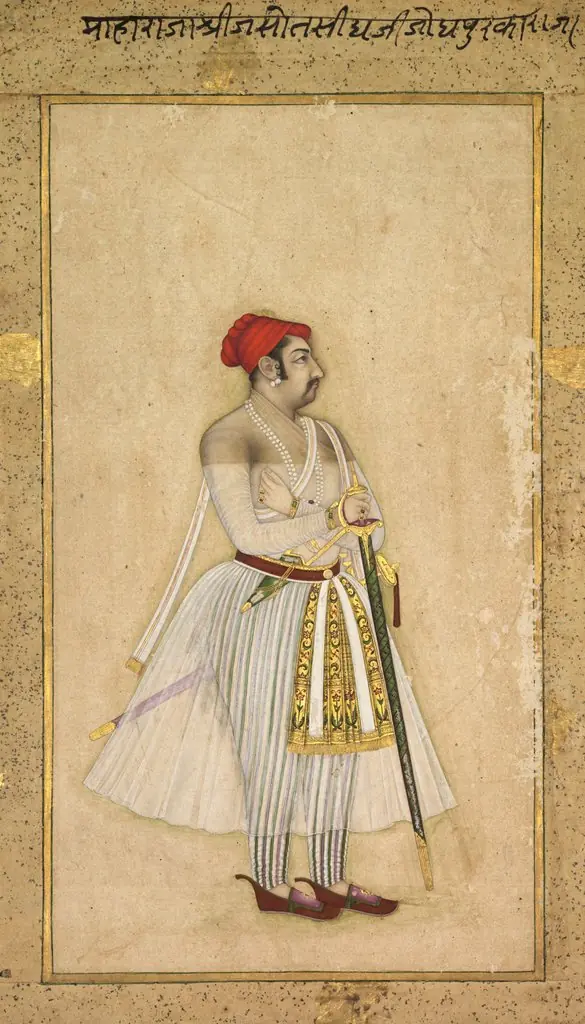
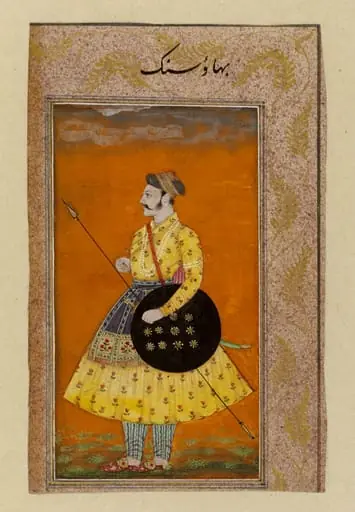
Portrait of Viram Deva is an unspecified painting by the Rococo painting artist Unknown. It dates from 1765 and is held in the collection of the Detroit Institute of Arts. This portrait depicts Viram Deva, a figure of probable royal or noble status, rendered in a traditional Indian miniature style.
About this work
Overview
This portrait depicts Viram Deva, a figure of probable royal or noble status, rendered in a traditional Indian miniature style.
This portrait depicts Viram Deva, a figure of probable royal or noble status, rendered in a traditional Indian miniature style. The subject stands centrally against a flat green backdrop, emphasizing his ornate attire and regal accessories. The painting’s modest size and delicate execution suggest it was intended for private contemplation rather than public display. Fading along the edges hints at age and possible exposure to light over time.
Subject & Meaning
Viram Deva is portrayed with symbols of authority: a tall orange hat adorned with red and gold, a pink staff, and ornamental jewelry including a gold earring and wrist bracelets. The yellow belt and robe trim suggest high rank, while the script at the top likely identifies him or records a title. The composition avoids narrative context, focusing instead on status and identity, typical of portraiture in regional courts during the late Mughal or early Rajput period.
Technique & Style
The painting employs fine brushwork characteristic of Indian miniature traditions, with precise outlines and flat areas of color. The background is unmodeled, drawing attention to the figure’s detailed garments and accessories. Pigments are applied thinly, creating a luminous effect, though some fading suggests the use of organic dyes. The lack of perspective and stylized proportions align with conventions of courtly portraiture in western India during the 17th or 18th century.
History & Provenance
The painting’s origin is tied to a Rajput or Mughal-affiliated court, likely in present-day Rajasthan or Gujarat. Its current location at the Detroit Institute of Arts indicates it entered a Western collection in the 20th century, possibly through dealer networks or colonial-era acquisitions. The brown frame with gold trim is likely a later addition, not original to the work, reflecting 19th-century Western framing tastes.
Context
During the 17th and 18th centuries, regional courts in India maintained distinct artistic traditions even as Mughal influence waned. Portraits like this served to affirm lineage and authority, often commissioned for personal or ceremonial use. The script at the top, likely in Devanagari or a related script, would have been legible to courtly audiences, reinforcing the subject’s social and political standing within a literate elite.
Legacy
This portrait contributes to the broader understanding of non-Mughal courtly art in early modern India. It reflects how local rulers preserved indigenous aesthetics while incorporating elements of Mughal refinement. Today, such works are valued for their historical specificity and as evidence of the diversity within Indian artistic production, offering insight into regional identities beyond the imperial center.
Artist & collection

 Domestic Scene
 Giacomo and Cardinal Marco, investing Andrea, Abbot of San Zeno, with his Benefice
 The Nymph of Fontainebleau
 Portrait of a Woman
 Madonna and Child with Saints in the Enclosed Garden
 Venus and Minerva
 Family Group of Four on Sofa
 Wall painting from Room H of the Villa of P. Fannius Synistor at Boscoreale