Artwork
Rao Udaji
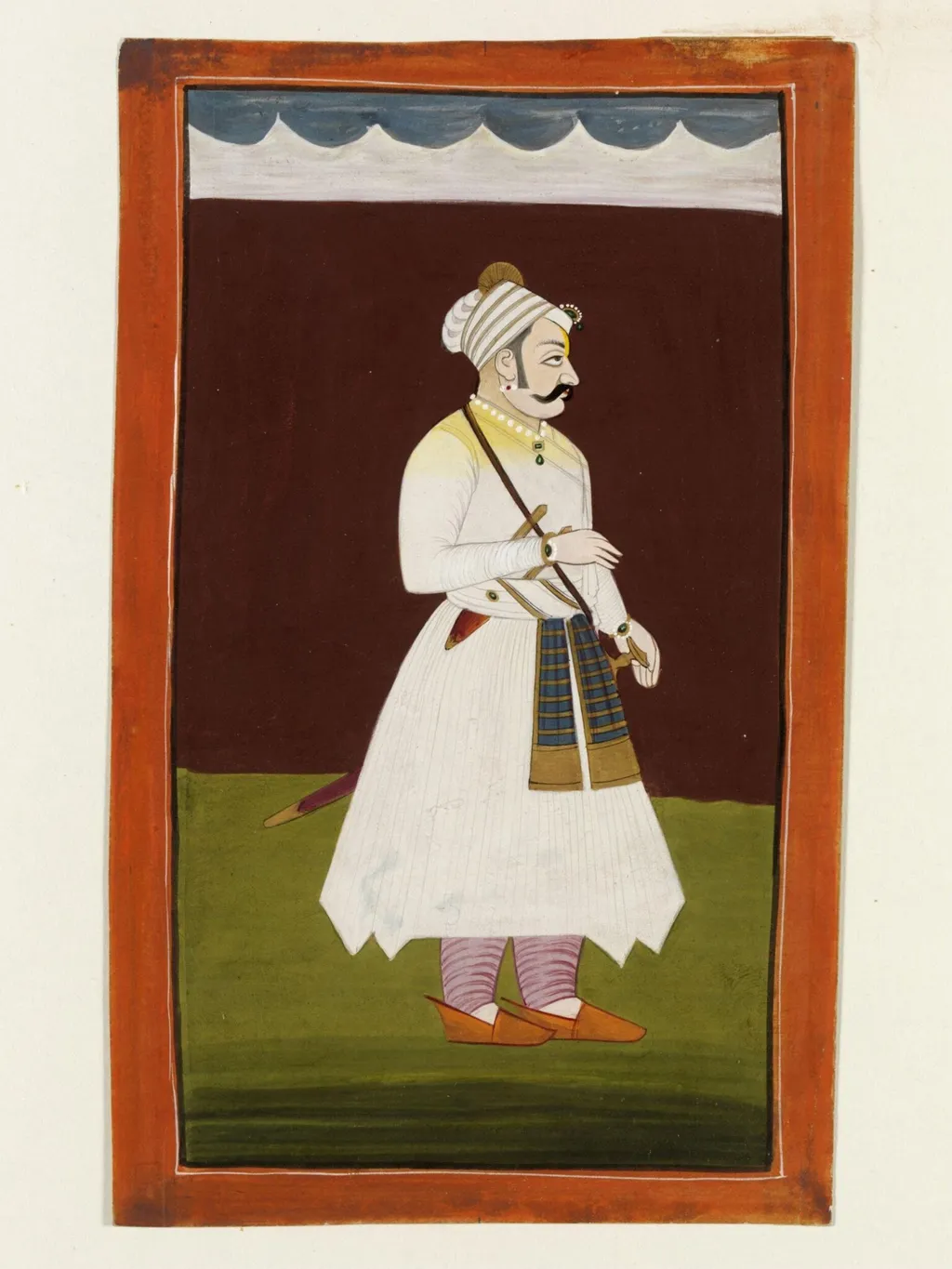
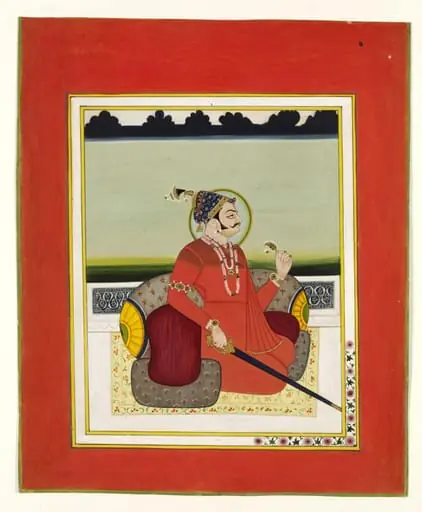
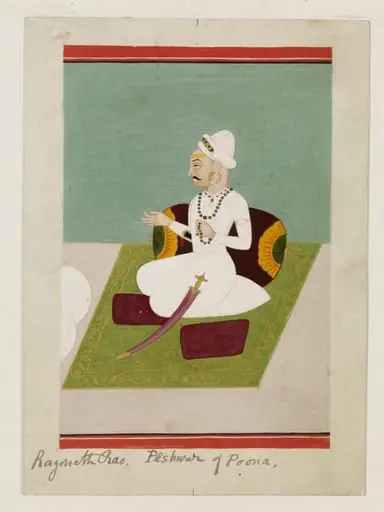
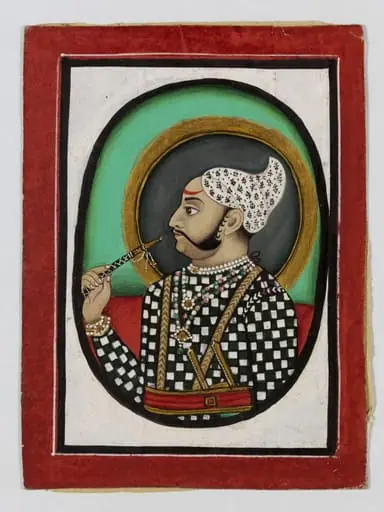
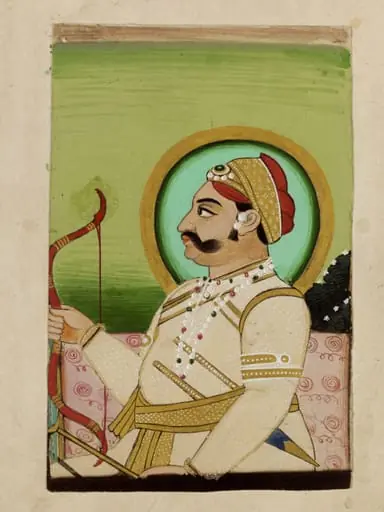
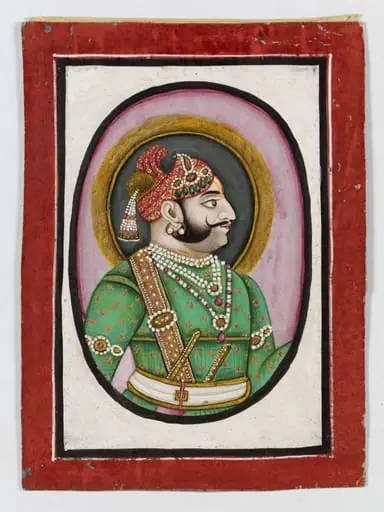
Rao Udaji is a paint painting by the Impressionist artist Chhajju Lal. It dates from 1890 and is held in the collection of the Victoria and Albert Museum.
About this work
Overview
The work reflects the continued vitality of courtly portraiture in late 19th-century India, even as photographic portraiture gained prominence elsewhere.
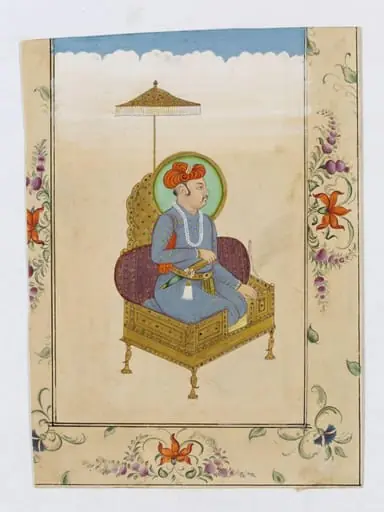
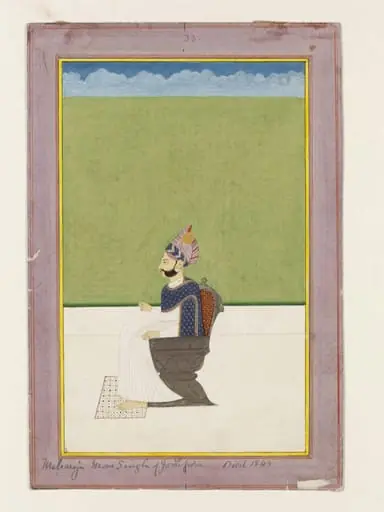
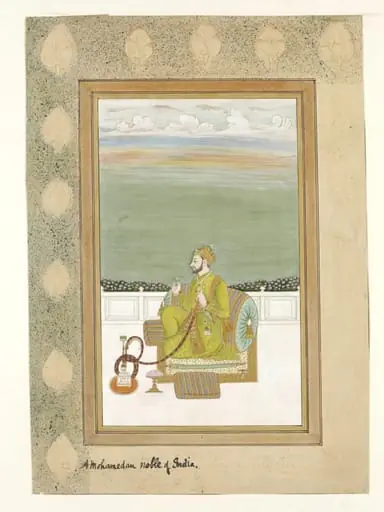
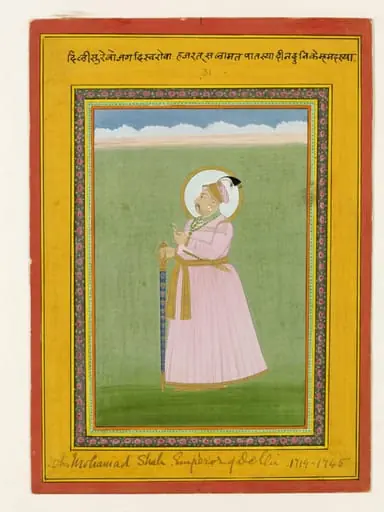
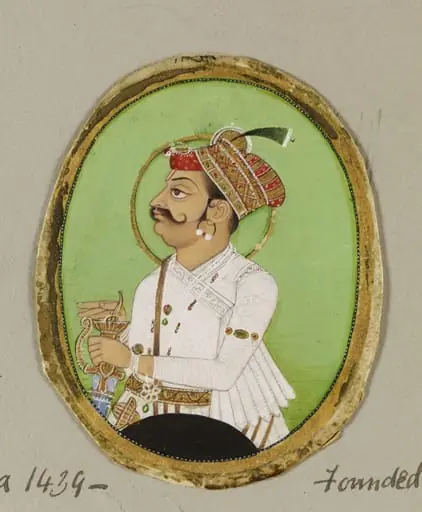
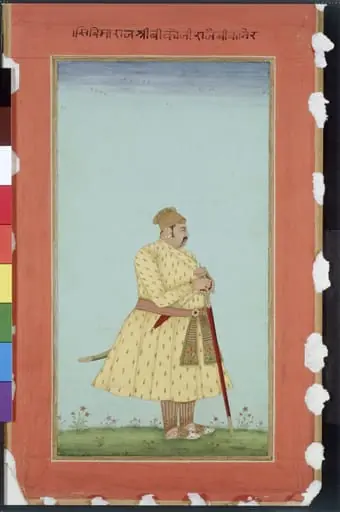
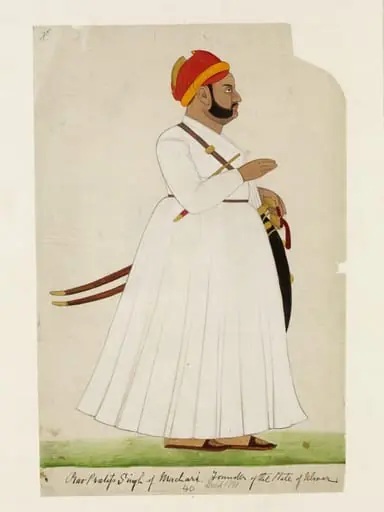
This 1890 portrait depicts Rao Udaji, a regional noble, painted in opaque watercolor and gold on paper. Created by the artist Chhajju Lal, it follows the conventions of Indian miniature painting, emphasizing detail and symbolic representation over naturalistic depth. The work reflects the continued vitality of courtly portraiture in late 19th-century India, even as photographic portraiture gained prominence elsewhere.
Subject & Meaning
Rao Udaji is portrayed in formal attire, suggesting his status within a princely court. The curved sword in his hand signifies authority and martial tradition, while the elaborate turban and sash denote rank and ceremonial dress. The absence of a landscape or narrative context focuses attention on the individual, reinforcing the portrait’s function as a symbol of identity and power rather than a record of a specific moment.
Technique & Style
The painting employs flat planes of vivid color, sharp outlines, and minimal shading, characteristic of the miniature tradition. Gold leaf highlights accentuate textiles and ornamentation, while the dark background isolates the figure, enhancing visual impact. The use of opaque watercolor allows for luminous, saturated hues, and the precision of brushwork reveals the artist’s training in meticulous, hand-rendered detail.
History & Provenance
Commissioned in 1890, the painting originates from a regional court in western India, likely under the patronage of Udaji’s lineage. It remained within family or court collections until entering institutional hands, possibly through acquisition or donation. Its survival into the 20th century reflects the enduring value placed on such portraits as markers of lineage and heritage.
Context
By the late 1800s, many Indian courts maintained traditional art forms despite British colonial influence and the rise of photography. Artists like Chhajju Lal adapted older styles to serve new patrons, blending regional aesthetics with evolving expectations of dignity and representation. This portrait stands as evidence of a living artistic lineage adapting to changing times without abandoning its roots.
Legacy
The painting contributes to the broader corpus of Indian miniature portraiture preserved in museums such as the Victoria and Albert Museum. It exemplifies how regional styles persisted into the modern era, offering insight into the visual culture of princely states. Its continued study helps contextualize the transition from pre-colonial to colonial-era artistic practices in South Asia.
Artist & collection
Artist
Chhajju Lal was the go-to painter for royal portraits in late-1800s India, always dressed in a spotless white kurta even when mixing paints.