Artwork
Rajah Birbar (Birbal)
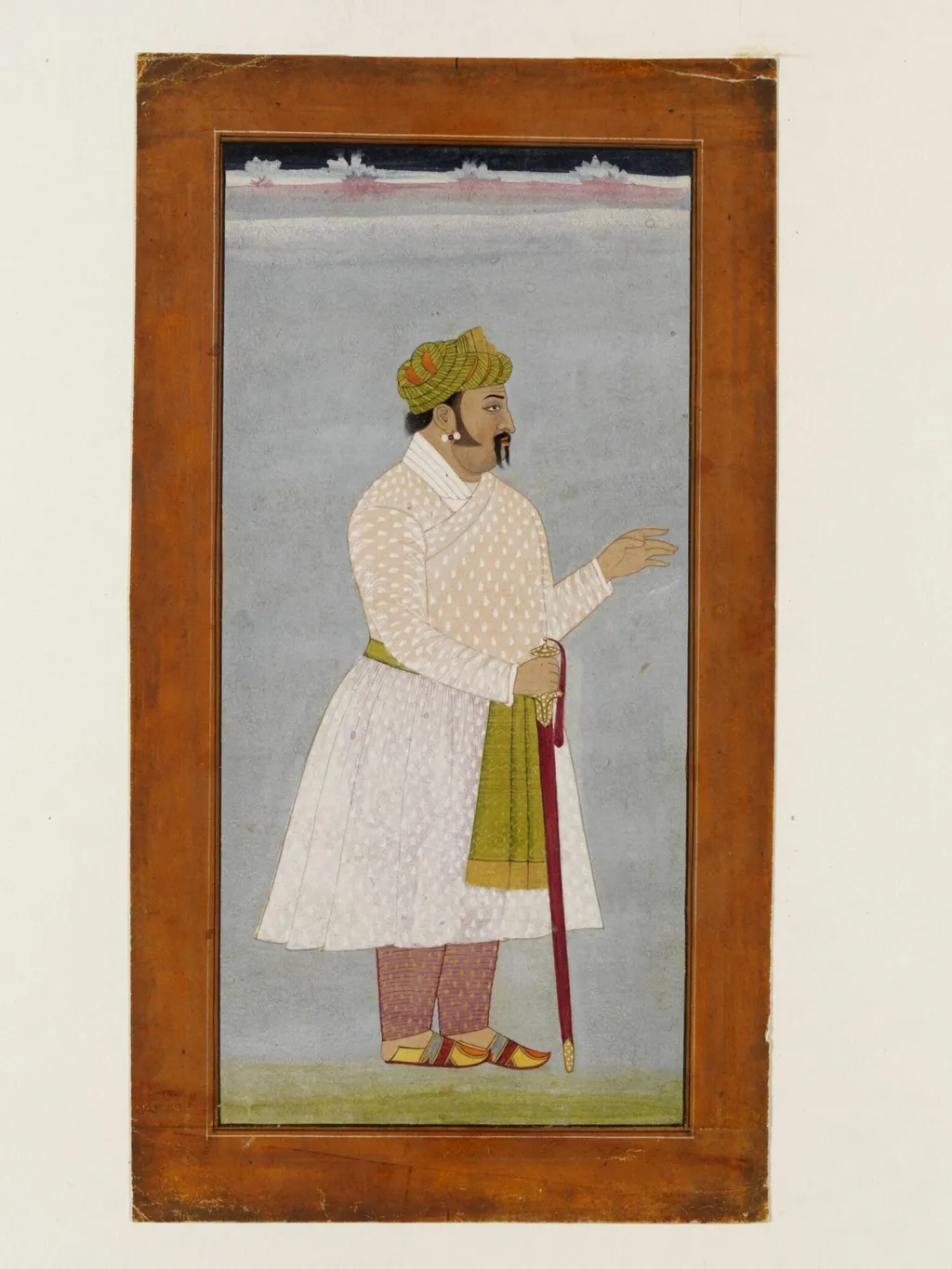
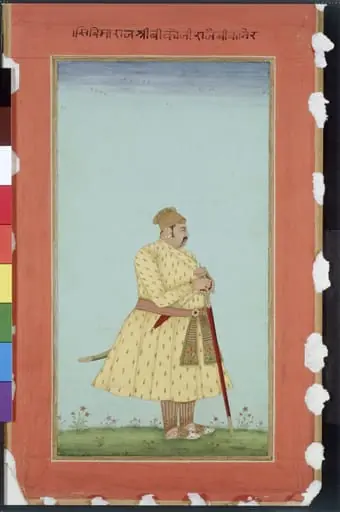
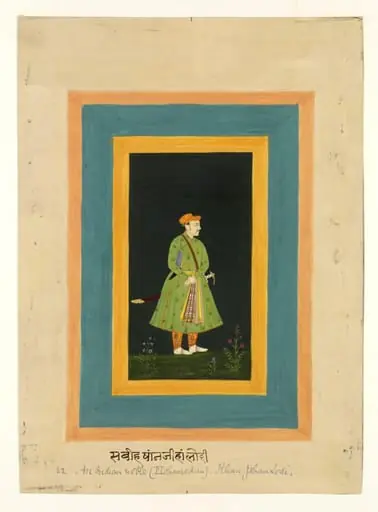
Rajah Birbar (Birbal) is a paint painting by the Impressionist artist Unknown. It dates from 1890 and is held in the collection of the Victoria and Albert Museum. This opaque watercolor and gold painting on paper portrays Birbal, a prominent Hindu minister in Emperor Akbar’s court.
About this work
Overview
The subject is rendered with formal precision, emphasizing status through attire and posture rather than naturalistic setting.
This opaque watercolor and gold painting on paper portrays Birbal, a prominent Hindu minister in Emperor Akbar’s court. Though dated to the late 19th century, the portrait draws from earlier Mughal conventions, reflecting enduring cultural memory rather than contemporary observation. The subject is rendered with formal precision, emphasizing status through attire and posture rather than naturalistic setting.
Subject & Meaning
Birbal, known for his wit and influence in Akbar’s court, is depicted not as a historical figure from his lifetime but as a symbolic presence in later visual tradition. His inclusion reflects his lasting place in North Indian folklore and courtly legend. The painting affirms his identity as a trusted advisor, using regal dress to convey authority beyond his religious background in a predominantly Muslim administration.
Technique & Style
The artist employs opaque watercolor with gold accents to create vivid, flat planes of color, typical of late Mughal and Pahari-derived styles. Details like the patterned robe and striped skirt are rendered with fine brushwork, while the plain blue background isolates the figure, directing focus to costume and gesture. The red stick and hand movement suggest speech or command, reinforcing Birbal’s role as an articulate courtier.
History & Provenance
Created in the late 19th century, this work likely originated in a regional atelier influenced by Mughal traditions, possibly in Punjab or Rajasthan. It was not made during Birbal’s lifetime but preserves his image through generations of visual storytelling. Its survival suggests continued interest in Mughal-era figures among collectors and patrons seeking cultural continuity.
Context
During the 19th century, as Mughal power waned, depictions of courtly figures like Birbal became vehicles for preserving historical memory. Artists in provincial centers revived earlier styles to cater to patrons nostalgic for imperial grandeur. Birbal’s enduring popularity in oral tales made him a natural subject for such revived traditions, blending history with myth.
Legacy
This painting contributes to a broader visual archive of Mughal-era personalities, sustaining their recognition beyond textual records. Though not an original portrait from Akbar’s reign, it demonstrates how folk narratives shaped artistic representation. Such works remain valuable for understanding how historical figures were reimagined in colonial-era India through inherited aesthetics.
Artist & collection

 Domestic Scene
 Giacomo and Cardinal Marco, investing Andrea, Abbot of San Zeno, with his Benefice
 The Nymph of Fontainebleau
 Portrait of a Woman
 Madonna and Child with Saints in the Enclosed Garden
 Venus and Minerva
 Family Group of Four on Sofa
 Wall painting from Room H of the Villa of P. Fannius Synistor at Boscoreale