Artwork
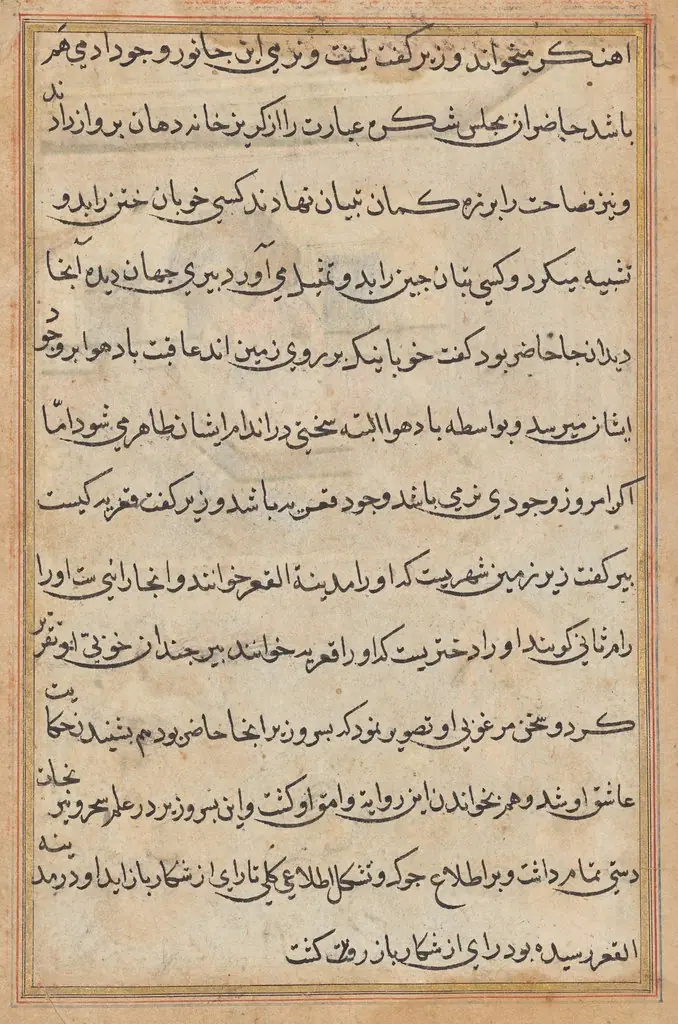
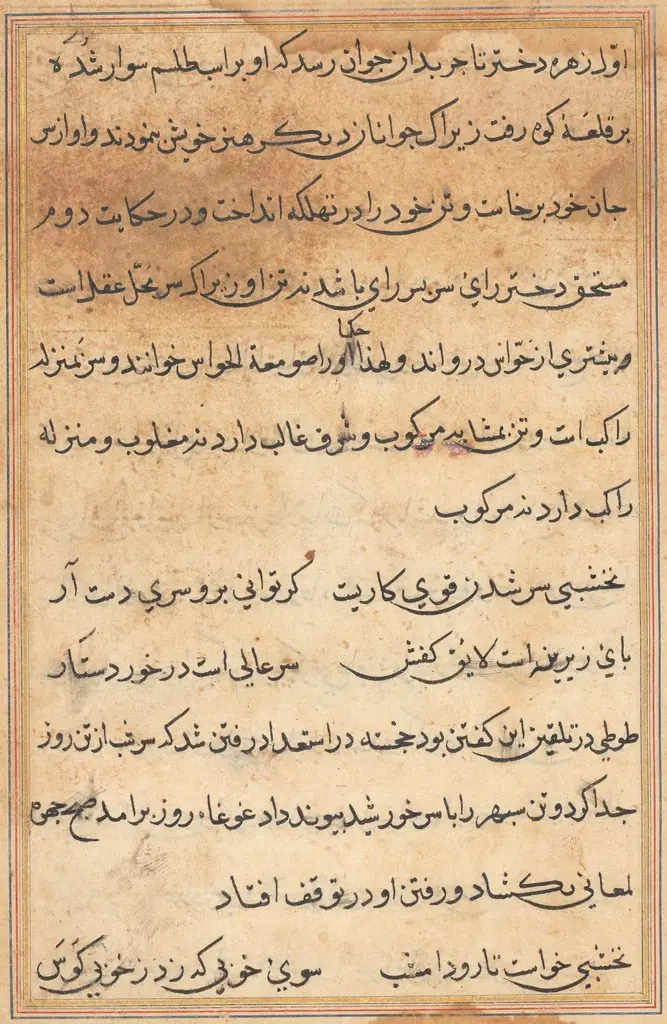
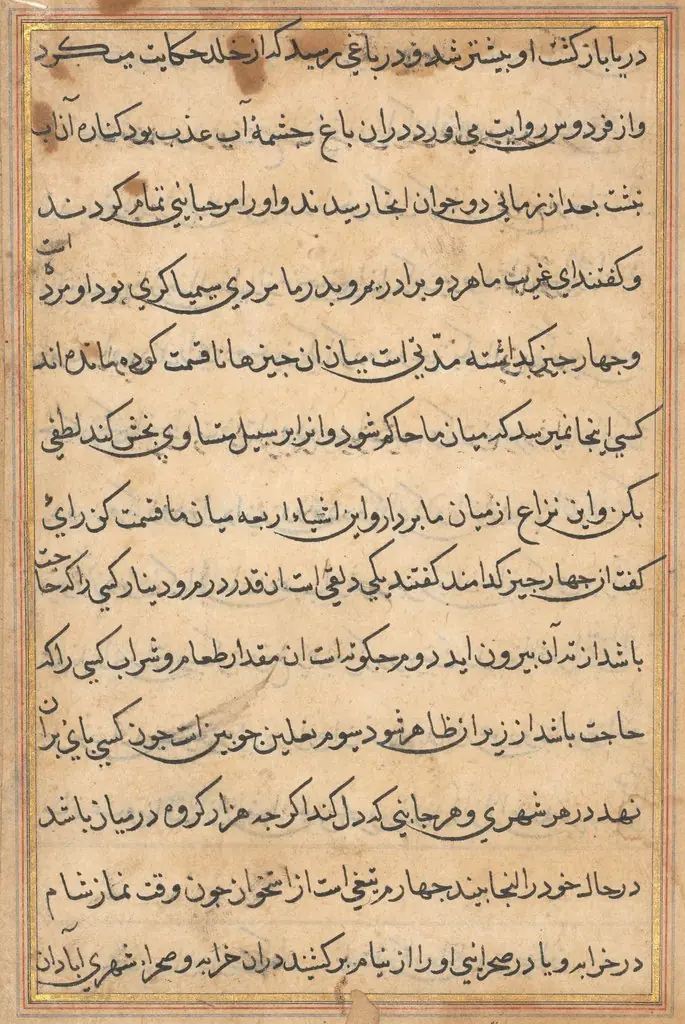
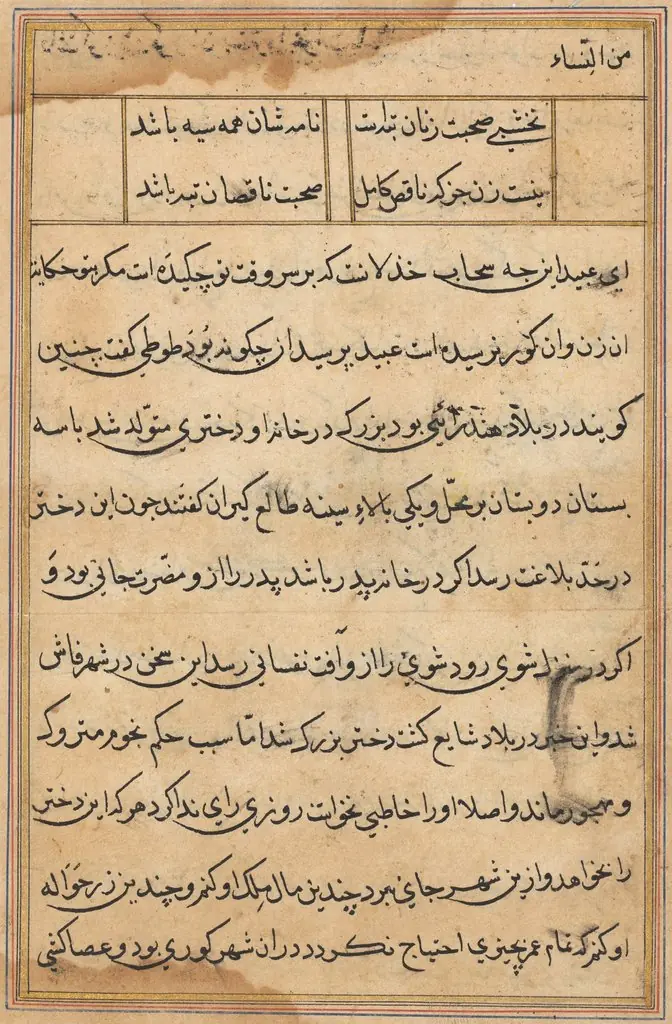
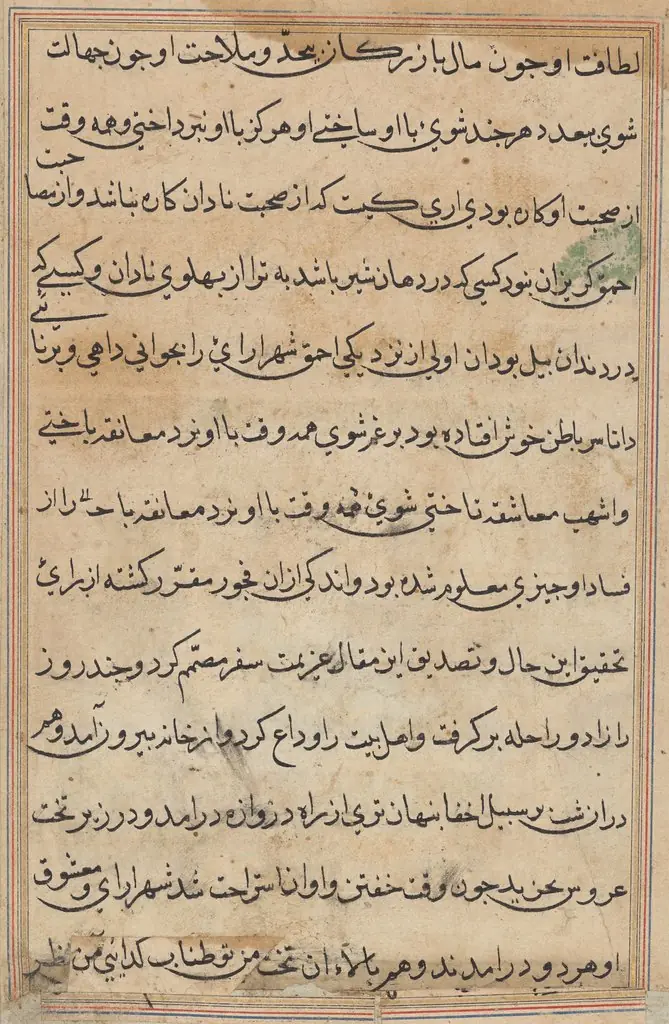
Page from Tales of a Parrot (Tuti-nama): text page
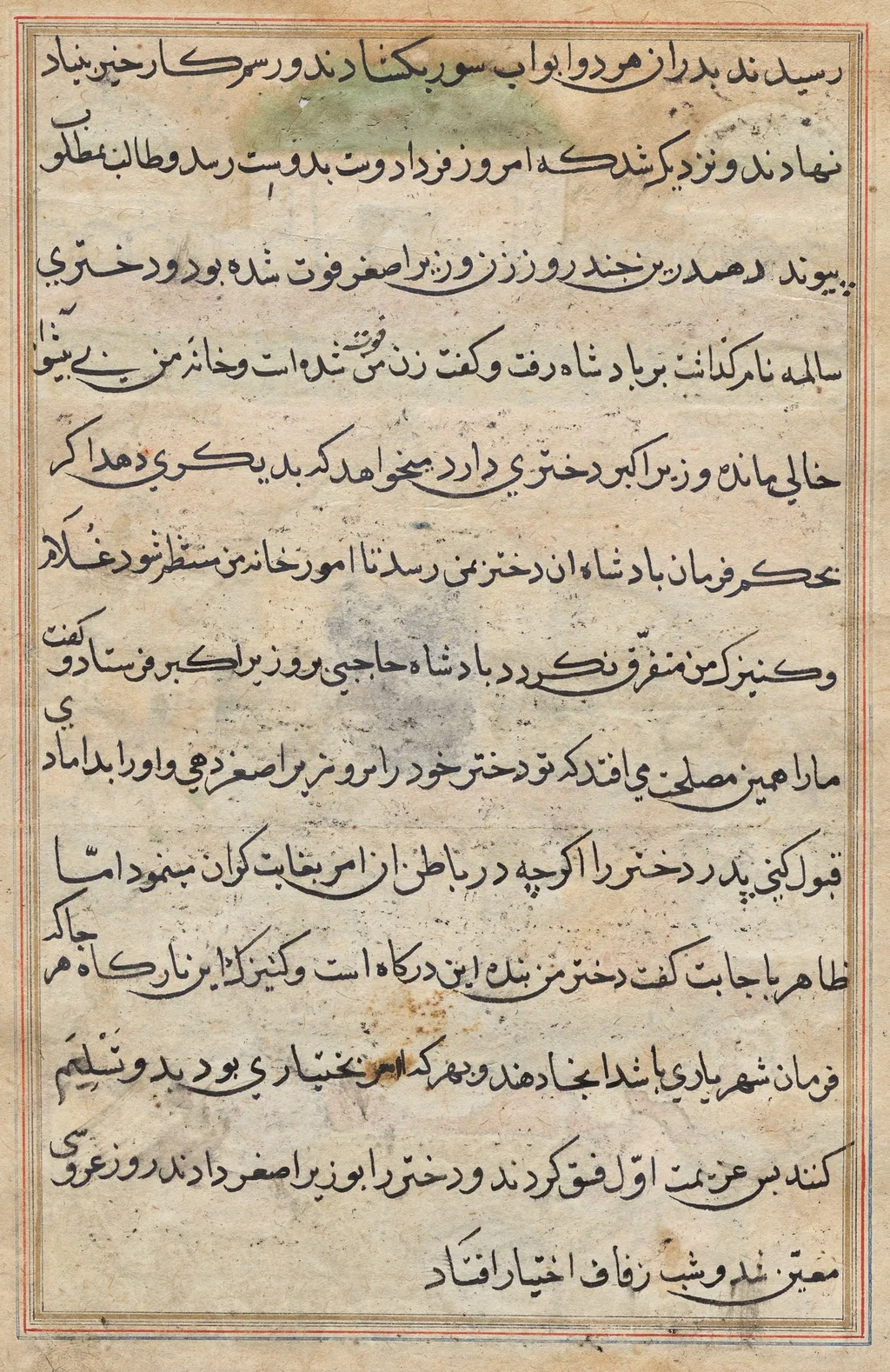
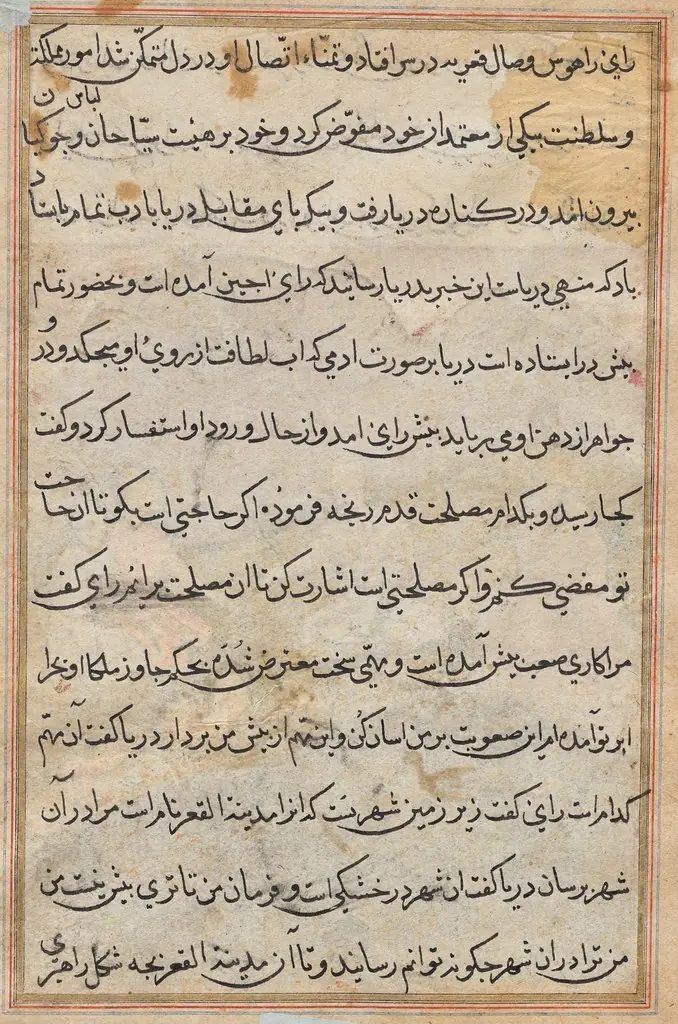
Page from Tales of a Parrot (Tuti-nama): text page is an unspecified painting. It dates from 1560 and is held in the collection of the Cleveland Museum of Art. The object is a single folio from the Persian manuscript *Tales of a Parrot* (Tuti‑nama).
About this work
Overview
The object is a single folio from the Persian manuscript *Tales of a Parrot* (Tuti‑nama). Rendered in dense black ink on a light‑colored paper, the page is bordered by a subtle red line. The surface shows signs of age, including minor stains and a slightly yellowed tone, indicating its historic nature.
Subject & Meaning
The inscribed text forms part of a narrative crafted for Prince Salim, a member of the Safavid court. The story, conveyed through the voice of a parrot, functions as both entertainment and moral instruction, reflecting the courtly practice of using allegorical animal tales to convey ethical lessons to elite patrons.
Technique & Style
The script is executed in a flowing, cursive hand characteristic of Persian calligraphy in the early 17th century, with tightly packed, curved strokes that maximize the use of space. The faint red border, applied with a fine brush, serves both decorative and structural purposes, framing the text without overwhelming the calligraphic composition.
History & Provenance
Created as a luxury manuscript for Prince Salim, the folio later entered private collections before being acquired by the Cleveland Museum of Art. Its provenance reflects the typical trajectory of Safavid courtly books, which were often gifted, inherited, or sold to collectors in the 19th and 20th centuries.
Context
*Tales of a Parrot* belongs to a broader tradition of Persian literary works that blend poetry, prose, and didactic storytelling. Produced during a period of flourishing arts under Safavid patronage, the manuscript exemplifies the era's emphasis on elaborate book production, where calligraphy, illumination, and binding were coordinated to honor the patron.
Artist & collection

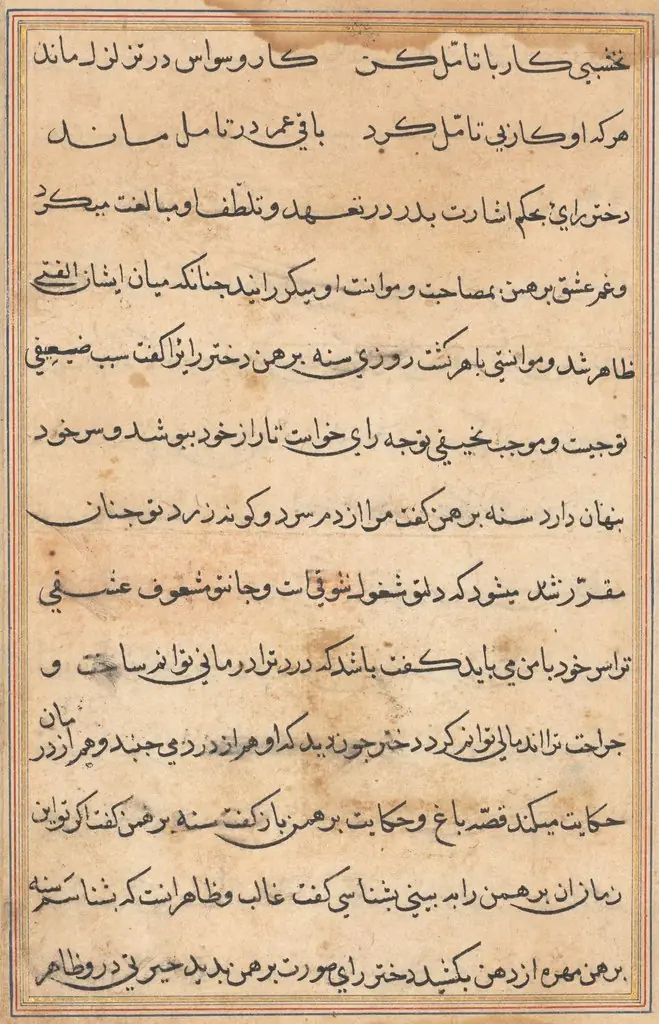 Page from Tales of a Parrot (Tuti-nama): text page
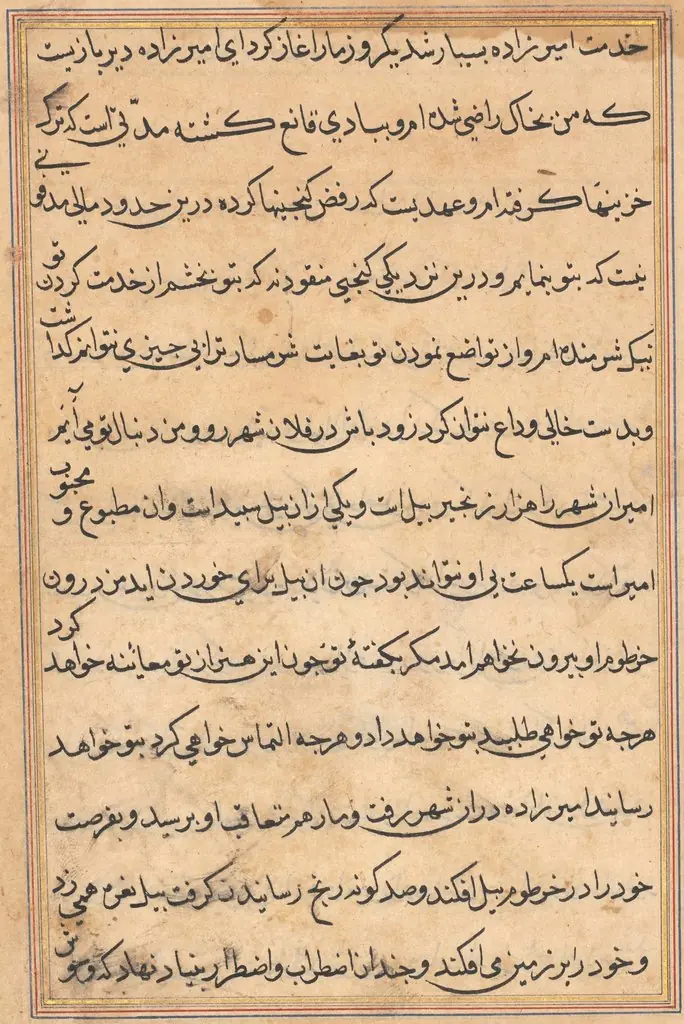 Page from Tales of a Parrot (Tuti-nama): text page
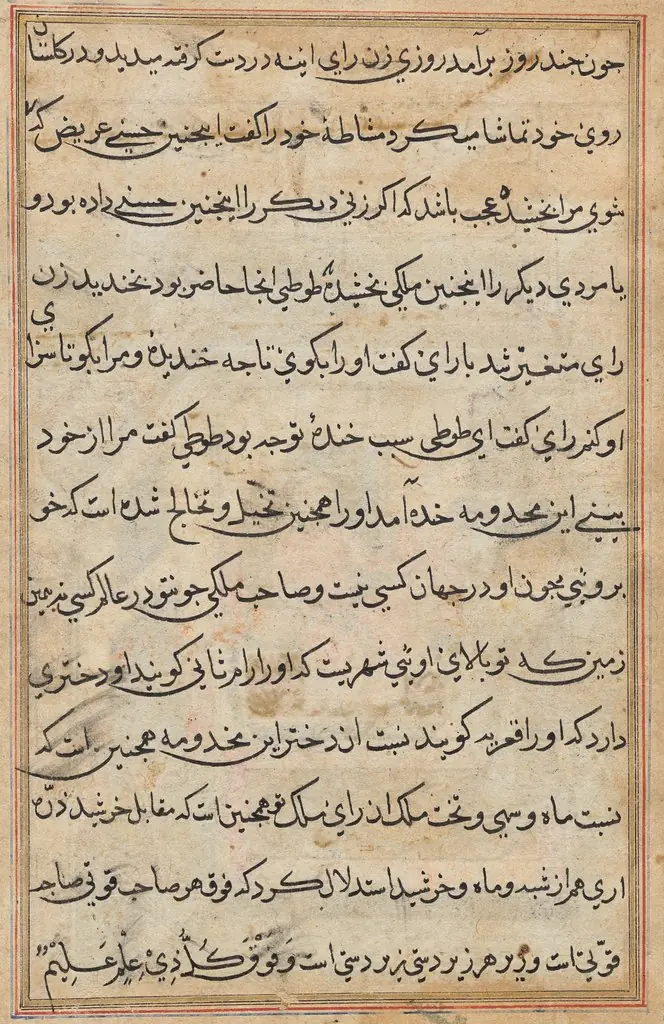 Page from Tales of a Parrot (Tuti-nama): text page
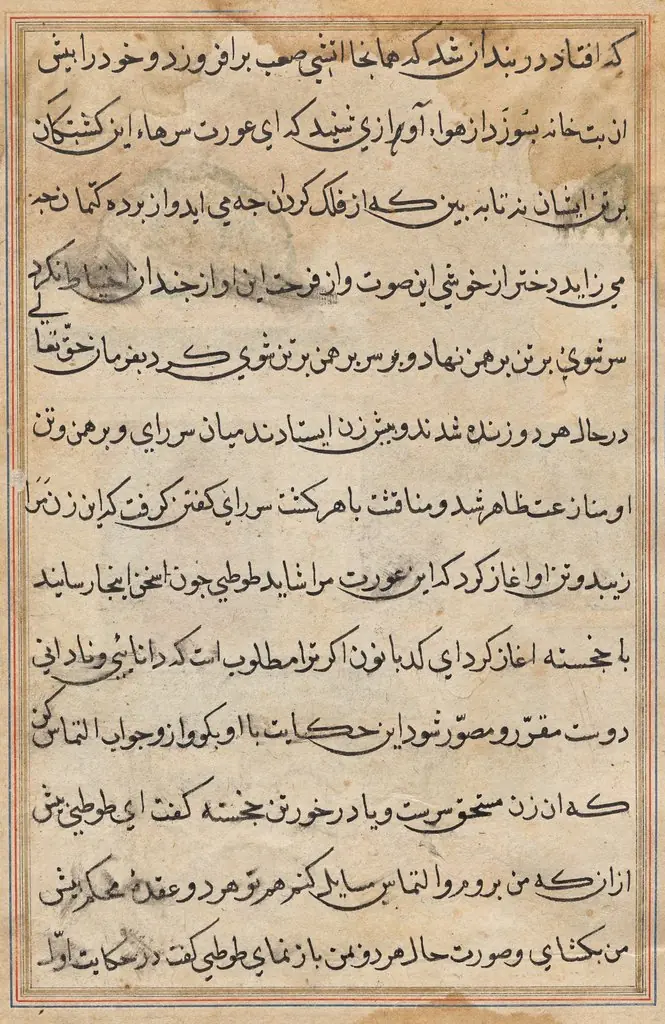 Page from Tales of a Parrot (Tuti-nama): text page
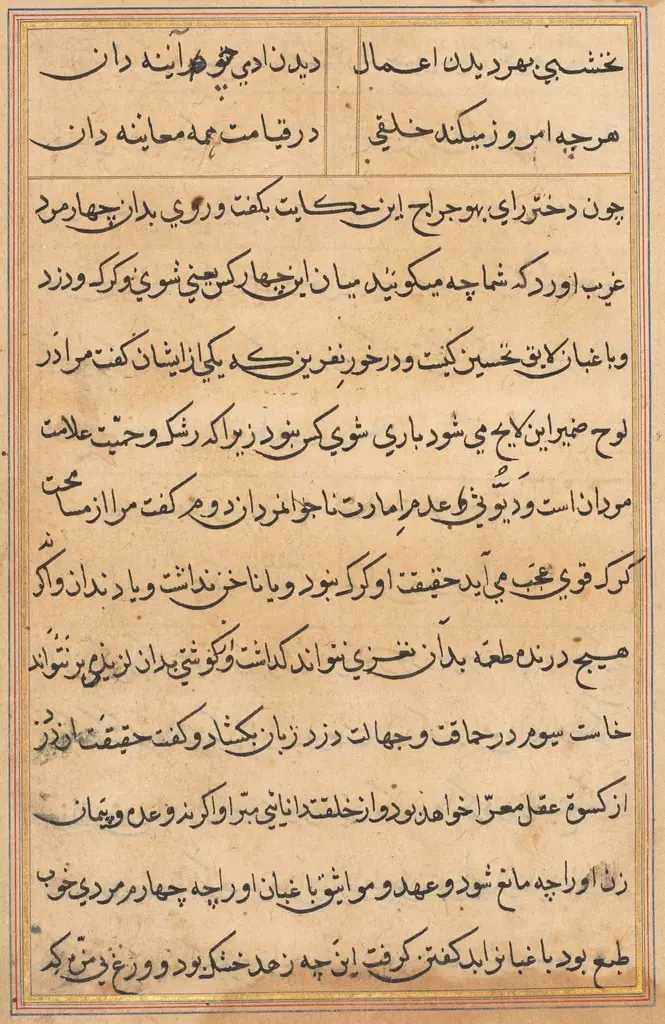 Page from Tales of a Parrot (Tuti-nama): text page
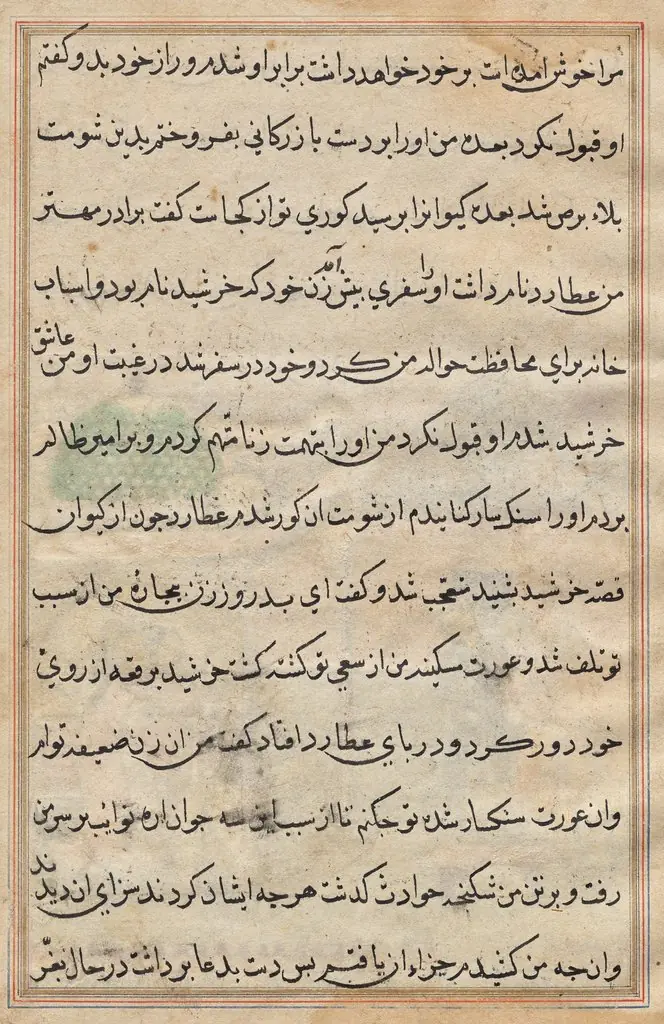 Page from Tales of a Parrot (Tuti-nama): text page
 Page from Tales of a Parrot (Tuti-nama): text page