Artwork
Page from Tales of a Parrot (Tuti-nama): text page
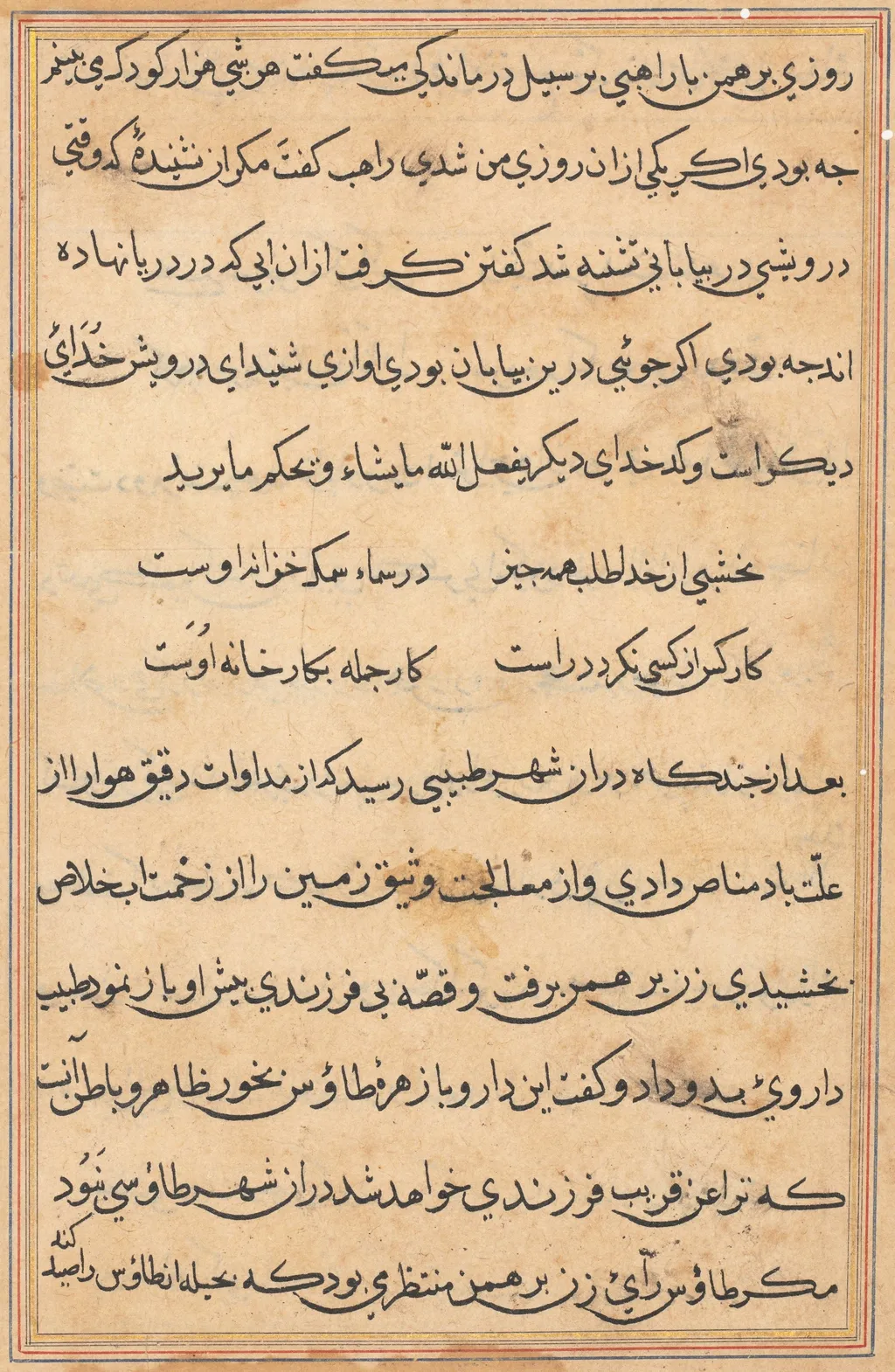
Page from Tales of a Parrot (Tuti-nama): text page is an unspecified painting. It dates from 1560 and is held in the collection of the Cleveland Museum of Art. This object is a single folio from the 1560 Persian manuscript known as Tales of a Parrot (Tuti‑nama).
About this work
The use of a light brown background and a simple border suggests a focus on the text itself, rather than elaborate illustrations or decorations.
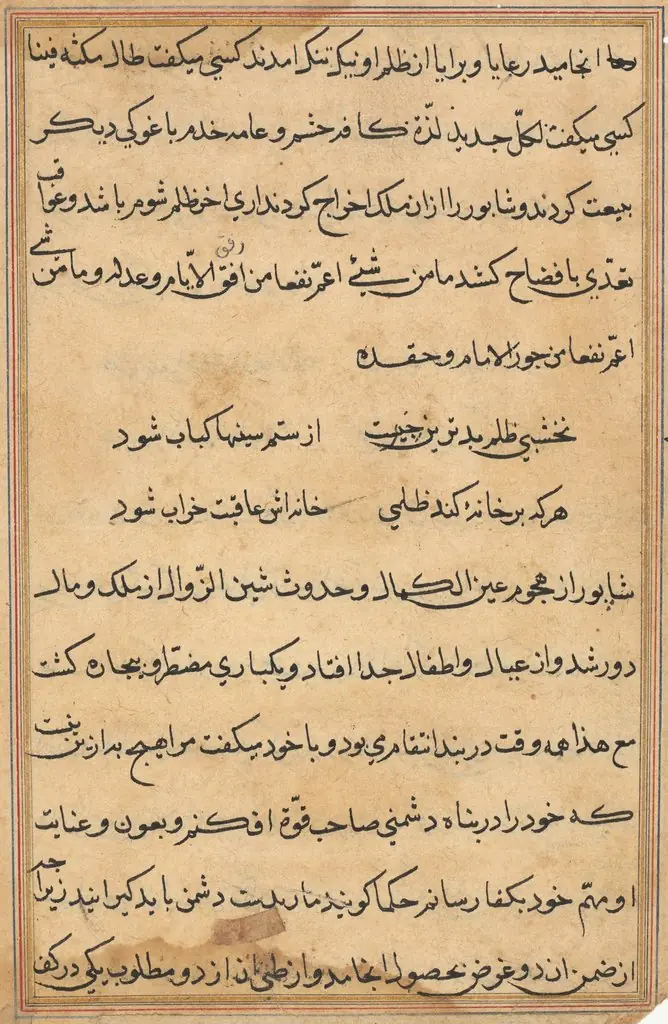
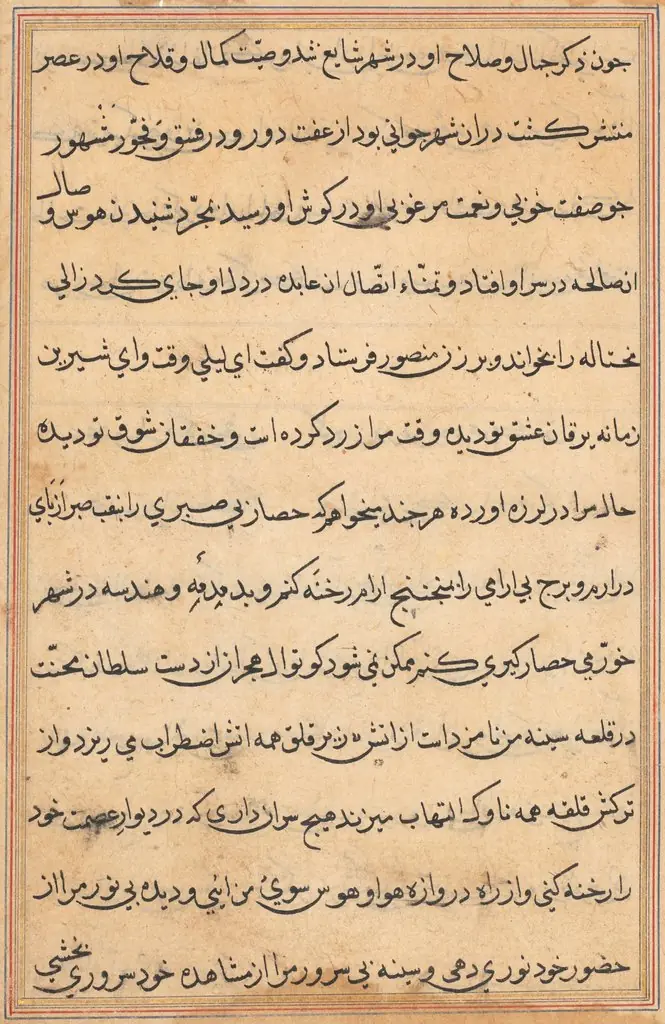
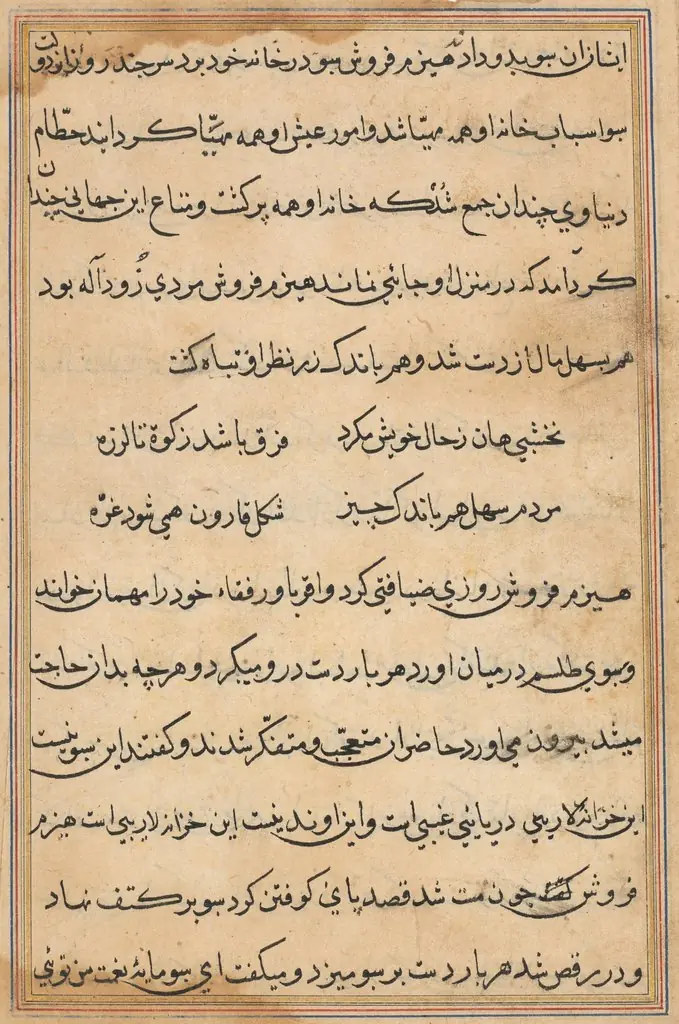
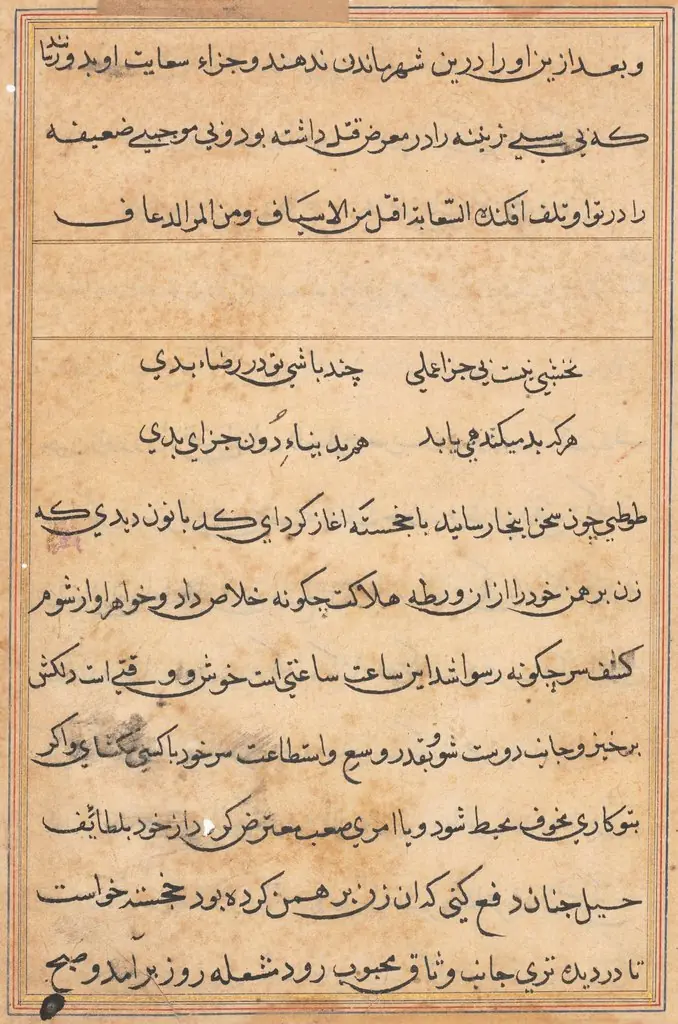
This painting is a page from "Tales of a Parrot" (Tuti-nama), created in 1560. It features a text page with black script on a light brown background, outlined by a thin border of red, yellow, and blue lines. The text is written in a flowing script, with some words or phrases underlined or highlighted in a slightly darker ink.
The page appears to be part of a larger manuscript, possibly a collection of stories or poems. The use of a light brown background and a simple border suggests a focus on the text itself, rather than elaborate illustrations or decorations.
The Cleveland Museum of Art holds this piece, which was made for Prince Salim. To learn more about the artistic techniques used in this painting, look up the term "sfumato".
Overview
This object is a single folio from the 1560 Persian manuscript known as Tales of a Parrot (Tuti‑nama). It consists of a page of running black script set against a light brown ground, framed by a narrow decorative line in red, yellow and blue. The page is part of a larger codex that contains narrative or poetic material.
Subject & Meaning
The text on the folio presents a segment of the collection’s stories, a tradition of moral and romantic tales transmitted in Persian courts. The emphasis on the written word, rather than illustrative embellishment, reflects the manuscript’s function as a literary source for an elite audience.
Technique & Style
The calligraphy is executed in a fluid, cursive hand, with occasional words rendered in a slightly darker ink to indicate emphasis. The background paper retains a natural light brown hue, while a thin border of three colored lines—red, yellow, blue—provides a modest visual frame without competing with the script.
History & Provenance
The folio was produced for Prince Salim, a member of the Mughal royal family, and later entered the collection of the Cleveland Museum of Art. Its survival as an individual page suggests it was detached from the original codex at some point before acquisition by the museum.
Context
Tales of a Parrot belongs to a genre of Persian narrative manuscripts that flourished in the 16th century, often commissioned by court patrons for private reading. The modest decorative scheme aligns with the period’s aesthetic preference for elegance in service of the text, rather than overt pictorial display.
Artist & collection

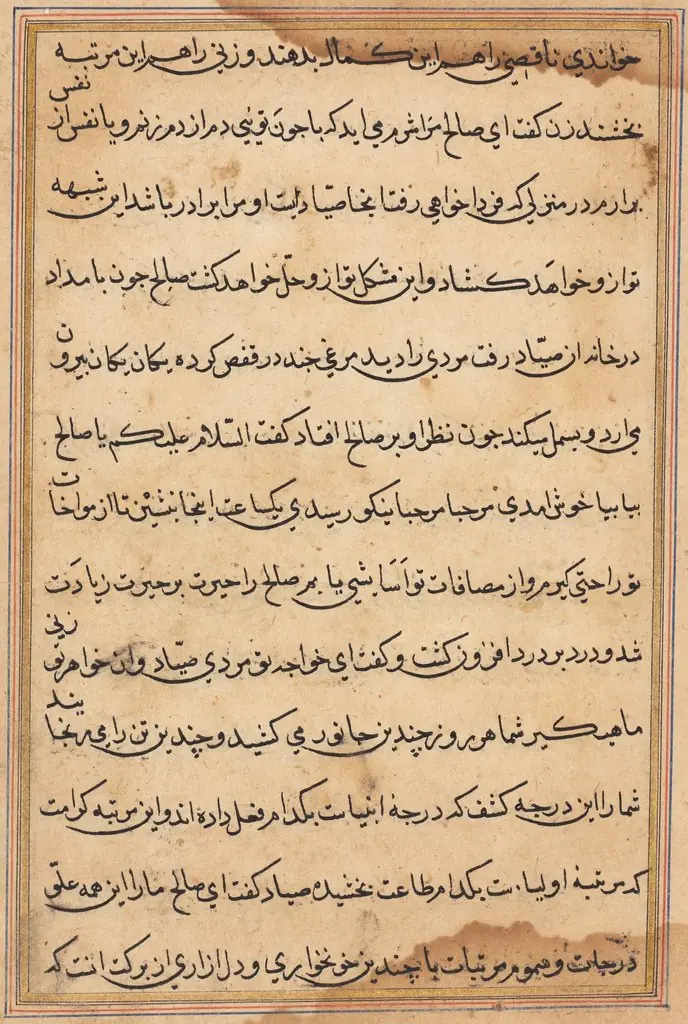 Page from Tales of a Parrot (Tuti-nama): text page
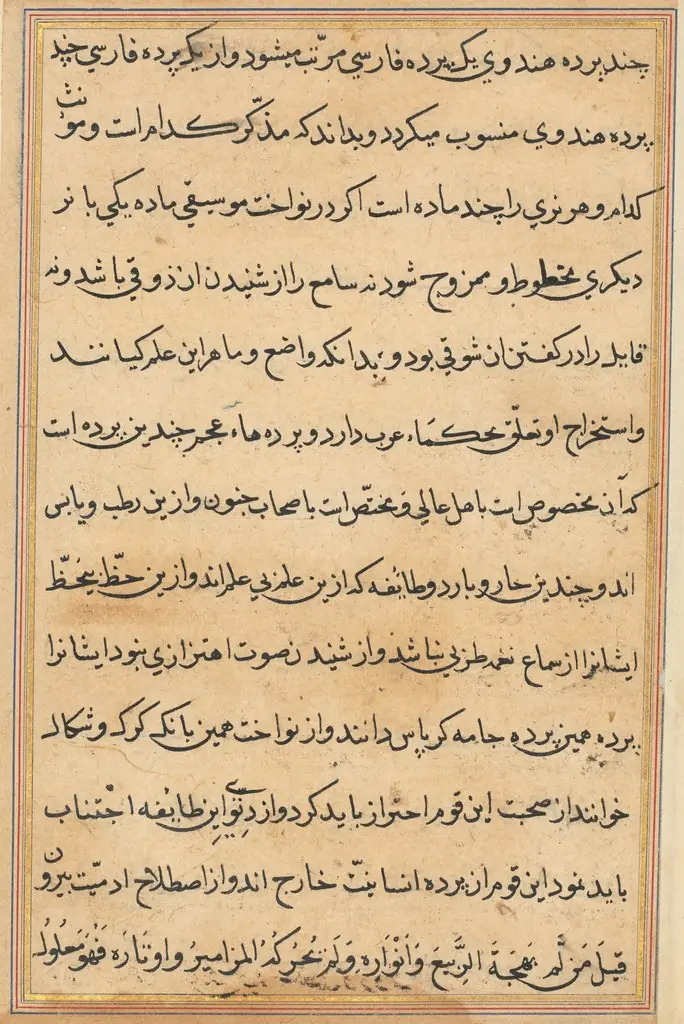 Page from Tales of a Parrot (Tuti-nama): text page
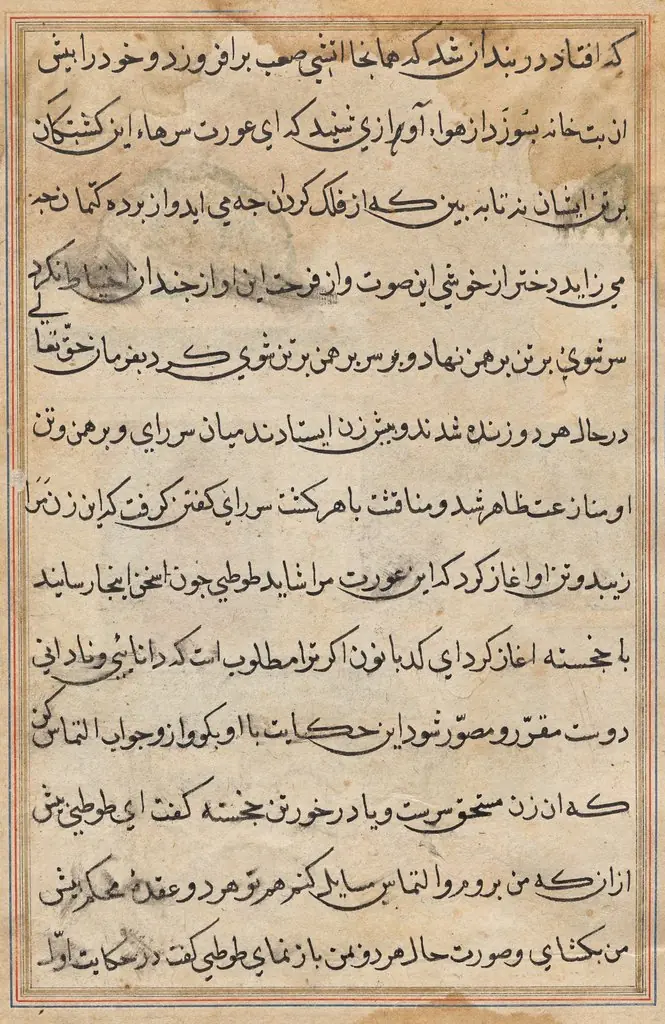 Page from Tales of a Parrot (Tuti-nama): text page
 Page from Tales of a Parrot (Tuti-nama): text page
 Page from Tales of a Parrot (Tuti-nama): text page
 Page from Tales of a Parrot (Tuti-nama): text page
 Page from Tales of a Parrot (Tuti-nama): text page
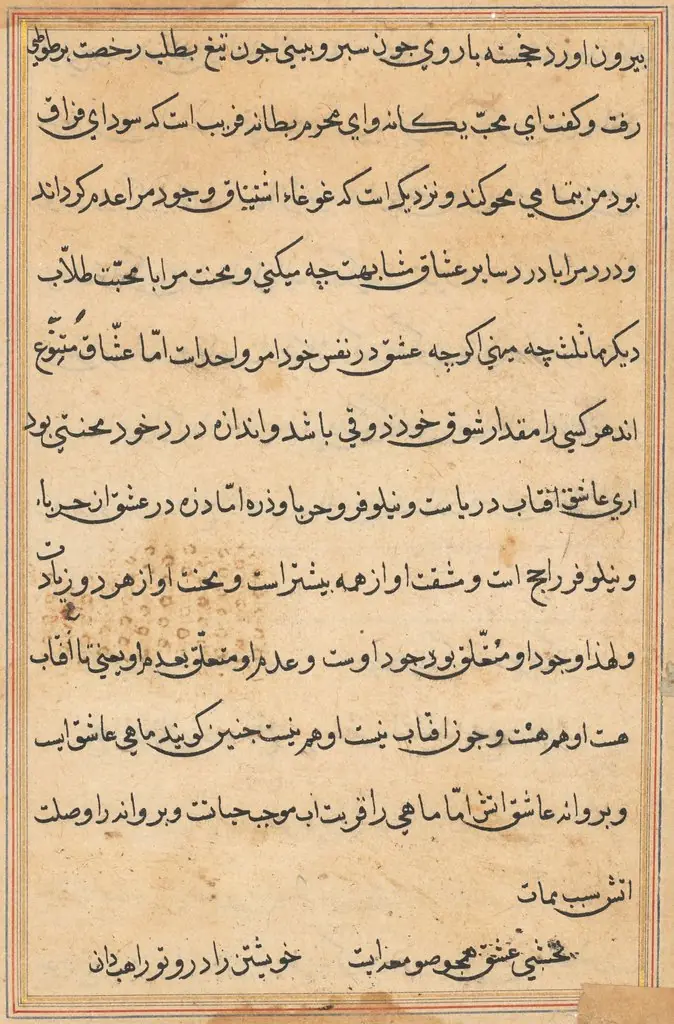 Page from Tales of a Parrot (Tuti-nama): text page
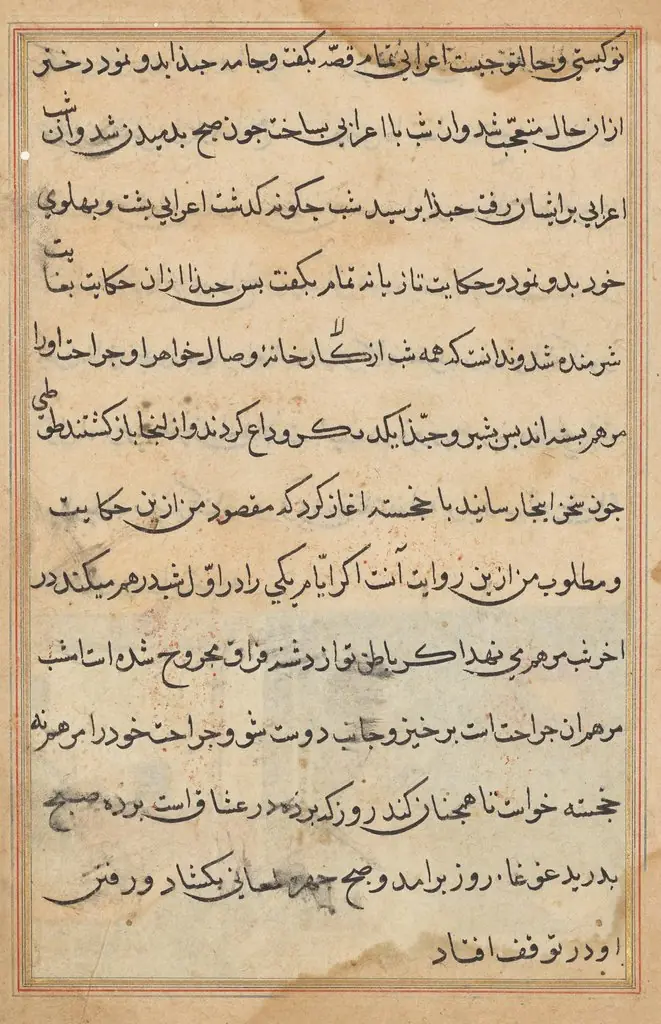 Page from Tales of a Parrot (Tuti-nama): text page
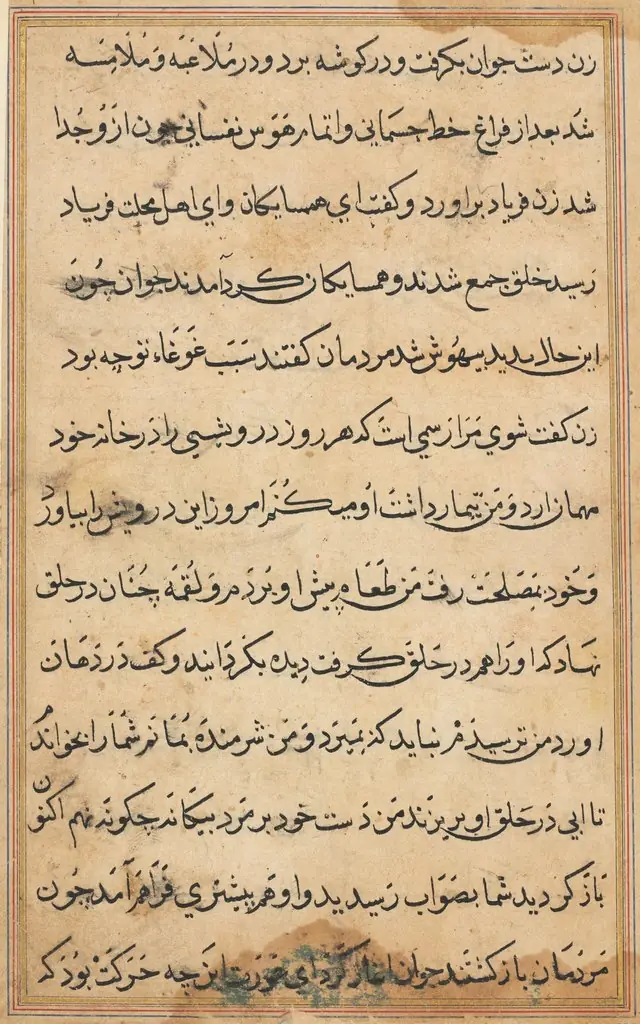 Page from Tales of a Parrot (Tuti-nama): text page
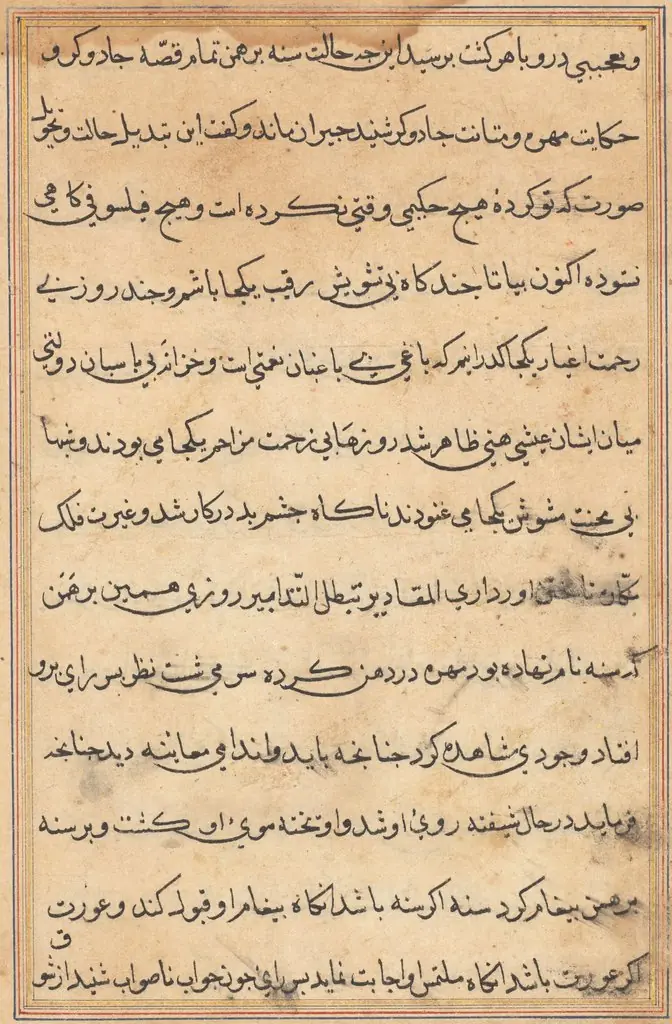 Page from Tales of a Parrot (Tuti-nama): text page