Artwork
Singerie in een kunstkamer
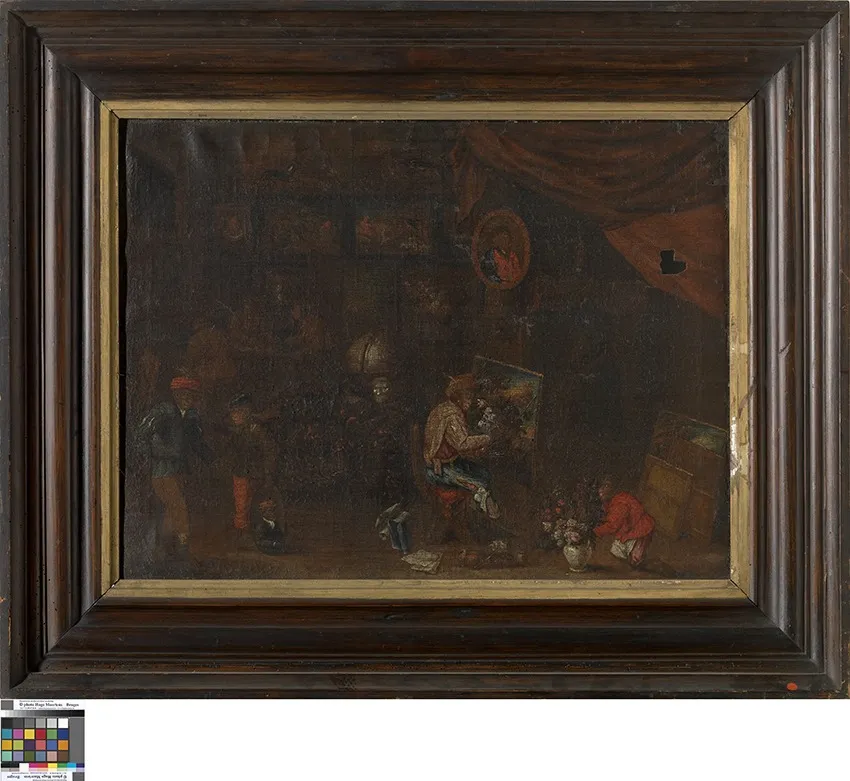
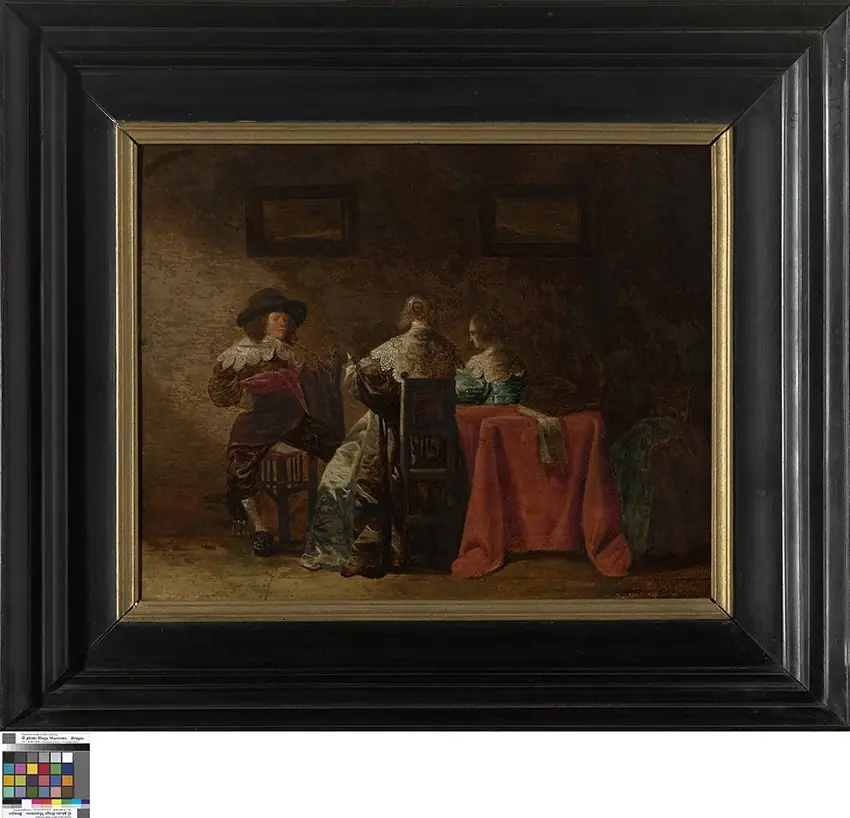
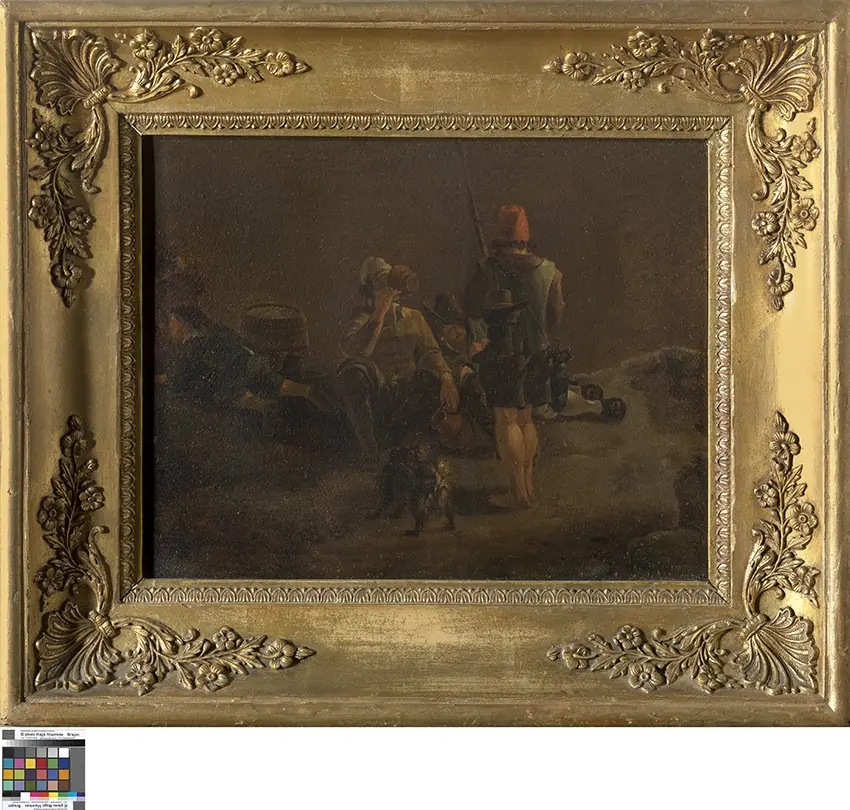
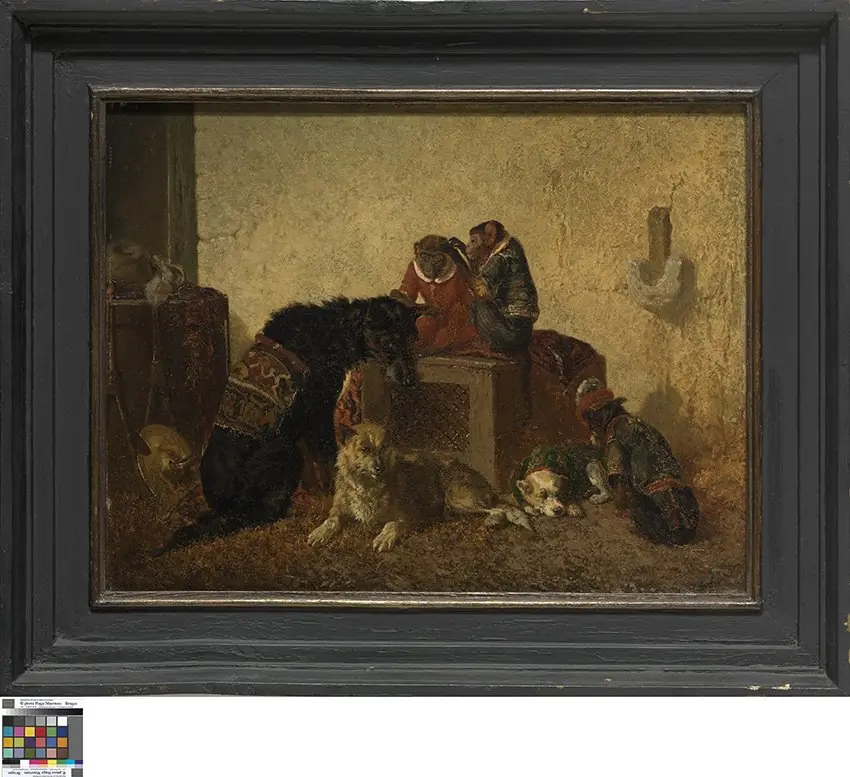
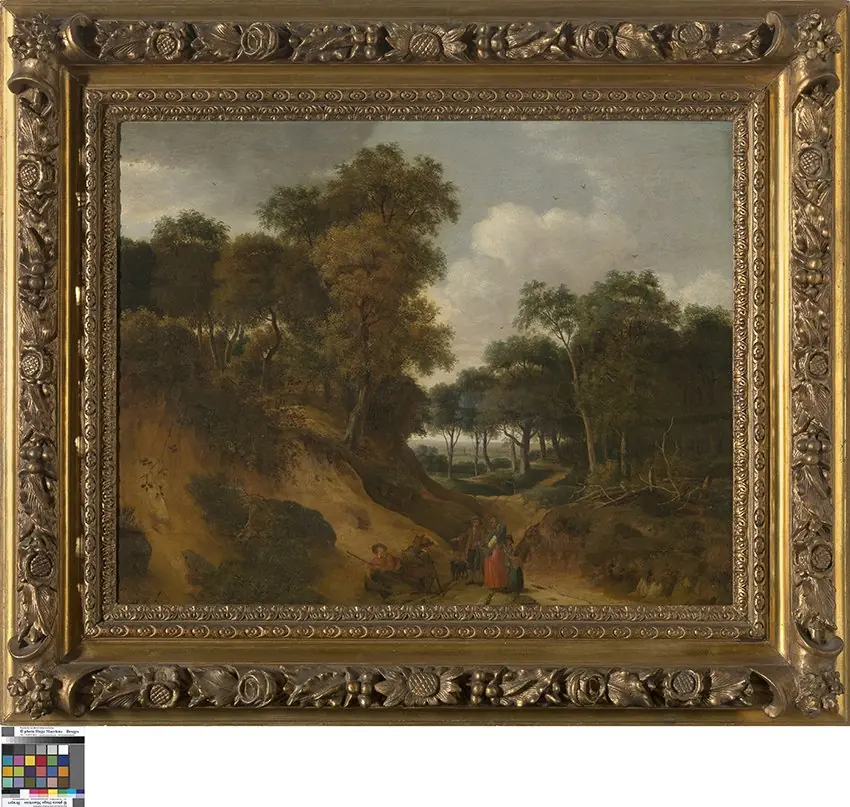
Singerie in een kunstkamer is an oil painting by the Early Baroque Italian artist Unknown. It dates from 1610 and is held in the collection of the Groeningemuseum. This oil painting depicts an intimate interior scene with four human figures and a monkey, rendered in a dimly lit chamber.
About this work
Overview
This oil painting depicts an intimate interior scene with four human figures and a monkey, rendered in a dimly lit chamber.
This oil painting depicts an intimate interior scene with four human figures and a monkey, rendered in a dimly lit chamber. The composition is framed by a draped curtain, enhancing the sense of a contained, private space. Objects such as a globe and unusual artifacts line the walls, suggesting a cabinet of curiosities. The monkey’s presence introduces an element of whimsy, disrupting the otherwise solemn atmosphere of the room.
Subject & Meaning
The scene likely references the 17th-century Dutch genre of 'singerie'—artistic depictions of monkeys imitating human behavior. Here, the monkey’s placement among scholars and collectors may critique human pretensions, suggesting folly in the pursuit of knowledge or status. The quiet, almost ritualistic arrangement of figures contrasts with the monkey’s unpredictable presence, inviting reflection on the boundaries between nature and culture.
Technique & Style
The artist employs chiaroscuro to heighten spatial depth and focus attention on key figures and objects. The dark, receding background isolates the illuminated subjects, lending the scene a theatrical quality. Brushwork is precise yet unobtrusive, with subtle gradations in tone modeling forms without overt detail. The lighting emphasizes textures—fabric, wood, glass—while maintaining an overall atmosphere of quiet mystery.
History & Provenance
The painting originates from the Dutch Golden Age, likely created in the mid-17th century by an artist associated with genre scenes or cabinet paintings. Its subject aligns with popular themes in Northern European art that blended moral allegory with visual curiosity. While its early ownership is undocumented, it entered institutional collections in the 19th or early 20th century, valued for its nuanced depiction of human and animal interaction.
Context
During the Dutch Golden Age, wealthy patrons collected exotic objects and commissioned artworks that reflected their intellectual interests and global connections. Paintings like this one often served as visual metaphors for the era’s fascination with natural history, colonial acquisition, and the limits of human understanding. The monkey, a common symbol in such works, acted as both entertainer and critic of human behavior.
Legacy
This work contributes to a broader tradition of animal-centered allegory in European art, influencing later depictions of primates in domestic and scholarly settings. Its quiet irony and restrained composition distinguish it from more overtly satirical works. Today, it remains a quiet testament to how art of the period used subtle visual cues to question authority, knowledge, and the human place within the natural world.
Artist & collection

 Domestic Scene
 Giacomo and Cardinal Marco, investing Andrea, Abbot of San Zeno, with his Benefice
 The Nymph of Fontainebleau
 Portrait of a Woman
 Madonna and Child with Saints in the Enclosed Garden
 Venus and Minerva
 Family Group of Four on Sofa
 Wall painting from Room H of the Villa of P. Fannius Synistor at Boscoreale