Artwork
The Fall of Men: Eve
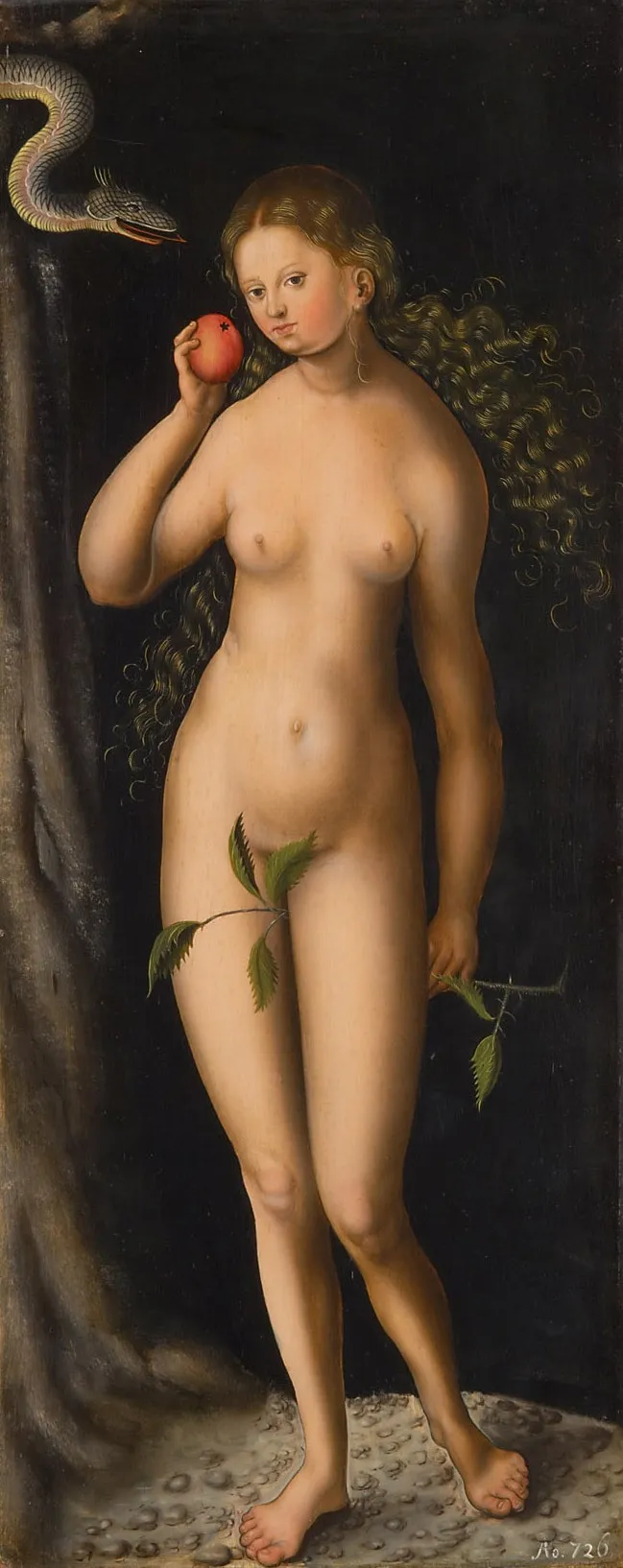
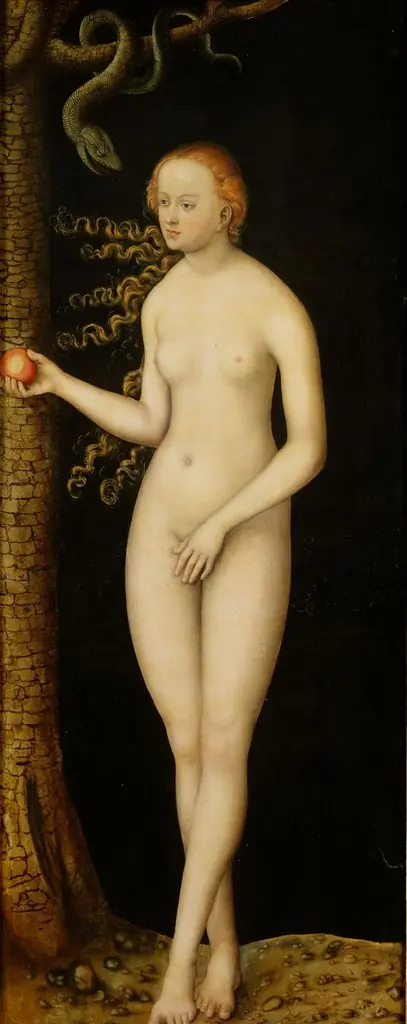
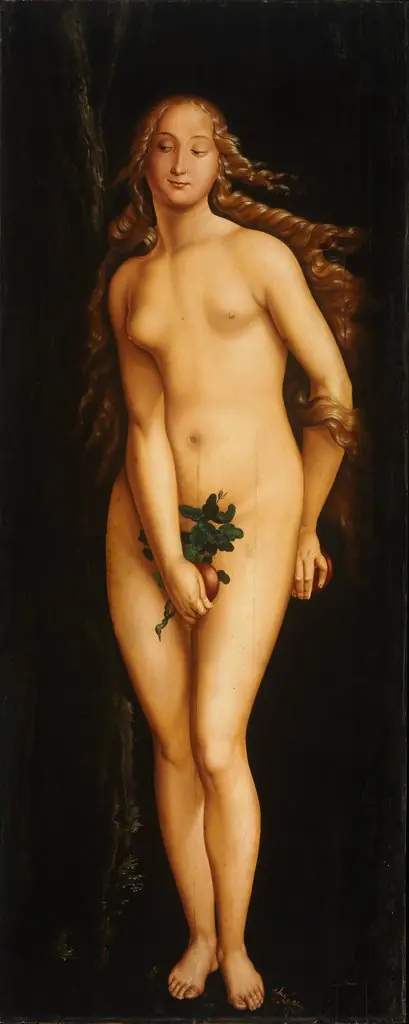
The Fall of Men: Eve is an unspecified painting by the Mannerist artist Unknown. It dates from 1520 and is held in the collection of the Kunsthistorisches Museum. The painting depicts a solitary woman, barefoot, set against a dark, swirling backdrop.
About this work
Overview
She holds a red apple in one hand and a sprig of greenery in the other, her loose hair framing a composed yet serious expression.
The painting depicts a solitary woman, barefoot, set against a dark, swirling backdrop. She holds a red apple in one hand and a sprig of greenery in the other, her loose hair framing a composed yet serious expression. Light falls across her form, highlighting certain areas while casting gentle shadows, giving the figure a sense of three‑dimensional presence as if she is stepping forward into the viewer’s space.
Subject & Meaning
The central figure represents Eve, the biblical first woman, poised at the moment of temptation. The red apple, a conventional symbol of the forbidden fruit, contrasts with the fresh greenery, suggesting the tension between innocence and knowledge. Her calm demeanor underscores the gravity of the choice she faces, inviting contemplation of the narrative’s moral and theological implications.
Technique & Style
The artist employs chiaroscuro, using stark contrasts between illuminated flesh and the enveloping darkness to model volume and depth. The swirling, smoke‑like pattern behind the figure functions as a dramatic curtain, enhancing the sense of mystery. Subtle gradations of light create a smooth, almost tactile surface on the skin, while the shadows provide a grounding counterpoint, reinforcing the three‑dimensional illusion.
Context
Rendered in a period when dramatic lighting and biblical themes were prevalent, the work reflects the influence of Baroque sensibilities that emphasized emotional intensity and theatrical composition. The focus on a single, isolated figure aligns with a tradition of intimate devotional images, while the use of symbolic objects—apple and greenery—connects it to longstanding iconographic conventions surrounding the story of the Fall.
Artist & collection

 Domestic Scene
 Giacomo and Cardinal Marco, investing Andrea, Abbot of San Zeno, with his Benefice
 The Nymph of Fontainebleau
 Portrait of a Woman
 Madonna and Child with Saints in the Enclosed Garden
 Venus and Minerva
 Family Group of Four on Sofa
 Wall painting from Room H of the Villa of P. Fannius Synistor at Boscoreale