Artwork
"Heartvine" ("Aoi") chapter from The Tale of Genji (Genji monogatari)
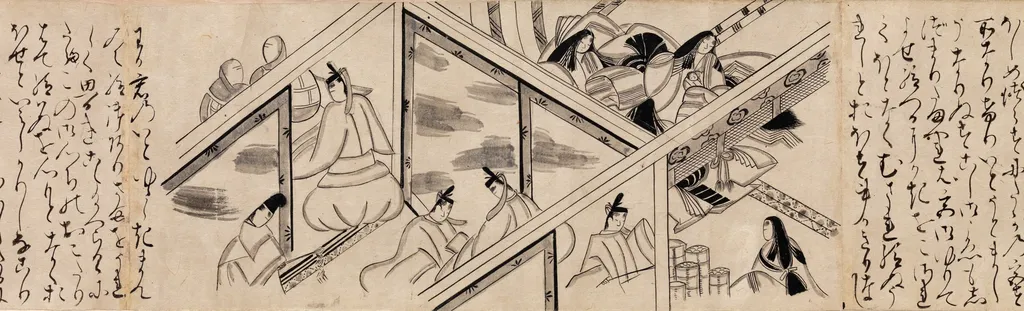
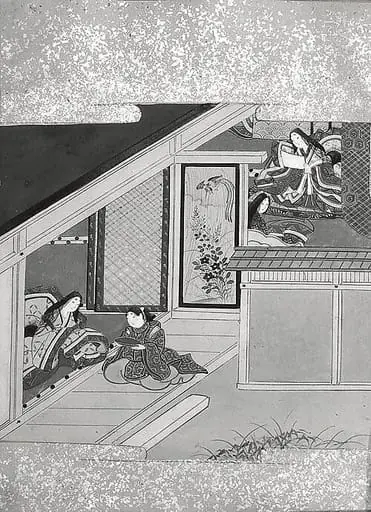
"Heartvine" ("Aoi") chapter from The Tale of Genji (Genji monogatari) is an unspecified painting. It dates from 1536 and is held in the collection of the Metropolitan Museum of Art.
About this work
Overview
The work titled “Heartvine (Aoi) chapter from The Tale of Genji” is a narrative painting that divides a single interior space into four distinct scenes. Each vignette is rendered with bold black outlines and minimalistic forms, creating a stylized, almost diagrammatic representation of the story’s moments.
Subject & Meaning
The left panel depicts a woman seated on a cushion near a window, attended by a kneeling man who offers a fan, suggesting a moment of courtly exchange.
The left panel depicts a woman seated on a cushion near a window, attended by a kneeling man who offers a fan, suggesting a moment of courtly exchange. The central scene shifts to a boat on water, where two figures are positioned against a backdrop of sky and waves, indicating travel or transition. The rightmost image shows a woman reclining on a bed while another woman stands nearby holding a tray, hinting at domestic intimacy or service.
Technique & Style
The artist employs stark, continuous black lines to define figures and architectural elements, while the interior spaces overlap like interlocking pieces of a puzzle. Simplified shapes and limited color accentuate the narrative flow, allowing the viewer to follow the sequence of events across the divided composition.
Context
The painting visualizes a chapter from the classic Japanese literary work The Tale of Genji, a 11th‑century novel that explores courtly life and romantic intrigue. By translating a literary episode into a series of pictorial scenes, the work reflects the long tradition of Japanese narrative art that merges text and image.
Legacy
As an example of narrative illustration, the piece demonstrates how artists have historically condensed complex stories into compact visual formats. Its presence in a major museum collection underscores the continued interest in the interplay between literature and visual culture in Japanese art history.
Artist & collection

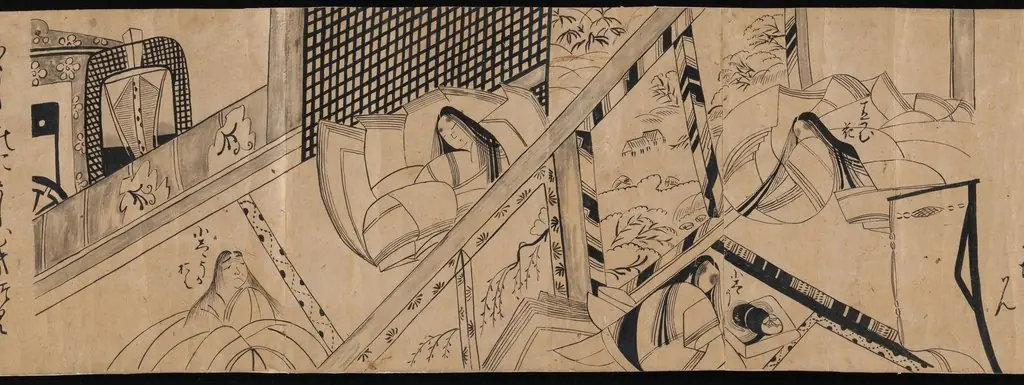 "Akashi", "Channel Buoys" ("Miotsukushi"), "The Wormwood Patch" ("Yomogiu"), "Gatehouse" ("Sekiya"), and "Picture Contest" ("E-awase") chapters from the Tale of Genji (Genji monogatari)
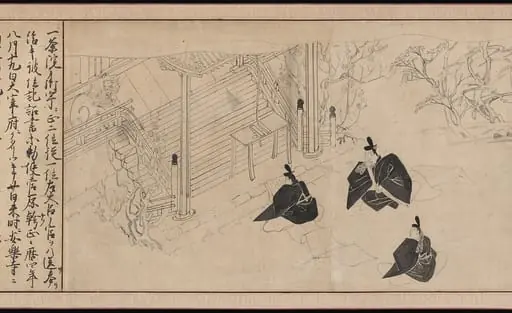 太宰府安楽寺 北野天神縁起絵巻 断簡 (Dazaifu Anrakuji, Kitano Tenjin engi emaki dankan)|Courtiers Visit Sugawara no Michizane’s Mortuary Temple, from Illustrated Legends of the Kitano Tenjin Shrine
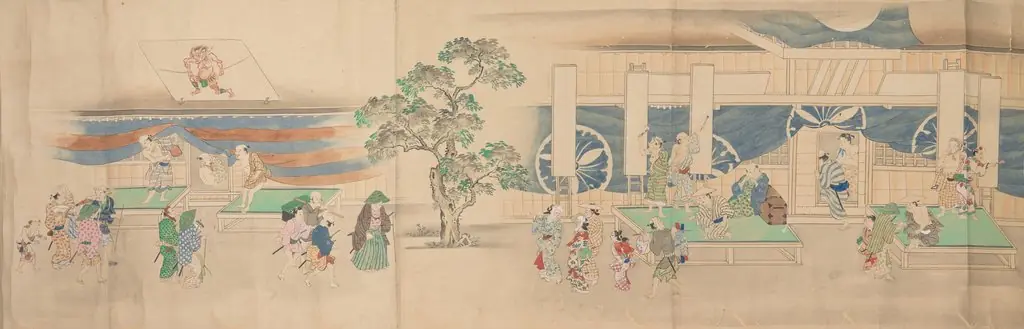 Kabuki Theater
 Untitled