Artwork
Heraclitus, the Weeping Philosopher
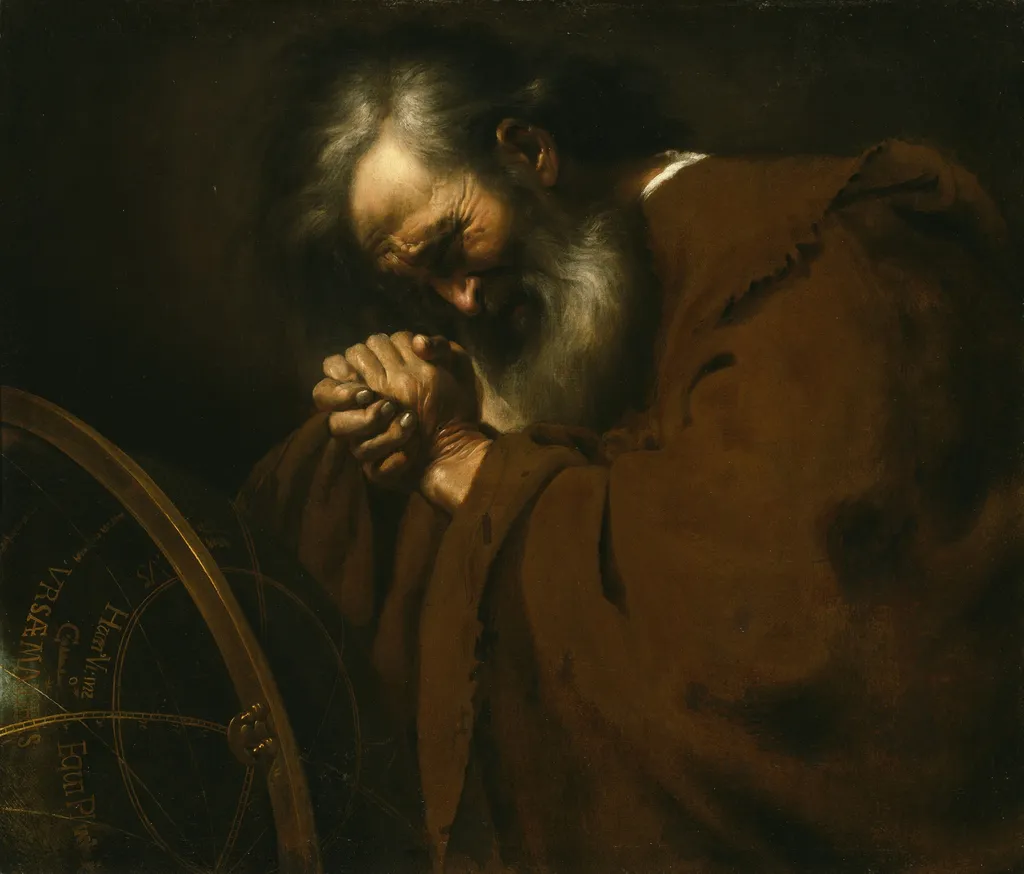
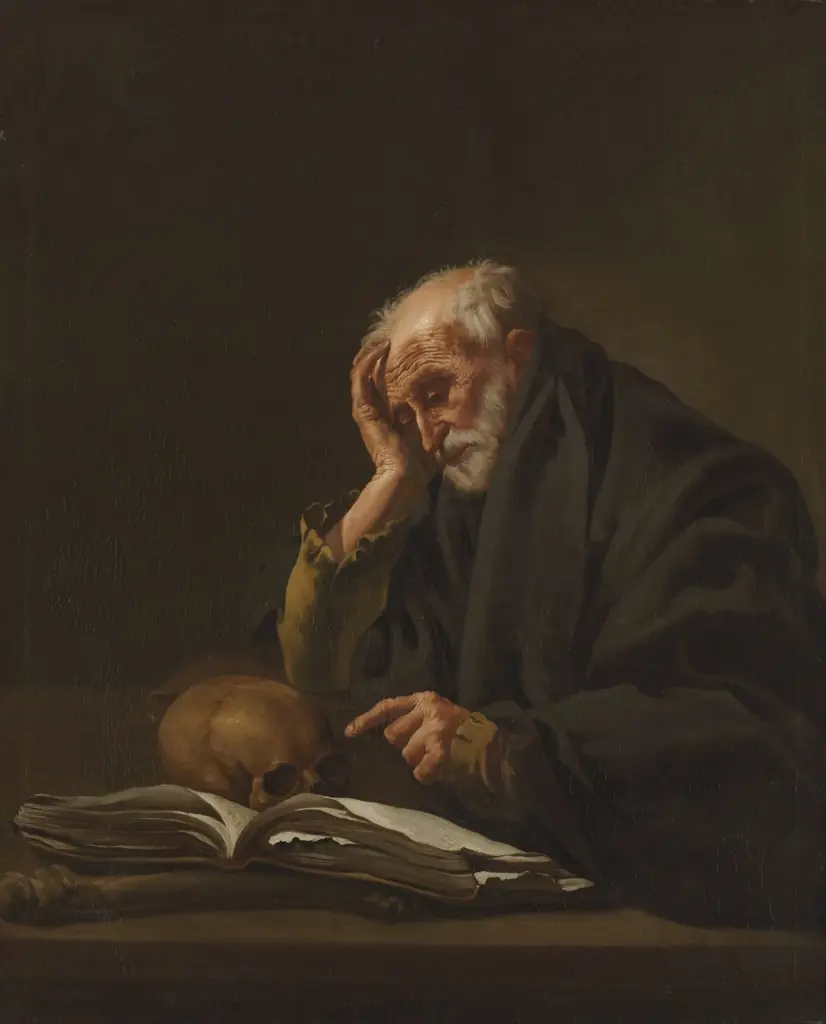
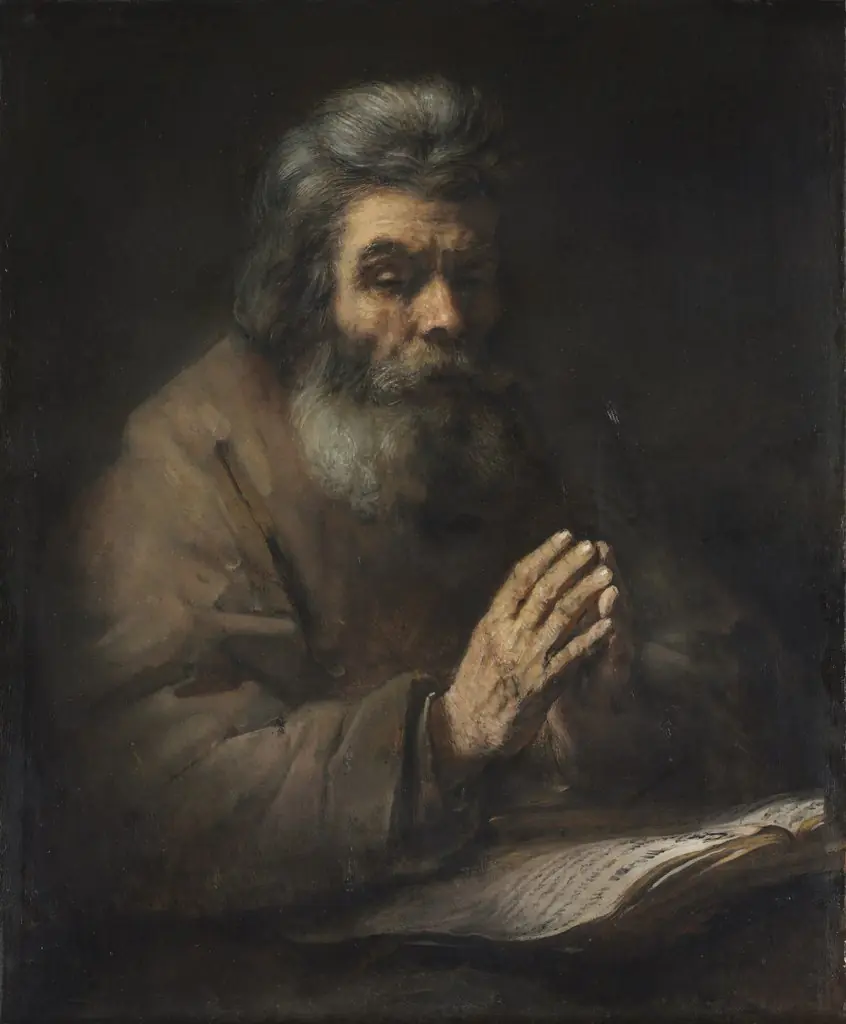
Heraclitus, the Weeping Philosopher is an oil painting by the Early Baroque Italian artist Unknown. It dates from 1630 and is held in the collection of the Art Institute of Chicago. The canvas presents a solitary figure, an elderly man with flowing white hair and beard, cloaked in a brown robe.
About this work
Overview
The canvas presents a solitary figure, an elderly man with flowing white hair and beard, cloaked in a brown robe. He sits with his head cradled in his hands before a large, round instrument marked with enigmatic symbols, perhaps a globe or an astrolabe. The overall tone is muted, the darkness surrounding the philosopher emphasizing a mood of introspection and sorrow.
Subject & Meaning
The seated individual is identified as Heraclitus, the pre‑Socratic thinker traditionally associated with melancholy. His posture—head bowed, hands supporting his face—conveys a blend of grief and deep contemplation, suggesting an inner struggle with the paradoxes of change and permanence that defined his philosophy.
Technique & Style
The artist employs chiaroscuro, contrasting stark light on the philosopher’s features with a deep, shadowed backdrop, creating a three‑dimensional effect. Thick impasto layers give texture to the robe and the circular device, while the restrained palette of browns, grays, and muted earth tones reinforces the work’s somber atmosphere.
Context
Rendered in oil on canvas, the painting aligns with a tradition of portraying classical thinkers in a contemplative pose, echoing Renaissance and Baroque approaches to intellectual portraiture. The inclusion of an astronomical instrument hints at Heraclitus’s engagement with the natural order, linking his metaphysical ideas to contemporary scientific symbols.
Artist & collection

 Domestic Scene
 Giacomo and Cardinal Marco, investing Andrea, Abbot of San Zeno, with his Benefice
 The Nymph of Fontainebleau
 Portrait of a Woman
 Madonna and Child with Saints in the Enclosed Garden
 Venus and Minerva
 Family Group of Four on Sofa
 Wall painting from Room H of the Villa of P. Fannius Synistor at Boscoreale