Artwork
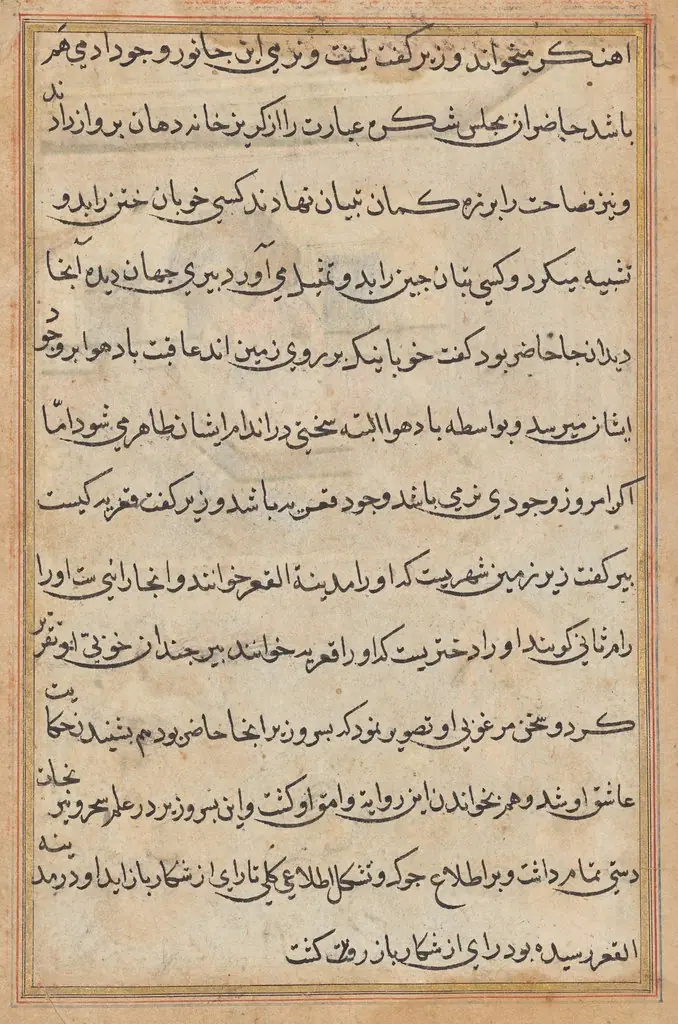
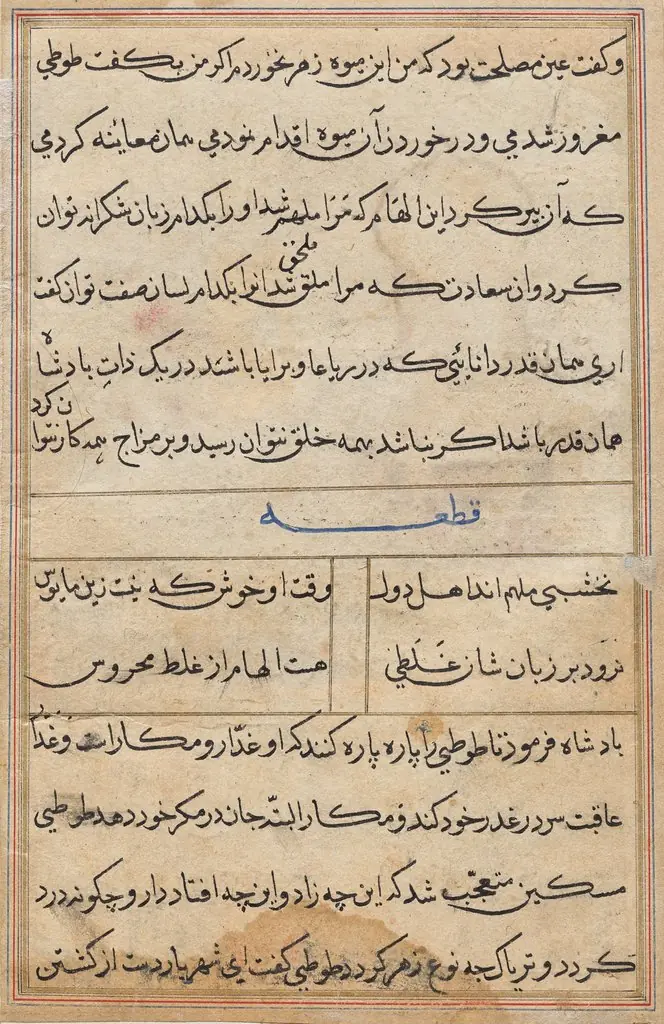
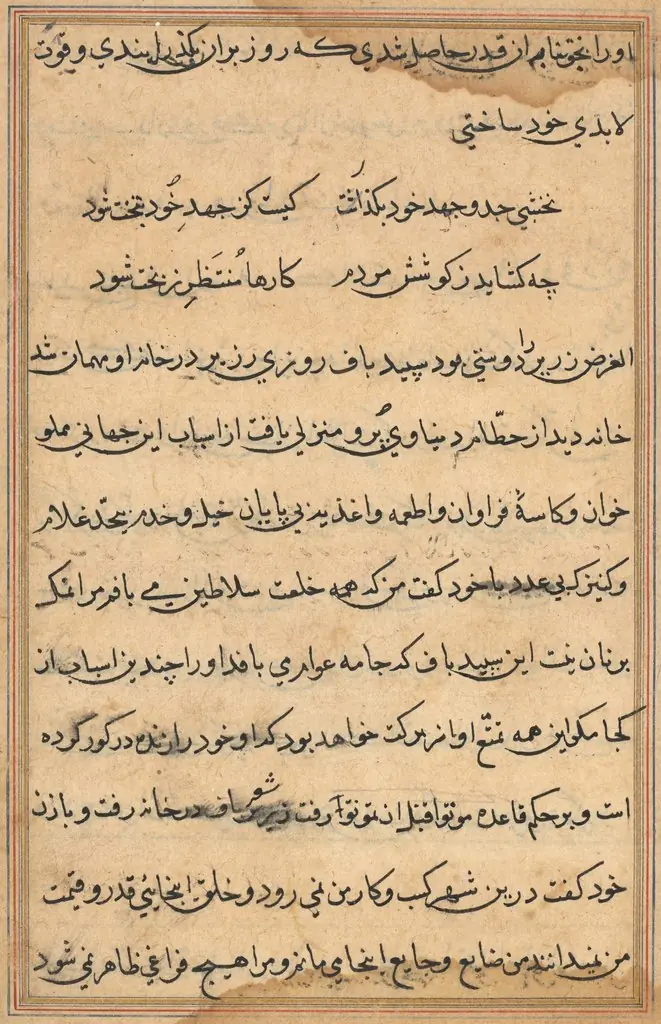
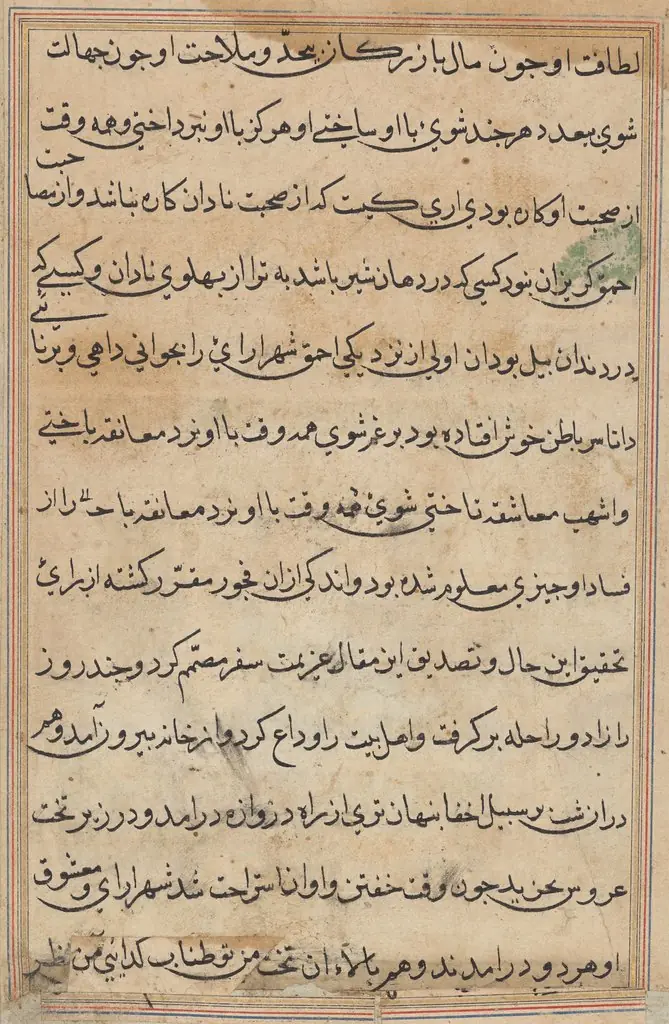
Page from Tales of a Parrot (Tuti-nama): text page
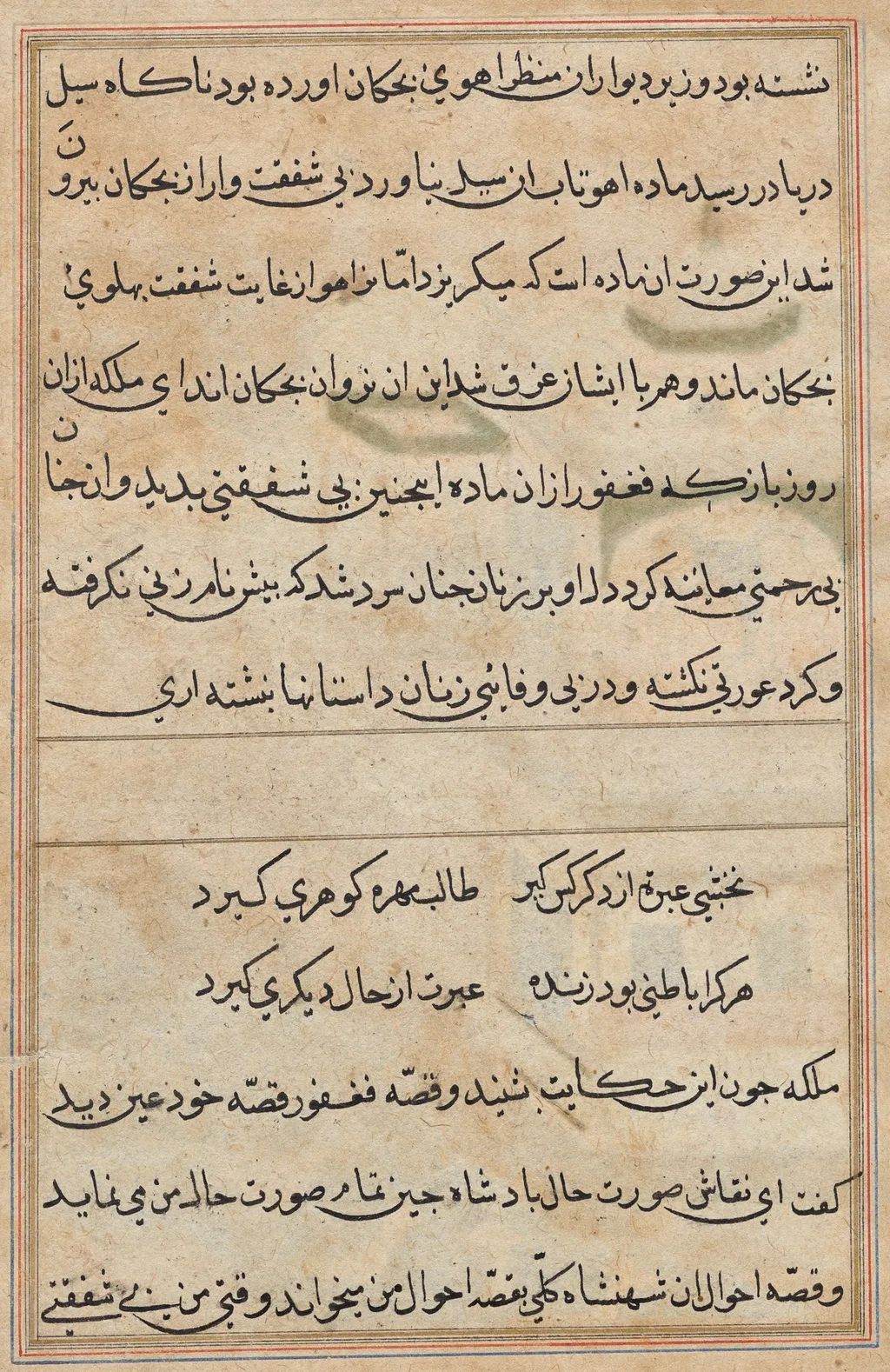
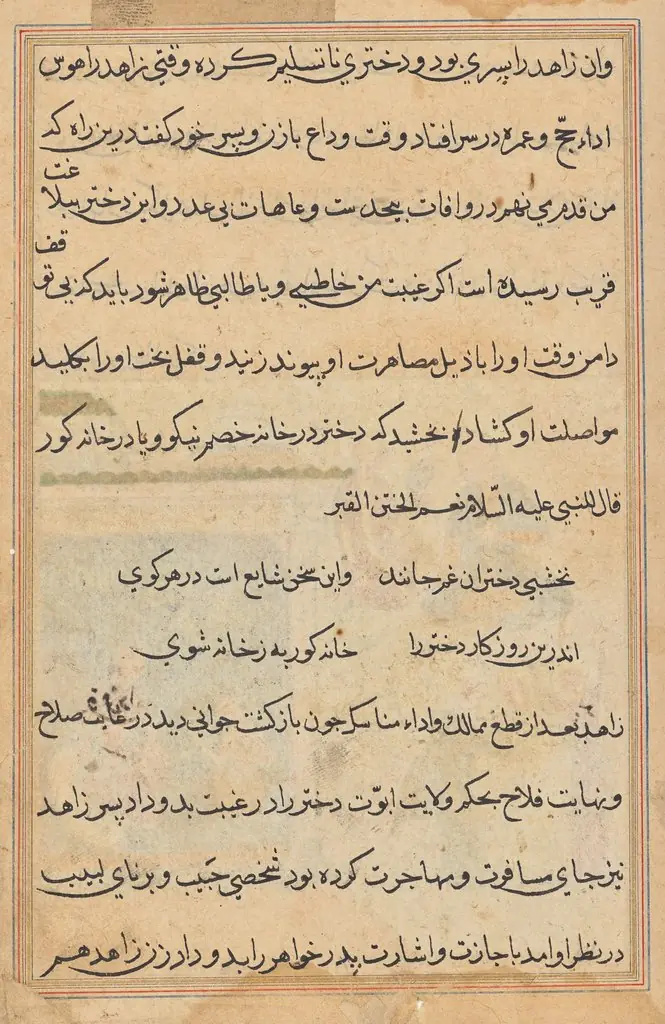
Page from Tales of a Parrot (Tuti-nama): text page is an unspecified painting. It dates from 1560 and is held in the collection of the Cleveland Museum of Art. The object is a single folio from the Persian manuscript known as *Tuti‑nama* (Tales of a Parrot).
About this work
Overview
The object is a single folio from the Persian manuscript known as *Tuti‑nama* (Tales of a Parrot). It consists of a page of paper bearing black ink calligraphy set against a light‑brown, slightly yellowed surface. A fine horizontal rule separates the page into two textual zones, the upper containing a denser block of script than the lower.
Subject & Meaning
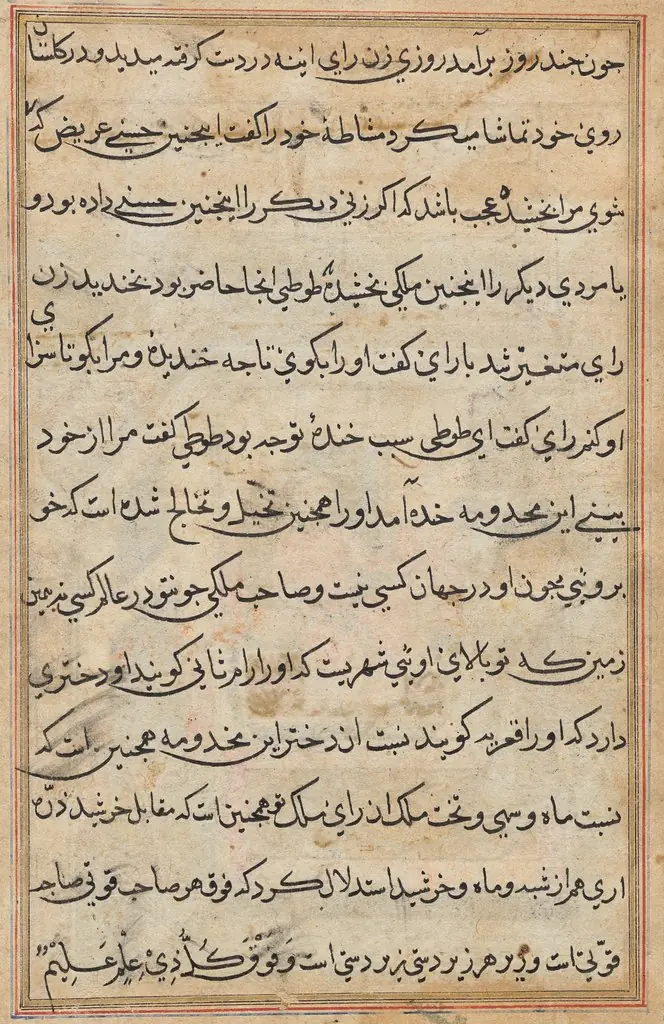
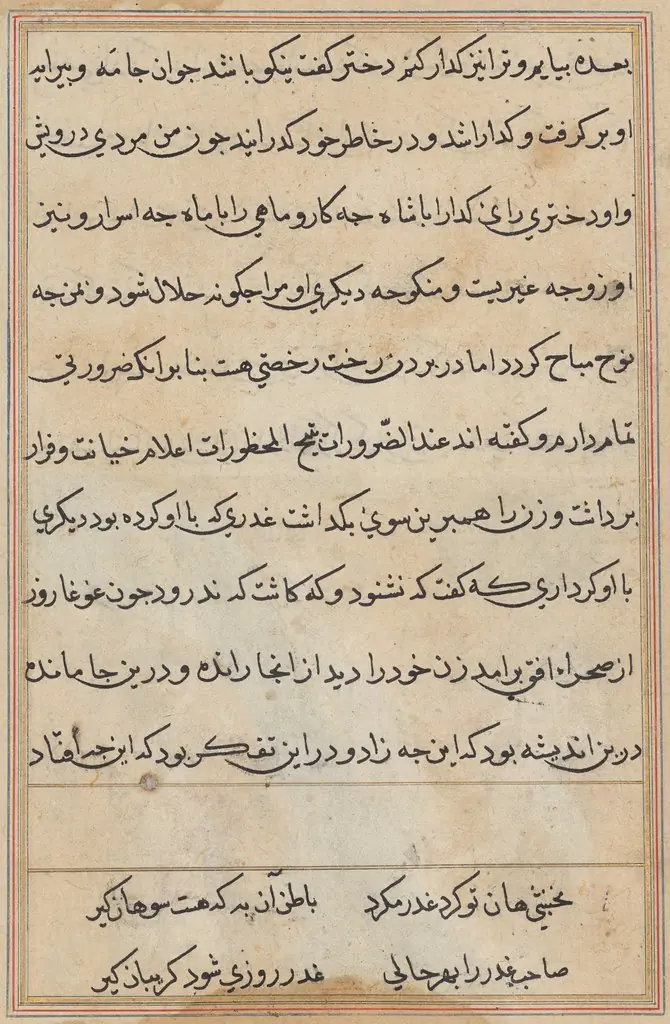
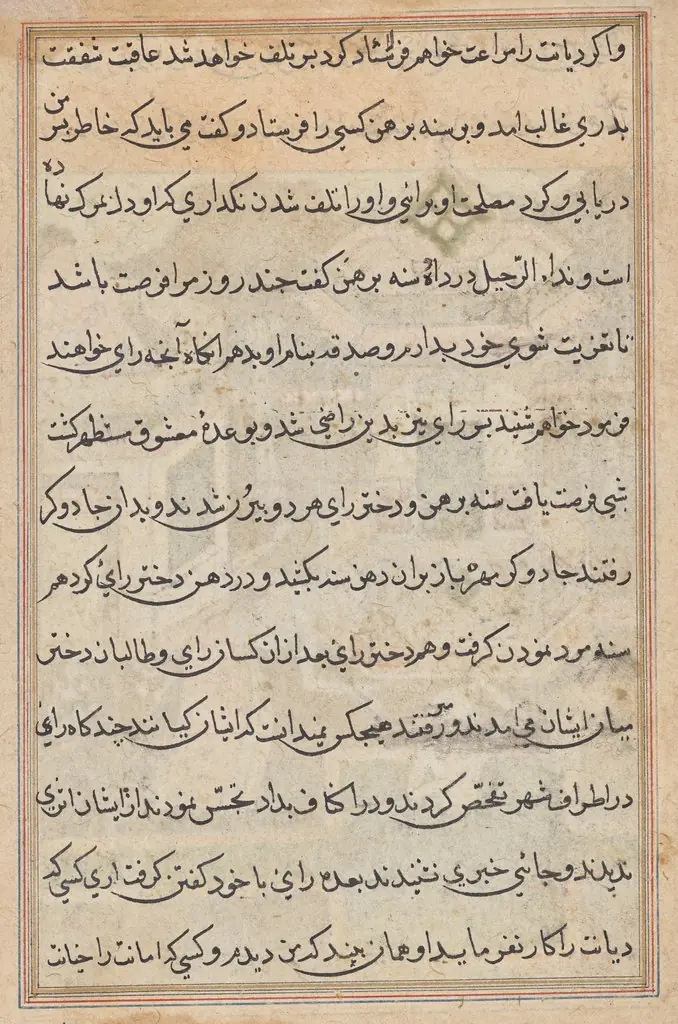
The manuscript compiles a collection of moral and didactic stories, traditionally narrated by a parrot to a king. The particular passage on this leaf likely conveys one of these allegorical tales, employing the parrot’s voice as a vehicle for ethical instruction, a common motif in medieval Persian literature.
Technique & Style
The calligraphy is executed in a highly ornamental hand, characterized by sweeping curves, intricate flourishes, and a balanced composition. The ink is uniformly black, applied with a reed or bamboo pen, while the paper’s warm tone and subtle wear suggest a handmade, rag‑based support typical of 14th‑ to 16th‑century Persian book production.
History & Provenance
The folio originates from an early modern Persian codex, likely produced in a courtly workshop. Its current condition—yellowed, slightly frayed edges, and a faint crease—indicates centuries of handling. The page entered a Western collection during the late 19th century, when many Persian manuscripts were acquired by European collectors and institutions.
Context
*Tuti‑nama* belongs to a broader tradition of illustrated moral compendia that flourished under Timurid and Safavid patronage. Such works combined literary content with elaborate calligraphy, reflecting the high status of the written word in Persian court culture and the emphasis on didactic storytelling as a means of moral education.
Artist & collection

 Page from Tales of a Parrot (Tuti-nama): text page
 Page from Tales of a Parrot (Tuti-nama): text page
 Page from Tales of a Parrot (Tuti-nama): text page
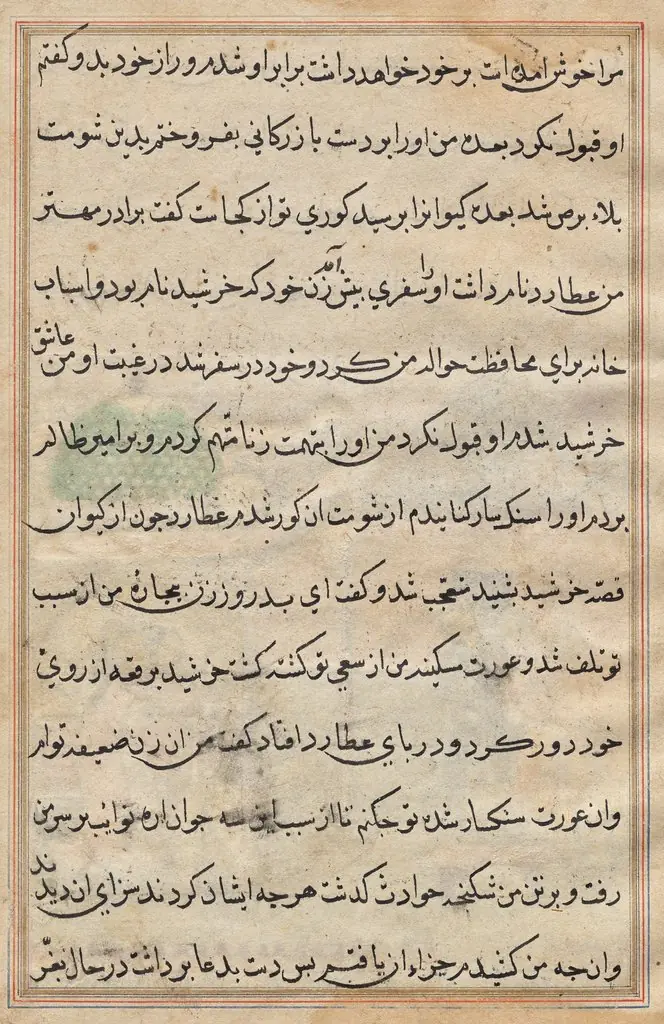 Page from Tales of a Parrot (Tuti-nama): text page
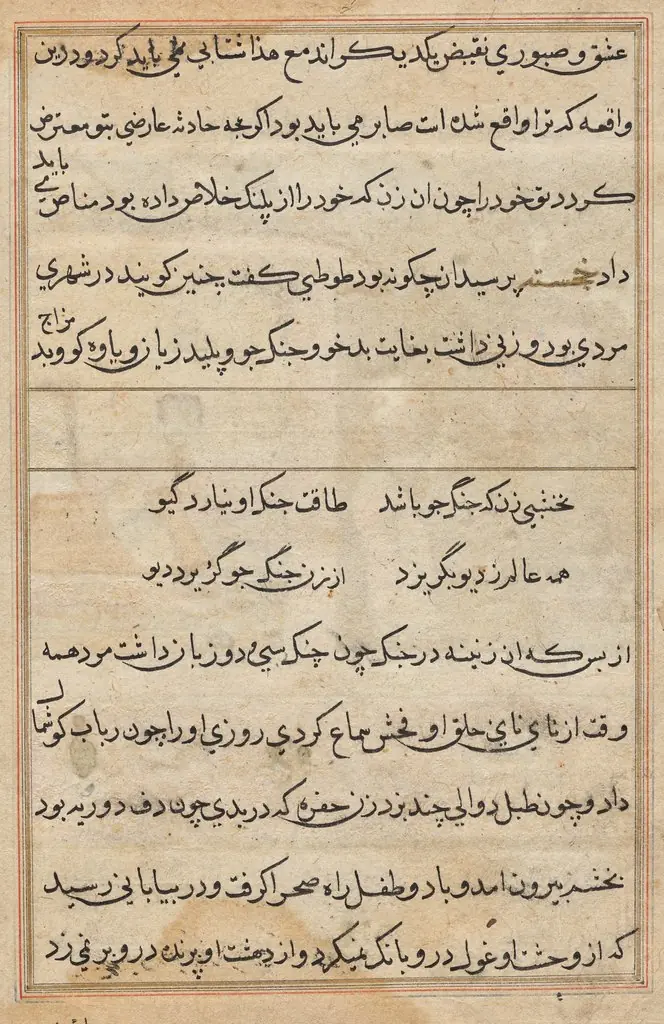 Page from Tales of a Parrot (Tuti-nama): text page
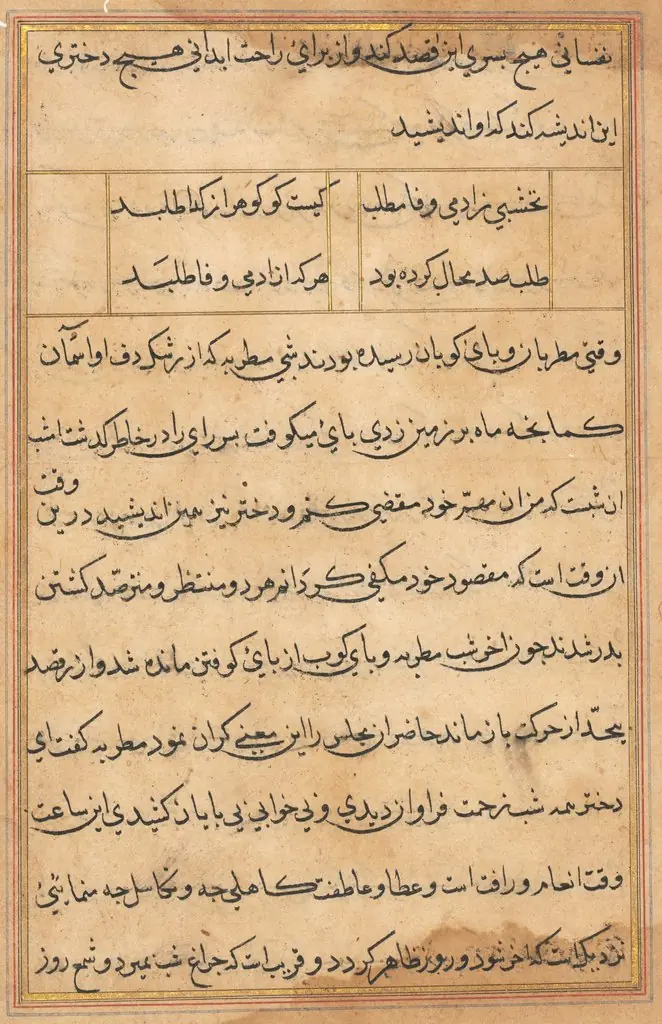 Page from Tales of a Parrot (Tuti-nama): text page
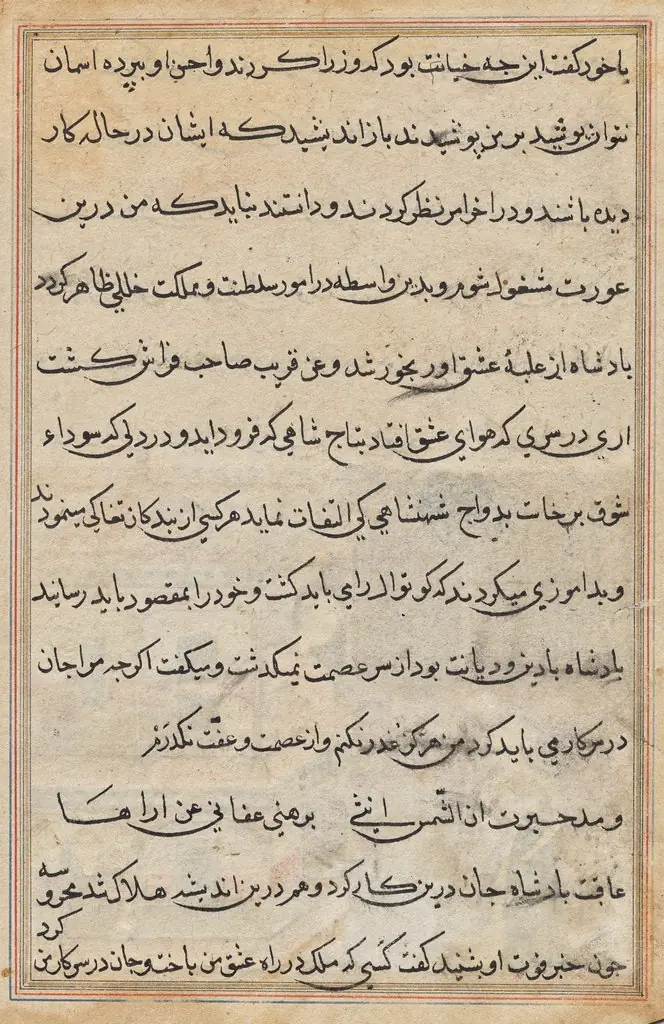 Page from Tales of a Parrot (Tuti-nama): text page
 Page from Tales of a Parrot (Tuti-nama): text page