Artwork
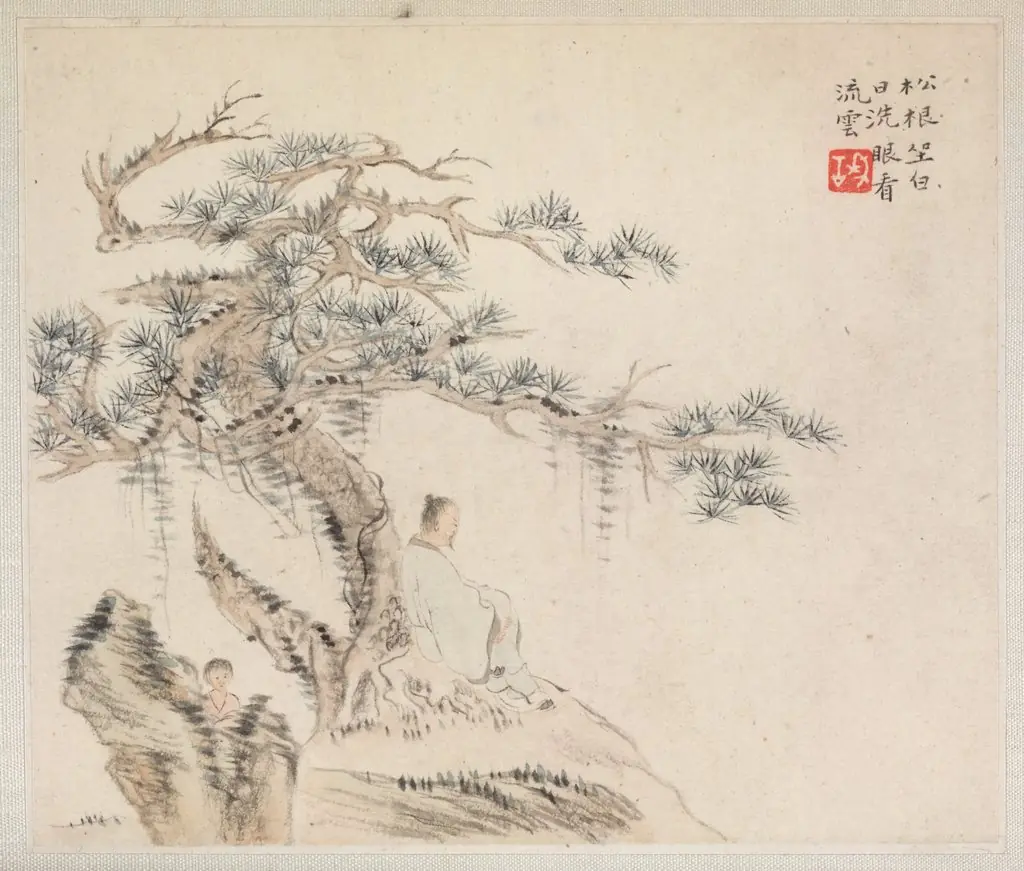
Album of Landscape Paintings Illustrating Old Poems: A Man Reclining and Enjoying the View
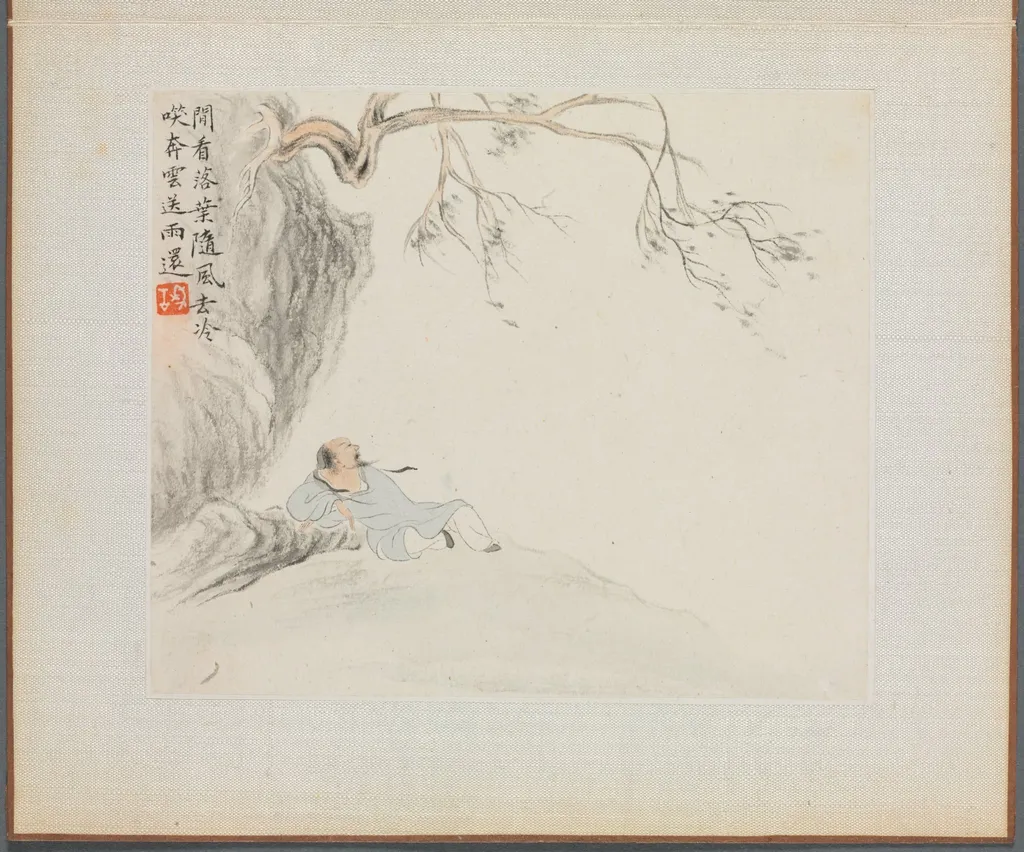
Album of Landscape Paintings Illustrating Old Poems: A Man Reclining and Enjoying the View is an unspecified painting by the Baroque artist Hua Yan. It dates from 1745 and is held in the collection of the Cleveland Museum of Art.
About this work
Overview
Created in 1745 by Hua Yan, this painting is one of a series illustrating classical Chinese poetry through landscape imagery. Executed in ink and subtle color on paper, it belongs to a tradition where visual art and literary verse interact closely. The work is part of the permanent collection at The Cleveland Museum of Art, where it is displayed as an example of Qing dynasty literati painting.
Subject & Meaning
The stillness of the pose and the sparse surroundings evoke contemplation and withdrawal from worldly concerns.
A solitary figure reclines on a rocky outcrop, draped in a loose robe, appearing at ease amid nature. The stillness of the pose and the sparse surroundings evoke contemplation and withdrawal from worldly concerns. The accompanying poem, inscribed along the left margin, deepens the mood, referencing themes of solitude and harmony with the natural world, common in Daoist-influenced literati culture.
Technique & Style
Hua Yan employs ink washes in muted grays and blues, with minimal color and delicate brushwork to suggest form. Bare tree branches are rendered with fine, angular lines, contrasting against the vast, empty sky. The composition favors asymmetry and negative space, a hallmark of literati aesthetics, where what is left unpainted is as significant as what is depicted.
History & Provenance
The painting was produced during the mid-Qing dynasty, a period when scholar-officials cultivated painting as a personal expression rather than a commercial pursuit. It entered The Cleveland Museum of Art’s collection through documented acquisitions, likely from a private Japanese or Chinese source in the early 20th century, though its earlier ownership remains partially undocumented.
Context
This work reflects the literati ideal of the scholar-artist who finds spiritual refuge in nature. Paintings like this were often created for intimate viewing, not public display, and paired with poetry to invite reflection. Hua Yan, though less known than contemporaries, participated in this tradition, drawing from earlier Song and Yuan masters while adapting their styles to Qing sensibilities.
Legacy
As part of a larger album, this painting exemplifies how Chinese artists integrated text and image to convey layered meaning. Its quiet composition continues to inform modern understandings of East Asian aesthetic principles. While not widely reproduced, it remains a key reference in scholarly studies of Qing literati painting and the enduring role of poetry in visual art.
Artist & collection

Artist
Hua Yan simplified Chinese: 华嵒; traditional Chinese: 華嵒; pinyin: Huà Yán; Wade–Giles: Hua Yen; courtesy name Qiu Yue (秋岳), sobriquets Xinluo Shanren (新罗山人), Dong Yuan Sheng (东园生), Buyi Sheng (布衣生), Ligou Jushi (离垢居士)and…

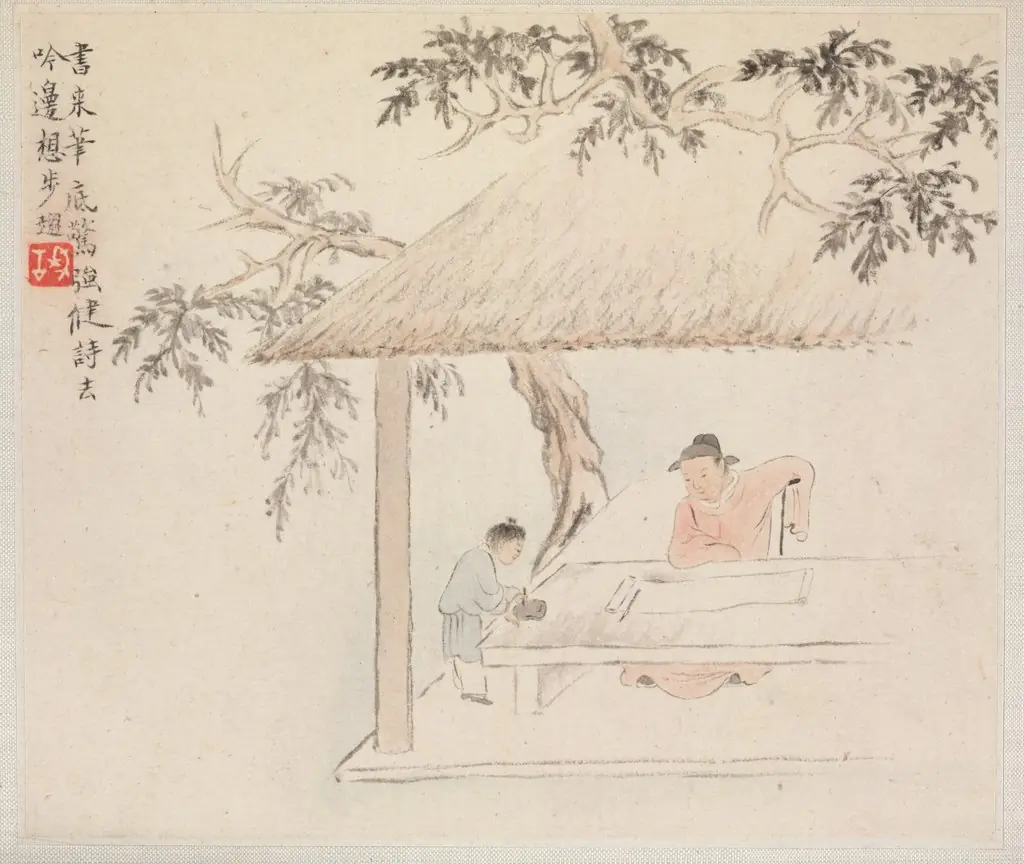 Album of Landscape Paintings Illustrating Old Poems: A Scholar at a Table with a Servant aside Preparing the Ink
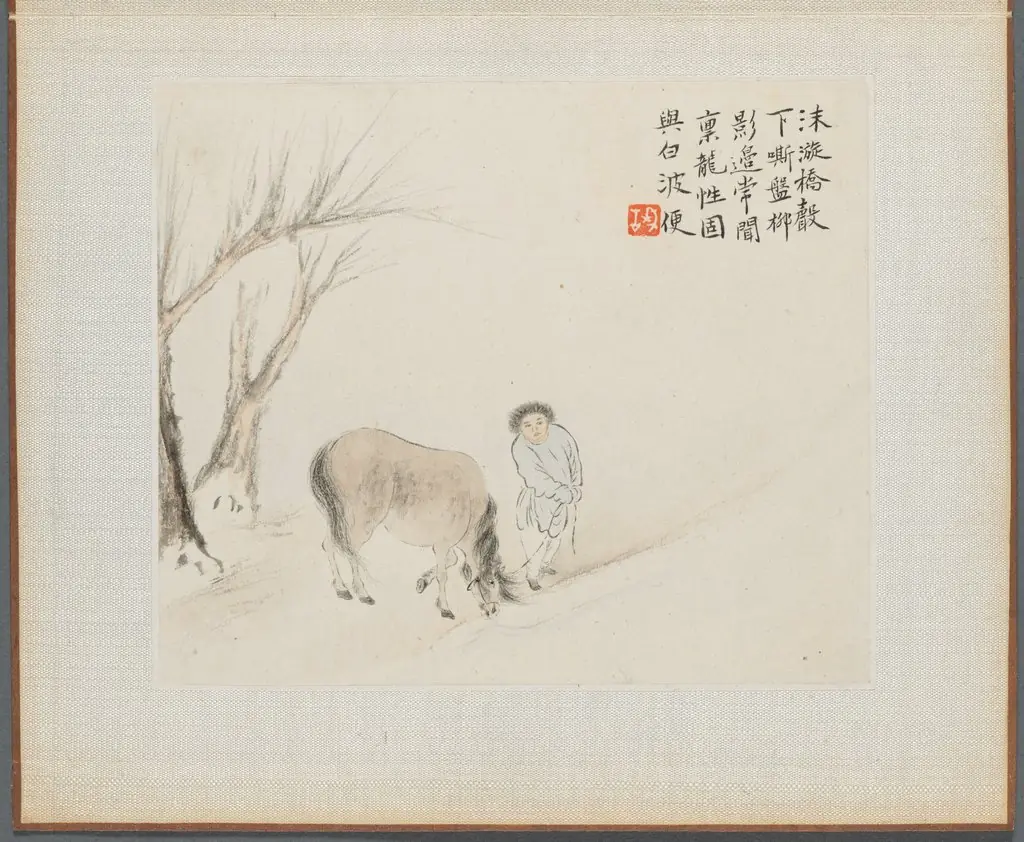 Album of Landscape Paintings Illustrating Old Poems: Boy Holding a Horse
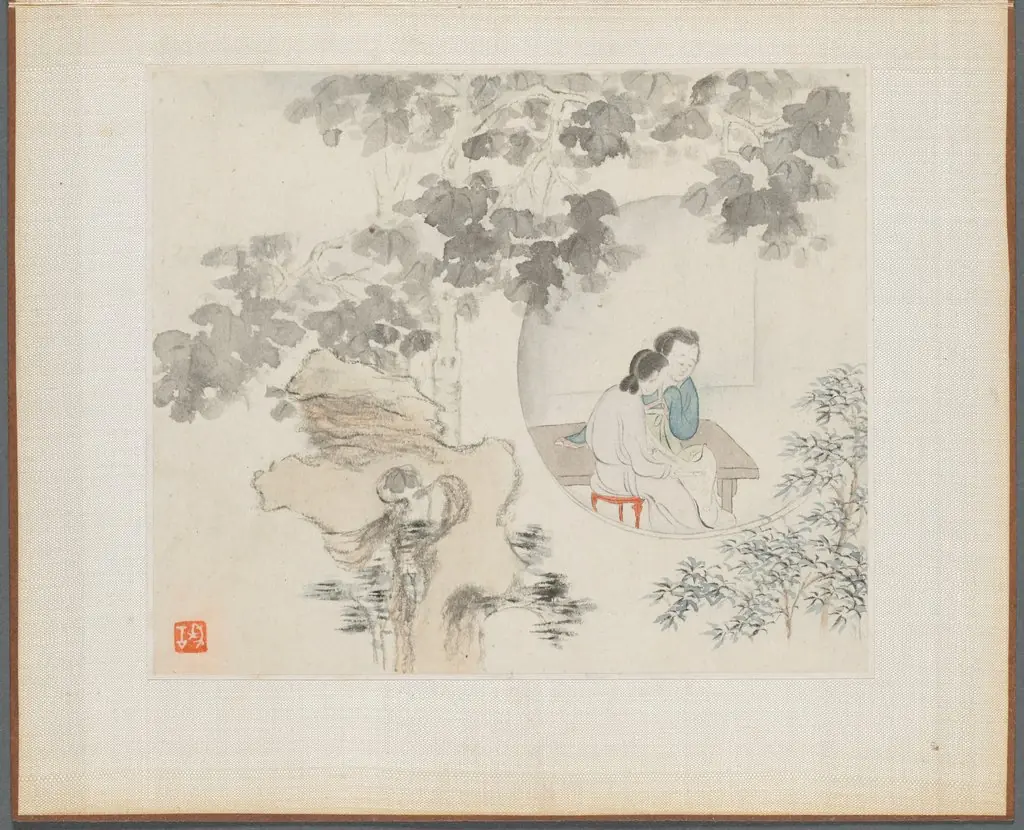 Album of Landscape Paintings Illustrating Old Poems: Two Women with Needlework in a Garden
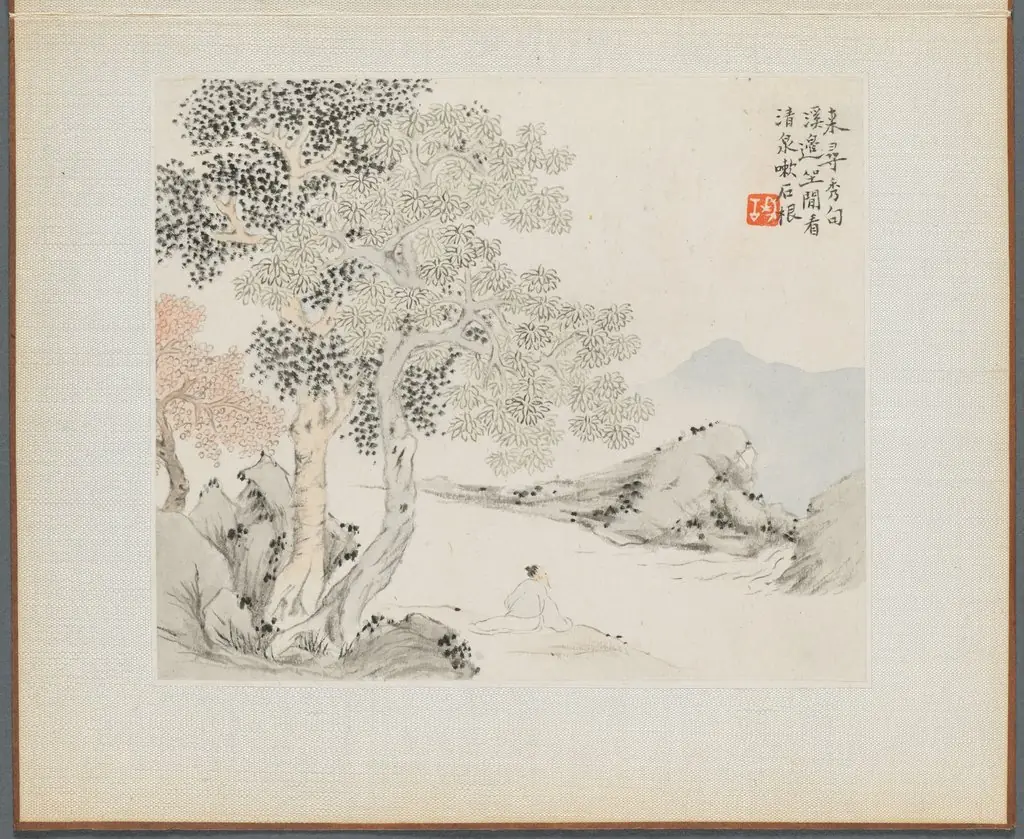 Album of Landscape Paintings Illustrating Old Poems: Three Big Trees, a Stream with an Old Man Sitting on the Bank
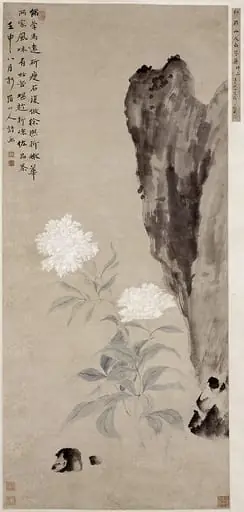 清 華喦 白芍藥圖 軸|White Peony and Rocks
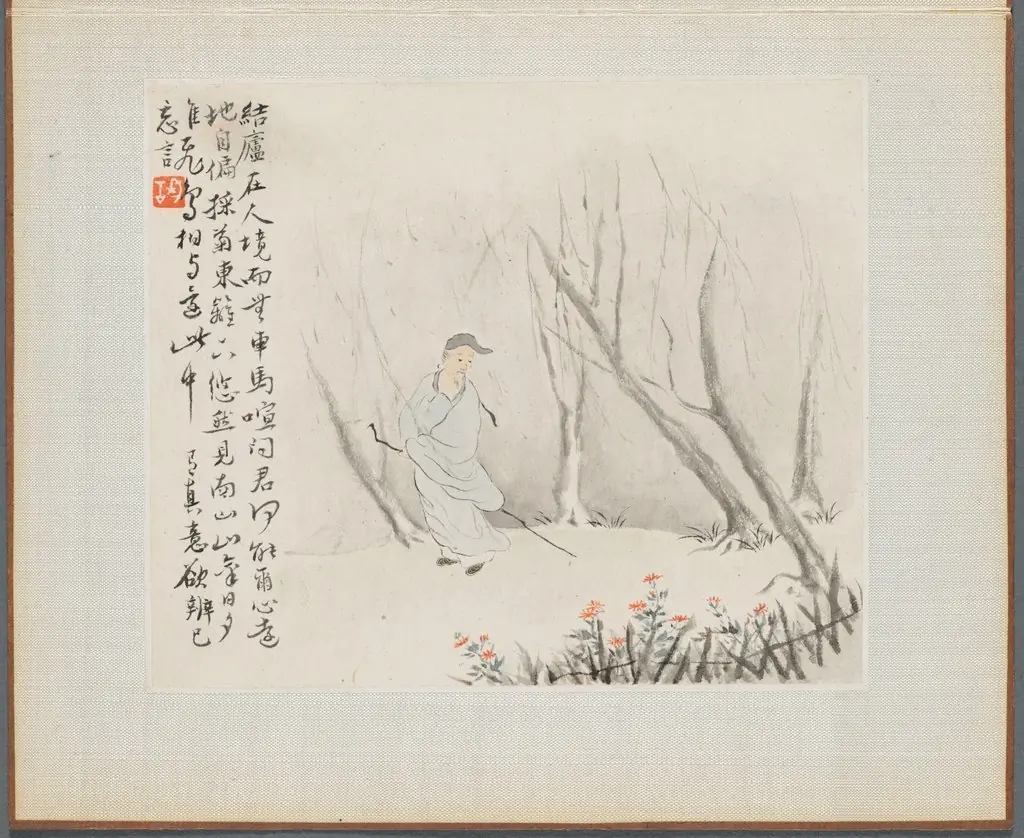 Album of Landscape Paintings Illustrating Old Poems: Man with a Staff Admires Chrysanthemums at a Fence
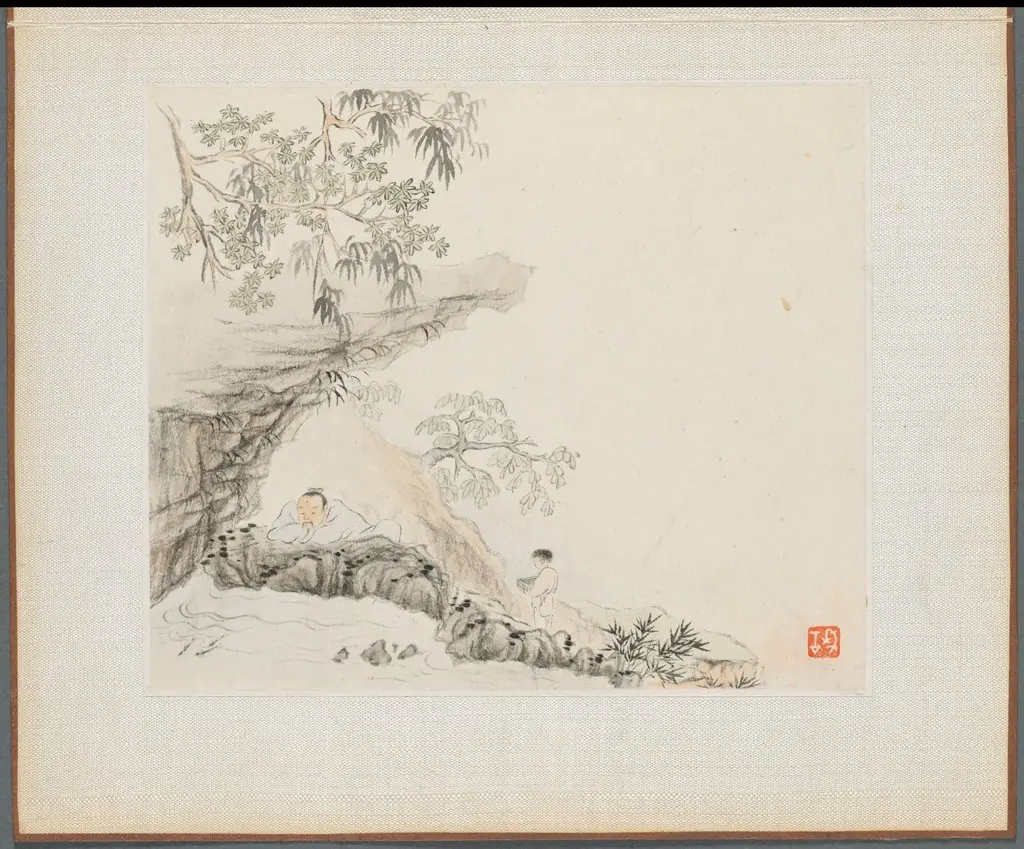 Album of Landscape Paintings Illustrating Old Poems: Scholar watching Fish
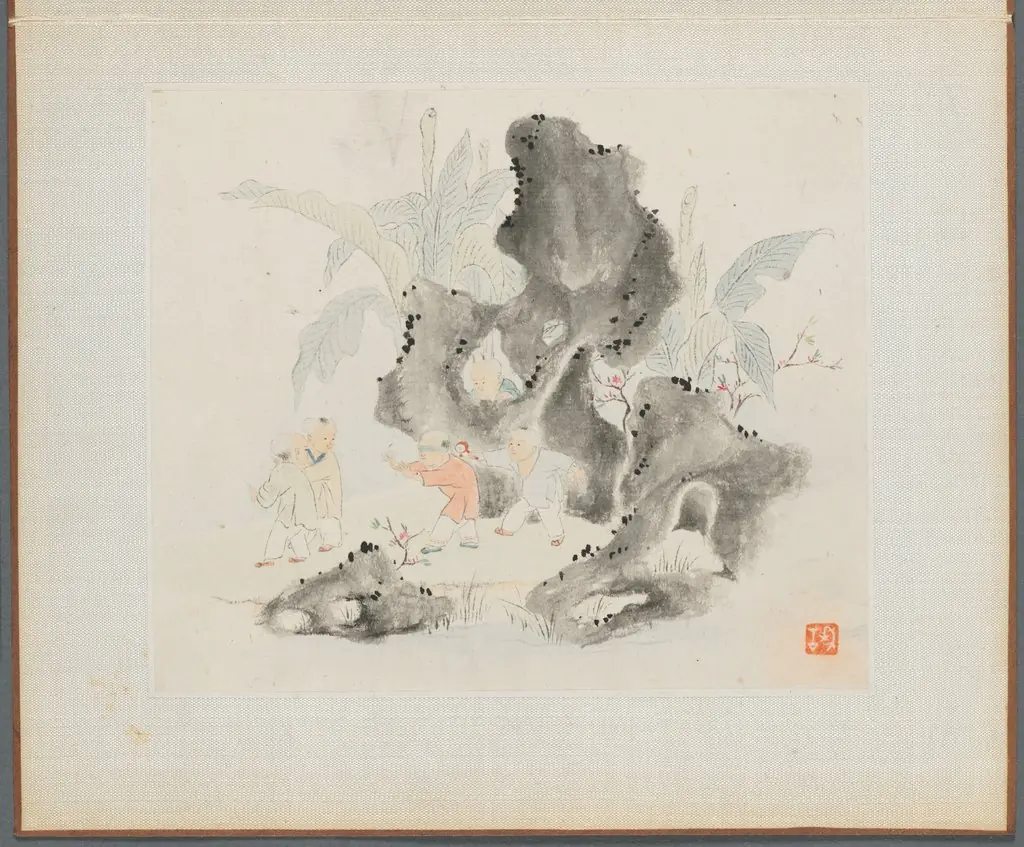 Album of Landscape Paintings Illustrating Old Poems: Children Playing Blindman's Buff in a Garden
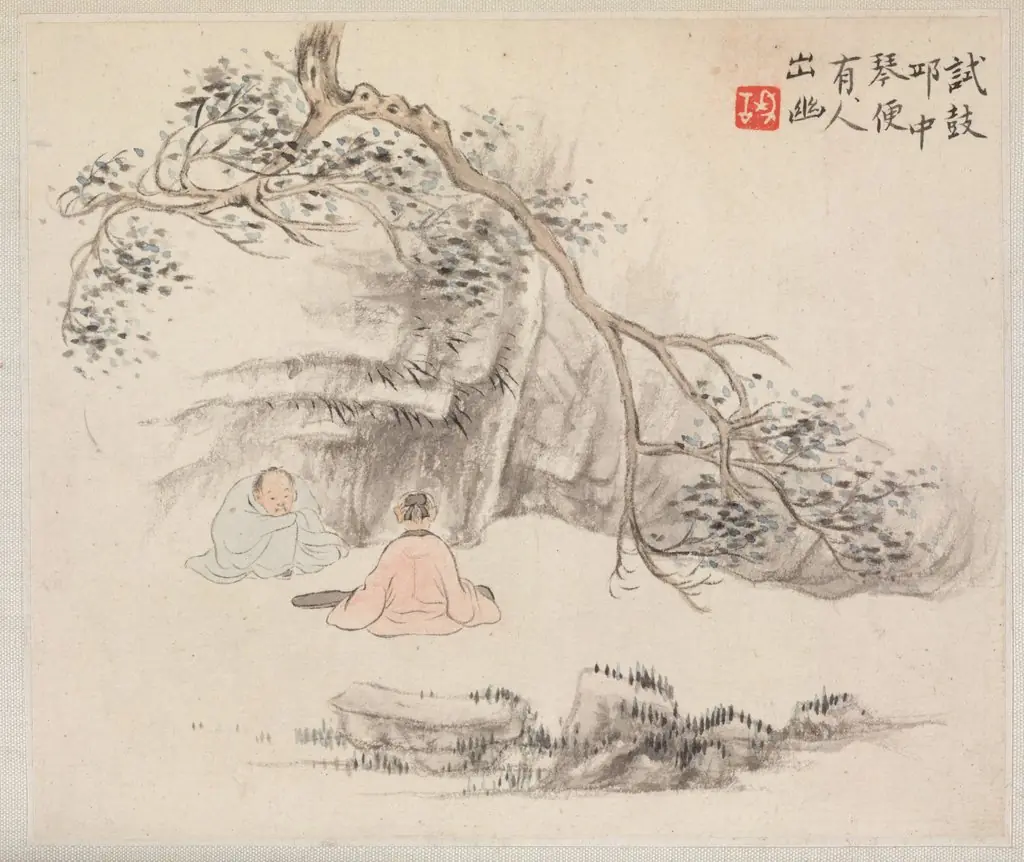 Album of Landscape Paintings Illustrating Old Poems: Listening to the Qin
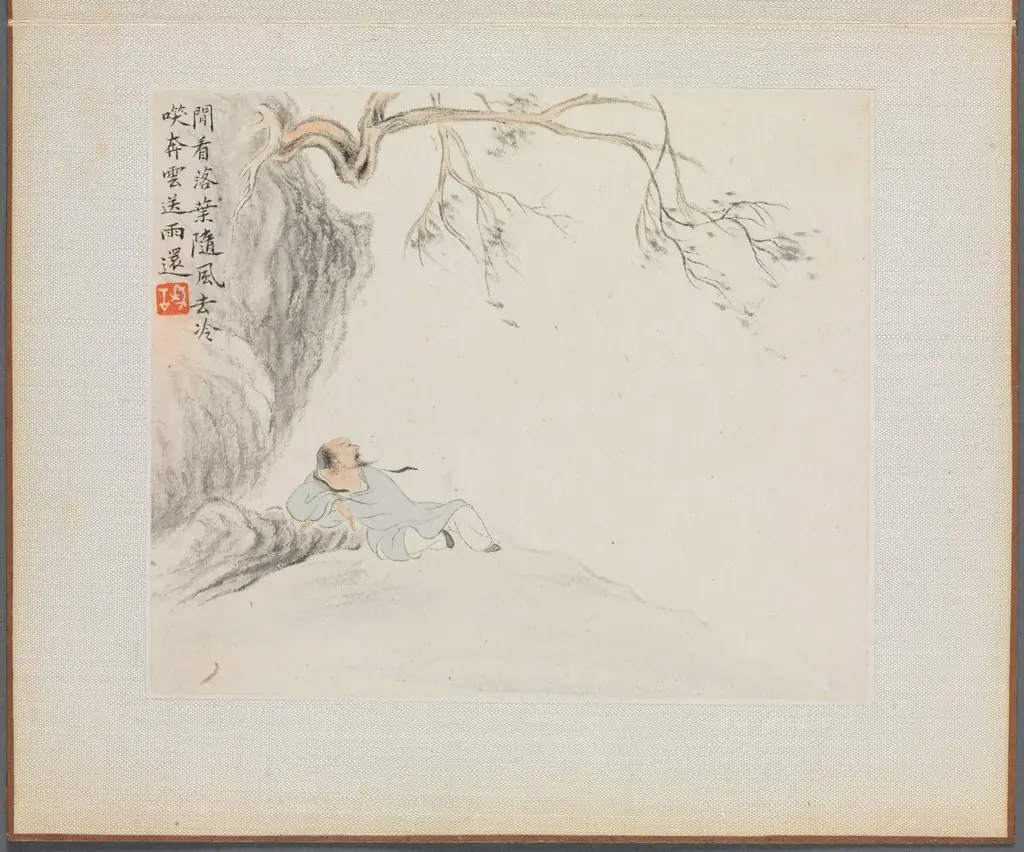 Album of Landscape Paintings Illustrating Old Poems: A Man Reclining and Enjoying the View
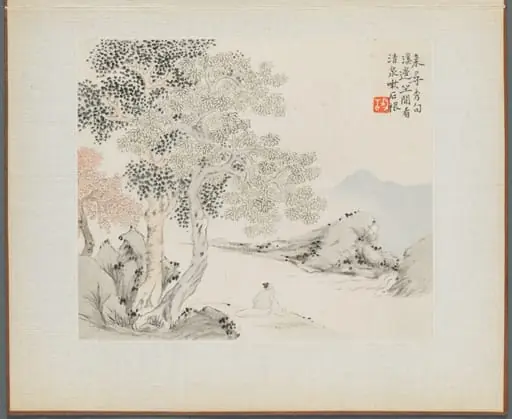 Album of Landscape Paintings Illustrating Old Poems: Three Big Trees, a Stream with an Old Man Sitting on the Bank
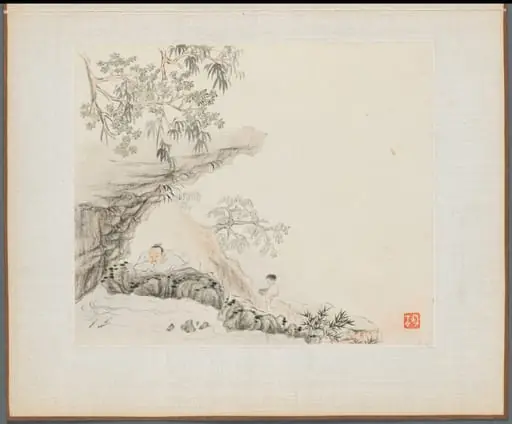 Album of Landscape Paintings Illustrating Old Poems: Scholar watching Fish
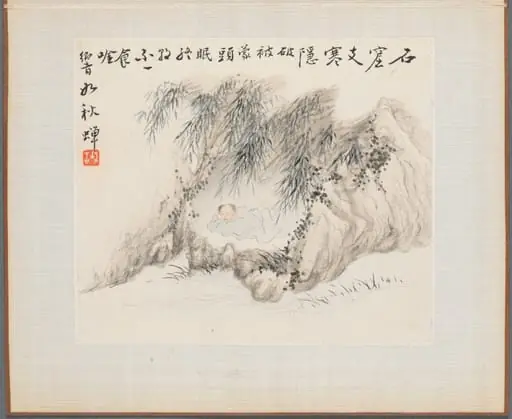 Album of Landscape Paintings Illustrating Old Poems: Man Resting under Bamboo
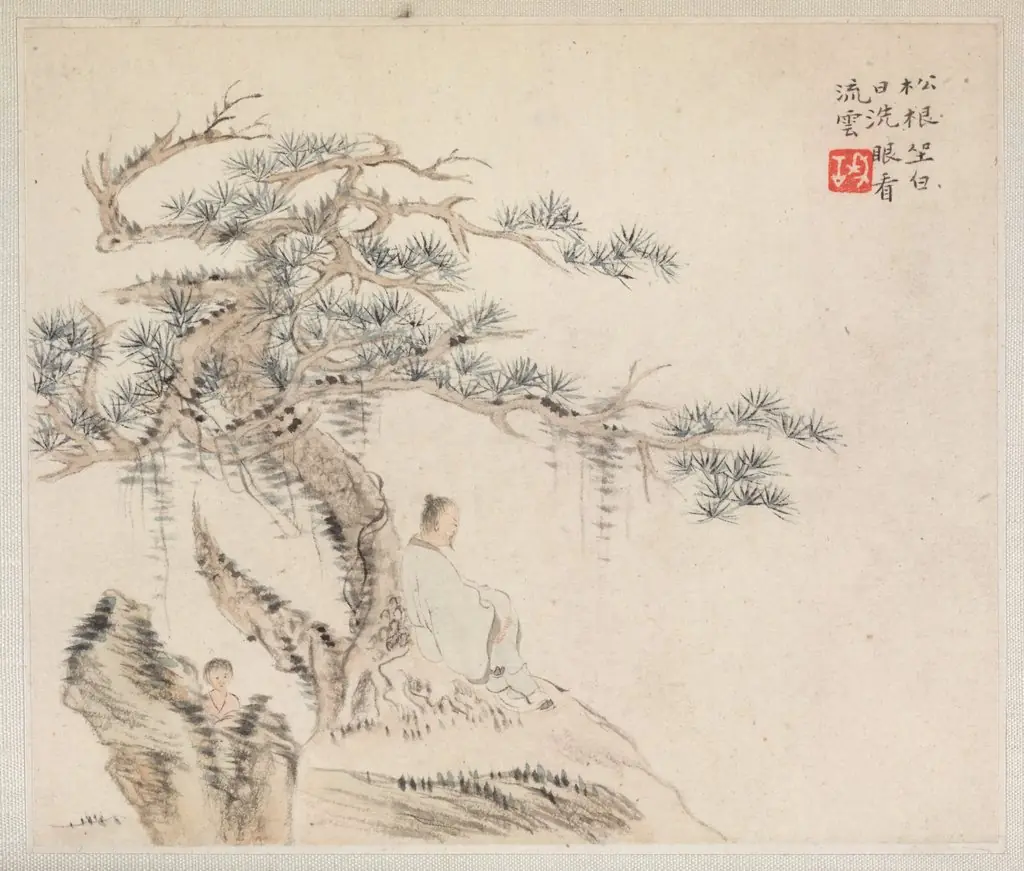 Album of Landscape Painting Illustrating Old Poems
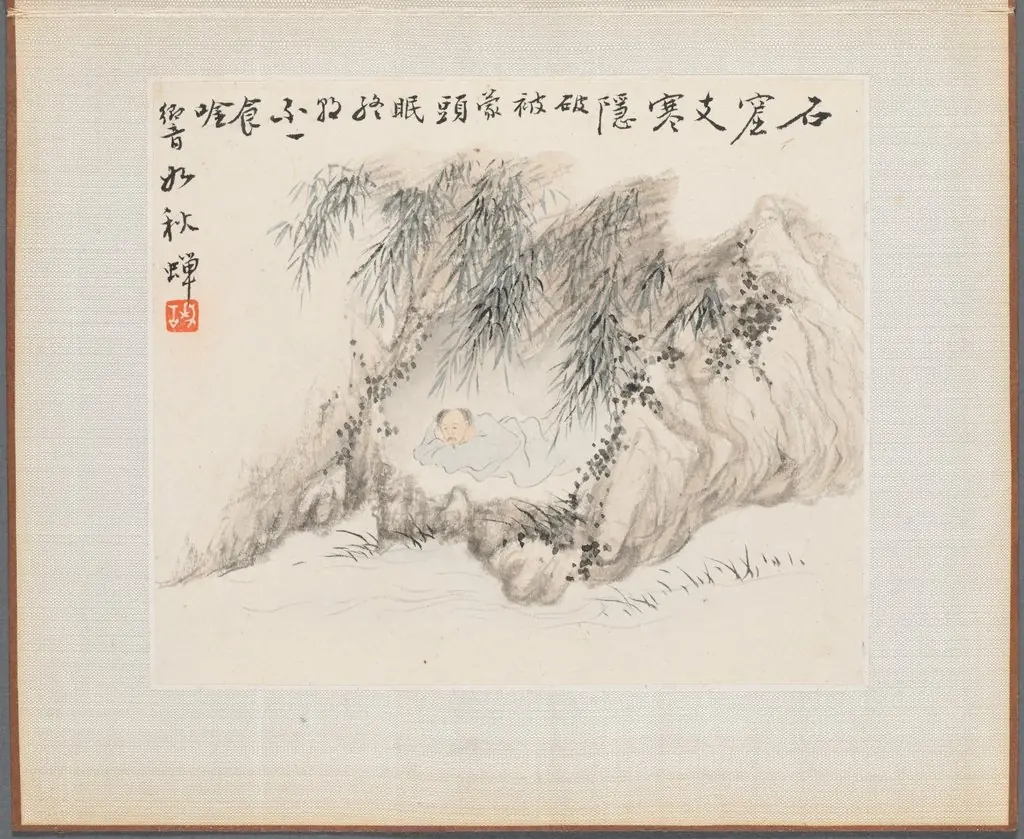 Album of Landscape Paintings Illustrating Old Poems: Man Resting under Bamboo
 Album of Landscape Paintings Illustrating Old Poems: Scholar under a Pine Tree