Artwork
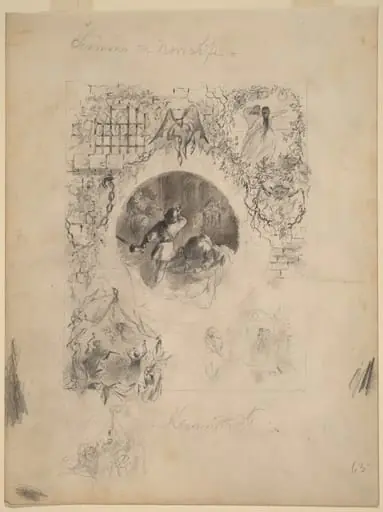
Illustration for Kensworth
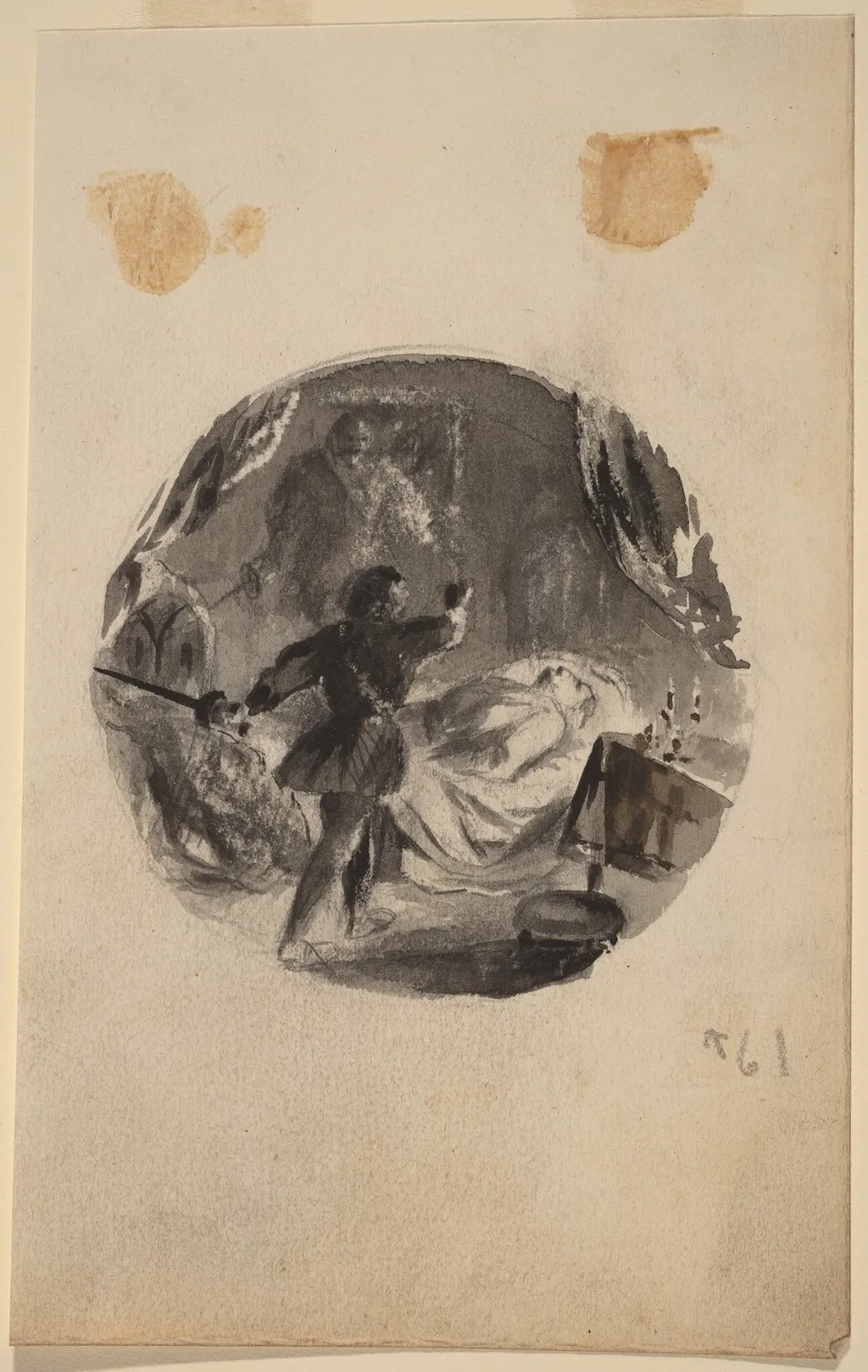
Illustration for Kensworth is an ink drawing by the Romanticist artist Alfred E. Hubbard. It dates from 1840 and is held in the collection of the National Gallery of Art. Alfred E.
About this work
Overview
Alfred E. Hubbard’s 1840 drawing titled Illustration for Kensworth is executed with brush and black ink, enhanced by a gray wash applied over a graphite base. The work is a single-sheet drawing that captures a solitary, cloaked figure in a dimly lit setting, rendered with a loose, atmospheric quality rather than precise detail.
Subject & Meaning
The composition centers on a hunched figure shrouded in a dark cloak and low‑drawn hat, suggesting anonymity or introspection. The vague background hints at urban or arboreal forms, creating a sense of isolation within an undefined space. The ambiguous setting invites viewers to contemplate the figure’s emotional state rather than a specific narrative.
Technique & Style
Hubbard employed rapid brushstrokes with black ink, allowing the gray wash to soften edges and generate a smoky ambience. The underlying graphite sketch provides structural guidance, while the ink and wash obscure fine lines, emphasizing movement and mood over exact representation. This approach aligns with a broader 19th‑century shift toward expressive, gestural drawing.
Context
Created in the early Romantic period, the drawing reflects the era’s fascination with the sublime and the inner experience. Artists of the time often prioritized emotional resonance and atmospheric effects, using techniques that suggested rather than delineated reality. Hubbard’s work exemplifies this aesthetic, situating it within the Romantic tradition of evocative, mood‑driven imagery.
Artist & collection

![La lezione di violincello [The Violin Lesson], by Mosè Bianchi](https://artifactworldgallery.com/img/mose-bianchi--la-lezione-di-violincello-the-violin-lesson--409ab16368cea0c8-w320.webp)