Artwork
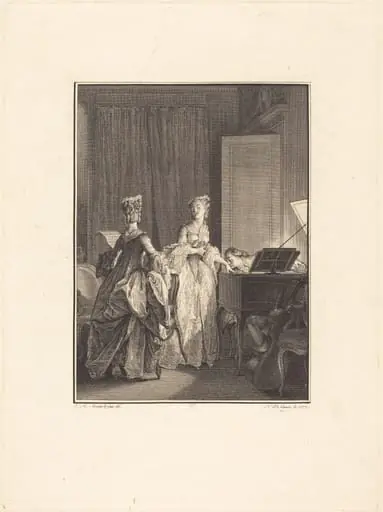
La Sentinelle en défaut
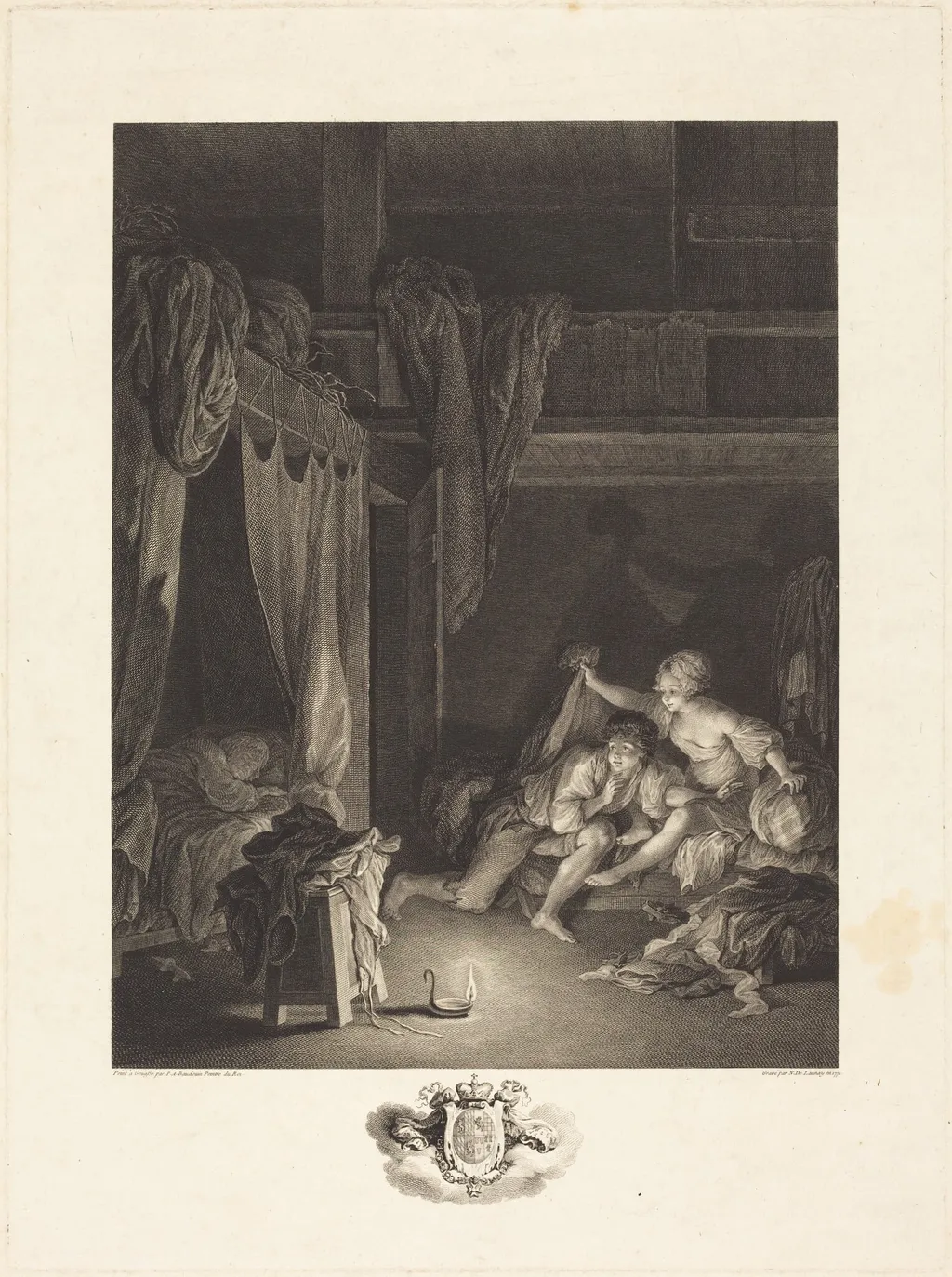
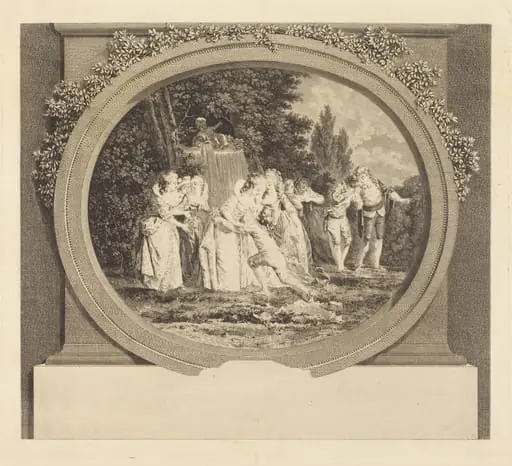
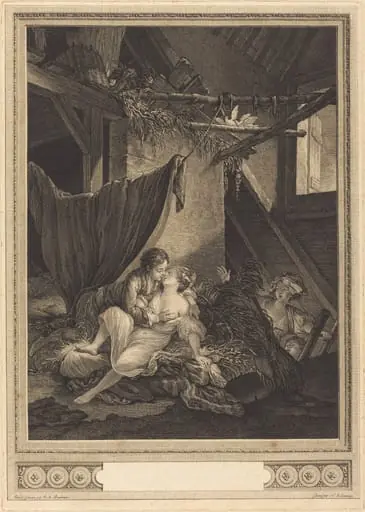
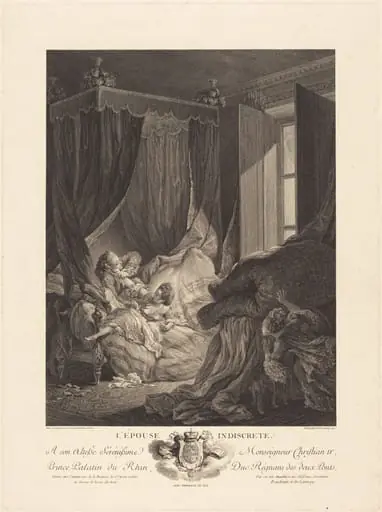
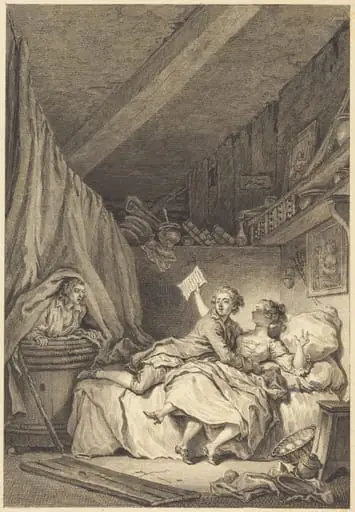
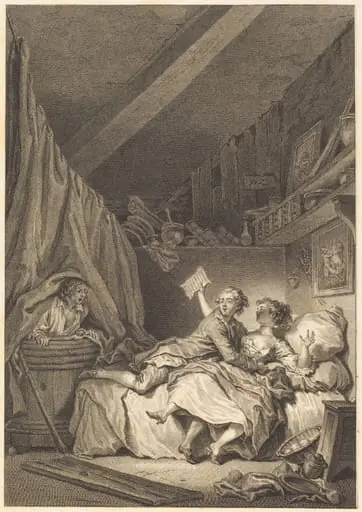
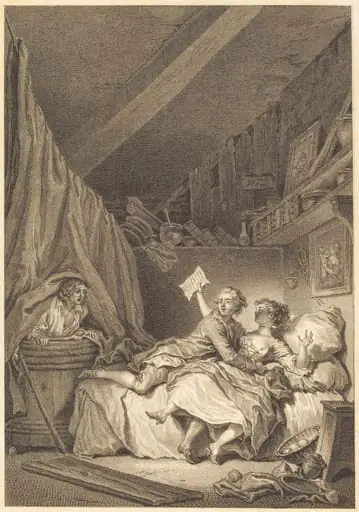
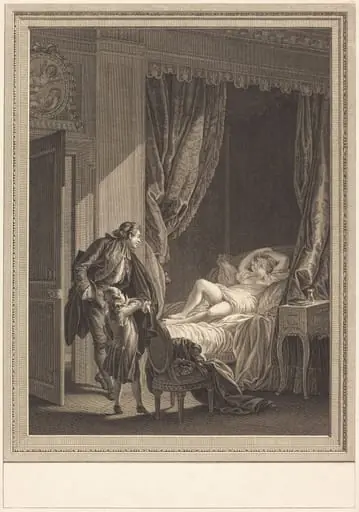
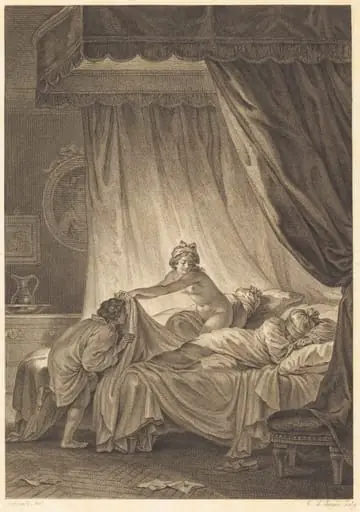
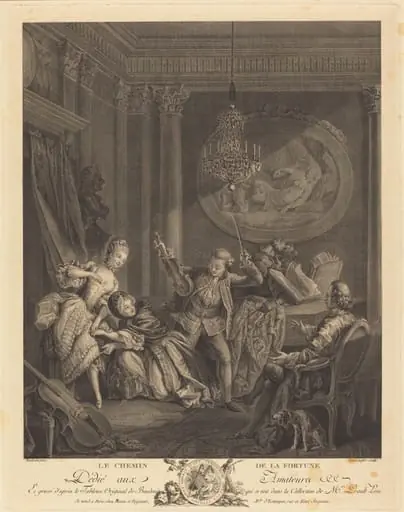
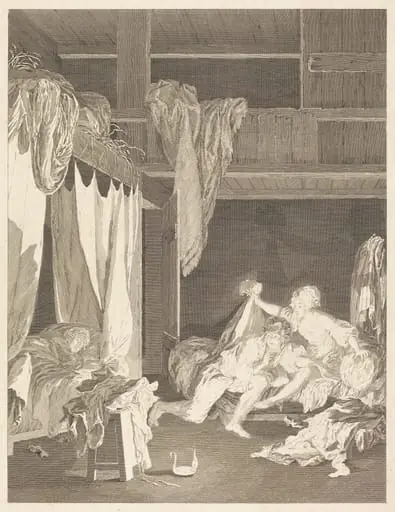
La Sentinelle en défaut is an ink print by the Romanticist artist Nicolas Delaunay. It dates from 1771 and is held in the collection of the National Gallery of Art.
About this work
Overview
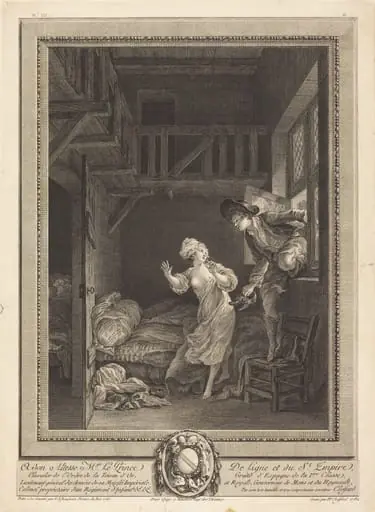
La Sentinelle en défaut is an 1771 print by French artist Nicolas Delaunay, executed as an engraving combined with etching techniques. The work presents a modest interior scene illuminated by a single candle, focusing attention on two figures—a seated adult and a standing child—both engaged with cloths in their hands.
Subject & Meaning
The composition captures a quiet moment of domestic activity: the adult, positioned on the floor, appears to be tending to a piece of fabric, while the child mirrors the gesture nearby. The shared task and the intimate lighting suggest themes of care, instruction, or familial duty within a humble setting.
Technique & Style
Delaunay employs a nuanced chiaroscuro, using the candle’s glow to model forms and generate contrast between light and shadow. The interplay of etched lines and engraved tones creates texture in the surrounding objects—a curtained bed, a chair, and a table—enhancing the sense of depth and three‑dimensionality.
Context
Produced in the late eighteenth century, the print reflects the period’s growing interest in genre scenes that emphasize everyday life and emotional resonance. While predating the full emergence of Romanticism, its focus on mood and intimate domesticity anticipates the movement’s later preoccupations with feeling and imagination.
History & Provenance
The work is catalogued as an original 1771 impression by Delaunay. Details of its ownership history are limited, but it remains a representative example of the artist’s printmaking output during his active years in France.
Artist & collection