Artwork
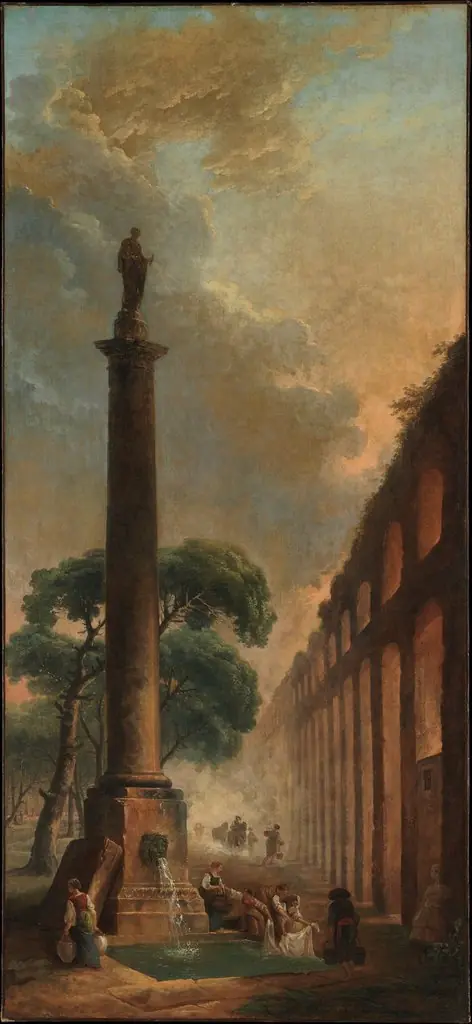
A Fountain with Washerwomen
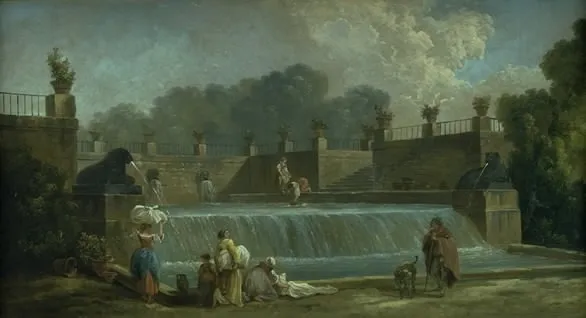
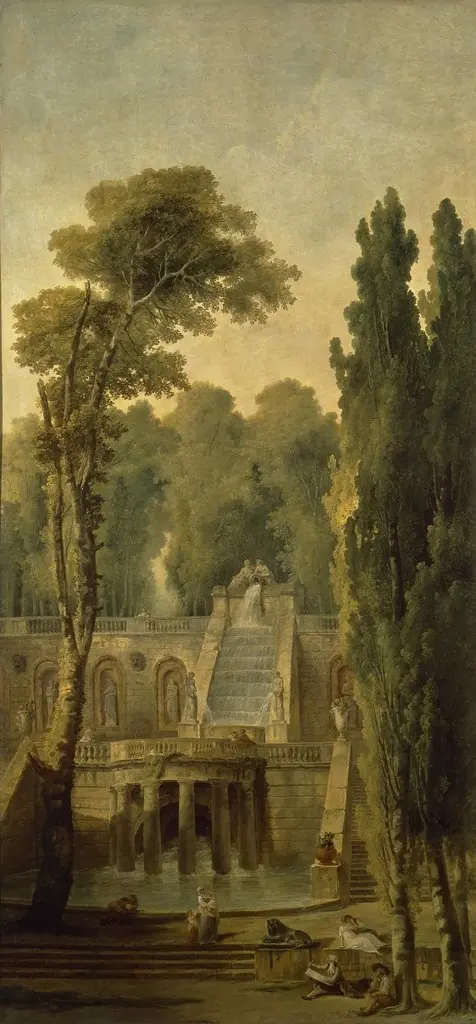
A Fountain with Washerwomen is an oil painting by the Neoclassicist artist Hubert Robert. It dates from 1800 and is held in the collection of the Statens Museum for Kunst.
About this work
Overview
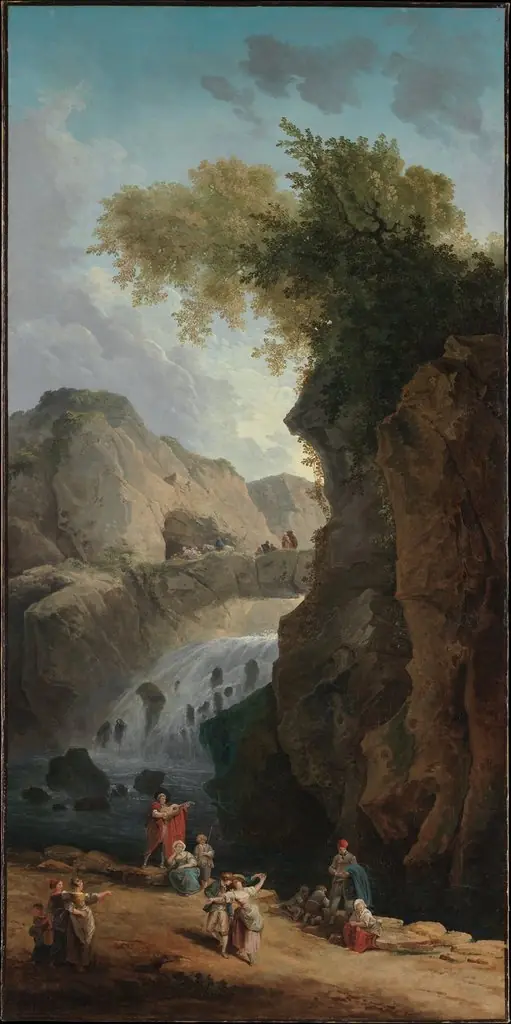
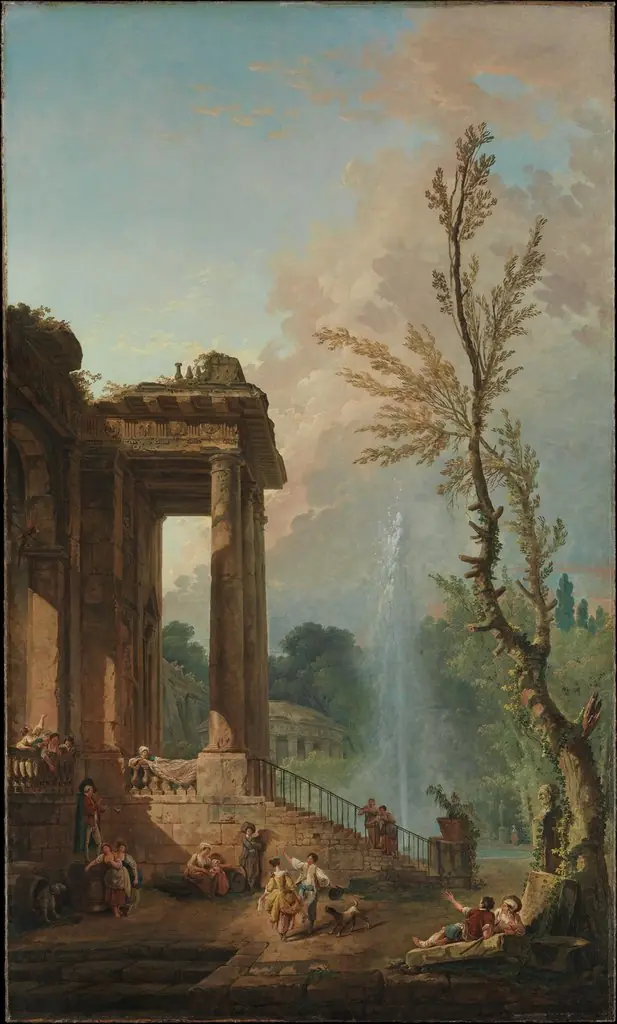
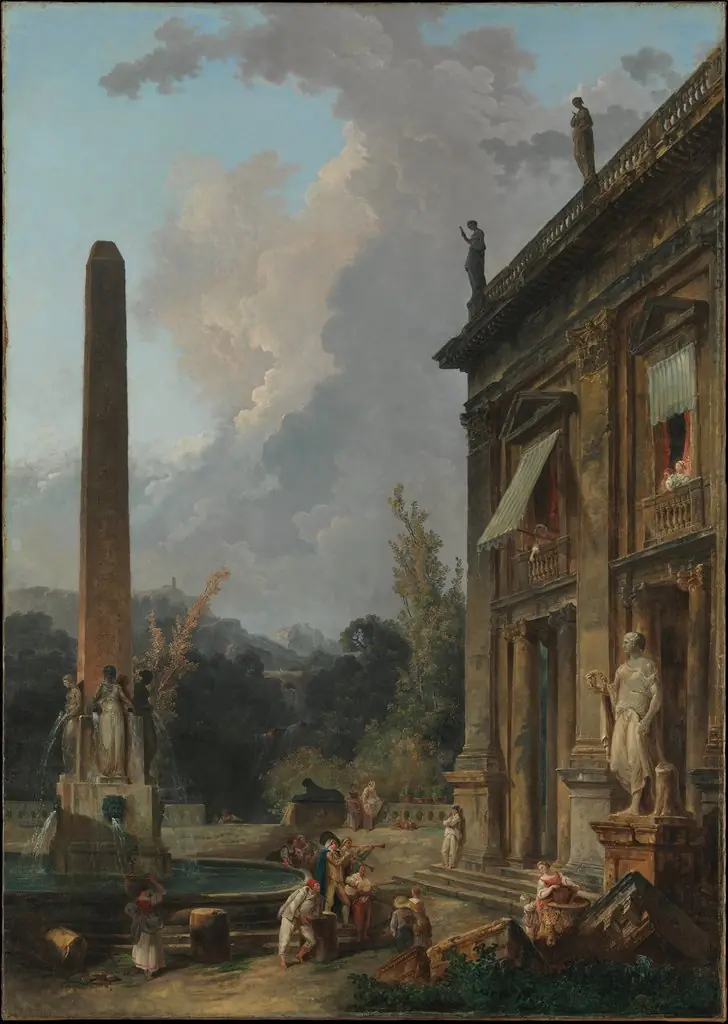
Painted in 1800 by French artist Hubert Robert, this oil on canvas depicts a quiet urban fountain surrounded by washerwomen and domestic activity.
Painted in 1800 by French artist Hubert Robert, this oil on canvas depicts a quiet urban fountain surrounded by washerwomen and domestic activity. Robert, known for his imaginative landscapes and ruins, here combines observed detail with a composed, almost theatrical setting. The scene lacks overt drama, instead offering a calm, everyday moment rendered with careful attention to light and spatial depth.
Subject & Meaning
The painting captures laborers engaged in the routine task of laundry at a public fountain, a common feature in pre-industrial cities. The presence of dogs and the varied postures of the figures suggest a lived-in environment rather than an idealized tableau. While not overtly symbolic, the scene reflects the quiet dignity of daily life, subtly contrasting the permanence of stone architecture with the transient nature of human labor.
Technique & Style
Robert employs a restrained palette of cool aquatics and warm earth tones to differentiate water, stone, fabric, and foliage. Brushwork is precise yet fluid, particularly in the rendering of cascading water and the folds of clothing. The composition uses architectural elements to frame the scene, guiding the eye toward the fountain’s center while maintaining a sense of atmospheric depth through soft background gradations.
History & Provenance
Created during Robert’s later years, the painting reflects his enduring interest in architectural spaces infused with human presence. It entered the collection of Statens Museum for Kunst in Denmark, where it remains today. While not widely exhibited, its inclusion in the museum’s holdings underscores its value as an example of early 19th-century French landscape painting that bridges Neoclassical order and Romantic observation.
Context
In the aftermath of the French Revolution, public fountains remained vital social and functional hubs. Robert’s depiction aligns with a broader European interest in documenting ordinary life, even as academic art favored grand historical narratives. His fusion of realist detail with stylized composition reflects a transitional moment in painting, where classical structure accommodated more intimate, observational subjects.
Legacy
Though less celebrated than his ruin paintings, this work exemplifies Robert’s ability to infuse mundane scenes with quiet resonance. It contributed to a growing tradition of genre-inflected landscapes that influenced later 19th-century painters seeking authenticity in everyday settings. Its preservation in a major Nordic collection highlights its recognition beyond French artistic circles.
Artist & collection
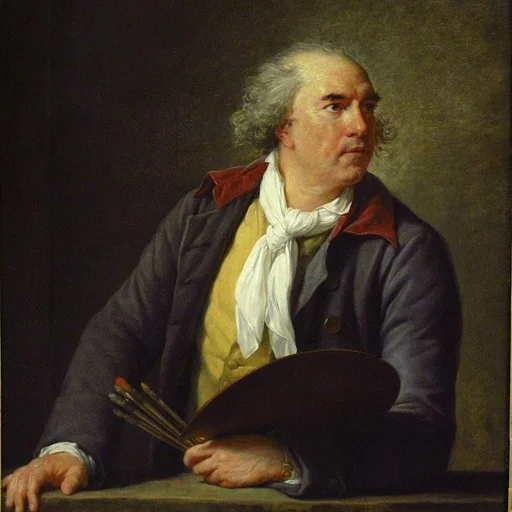
Artist
Hubert Robert (French pronunciation: ; 22 May 1733 – 15 April 1808) was a French painter in the school of Romanticism, noted especially for his landscape paintings and capricci, or semi-fictitious picturesque depictions of ruins in Italy…