Artwork
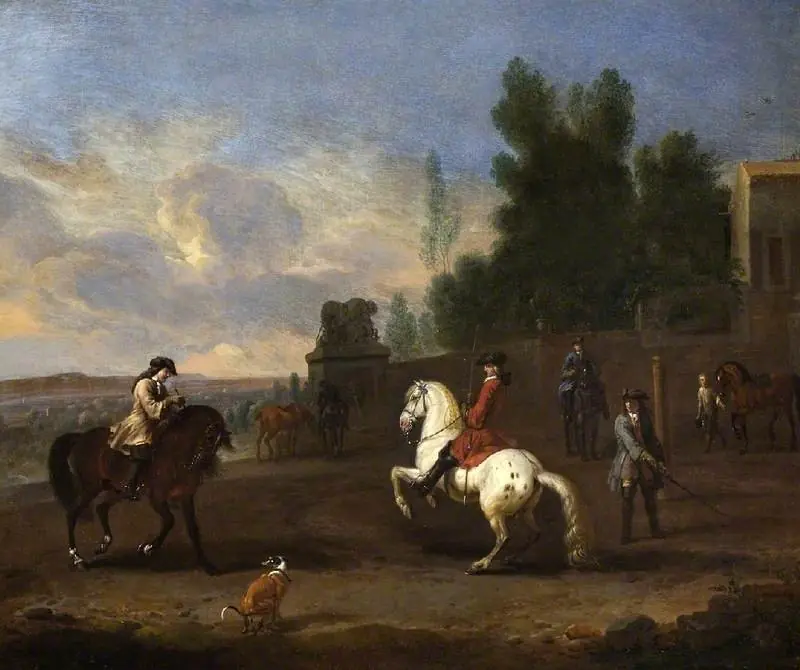
A Coach Party with a Classical Building
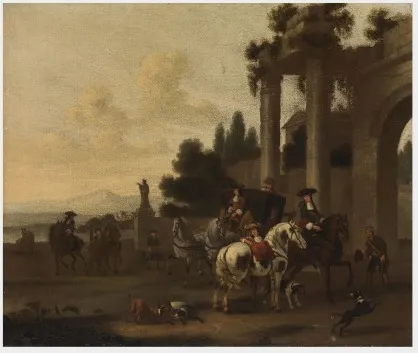
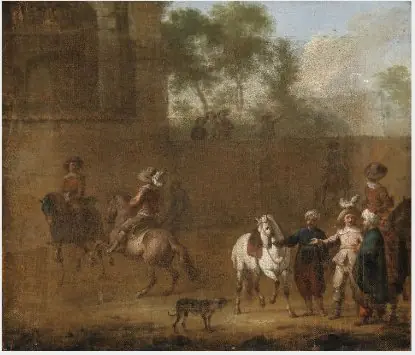
A Coach Party with a Classical Building is an oil painting by Dirk Maas. It dates from 1698 and is held in the collection of the National Gallery of Ireland.
About this work
Overview
Dirk Maas’s oil painting, A Coach Party with a Classical Building, dates to around 1698 and is part of the National Gallery of Ireland’s collection.
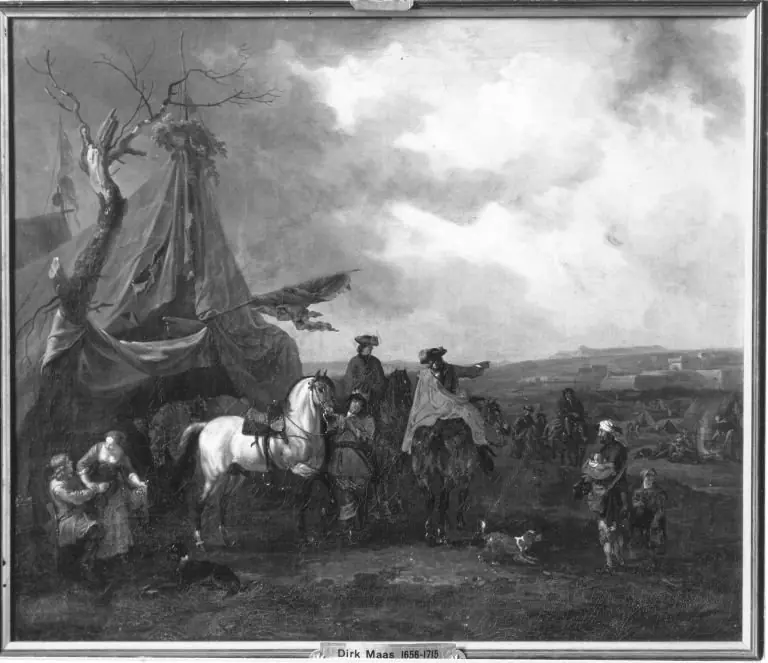
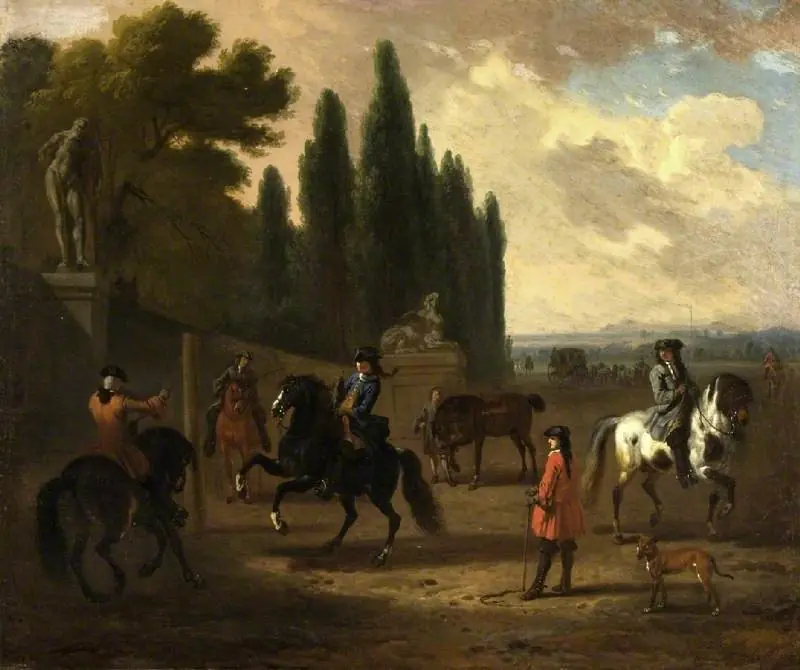
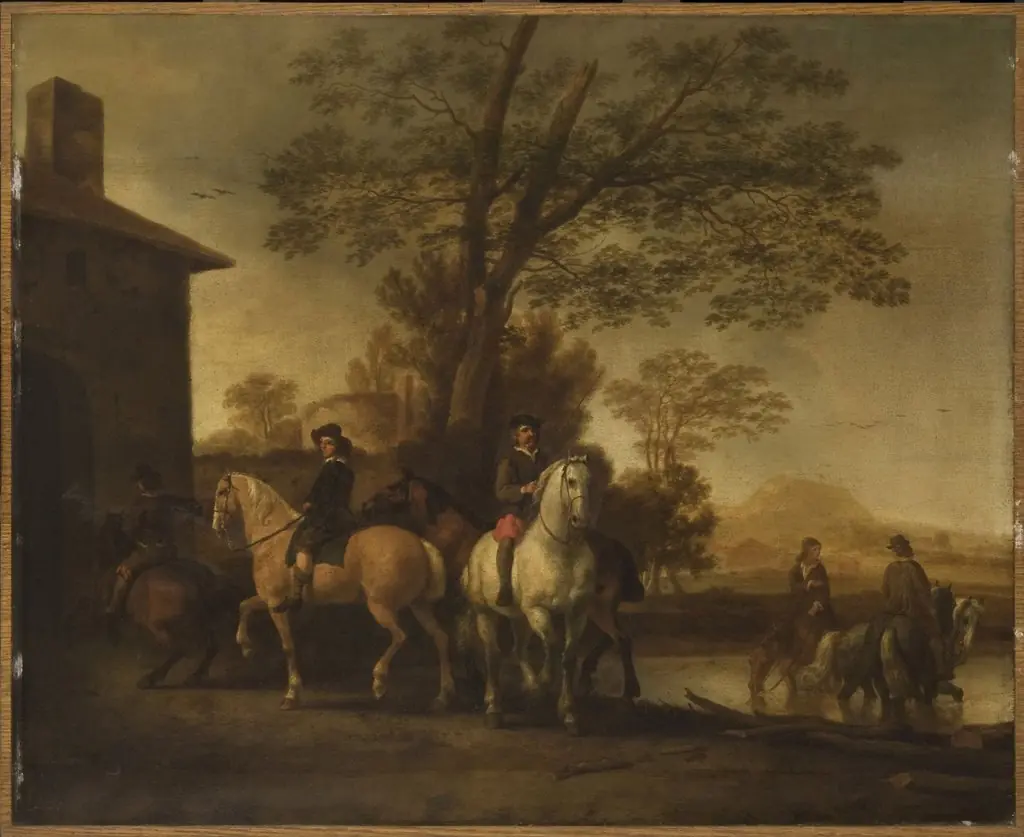
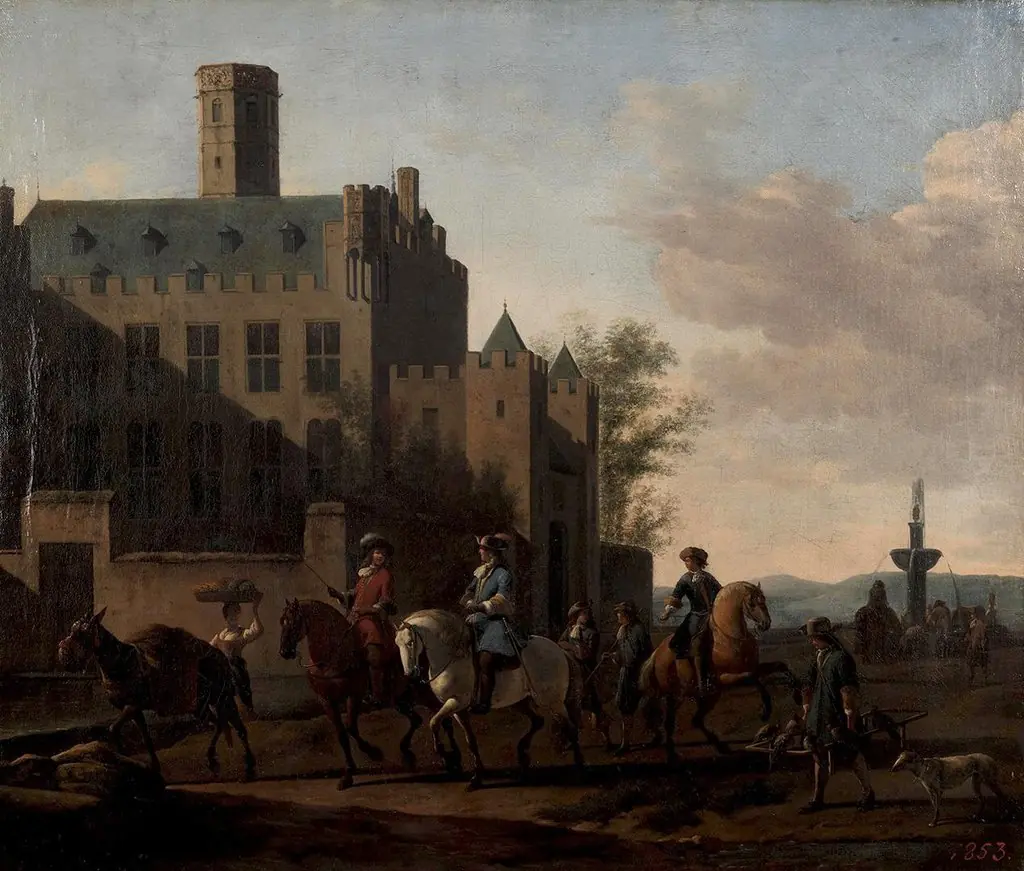
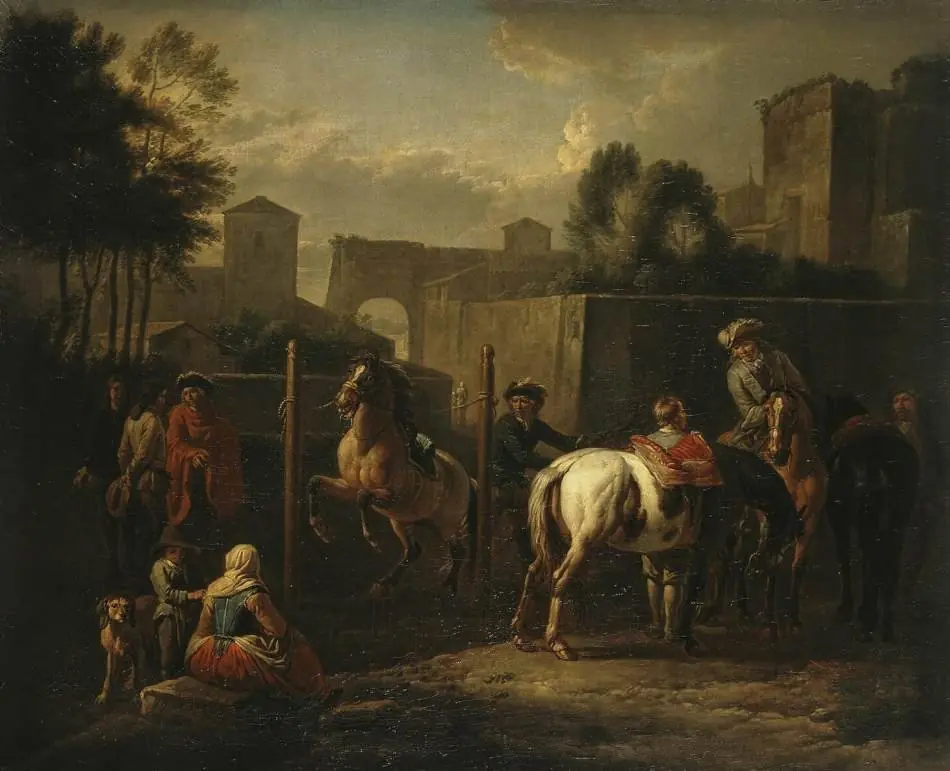
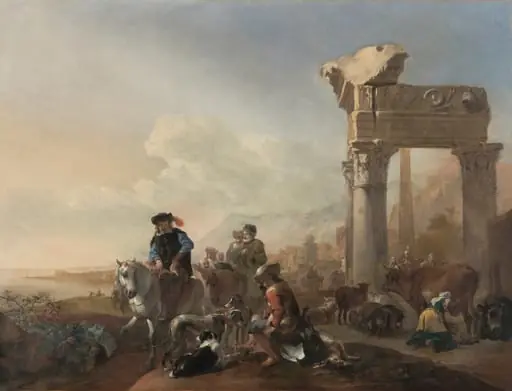
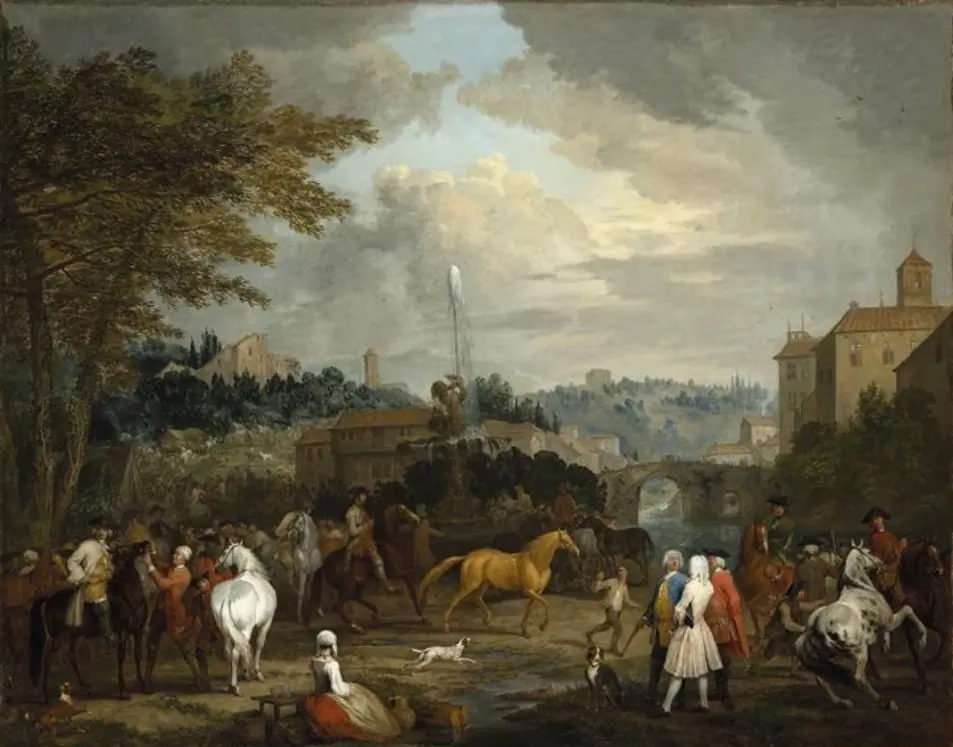
Dirk Maas’s oil painting, A Coach Party with a Classical Building, dates to around 1698 and is part of the National Gallery of Ireland’s collection. The work depicts a festive procession of riders and a carriage set before a monumental classical façade, its columns framing the lively scene. A striking white horse dominates the foreground, while a small dog darts around its legs, adding a touch of domestic animation.
Subject & Meaning
The composition captures a moment of leisure and social gathering, typical of late‑17th‑century Dutch genre scenes. The presence of well‑dressed figures, a horse‑drawn coach, and an elegant classical structure suggests a celebration of status and the cultured pursuits of the upper class, while the informal posture of the participants conveys a relaxed, convivial atmosphere.
Technique & Style
Maas employs a refined oil technique, rendering the sheen of horsehair and the texture of fabric with meticulous brushwork. Light falls across the marble columns, emphasizing their architectural depth, while the dynamic poses of the riders convey movement. The palette balances warm earth tones with the crisp white of the lead horse, highlighting the artist’s skill in handling both figure and architectural elements.
History & Provenance
Created circa 1698, the painting entered the National Gallery of Ireland’s holdings at an unspecified later date, becoming a representative example of Dutch landscape‑genre painting within the museum’s European collection. Its attribution to Maas, a Dutch artist known for equestrian subjects, has been consistently affirmed by scholarly catalogues.
Context
During the late 1600s, Dutch painters often combined pastoral or urban settings with classical motifs to appeal to affluent patrons interested in antiquity and contemporary fashion. Maas’s work reflects this trend, merging a realistic depiction of a coach party with the idealized grandeur of a classical edifice, thereby situating a modern social event within a timeless architectural frame.
Artist & collection