Artwork
Le Poteau
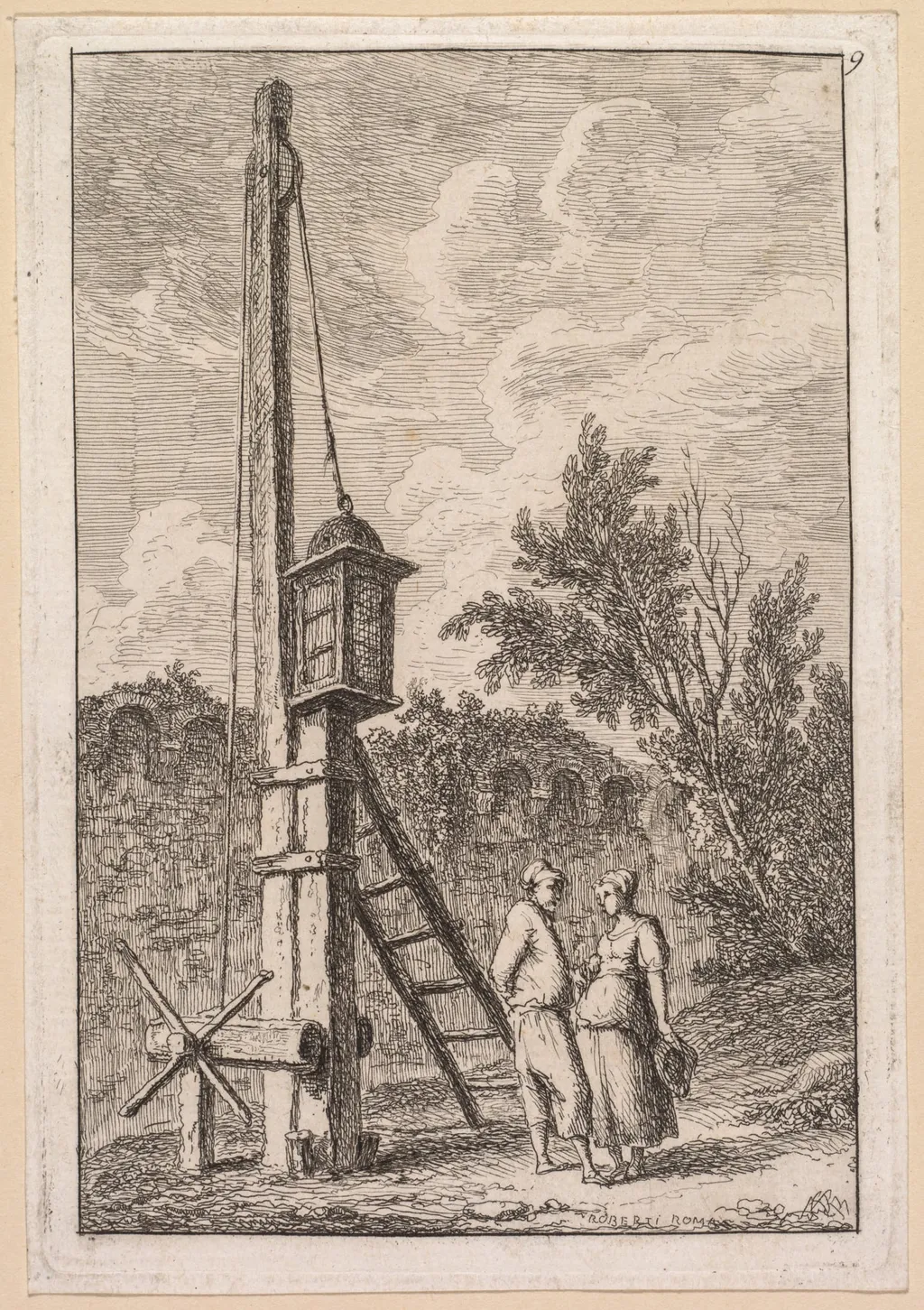
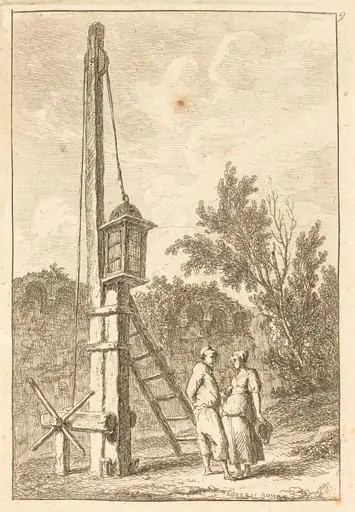
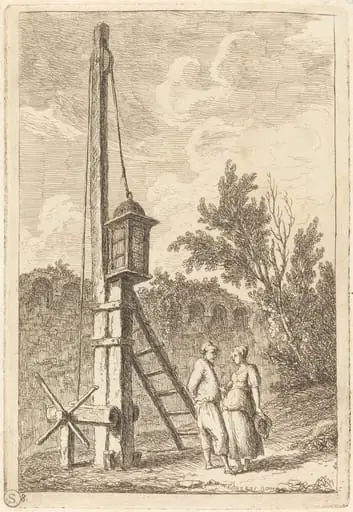
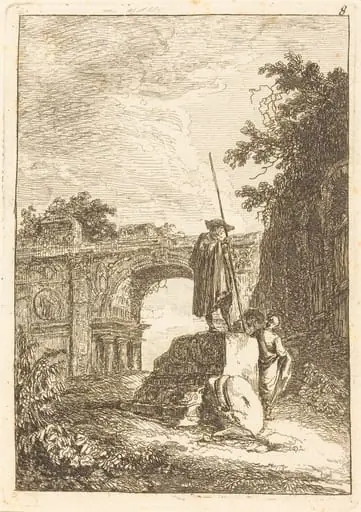
Le Poteau is a print by the Romanticist artist Hubert Robert. It dates from 1764 and is held in the collection of the Cleveland Museum of Art.
About this work
Overview
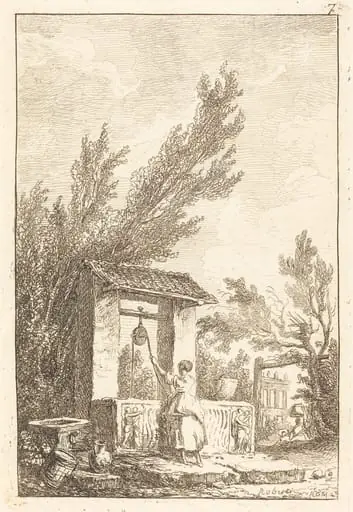
This etching is part of a small series by Hubert Robert, derived from his personal pen-and-ink sketches made during his time in Rome.
This etching is part of a small series by Hubert Robert, derived from his personal pen-and-ink sketches made during his time in Rome. The work captures a quiet, unassuming moment near a stone post, surrounded by modest stones and empty space. Unlike grand historical scenes, it focuses on ordinary urban details, reflecting Robert’s interest in the everyday life of the city. The print was produced using his own drawings, indicating a deliberate shift from direct observation to mediated reproduction.
Subject & Meaning
The scene centers on a lone figure standing beside a weathered stone post, possibly a boundary marker or ancient relic. The setting lacks dramatic action, emphasizing stillness and decay. The figure’s simple attire and the unadorned architecture suggest a focus on the quiet persistence of Roman ruins amid daily life. The absence of narrative tension invites contemplation rather than storytelling, aligning with Robert’s broader interest in ruins as silent witnesses to time.
Technique & Style
Robert translated his spontaneous ink sketches into etched plates, preserving the fluidity of his hand while adapting to the demands of printmaking. The lines are delicate yet deliberate, with subtle tonal variations achieved through controlled etching rather than heavy shading. The composition avoids theatricality, favoring asymmetry and open space. This method reveals his engagement with both drawing and print traditions, blending immediacy with technical refinement.
History & Provenance
The series was dedicated to Marguerite Le Compte, an amateur printmaker who visited Rome in 1764 with Claude Henri Watelet, a noted art patron. Both were part of a circle of artists and collectors connected to the French academies in Italy. Robert’s dedication likely aimed to secure future support, as Le Compte was known to commission works. Some scholars suggest she may be the figure holding a hand muff in one scene, though this remains speculative.
Context
In mid-18th century Rome, artists like Robert were drawn to the city’s ruins not as symbols of glory, but as subjects of quiet observation. The rise of amateur printmaking among wealthy travelers created a market for intimate, topographical views. Robert’s work responded to this trend, offering personal interpretations of familiar landmarks rather than idealized panoramas. His approach aligned with a growing interest in authenticity over grandeur in visual culture.
Legacy
Robert’s use of personal sketches as the basis for etchings helped bridge the gap between studio drawing and published prints, influencing later artists who valued direct observation. His focus on mundane architectural elements elevated the status of everyday ruins in art. Though not widely celebrated in his time, his method contributed to the development of topographical printmaking as a serious artistic practice in the late 18th century.
Artist & collection
Artist
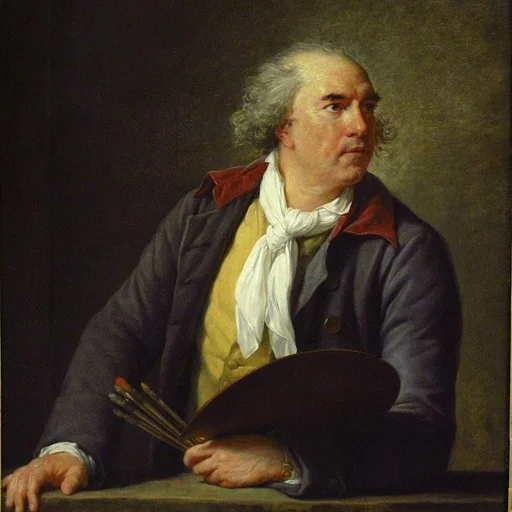
Hubert Robert (French pronunciation: ; 22 May 1733 – 15 April 1808) was a French painter in the school of Romanticism, noted especially for his landscape paintings and capricci, or semi-fictitious picturesque depictions of ruins in Italy…