Artwork
The Garden
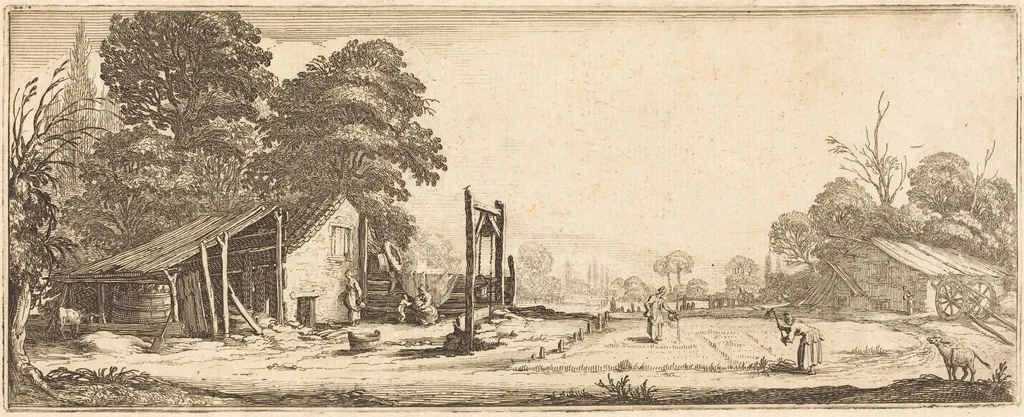
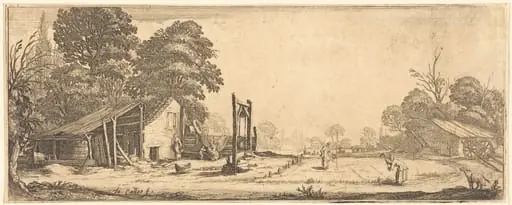
The Garden is an ink print by the Baroque artist French 17th Century. It dates from 1634 and is held in the collection of the National Gallery of Art.
About this work
Overview
The work titled “The Garden” is an etching executed on laid paper, presenting a tranquil rural tableau in monochrome. Central to the composition is a modest thatched cottage adjacent to a well where two figures attend to water—one holding a bucket, the other seated. A woman bearing a basket, a grazing sheep, and a distant bridge over a stream complete the scene, all framed by trees.
Subject & Meaning
The print depicts everyday agrarian life, emphasizing the quiet labor of water collection and domestic tasks. The presence of the woman with a basket suggests routine sustenance activities, while the sheep and surrounding foliage underscore a harmonious relationship between humans and the pastoral environment. The composition invites contemplation of simple, self‑sufficient rural existence.
Technique & Style
Created through etching, the artist incised fine lines into a metal plate, then transferred the image onto laid paper, achieving delicate detail in clothing folds, foliage texture, and water reflections. The crisp linear quality and careful rendering of light and shadow are characteristic of 17th‑century printmaking, where the medium allowed for reproducibility without sacrificing intricate visual information.
Context
In the 1600s, etching emerged as a pivotal medium for disseminating visual ideas beyond the confines of a single painting. Prints like this could be distributed to a broader audience, facilitating the spread of aesthetic trends and social narratives. The rural subject aligns with contemporary interests in genre scenes that documented ordinary life.
Legacy
While specific provenance for this particular impression is not recorded, the piece exemplifies the enduring appeal of early modern prints as documentary and artistic records. Its meticulous execution continues to inform studies of period techniques and the visual culture surrounding everyday rural labor.
Artist & collection

Artist
Seventeenth-century French printmakers turned ink into story. Their tools were burin and acid, paper their stage. Look at the Beggar Woman with Rosary (1622), etched on laid paper, her hands folded around faith, or The…

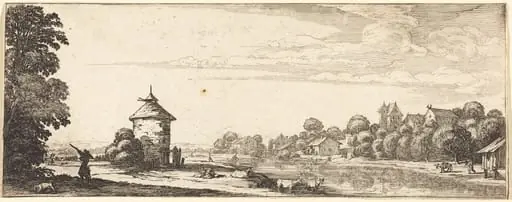 The Dovecot
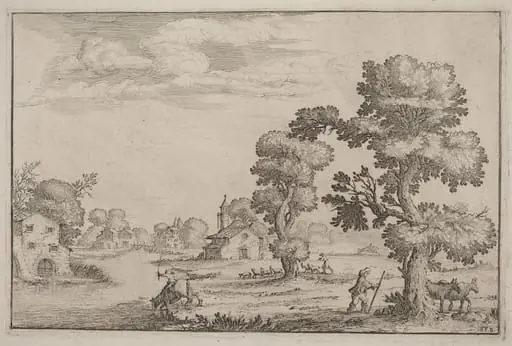 Lakeside Village with Herdsmen
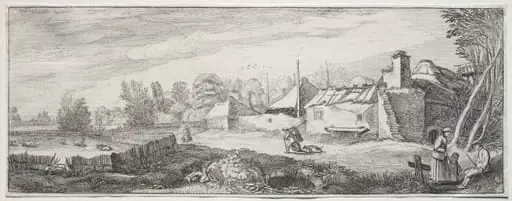 Some Pleasing Landscapes and Ruins of Ancient Monuments: Dilapidated Farm
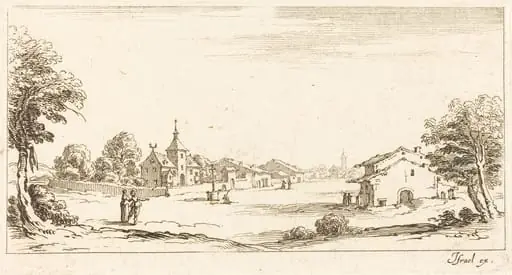 Landscape
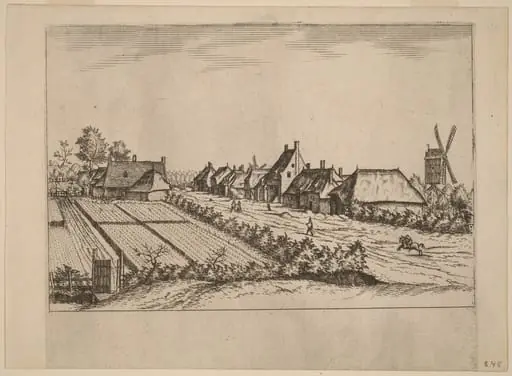 Fields and a Village Road with Post Mill
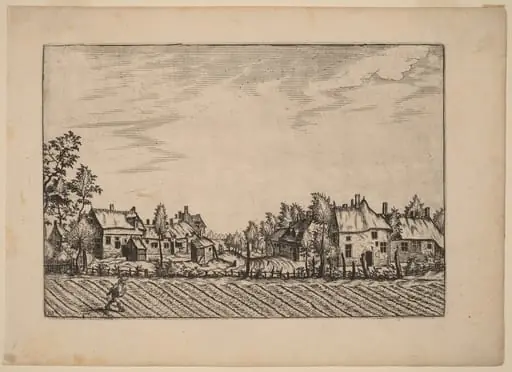 Farms
Farms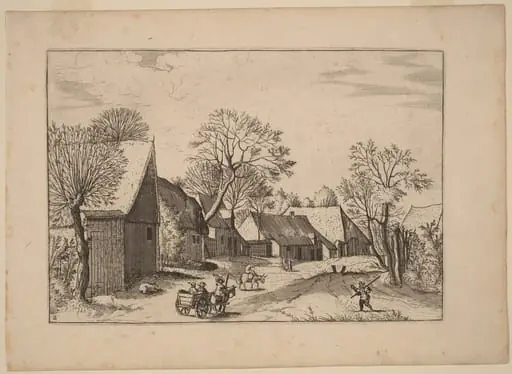 Farms and Shed
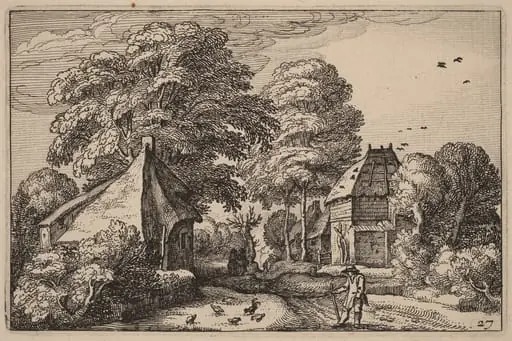 Road with Barn and Cottages
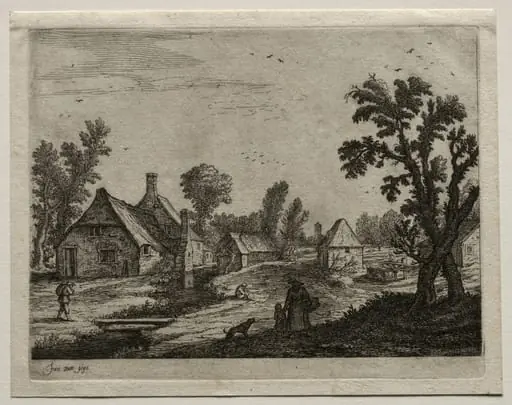 The Plank over the Stream
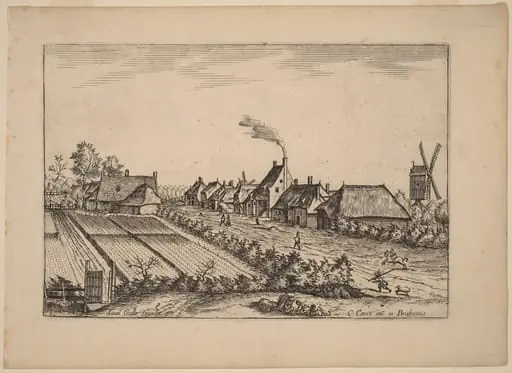 Fields and a Village Road with Post Mill
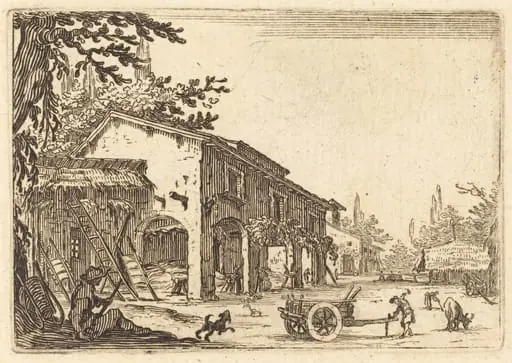 Courtyard of a Farm
 The Garden