Artwork
The Post
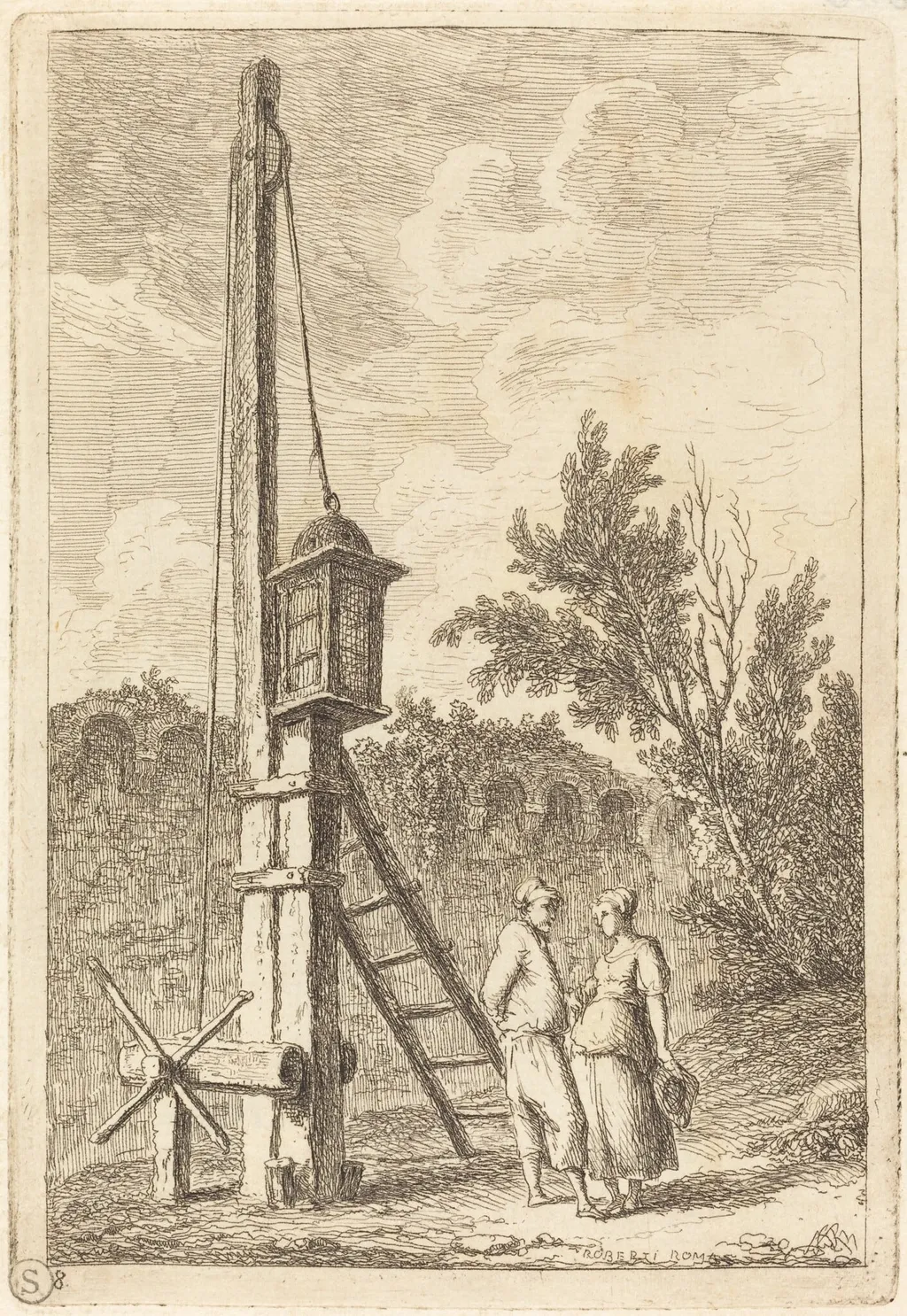
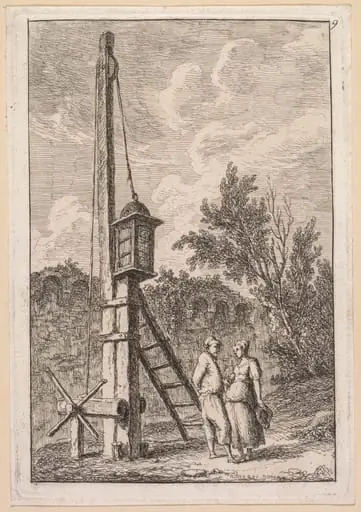
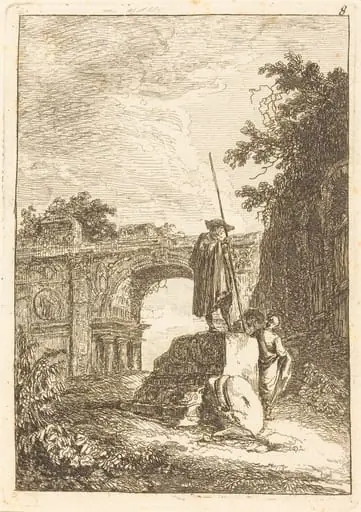
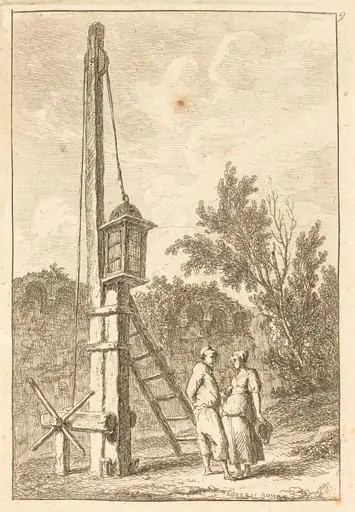
The Post is an ink print by the Romanticist artist Hubert Robert. It dates from 1764 and is held in the collection of the National Gallery of Art.
About this work
Overview
Created in 1764, *The Post* is an etching on laid paper by French artist Hubert Robert. It belongs to a series of prints that captured everyday scenes of travel and rural life in 18th-century Europe. Robert, primarily known for architectural landscapes and imagined ruins, turned his attention here to a moment of transit, using the medium’s precision to convey quiet narrative.
Subject & Meaning
The scene depicts a traveler on horseback pausing at a modest roadside inn, accompanied by a dog investigating the ground. The rider, wearing a tricorn hat, suggests a traveler of modest means. The inn’s sign, barely legible, implies local commerce and the rhythms of travel. The image avoids grandeur, instead offering a glimpse into the mundane routines of movement and rest in pre-modern Europe.
Technique & Style
Robert employed fine, controlled etching lines to model light and texture, creating subtle contrasts between the rider’s shadowed form and the sunlit inn.
Robert employed fine, controlled etching lines to model light and texture, creating subtle contrasts between the rider’s shadowed form and the sunlit inn. The laid paper’s texture enhances the tactile quality of the scene. His draftsmanship emphasizes detail without ornamentation—each element, from the horse’s posture to the sign’s wood grain, contributes to a sense of observed reality rather than idealized fantasy.
History & Provenance
Produced in the mid-1760s, *The Post* was part of a broader circulation of prints that disseminated visual culture beyond elite collections. Though the work’s early ownership is undocumented, its subject and technique align with Robert’s interest in accessible, narrative imagery. Such prints were often sold individually or in portfolios, reaching audiences interested in contemporary life and travel.
Context
In 1760s France, printmaking flourished as a medium for documenting social scenes and landscapes. Robert’s work responded to growing public interest in travel, infrastructure, and the picturesque. While his larger paintings often featured ruins, this etching grounds his aesthetic in the present—capturing the quiet dignity of ordinary moments amid a changing transportation network.
Legacy
Though less celebrated than his monumental landscapes, *The Post* exemplifies Robert’s ability to infuse everyday subjects with quiet observation. It reflects a broader 18th-century shift toward valuing the particular over the monumental in visual art. The etching remains a reference point for studies of travel, print culture, and the evolution of genre scenes in French art.
Artist & collection
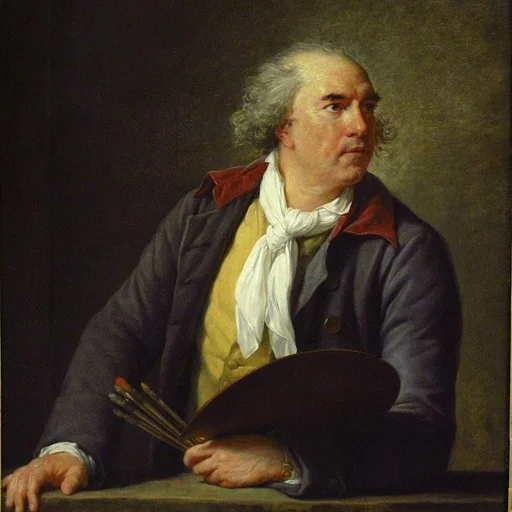
Artist
Hubert Robert (French pronunciation: ; 22 May 1733 – 15 April 1808) was a French painter in the school of Romanticism, noted especially for his landscape paintings and capricci, or semi-fictitious picturesque depictions of ruins in Italy…