Artwork
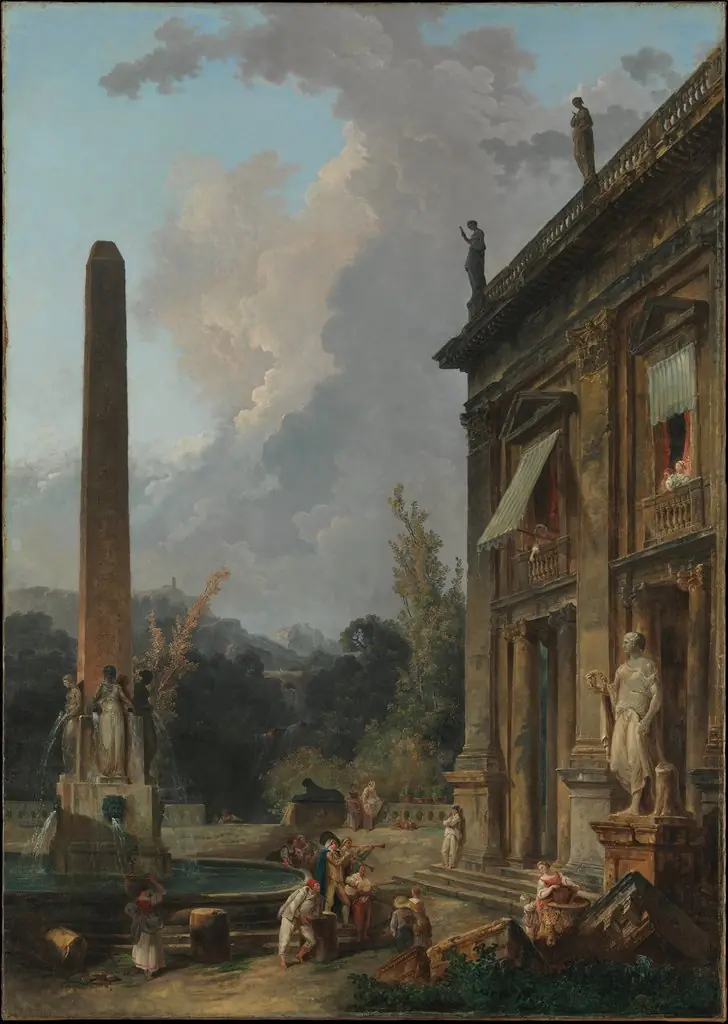
Imaginary View of Rome with the Horse Tamer of the Monte Cavallo and a Church
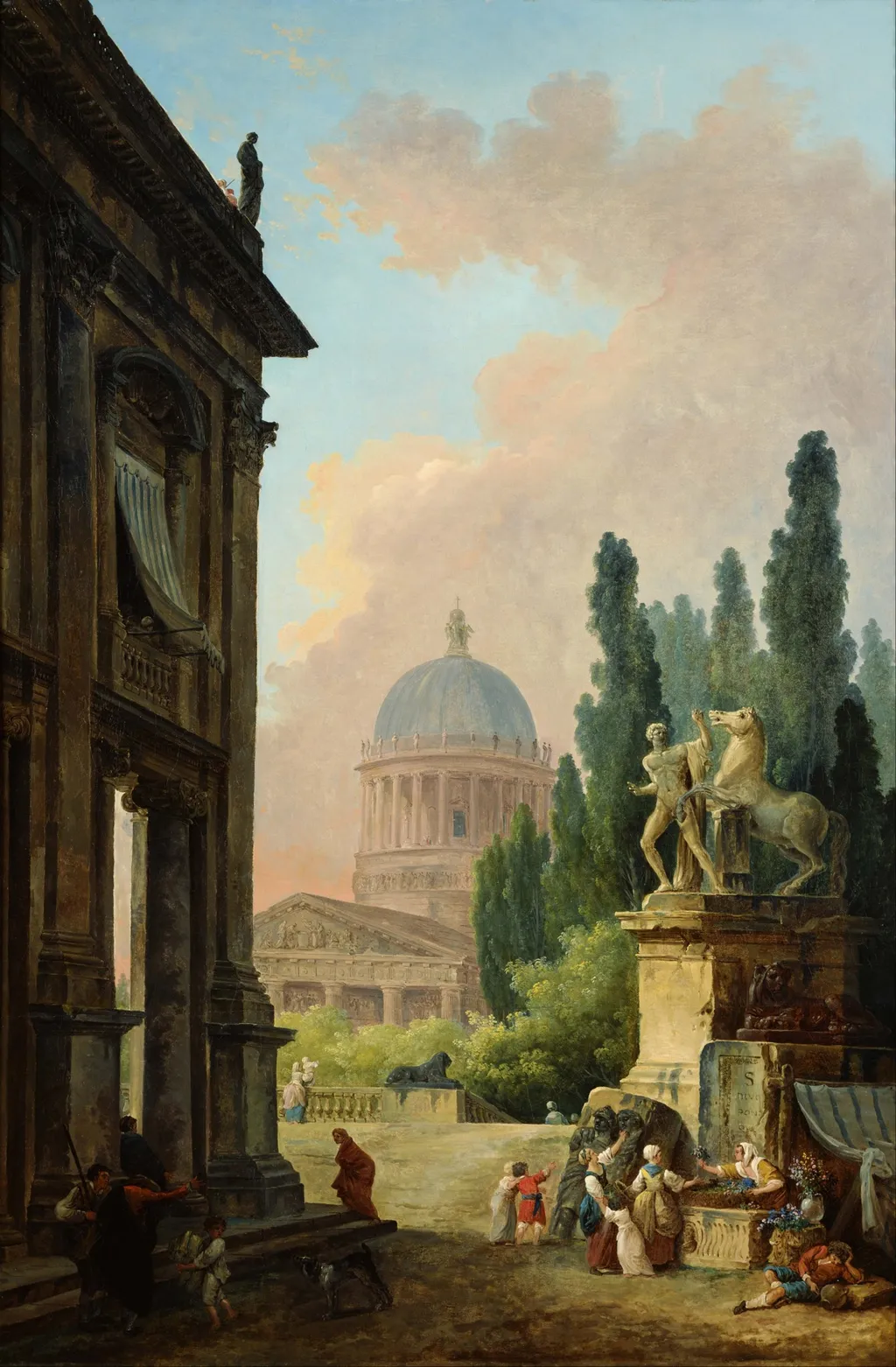
Imaginary View of Rome with the Horse Tamer of the Monte Cavallo and a Church is an oil painting by the Rococo painting artist Hubert Robert. It dates from 1794 and is held in the collection of the National Museum of Western Art.
About this work
Overview
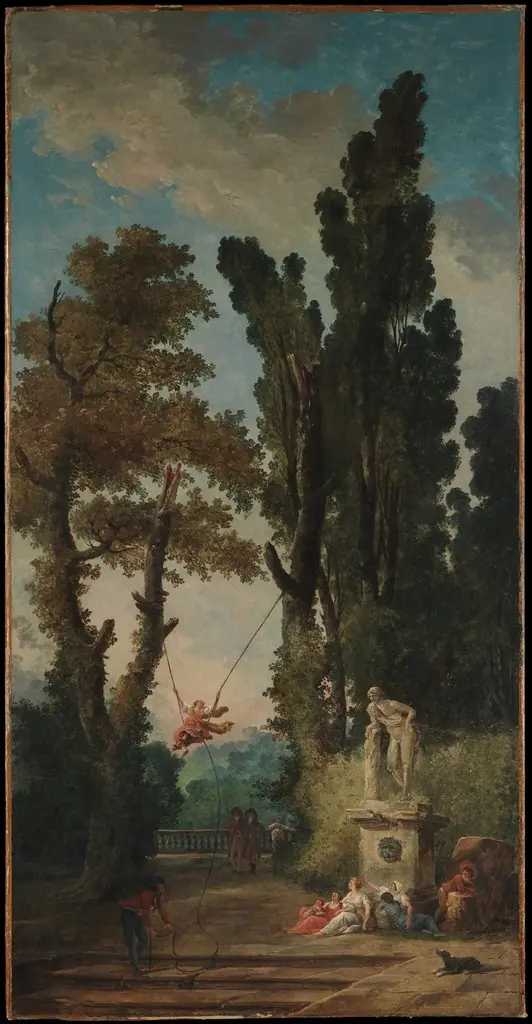
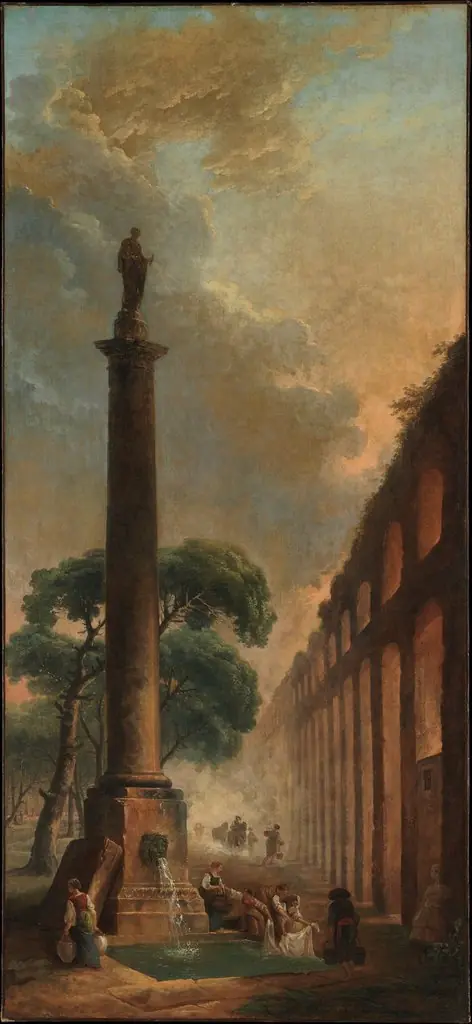
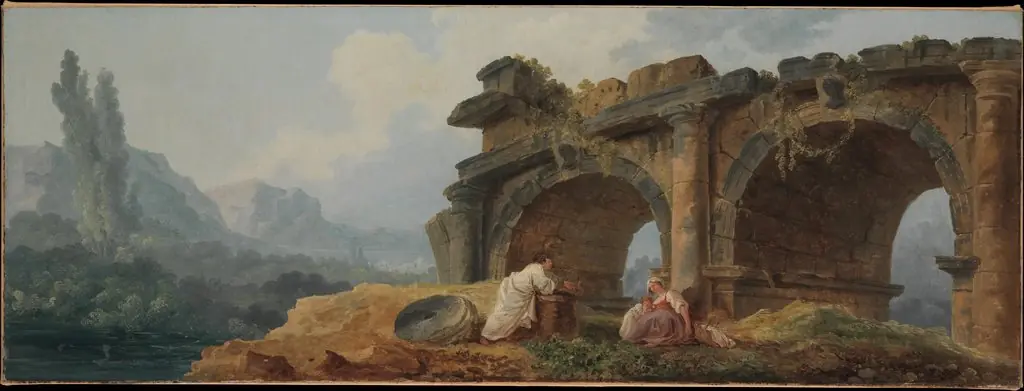
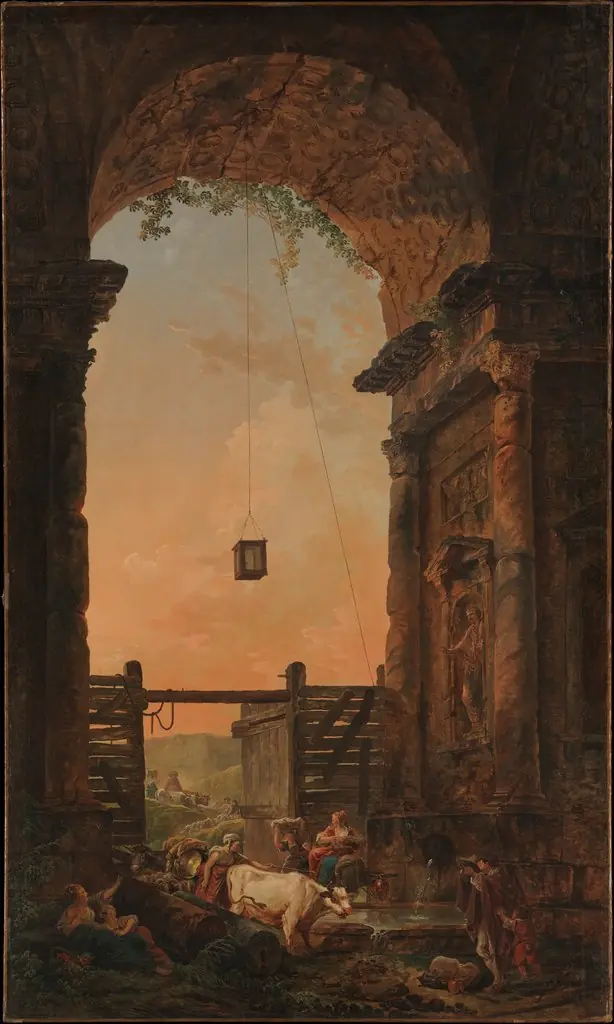
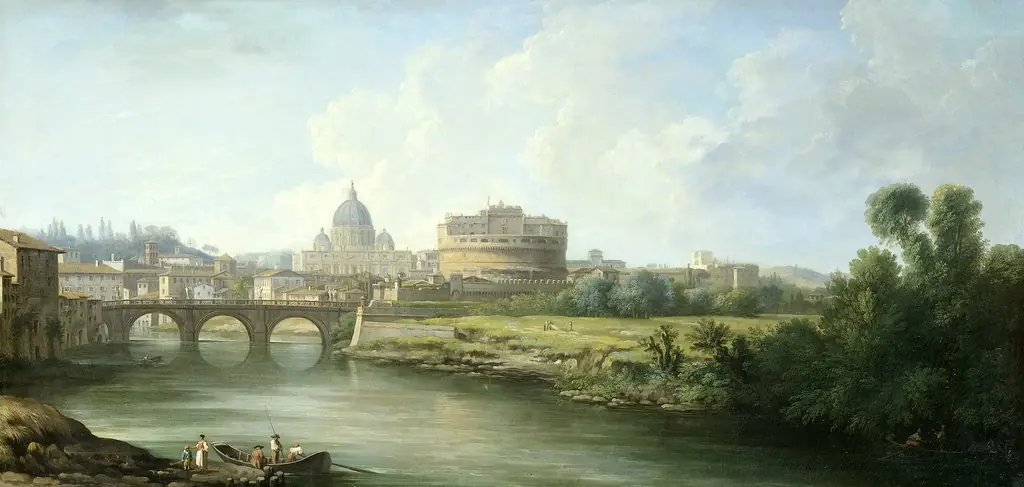
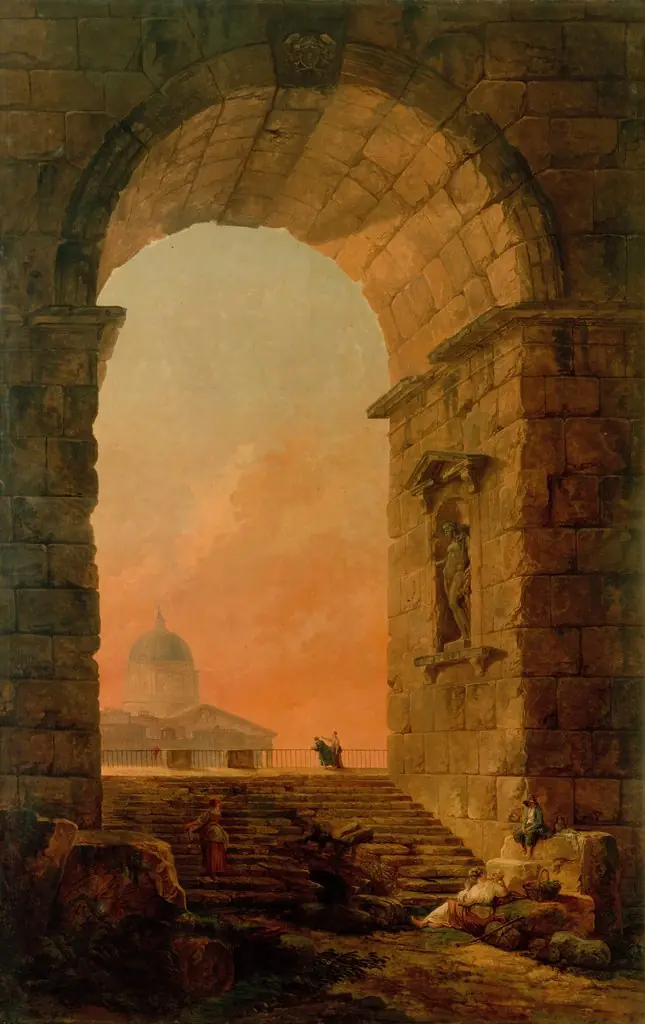
Painted in 1794 by Hubert Robert, this oil on canvas work presents a fabricated landscape of Rome, blending real and invented architectural elements.
Painted in 1794 by Hubert Robert, this oil on canvas work presents a fabricated landscape of Rome, blending real and invented architectural elements. Robert, a French artist known for his imaginative ruinscapes, constructed this scene not from direct observation but from memory and study. The composition merges classical monuments with naturalistic lighting, reflecting his interest in antiquity and atmospheric effect.
Subject & Meaning
The painting centers on the ancient equestrian statue of Marcus Aurelius, positioned prominently on a pedestal, surrounded by modest human figures engaged in quiet daily activities. A distant church dome and columned structure frame the background, suggesting a layered history of Roman and Christian architecture. The scene evokes contemplation rather than grandeur, emphasizing the quiet persistence of ruins amid ordinary life.
Technique & Style
Robert employed fine brushwork to render architectural details with precision, while maintaining a soft, diffused light that unifies the composition. The palette favors muted earth tones—ochres, grays, and pale browns—with subtle accents of pink in the sky. Figures are rendered with minimal detail, serving as scale indicators rather than focal points, reinforcing the painting’s emphasis on atmosphere over narrative.
History & Provenance
Created during Robert’s mature period, the painting reflects his long-standing fascination with Italian antiquities, cultivated during his years in Rome. It entered the collection of the National Museum of Western Art in Tokyo, where it remains today. The work was likely acquired as part of broader 20th-century efforts to assemble a comprehensive survey of European landscape traditions.
Context
Painted in the wake of the French Revolution, Robert’s imaginary Rome contrasts with the political upheaval of his time, offering a serene, timeless vision of classical heritage. His capricci—fantastical amalgamations of real and invented ruins—were popular among European collectors seeking idealized antiquity. This work aligns with a broader 18th-century trend of romanticizing the past through architectural fantasy.
Legacy
Robert’s imaginative reconstructions of ancient sites influenced later generations of landscape painters and architects interested in the emotional resonance of ruins. Though not overtly political, his works provided a visual language for contemplating time, decay, and cultural memory. His approach to blending fact and fiction in landscape painting remains a significant contribution to the evolution of Romantic-era art.
Own this work as a print
Artist & collection
Artist
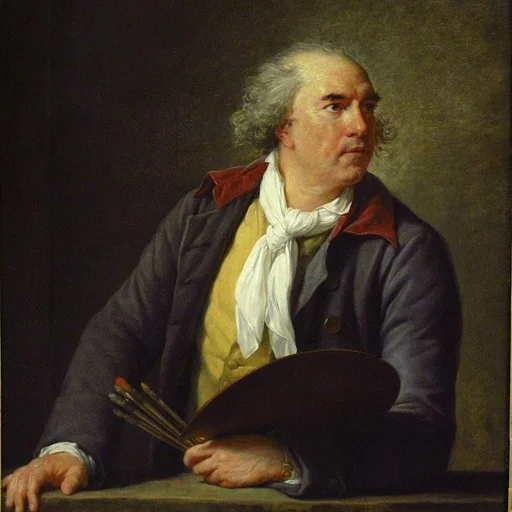
Hubert Robert (French pronunciation: ; 22 May 1733 – 15 April 1808) was a French painter in the school of Romanticism, noted especially for his landscape paintings and capricci, or semi-fictitious picturesque depictions of ruins in Italy…