Artwork
The Landing Place
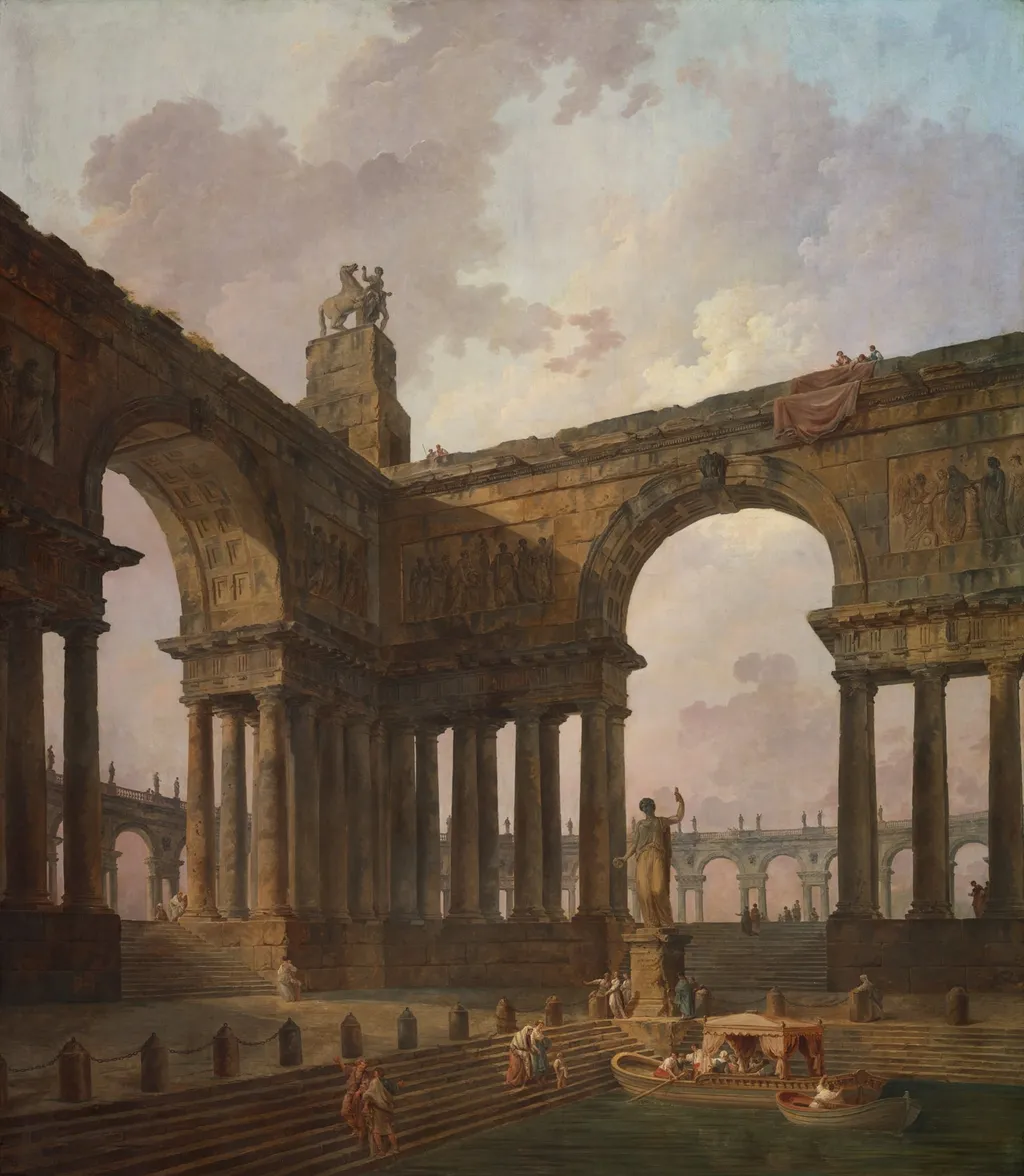
The Landing Place is an oil painting by the Rococo painting artist Hubert Robert. It dates from 1788 and is held in the collection of the Art Institute of Chicago.
About this work
Light plays on the columns and water in a way that tricks your eye.
Hubert Robert painted a grand fantasy scene in 1788. A huge stone colonnade looms over a busy harbor. Small boats ferry people to shore while others relax by the water.
Robert mixed real Roman ruins with his own made-up details. The scene feels both real and dreamlike. Light plays on the columns and water in a way that tricks your eye.
His style feels like a stage set. Look for the way he stacks arches and shadows. Compare it to Canaletto’s cleaner views of Venice.
Hubert Robert
Overview
Painted in 1788, The Landing Place is an oil on canvas commissioned as part of a series for the salon of Jean-Joseph, Marquis de Laborde. It presents a fictional harbor scene framed by an expansive colonnade, designed to visually extend the room’s architecture. Robert blended observed antiquities with imaginative elements, creating an illusion of boundless space that harmonized with the salon’s dimensions.
Subject & Meaning
The scene depicts a tranquil harbor where figures depart in small boats or pause along the shore. Though rooted in the tradition of Roman port views, the setting is entirely invented. No specific location is referenced; instead, the composition evokes a timeless, idealized moment of leisure, suggesting a retreat from urban life through architectural grandeur and serene water.
Technique & Style
Robert employed precise linear perspective and layered arches to construct depth, while careful modulation of light across stone and water enhances realism. Shadows fall with theatrical precision, reinforcing the illusion of a painted stage. His handling of texture and scale recalls Canaletto’s precision but with a more fantastical, less documentary approach, prioritizing atmospheric effect over topographical accuracy.
History & Provenance
The painting was one of four commissioned by the financier Marquis de Laborde to adorn his Parisian château’s salon. These works were intended to transform the interior into an imagined classical landscape. The series remained in the Laborde family until the late 19th century, after which it entered public collections, where it is now recognized as a key example of 18th-century French architectural fantasy.
Context
Created during the late Ancien Régime, the painting reflects aristocratic taste for classical antiquity and engineered illusions. While contemporaries like Canaletto documented real cities, Robert’s work responded to a desire for idealized, emotionally resonant spaces. His fantasies aligned with Enlightenment-era interests in archaeology and the sublime, yet prioritized poetic invention over scholarly fidelity.
Legacy
Robert’s architectural fantasies influenced later 19th-century painters interested in illusionistic interiors and romanticized ruins. The Landing Place exemplifies how art could manipulate perception to transform domestic space. Its blend of real and invented elements helped define a genre that bridged topographical painting and imaginative design, leaving a mark on decorative arts and theatrical set design.
Own this work as a print
Artist & collection
Artist
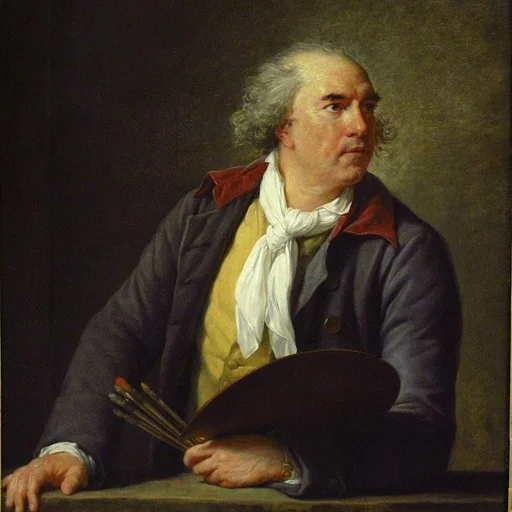
Hubert Robert (French pronunciation: ; 22 May 1733 – 15 April 1808) was a French painter in the school of Romanticism, noted especially for his landscape paintings and capricci, or semi-fictitious picturesque depictions of ruins in Italy…

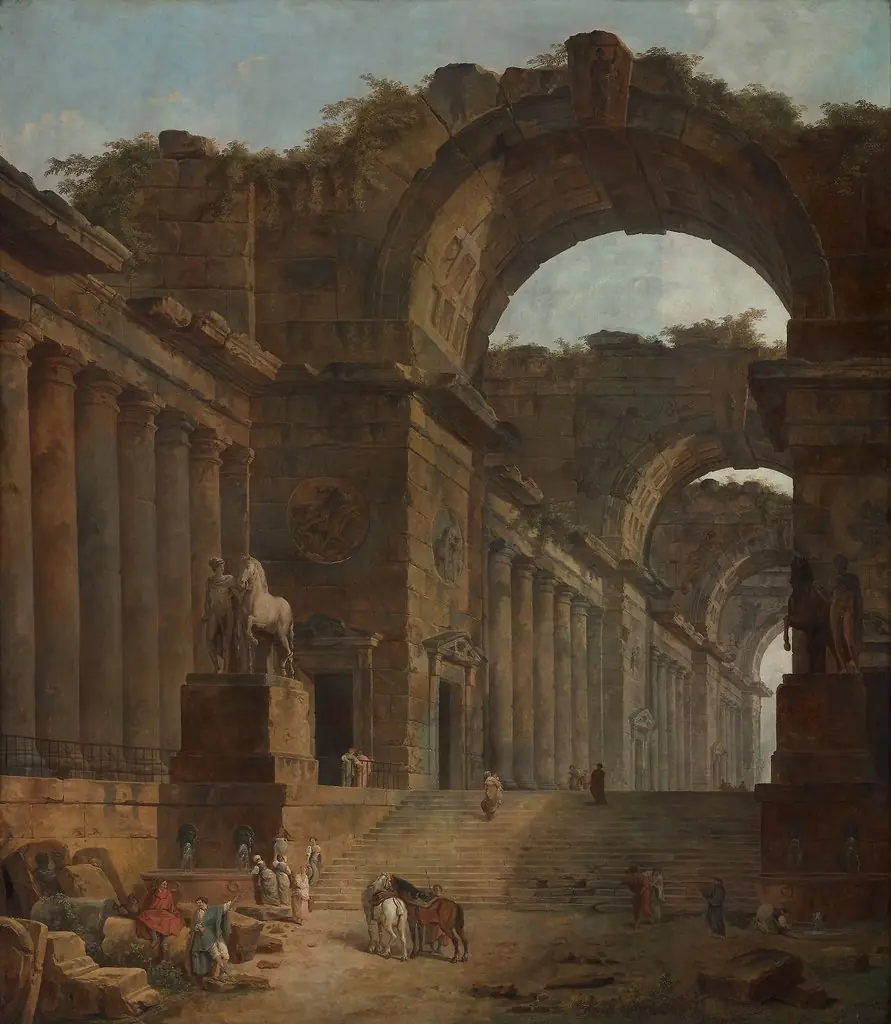 The Fountains
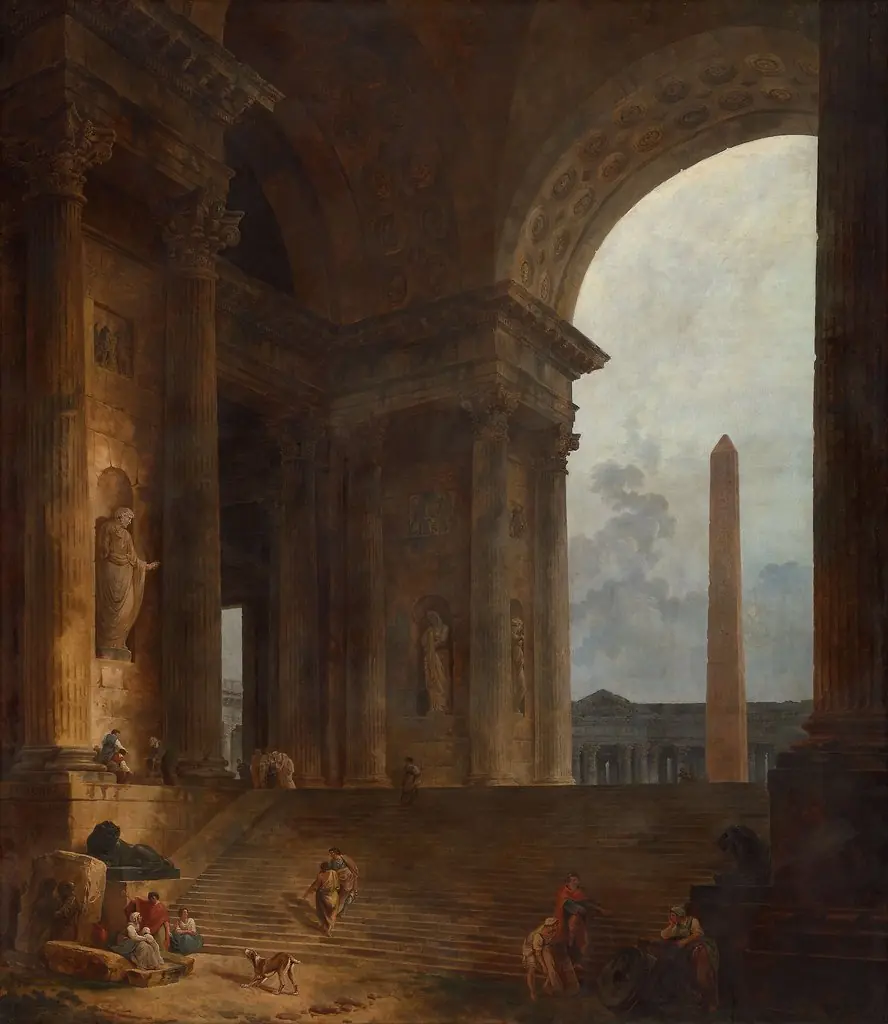 The Obelisk
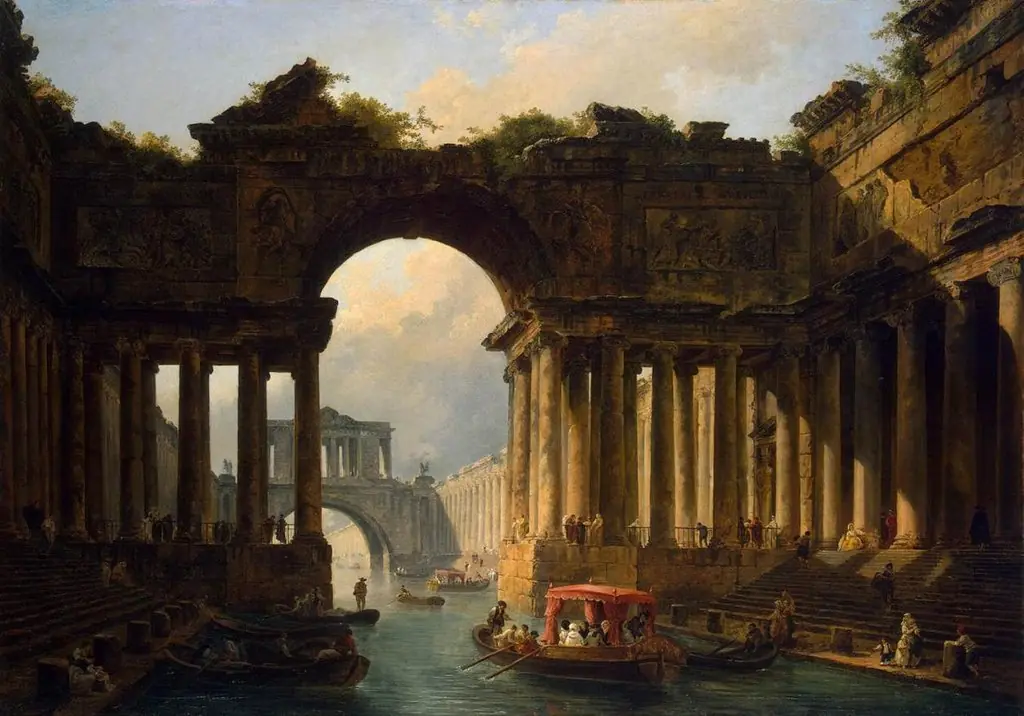 Architectural Landscape with a Canal
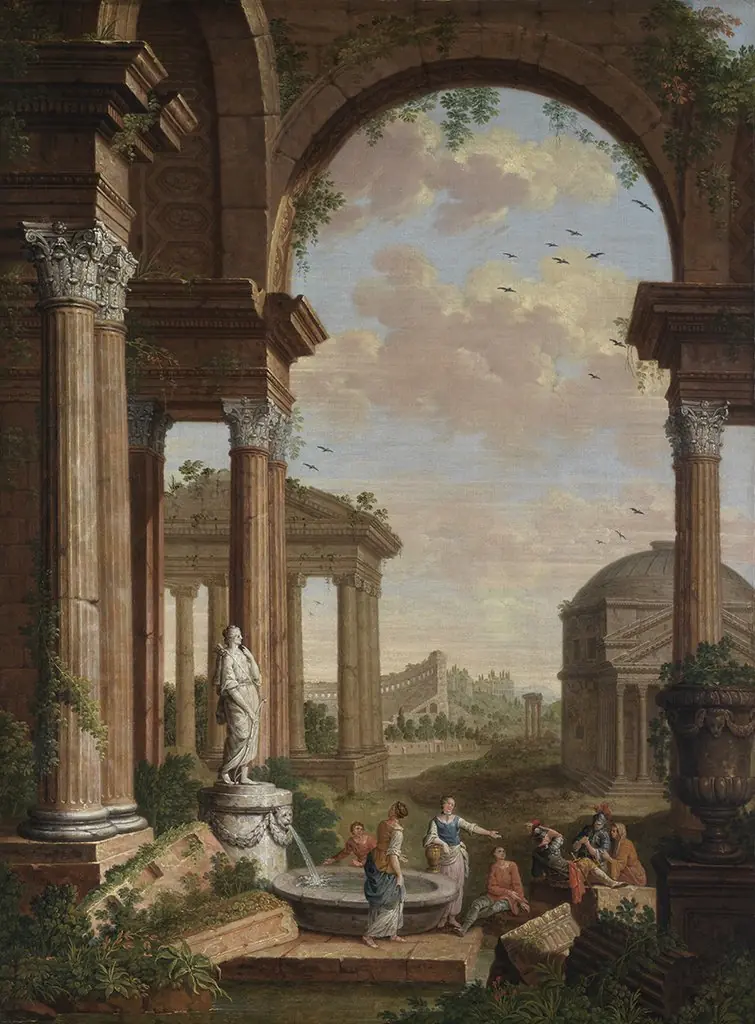 Landscape with Roman Ruins
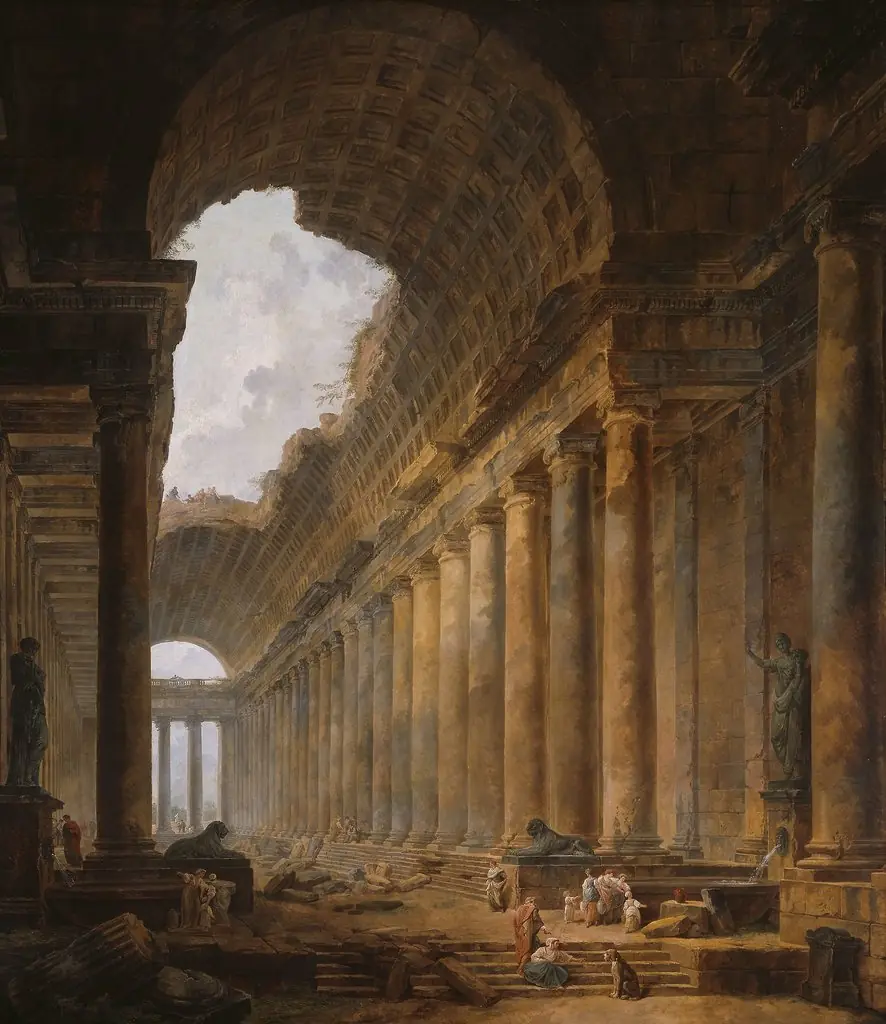 The Old Temple
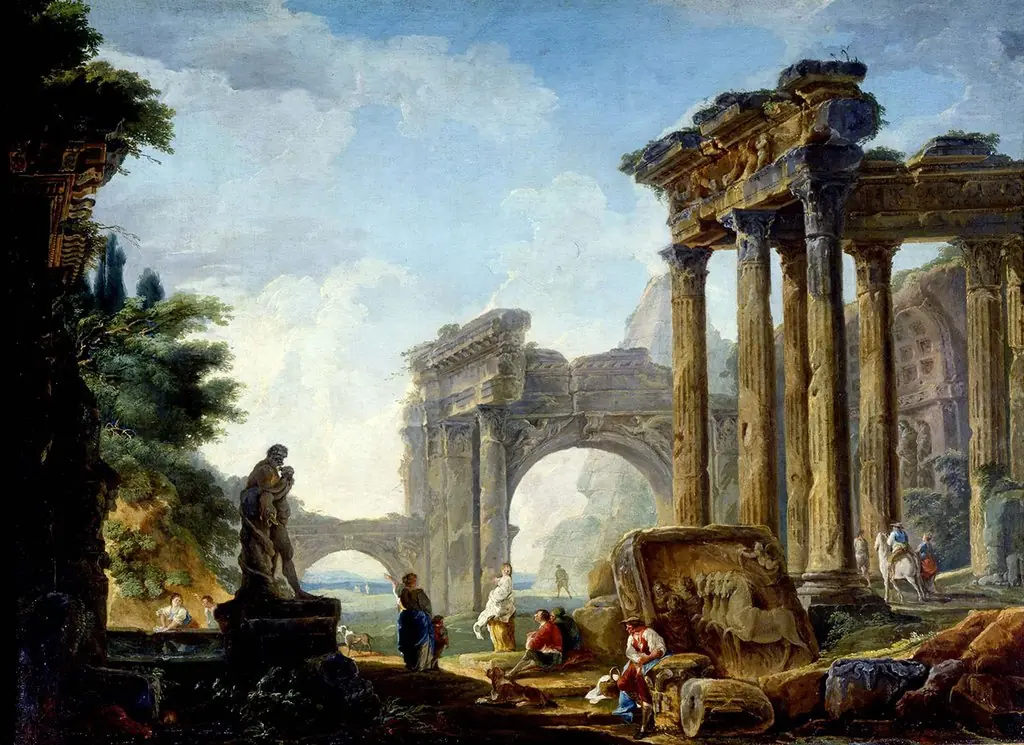 Paysage avec ruines romaines
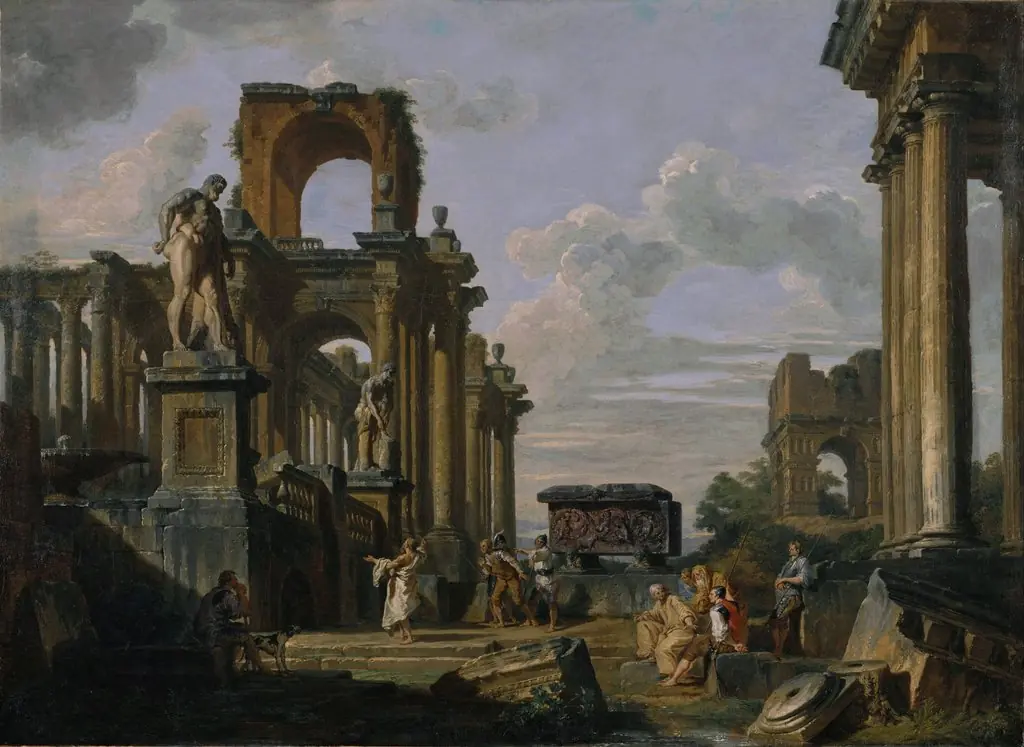 An Architectural Capriccio of the Roman Forum with Philosophers and Soldiers among Ancient Ruins, including the Arch of Janus Quadrifrons, the Sarcophagus of Santa Constanza, the Farnese Hercules and the Cincinnatus
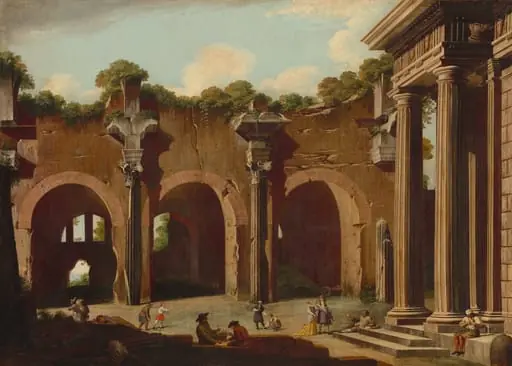 The Basilica of Constantine with a Doric Colonnade
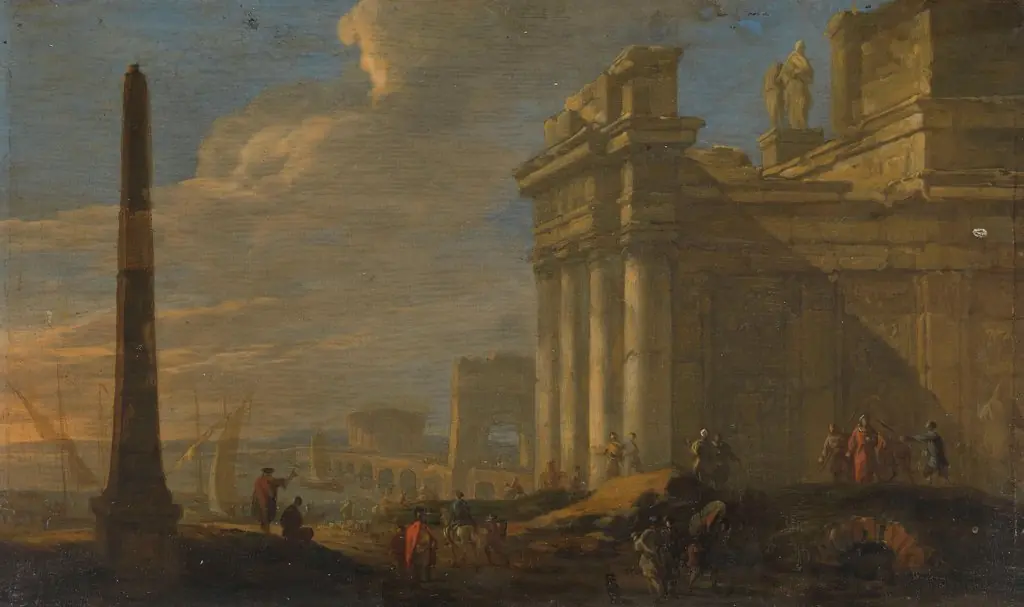 Italian harbor view
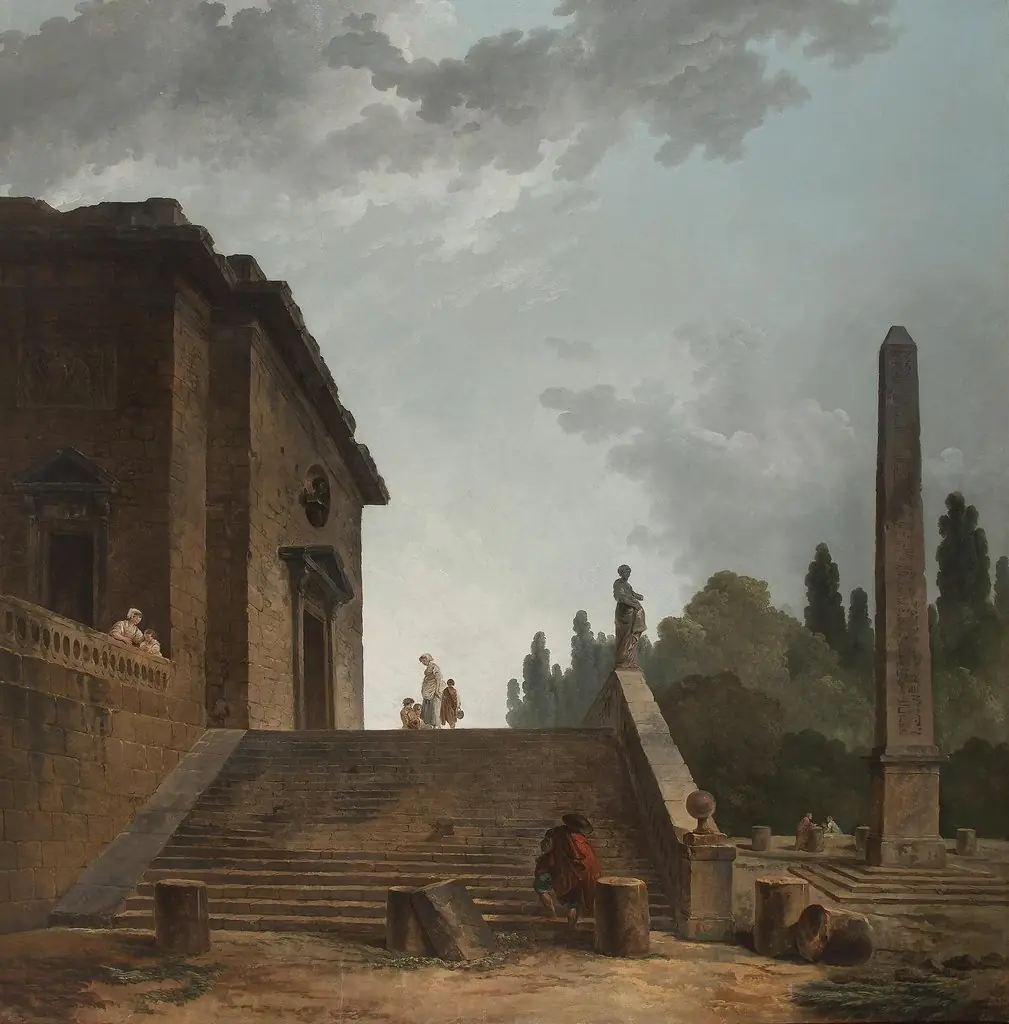 Landscape with a Stairs and Obelisk