Artwork
Tomb of Cecilia Metella
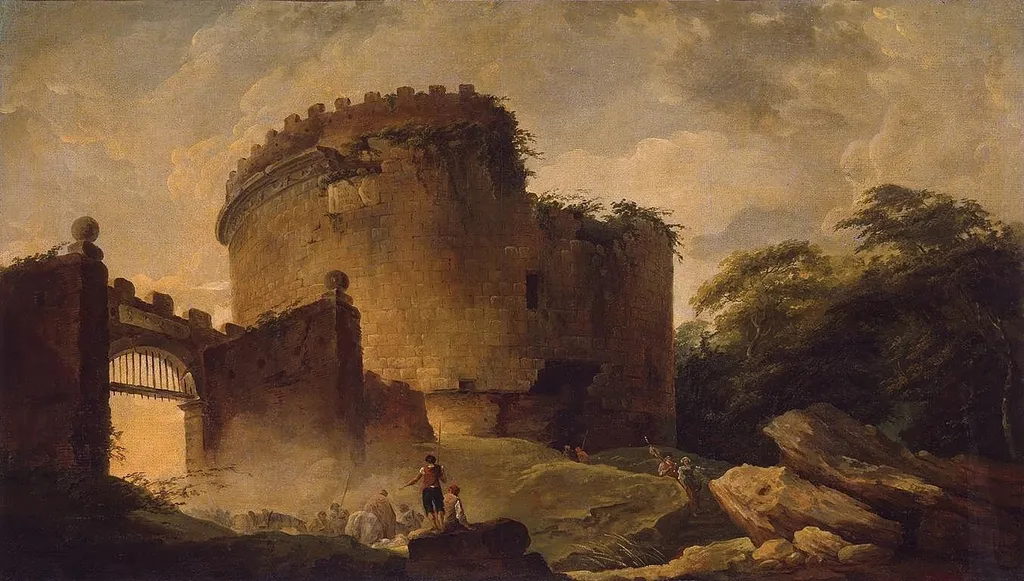
Tomb of Cecilia Metella is an oil painting by the Rococo painting artist Hubert Robert. It dates from 1765 and is held in the collection of the Hermitage Museum.
About this work
Overview
Hubert Robert’s 1765 oil on canvas presents the ancient Roman tomb of Caecilia Metella as a ruinous monument set within a pastoral landscape. The composition balances the weathered stone structure with a gently arched bridge, a flowing river, and a few solitary figures, all under a cloud‑filled sky that lends a quiet, contemplative atmosphere.
Subject & Meaning
The work foregrounds the decayed tomb, a symbol of imperial Rome’s passage of time, while the surrounding natural elements suggest the coexistence of history and nature. The presence of travelers and idle figures hints at the Romantic fascination with ruins as sites of reflection and the fleeting nature of human achievement.
Technique & Style
Robert employs a delicate handling of light and shade to render the stone’s texture and the surrounding foliage with convincing depth. His palette, soft yet varied, aligns with Rococo sensibilities, while the composition’s staged yet believable setting reflects his penchant for capriccio—a blend of accurate detail and imaginative reconstruction.
History & Provenance
Created during Robert’s early career, the painting entered the collection of the State Hermitage Museum, where it remains on display. Its acquisition reflects the 18th‑century European interest in classical antiquity and the artist’s reputation for rendering imagined yet plausible archaeological scenes.
Context
Although Robert is often linked to Romanticism for his evocative landscapes, this piece also bears hallmarks of the Rococo period, particularly in its lightness of touch and ornamental treatment of ruins. The work exemplifies the era’s broader fascination with antiquarian travel and the aestheticization of decay.
Artist & collection
Artist
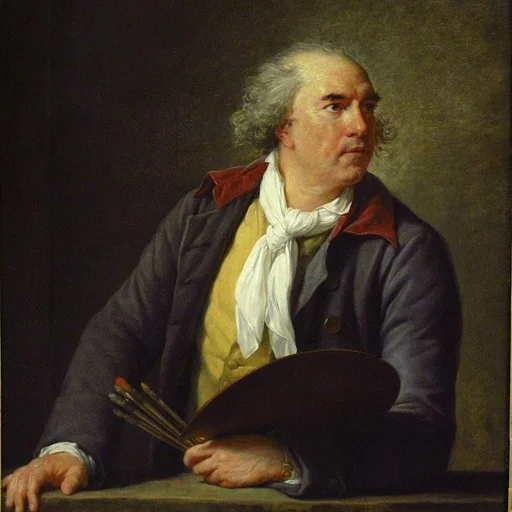
Hubert Robert (French pronunciation: ; 22 May 1733 – 15 April 1808) was a French painter in the school of Romanticism, noted especially for his landscape paintings and capricci, or semi-fictitious picturesque depictions of ruins in Italy…

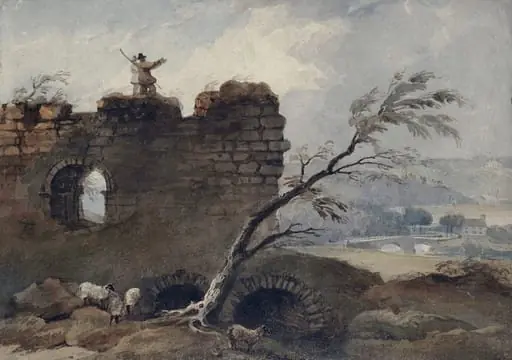 Mitford Castle, Northumberland
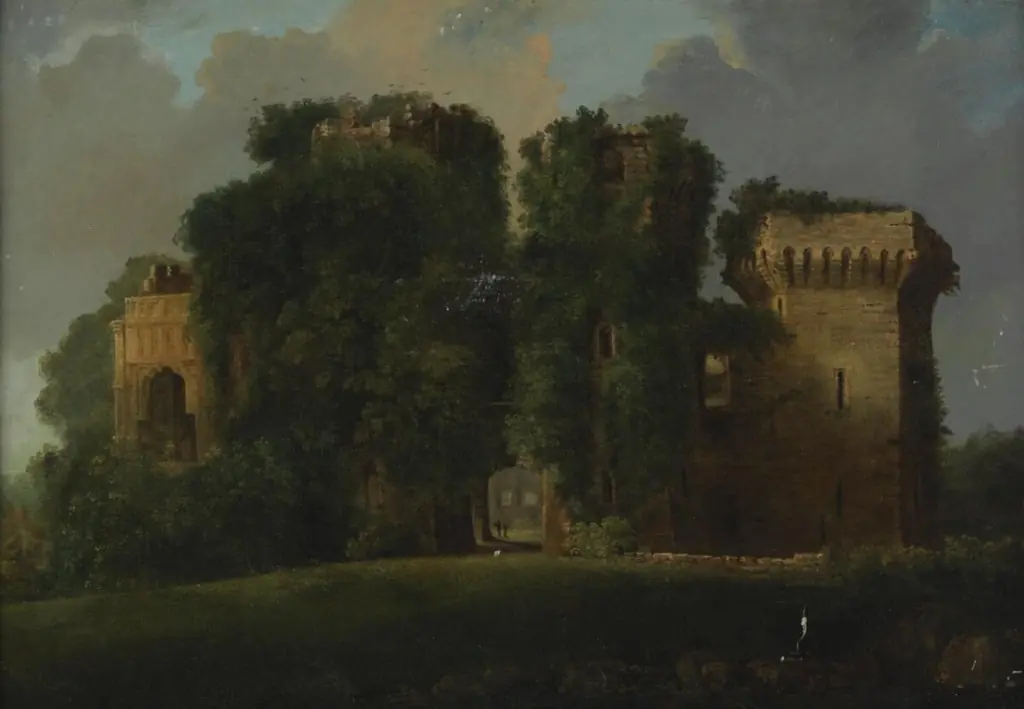 Raglan Castle
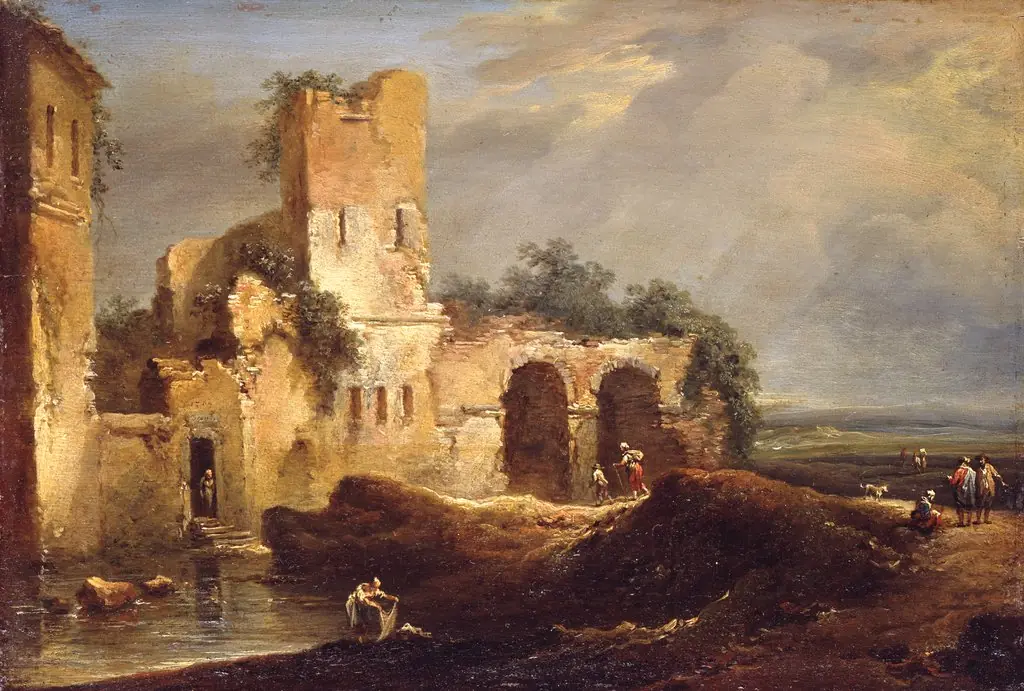 Landscape with a ruin at a stretch of water
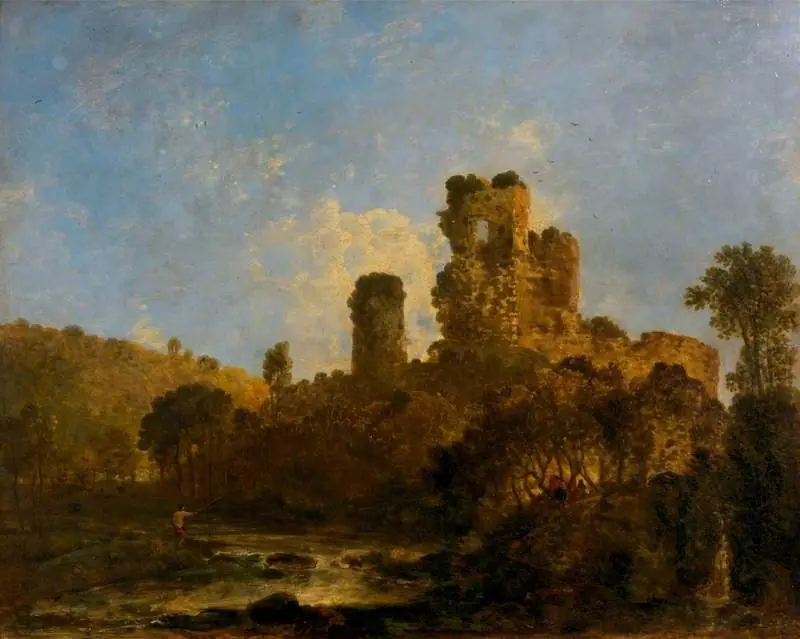 Landscape with a River and Ruins
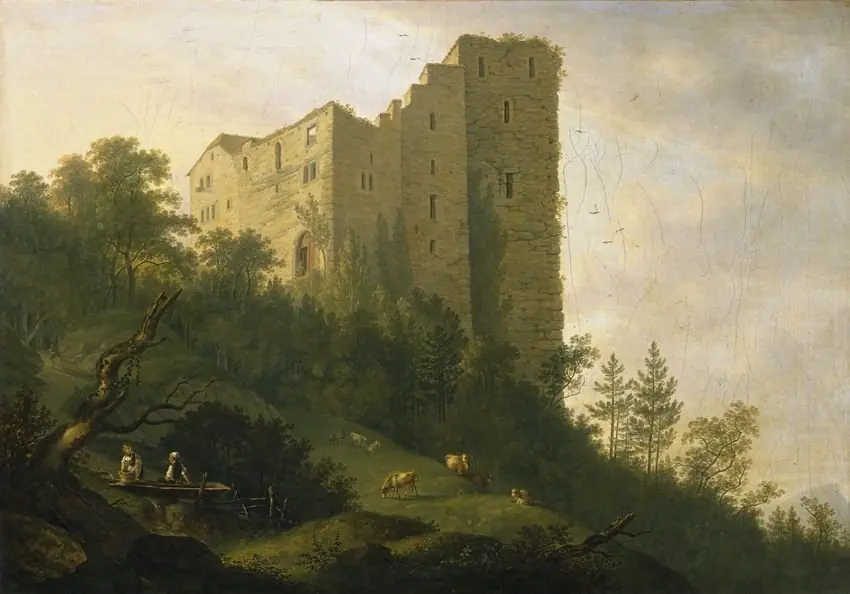 Umgebung der Ruine Habsburg
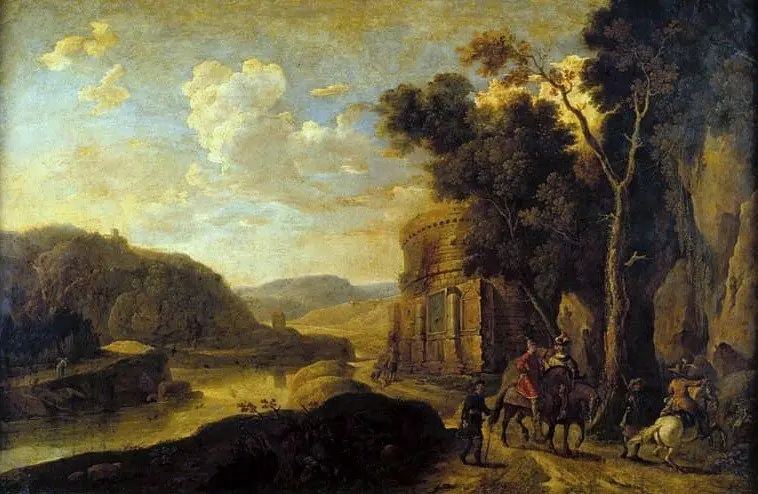 Return from the Hunt
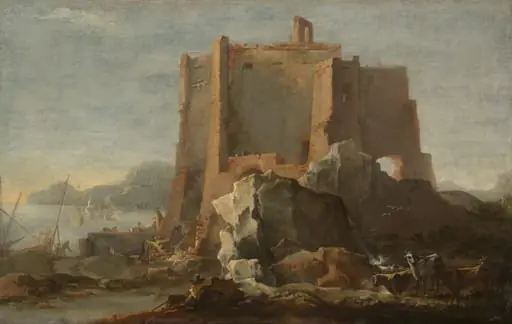 Landscape with Rock and Fortress
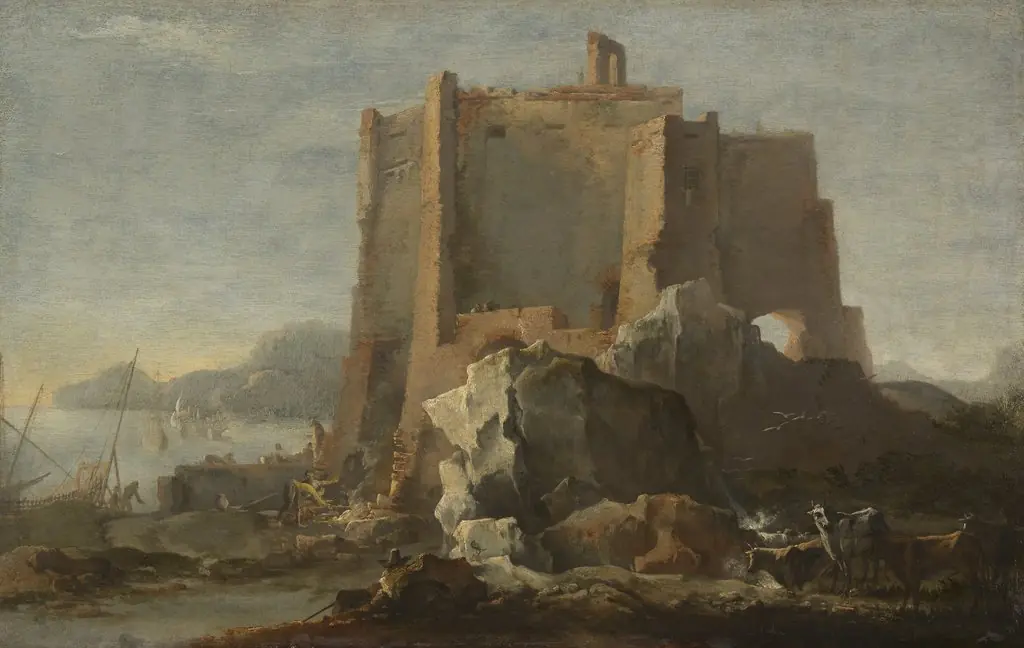 Landscape with Rock and Fortress
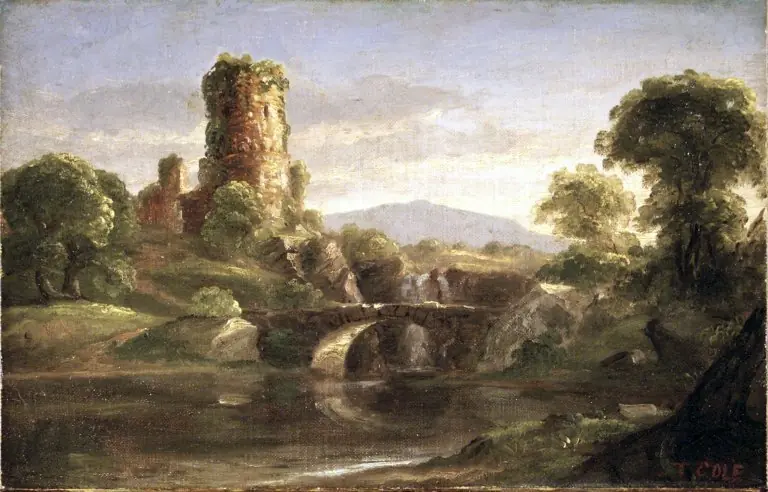 Ruined Castle and River
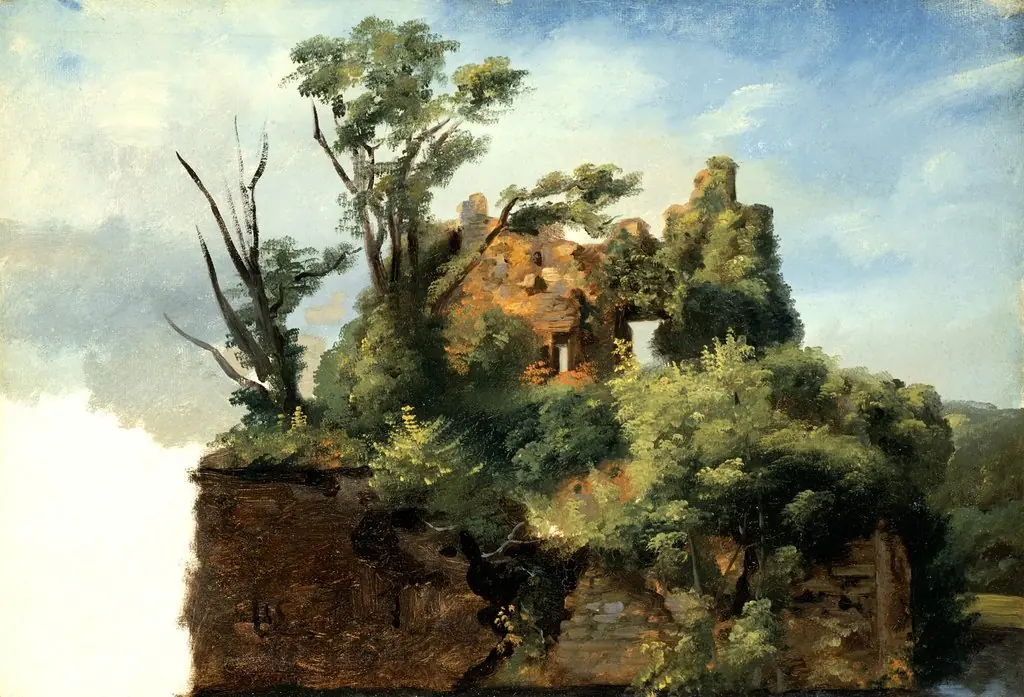 Landscape with Ruins
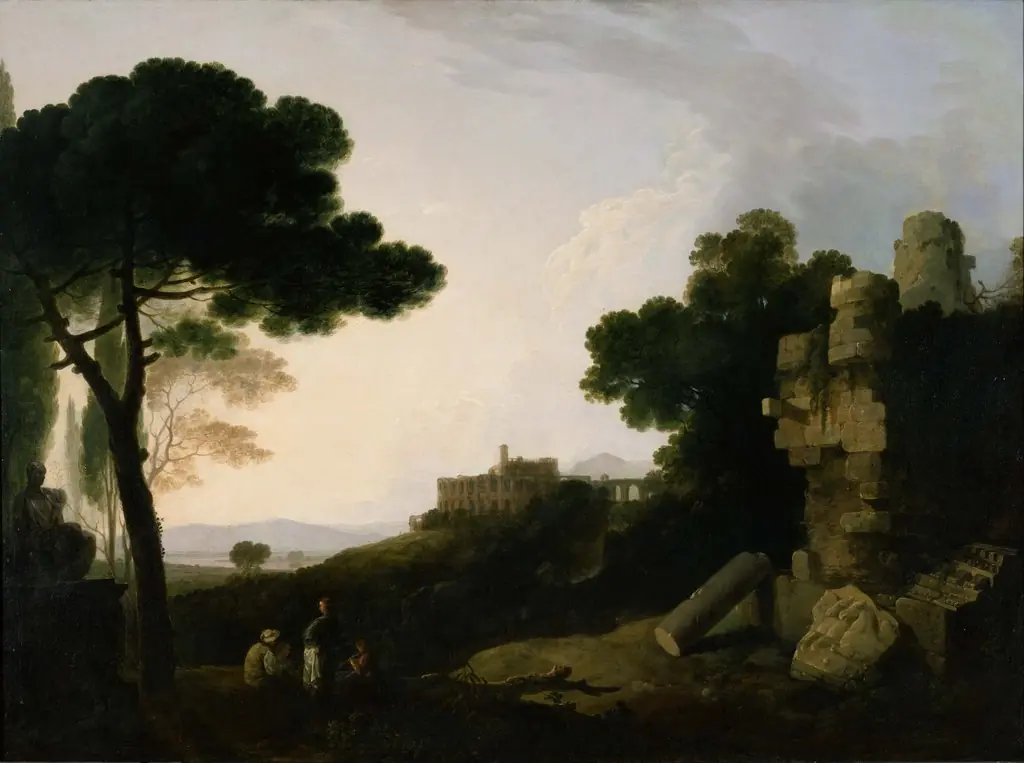 Landscape Capriccio with Tomb of the Horatii and Curiatii, and the Villa of Maecenas at Tivoli
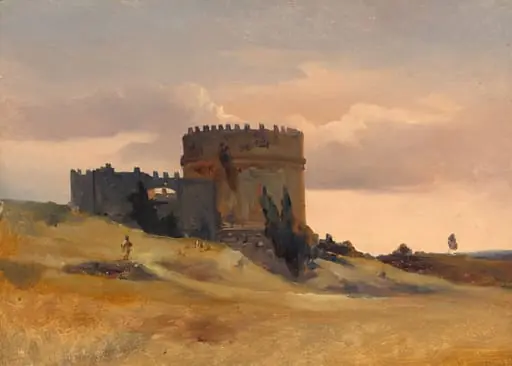 The Tomb of Caecilia Metella