Artwork
Saint-Malo, sunset
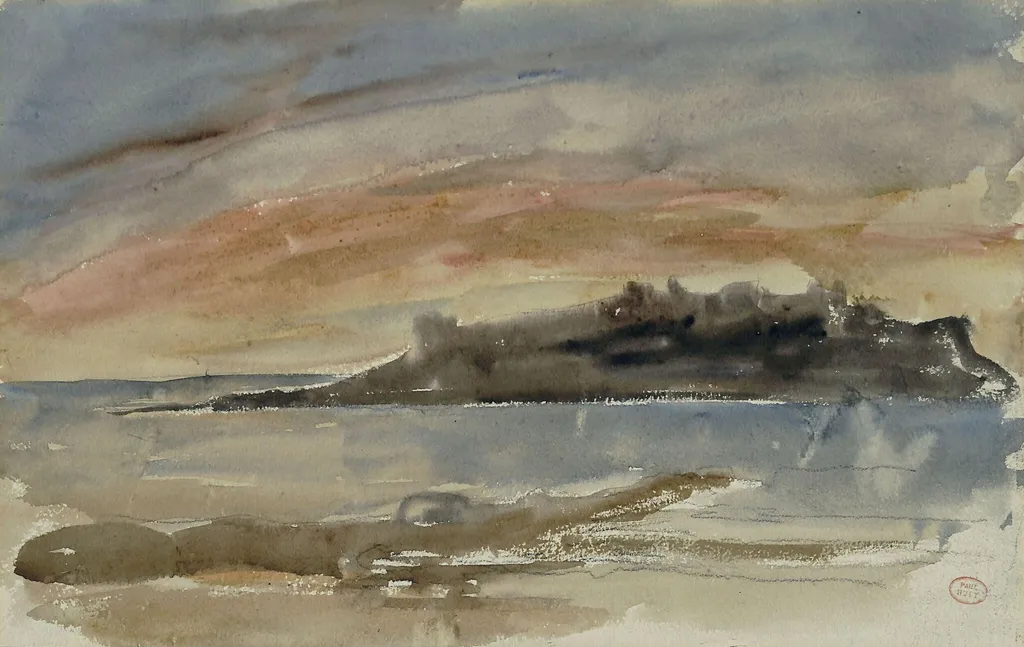
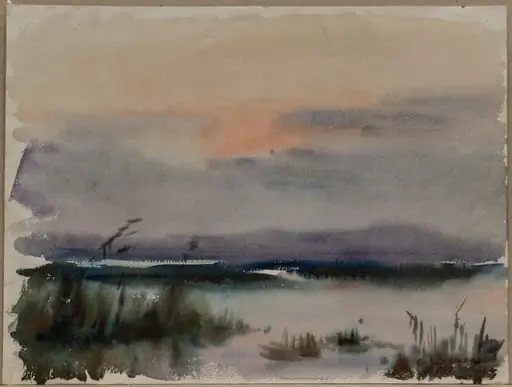
Saint-Malo, sunset is a watercolor work on paper by the Impressionist artist Paul Huet. It dates from 1864 and is held in the collection of the Victoria and Albert Museum.
About this work
Overview
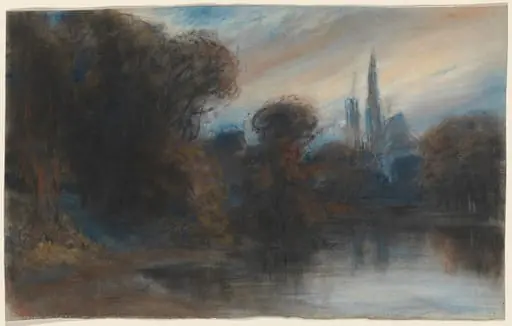
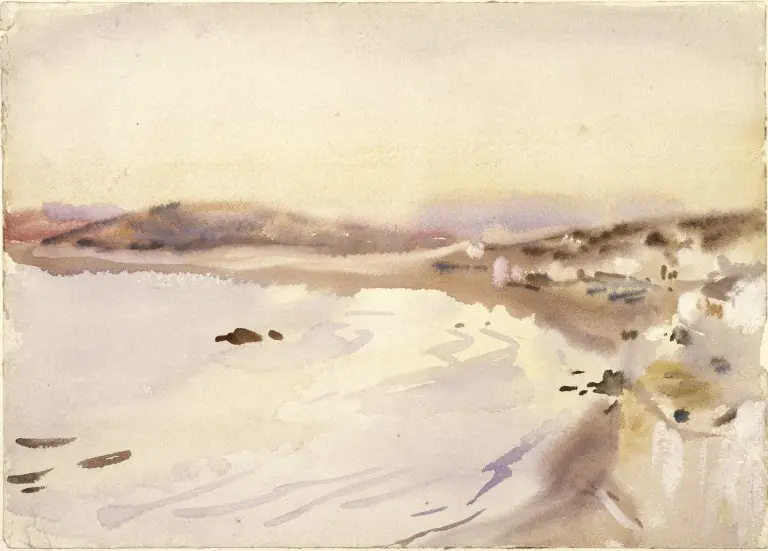
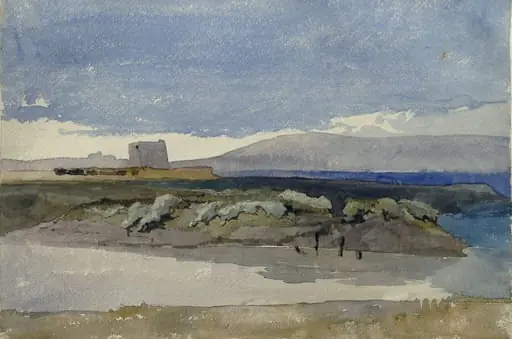
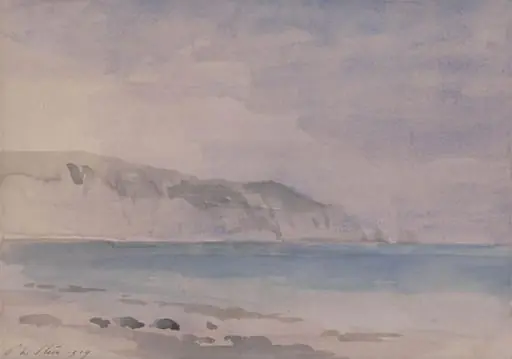
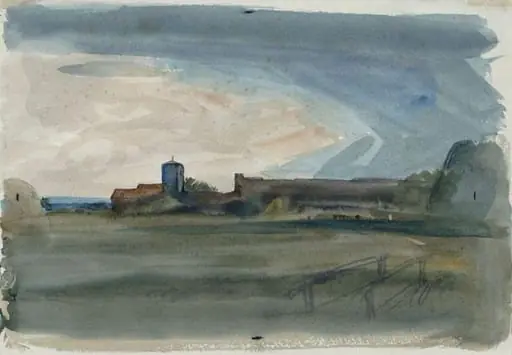
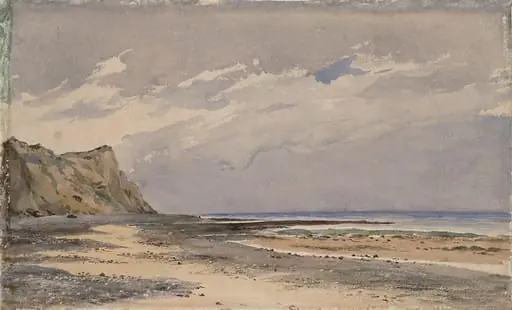
Painted in 1864, this watercolour by Paul Huet captures the coastal town of Saint-Malo at dusk. Executed with fluid washes and delicate tonal shifts, the work conveys a quiet moment between day and night. The composition centers on a distant hill silhouetted against the fading sun, with the sea stretching calmly toward the viewer in soft, reflective tones.
Subject & Meaning
The setting sun, partially obscured by the hill, casts a warm glow over the water and sky, suggesting transition and stillness.
The scene presents Saint-Malo not as a bustling port but as a tranquil, almost meditative landscape. The setting sun, partially obscured by the hill, casts a warm glow over the water and sky, suggesting transition and stillness. The absence of human figures or activity emphasizes solitude and the quiet rhythm of nature, aligning with 19th-century Romantic sensibilities toward nature’s emotional resonance.
Technique & Style
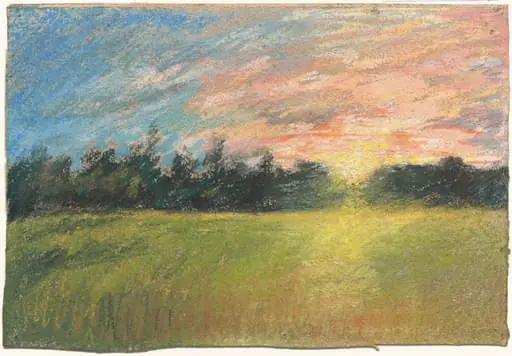
Huet employed loose, spontaneous brushwork and layered watercolour washes to suggest light and atmosphere. The sky transitions from pale pink to deep orange, while the hill is rendered in muted browns and greys with minimal detail. The sea’s surface is suggested through subtle horizontal strokes, avoiding sharp definition to enhance the sense of calm and atmospheric unity.
History & Provenance
Created during Huet’s travels along the Brittany coast, the work reflects his interest in capturing transient natural effects. It was likely made as a study or personal record rather than a commissioned piece. The watercolour remained in private hands until entering a public collection in the 20th century, though its exact early ownership remains undocumented.
Context
In the mid-19th century, French artists increasingly turned to landscape as a subject worthy of serious attention. Huet, influenced by the Barbizon School and early Impressionist concerns, used watercolour to explore light and mood with immediacy. This piece aligns with a broader shift toward plein air observation and the emotional potential of natural scenes over idealized compositions.
Legacy
Though not among Huet’s most widely exhibited works, this watercolour exemplifies his skill in conveying atmosphere with minimal means. It contributes to the understanding of his role in bridging Romantic landscape traditions and the emerging focus on optical realism. Its quiet intensity continues to inform studies of 19th-century French watercolour practice.
Own this work as a print
Artist & collection