Artwork
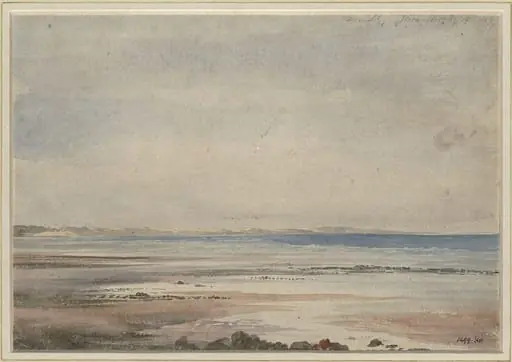
Shore Scene, Sheringham, Norfolk
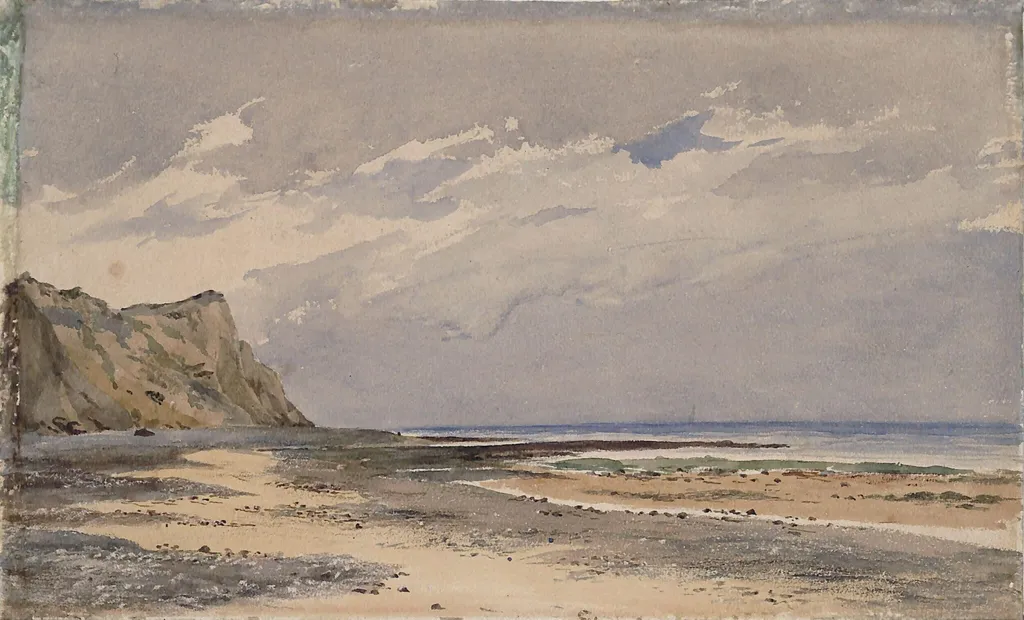
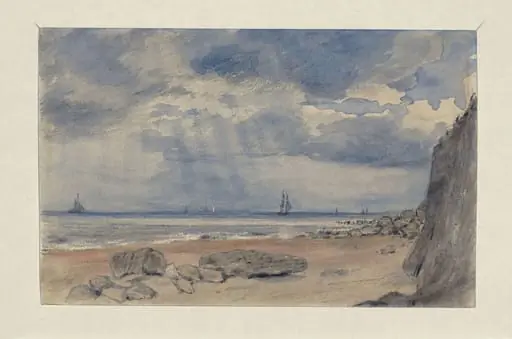
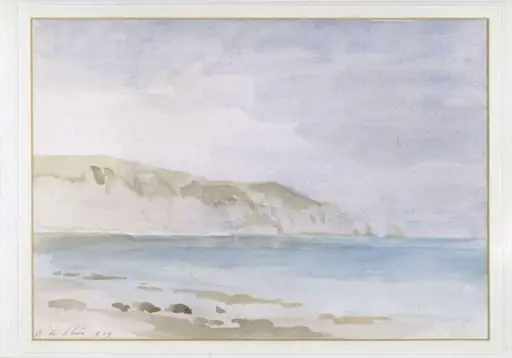
Shore Scene, Sheringham, Norfolk is a watercolor work on paper by the British Romanticist artist James Stark. It dates from 1825 and is held in the collection of the Victoria and Albert Museum. This watercolour captures a tranquil stretch of coastline near Sheringham in Norfolk.
About this work
Overview
Subtle shifts in tone and minimal detail invite quiet contemplation, characteristic of early 19th-century British landscape watercolours.
This watercolour captures a tranquil stretch of coastline near Sheringham in Norfolk. The composition emphasizes stillness, with a low horizon line dividing the pale sand from the calm sea. Subtle shifts in tone and minimal detail invite quiet contemplation, characteristic of early 19th-century British landscape watercolours. The scene avoids dramatic elements, focusing instead on the quiet interplay of land, sea, and sky.
Subject & Meaning
The painting presents an unpopulated shore, devoid of figures or activity, suggesting a meditative observation of nature. The rocky cliff on the left anchors the view, while the flat expanse of sand and still water conveys a sense of temporal pause. This quietude reflects a broader Romantic-era interest in unspoiled landscapes, valued for their serenity rather than their grandeur.
Technique & Style
The artist employed thin, fluid washes to suggest texture without definition—light strokes for the cliff’s weathered surface, delicate dabs for scattered stones, and soft gradients for the sky. The palette is restrained, relying on pale blues, greys, and off-whites to evoke atmospheric light. Brushwork remains loose and deliberate, prioritizing mood over precision, typical of watercolour practice in the period.
History & Provenance
Created by James Stark, a member of the Norwich School of painters, this work dates from the early 1800s. Stark frequently depicted coastal scenes in Norfolk, drawing inspiration from the region’s understated beauty. The painting likely originated as a private study or sketch, later preserved as a finished piece. Its survival reflects the growing appreciation for watercolour as a serious medium during the era.
Context
In early 19th-century England, watercolour was increasingly embraced for its portability and immediacy, especially among artists documenting regional landscapes. Stark’s work aligns with the Norwich School’s focus on local scenery, contrasting with the more dramatic vistas favored by contemporaries in London. This piece exemplifies a quiet, observational tradition rooted in direct engagement with the natural world.
Legacy
Stark’s coastal watercolours, including this one, contributed to the recognition of regional British landscapes as worthy artistic subjects. His restrained technique influenced later generations of watercolourists who valued subtlety over spectacle. Though not widely exhibited in his time, his works remain important for understanding the development of landscape art outside metropolitan centers.
Own this work as a print
Artist & collection
Artist
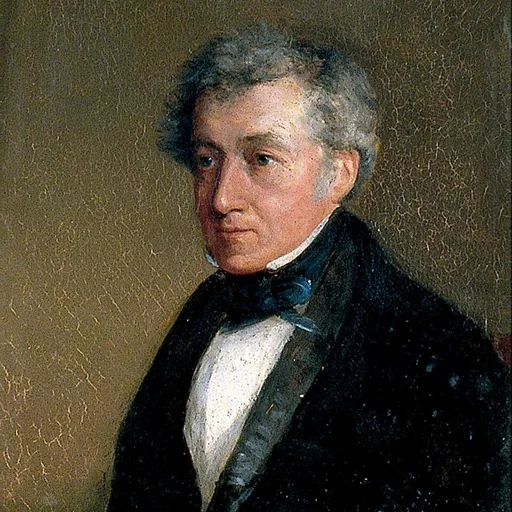
James Stark (19 November 1794 – 24 March 1859) was an English landscape painter. A leading member of the Norwich School of painters, he was elected vice-president of the Norwich Society of Artists in 1828 and became…