Artwork
Skaters on the Serpentine in Hyde Park
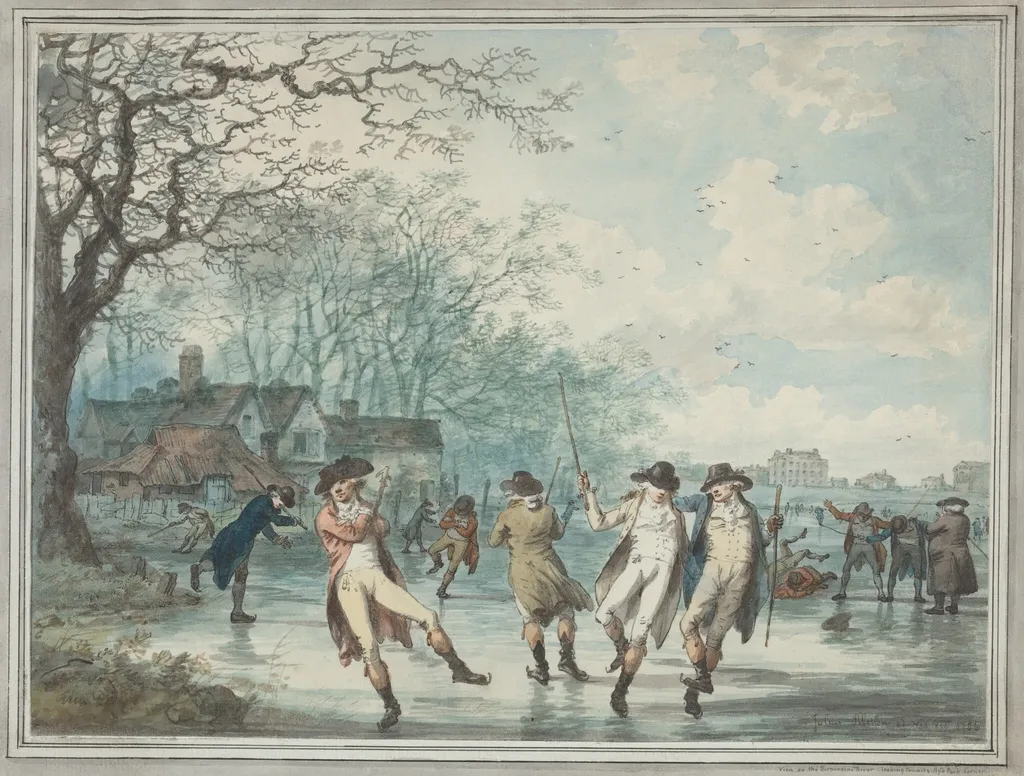
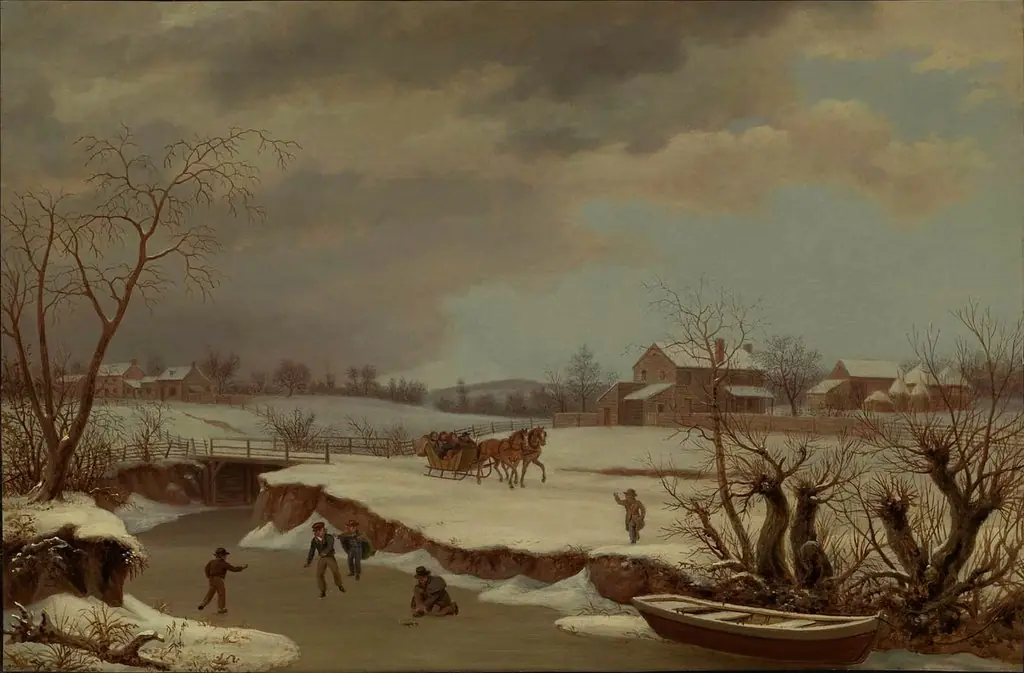
Skaters on the Serpentine in Hyde Park is an ink drawing by the Romanticist artist Julius Caesar Ibbetson. It dates from 1786 and is held in the collection of the National Gallery of Art.
About this work
Overview
Its delicate handling of light and texture reflects the artist’s skill in watercolor techniques common in late 18th-century British drawing.
Created in 1786 by Julius Caesar Ibbetson, this drawing depicts a winter scene on the Serpentine Lake in Hyde Park. Executed in pen, black ink, and watercolor on laid paper, it captures a moment of public recreation during a cold season. The work is mounted on a backing, suggesting it was preserved as a finished piece rather than a sketch. Its delicate handling of light and texture reflects the artist’s skill in watercolor techniques common in late 18th-century British drawing.
Subject & Meaning
The scene portrays a bustling crowd engaged in winter pastimes: skaters glide across the frozen lake, while spectators and pedestrians move along its edges. Clothing and postures reflect late 18th-century fashion and social behavior. Rather than idealizing the moment, Ibbetson presents an unembellished view of urban leisure, suggesting an interest in documenting everyday life as it unfolded, with quiet attention to the rhythms of public space in London.
Technique & Style
Ibbetson employed thin, layered watercolor glazes to suggest the translucency of ice and the softness of winter light. Pen lines define figures and structural details with precision, while watercolor washes create subtle tonal gradations. The restrained palette—dominated by grays, blues, and muted earth tones—enhances the chill of the atmosphere. The technique avoids dramatic contrast, favoring a quiet, observational realism that emphasizes atmosphere over spectacle.
History & Provenance
The work was completed in 1786, during a period when watercolor drawing was gaining recognition as a serious medium in Britain. Ibbetson, known for topographical and genre scenes, often recorded contemporary life with documentary intent. The piece was later laid down on a support, a common conservation practice of the time to stabilize fragile paper. Its survival suggests it was valued early on, possibly by collectors interested in London’s social landscape.
Context
In the 1780s, the Serpentine was a popular destination for Londoners seeking seasonal recreation. Ice skating had become a fashionable winter activity, particularly among the middle and upper classes. Ibbetson’s depiction aligns with a broader trend in British art that turned toward scenes of ordinary life, moving away from grand historical or mythological subjects. The drawing reflects both the social habits of the era and the growing appreciation for watercolor as a medium for intimate observation.
Legacy
Ibbetson’s work contributed to the development of British watercolor as a medium capable of nuanced realism. While not widely known today, his attention to everyday detail influenced later artists who sought to capture urban life with quiet accuracy. This drawing remains a valuable record of 18th-century public behavior and seasonal customs, offering insight into how Londoners interacted with their environment during winter months.
Artist & collection
Artist
Julius Caesar Ibbetson painted lively outdoor scenes and rugged landscapes in watercolor.