Artwork
Pe Dunăre la „Mila 23”
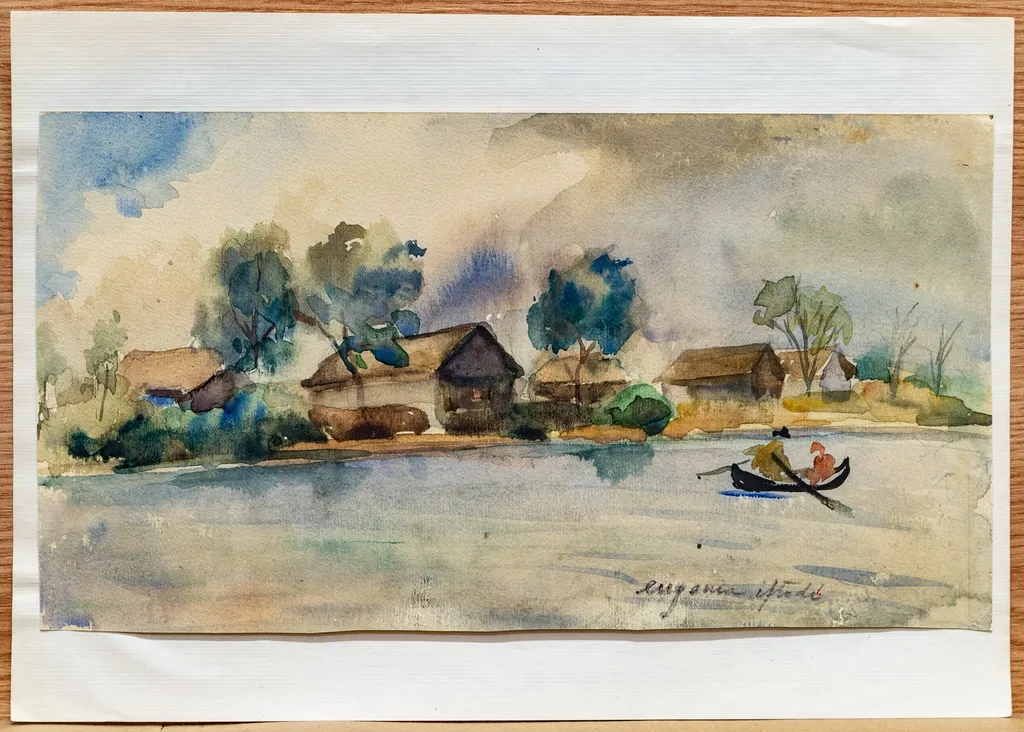
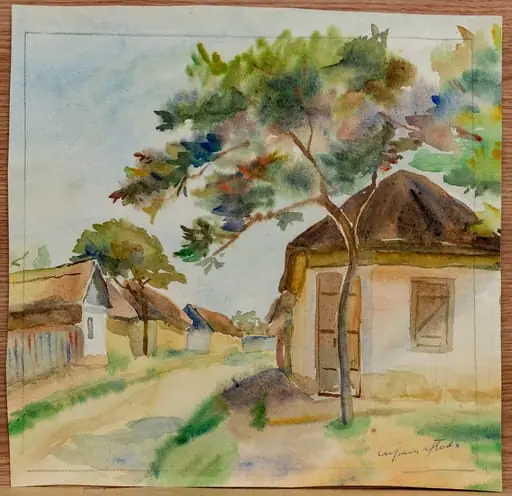
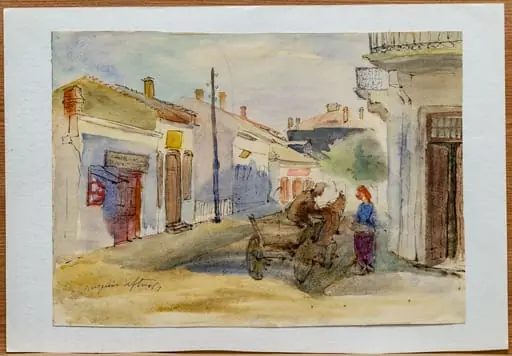
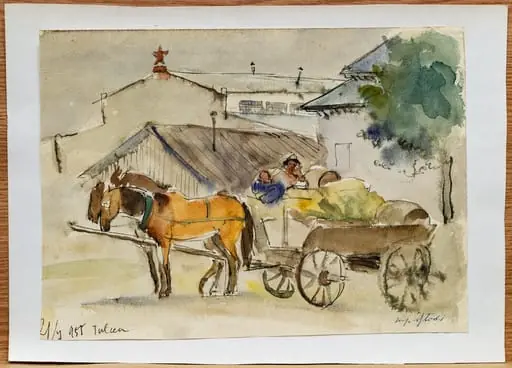
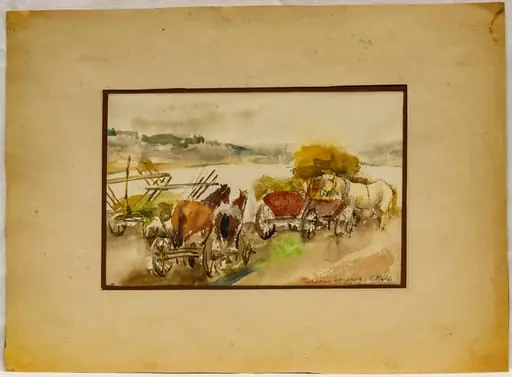
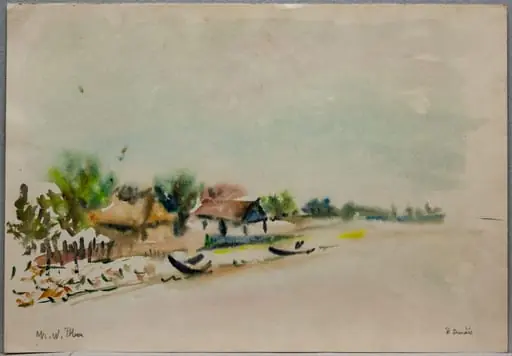
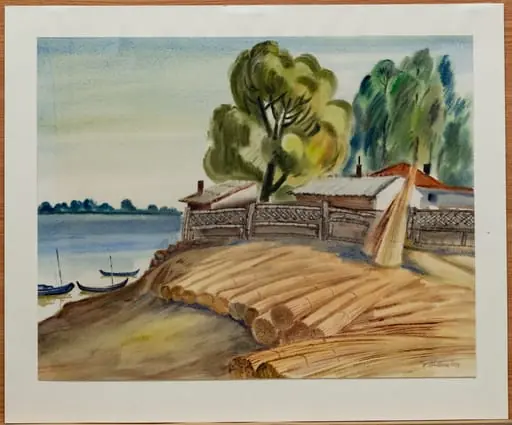
Pe Dunăre la „Mila 23” is a print by Eugenia Iftodi. It is held in the collection of the Gavrila Simion Eco-Museum Research Institute Tulcea. This painting depicts a tranquil riverside setting along the Danube, near the location known as Mila 23.
About this work
Overview
The brushwork is loose and fluid, suggesting immediacy rather than polished finish, and the artist’s signature appears subtly in the lower right.
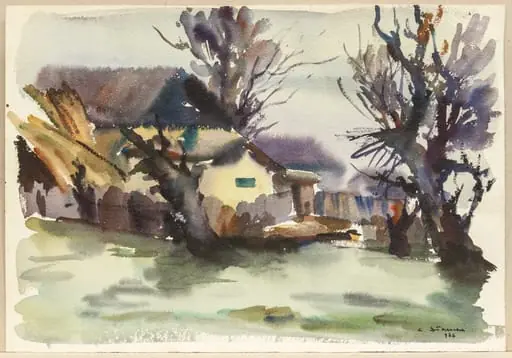
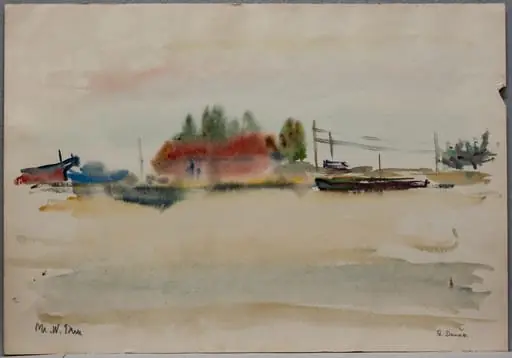
This painting depicts a tranquil riverside setting along the Danube, near the location known as Mila 23. It captures a quiet moment with modest dwellings, dense foliage, and a solitary boat drifting on the water. The palette is restrained, dominated by muted blues, greens, and browns, contributing to a subdued, contemplative mood. The brushwork is loose and fluid, suggesting immediacy rather than polished finish, and the artist’s signature appears subtly in the lower right.
Subject & Meaning
The scene presents an unremarkable stretch of riverbank, free from human activity or dramatic event. The small, thatched houses and lone figure in the boat imply quiet domestic life, perhaps tied to fishing or local travel. There is no narrative thrust; instead, the work emphasizes stillness and the rhythm of everyday existence along the water, inviting quiet observation rather than interpretation.
Technique & Style
The artist employs a loose, sketch-like technique with visible, fluid brushstrokes that avoid sharp definition. Colors are blended softly, creating atmospheric depth without strong contrasts. The unfinished quality suggests a focus on impression over detail, aligning with observational practices common in late 19th-century landscape studies. The composition is deliberately uncluttered, allowing the natural setting to dominate the visual field.
History & Provenance
The painting’s origin is tied to the Danube region, likely created during a period when artists were documenting rural riverside life. Its title references Mila 23, a specific locale near the river, indicating local familiarity. The faint signature suggests the work may have been a personal study rather than a commissioned piece. Its early history remains undocumented, and it entered institutional collections without notable prior ownership.
Context
This work emerged during a time when Romanian artists increasingly turned to native landscapes for inspiration, moving away from idealized or foreign subjects. The Danube’s banks, with their modest settlements and quiet rhythms, became a focus for painters seeking authenticity. This piece reflects a broader regional trend of capturing everyday environments with sensitivity rather than grandeur.
Legacy
Though not widely exhibited, the painting contributes to a body of work that documents rural Romanian life with quiet dignity. Its unadorned approach influenced later artists interested in understated naturalism. Collections such as the Museum of Ethnography preserve similar works, reinforcing its role in a regional artistic lineage focused on place and quiet observation.
Artist & collection
Artist
Eugenia Iftodi made prints and drawings of everyday life in mid-20th-century Romania.
Museum
Gavrila Simion Eco-Museum Research Institute Tulcea
Continue through works from the same source collection.