Artwork
Căruțaș
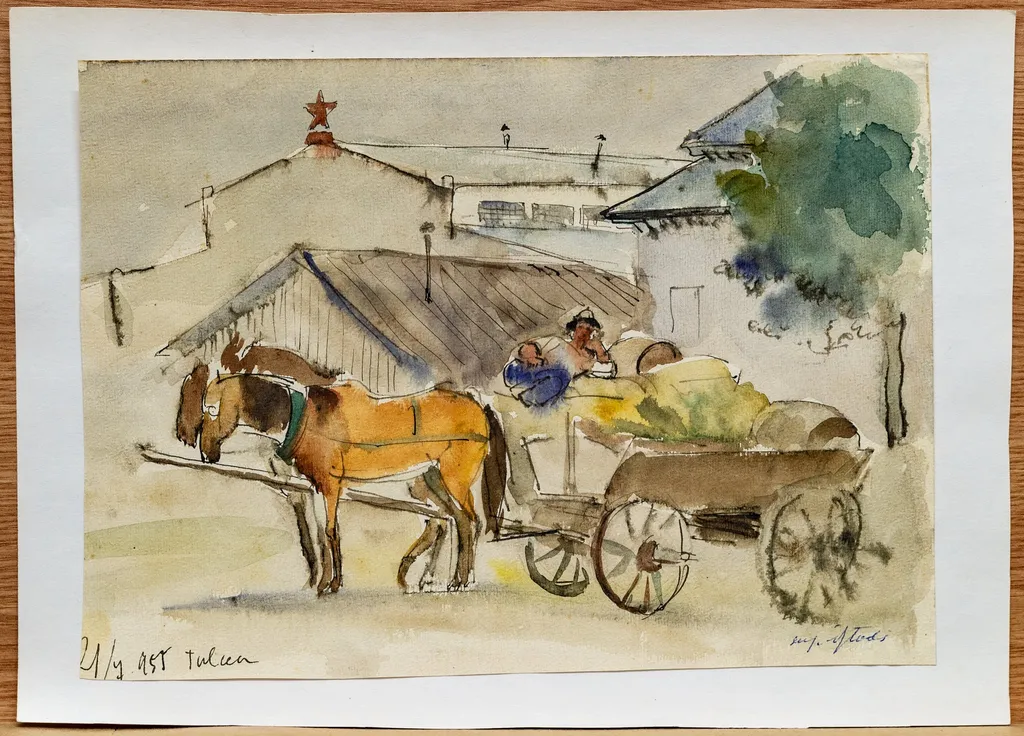
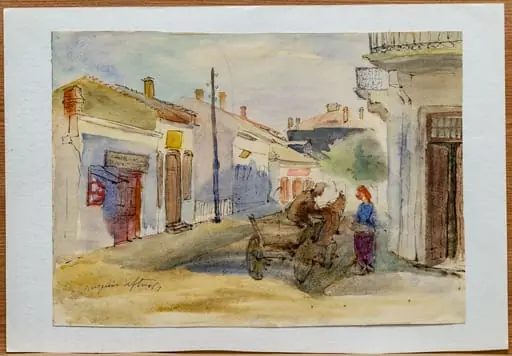
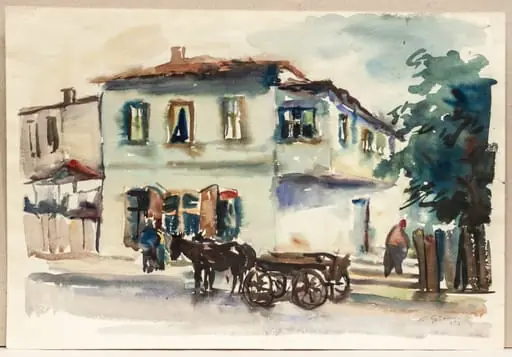
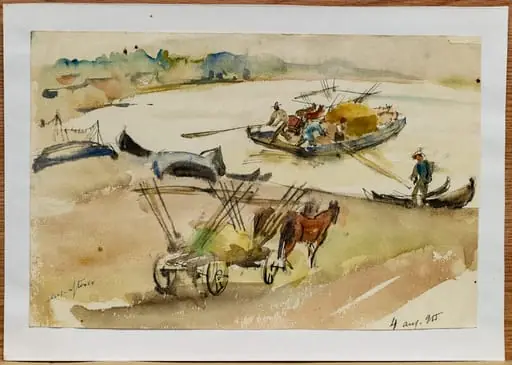
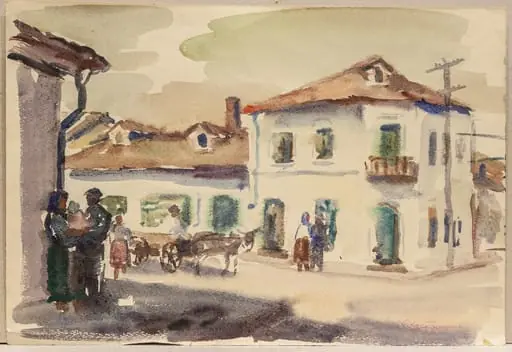
Căruțaș is a print by Eugenia Iftodi. It is held in the collection of the Gavrila Simion Eco-Museum Research Institute Tulcea. This painting portrays a rural scene featuring a horse-drawn cart parked before a modest dwelling.
About this work
Overview
The cart, piled with goods and occupied by a seated figure, is rendered with loose, dynamic brushwork that suggests motion despite its stillness.
This painting portrays a rural scene featuring a horse-drawn cart parked before a modest dwelling. The cart, piled with goods and occupied by a seated figure, is rendered with loose, dynamic brushwork that suggests motion despite its stillness. Earthy hues of brown, olive, and ochre unify the composition, grounding the image in a quiet, everyday moment. The background includes clustered houses and scattered trees, framing the action without overwhelming it.
Subject & Meaning
The scene captures a routine rural transaction or transport, likely part of daily subsistence life. The presence of goods on the cart and the solitary figure suggest labor, trade, or movement between homes. No dramatic narrative is implied; instead, the work emphasizes quiet continuity, valuing the unremarkable rhythms of peasant existence through its unembellished focus.
Technique & Style
Brushstrokes are fluid and deliberately unrestrained, conveying texture and movement rather than precise detail. The palette relies on muted, natural tones—browns, greens, and yellows—creating harmony with the landscape. Forms are suggested rather than meticulously defined, favoring atmospheric effect over realism. This approach aligns with a tradition of expressive, observational painting rooted in local life.
History & Provenance
The work is attributed to Iftodi, Eugenia, an artist associated with Romanian rural realism in the early to mid-20th century. While specific acquisition details are not widely documented, the painting reflects a broader regional interest in documenting agrarian life during a period of social transition. Its survival suggests it was retained within private or local institutional collections.
Context
Created amid shifting rural economies in interwar Romania, the painting reflects a cultural moment when traditional ways of life were being quietly recorded by artists. Unlike urban-focused modernists, Iftodi and peers turned to village scenes as subjects worthy of artistic attention, preserving visual records of a world changing under industrial and political pressures.
Legacy
The painting contributes to a modest but enduring body of work that elevated ordinary rural life as worthy of artistic representation. Though not widely exhibited internationally, it remains a reference point in regional art histories for its unidealized depiction of labor and landscape, influencing later generations focused on vernacular realism.
Artist & collection
Artist
Eugenia Iftodi made prints and drawings of everyday life in mid-20th-century Romania.
Museum
Gavrila Simion Eco-Museum Research Institute Tulcea
Continue through works from the same source collection.