Artwork
Hyena, Antelope and Cassowary in a Cactus Landscape
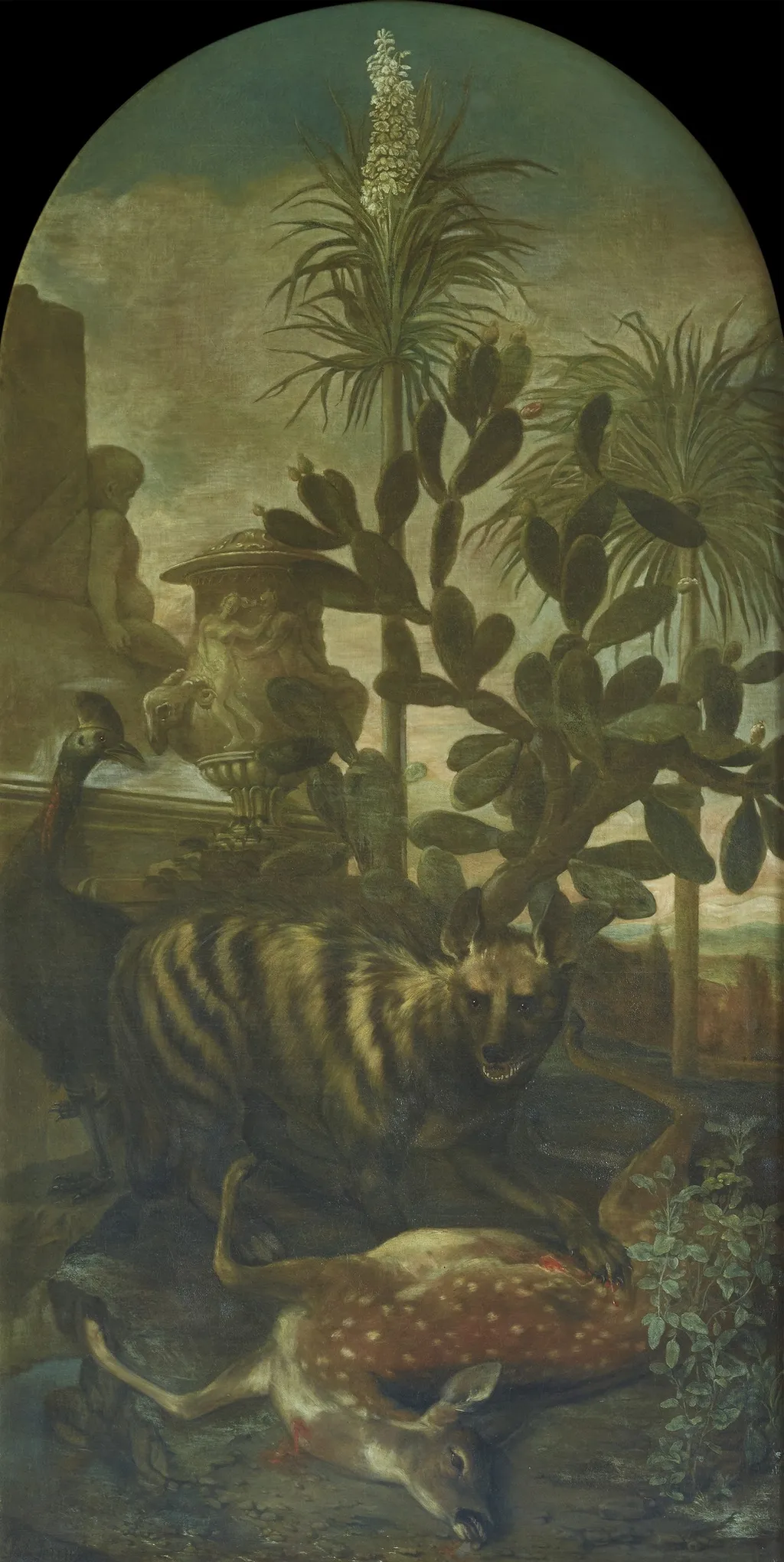
Hyena, Antelope and Cassowary in a Cactus Landscape is an oil painting by the Rococo painting artist Ignaz Heinitz von Heinzenthal. It dates from 1723 and is held in the collection of the Kunsthistorisches Museum.
About this work
Overview
Created in 1723 by Ignaz Heinitz von Heinzenthal, this oil painting depicts an unlikely grouping of a hyena, an antelope and a cassowary set against a desert‑like terrain populated with cacti and a distant stone structure. The work is part of the collection of the Kunsthistorisches Museum in Vienna and measures a modest size typical of early eighteenth‑century landscape studies.
Subject & Meaning
The composition places the hyena in the foreground, its gaze directed toward the viewer, while the antelope lies recumbent and the cassowary stands upright behind it. The juxtaposition of these three animals—one carnivorous, one prey, one exotic bird—within a barren, muted landscape invites contemplation of natural hierarchy and the calm coexistence of disparate species.
Technique & Style
Heinitz employs a restrained palette of browns, ochres and muted greens, rendering the cacti and rocky backdrop with fine, almost tactile detail. The oil medium allows for subtle gradations of light and shadow, giving the figures a modest three‑dimensional presence while preserving an overall sense of stillness and atmospheric quiet.
History & Provenance
The painting entered the holdings of the Kunsthistorisches Museum shortly after its acquisition by the imperial collection in the 18th century, where it has remained on public display. Its attribution to Heinitz von Heinzenthal has been consistently affirmed by museum records and scholarly catalogues.
Context
Produced during a period when European artists increasingly incorporated exotic fauna into imagined landscapes, the work reflects contemporary curiosity about far‑off lands. The inclusion of a cassowary—a bird native to New Guinea—alongside African‑type animals suggests an amalgam of travel literature and scientific curiosity that informed artistic practice at the time.
Artist & collection
Artist
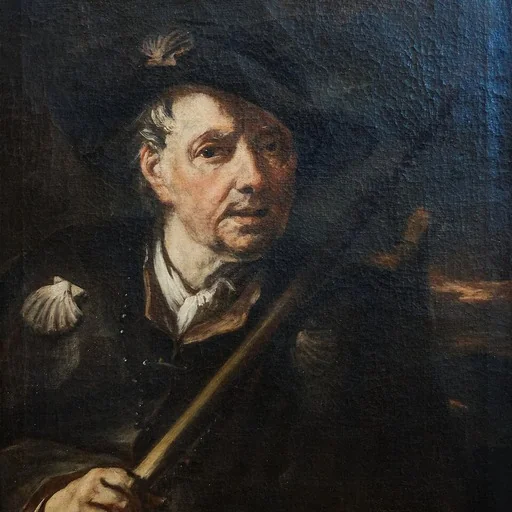
Ignaz Heinitz von Heinzenthal (1657–1742) was an artist, born in Vienna.

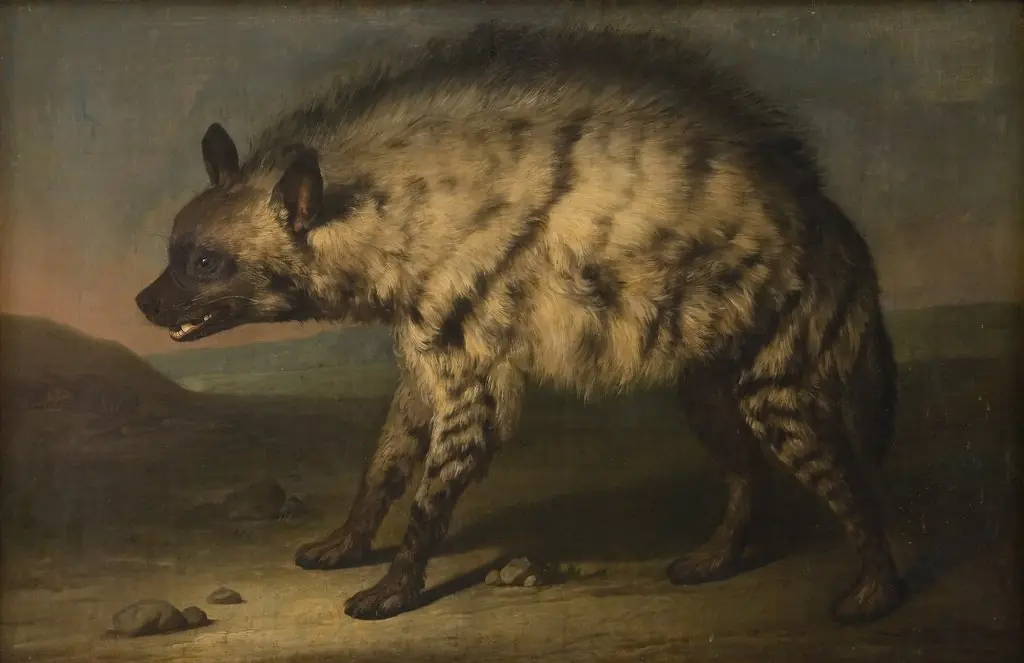 Hyena from the zoo at Frederiksberg Castle
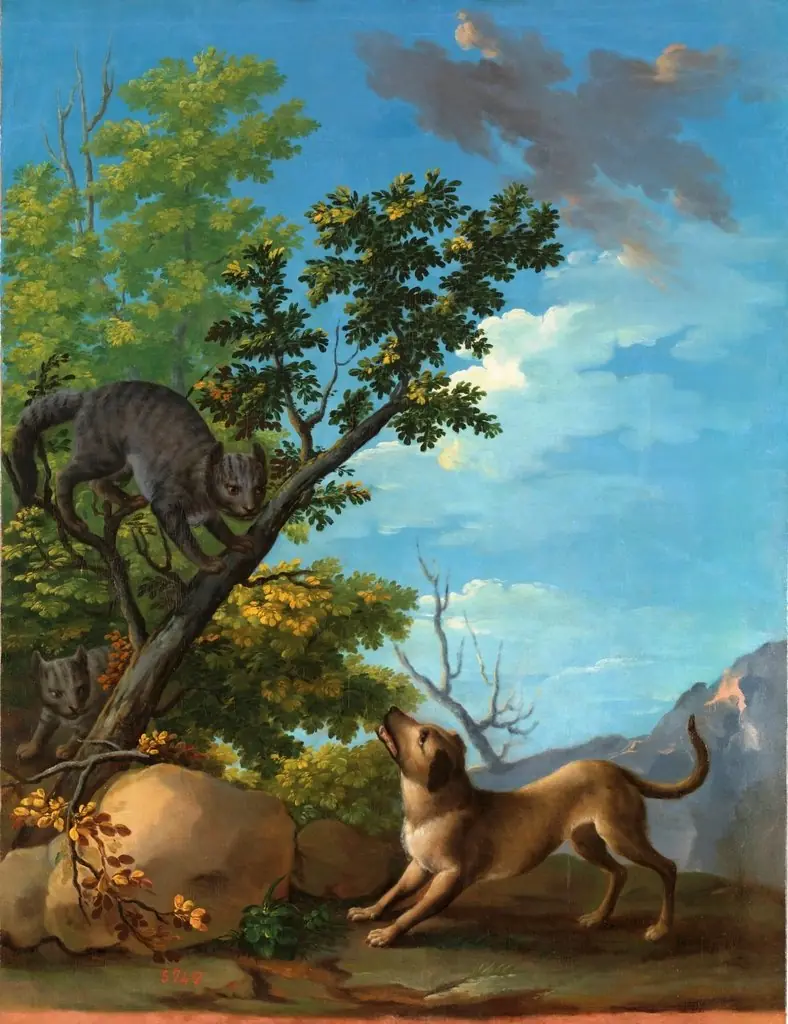 Perro y gatos
 Jaguars and a Crocodile
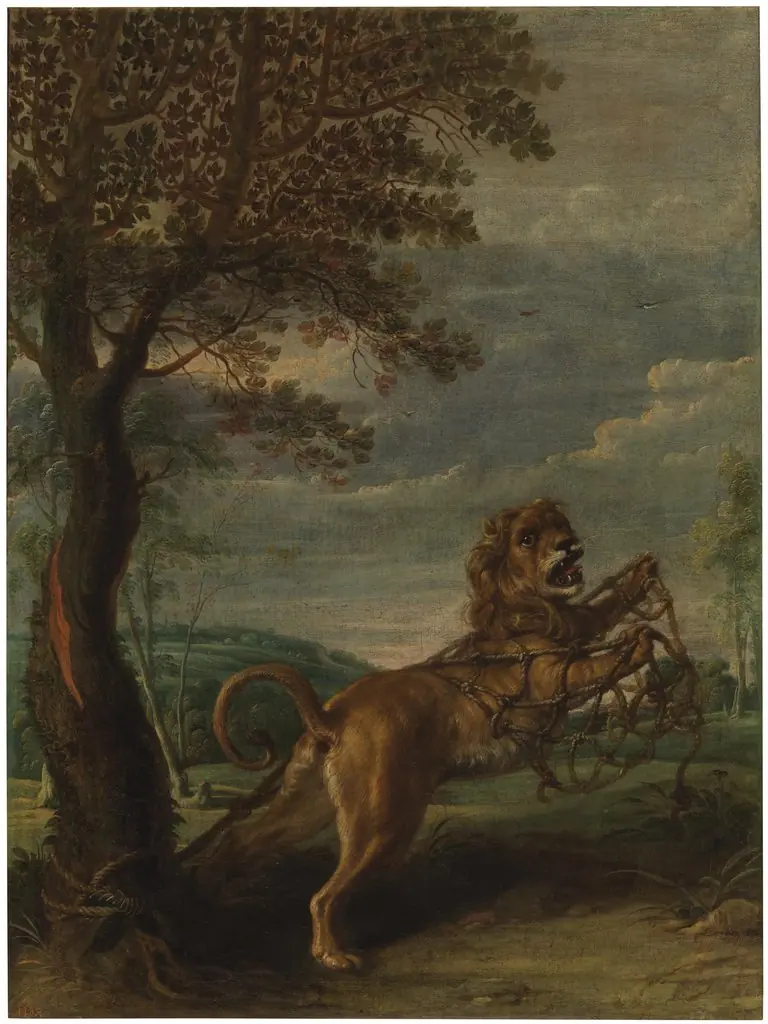 Aesop's fable: The Lion and the Mouse
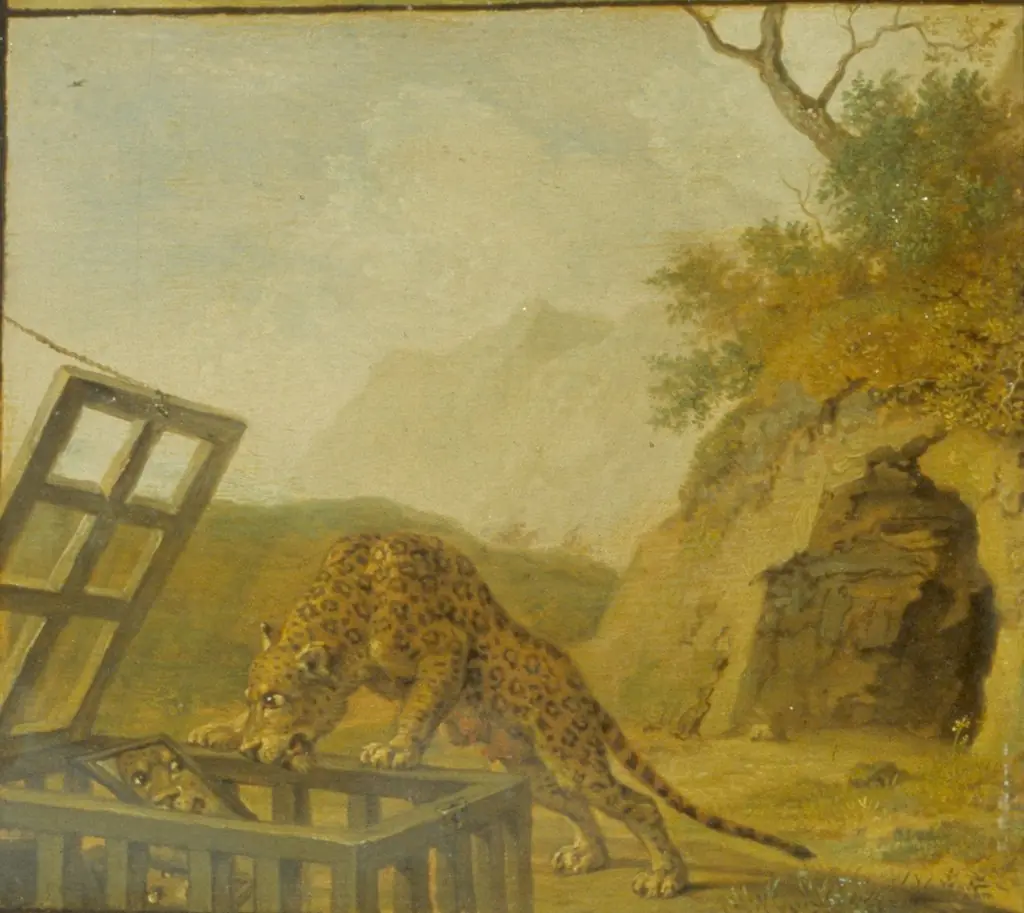 Trapping a Leopard
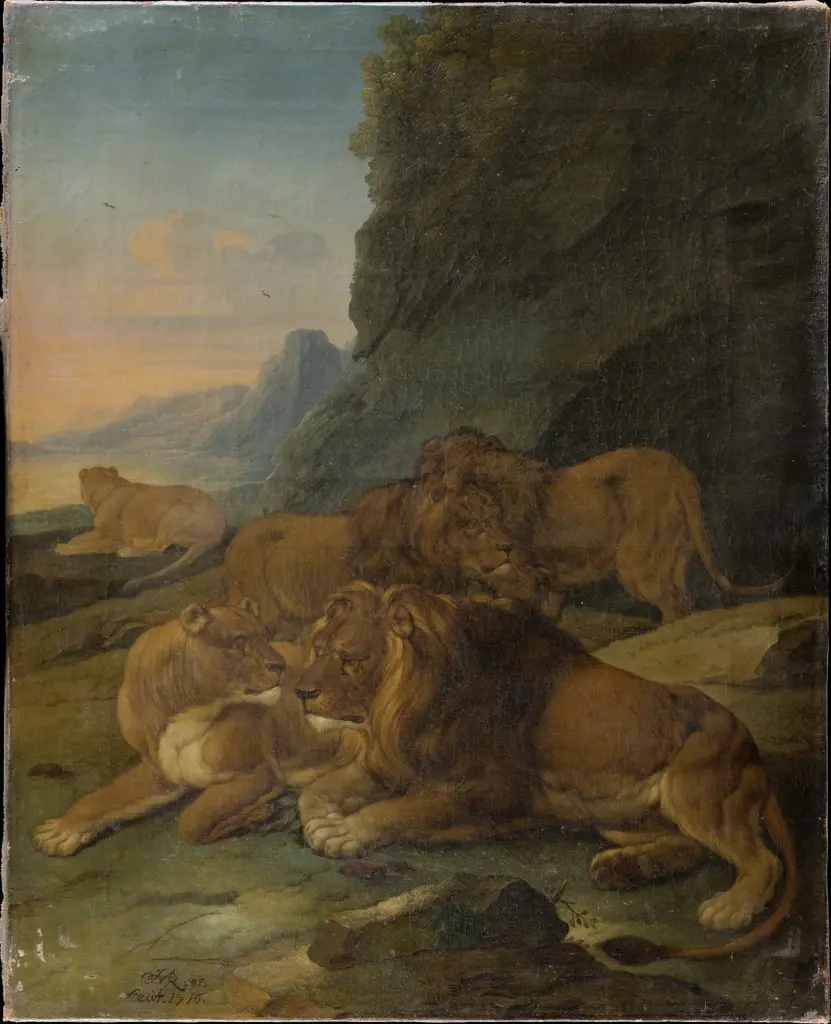 Landscape with a Lion Family
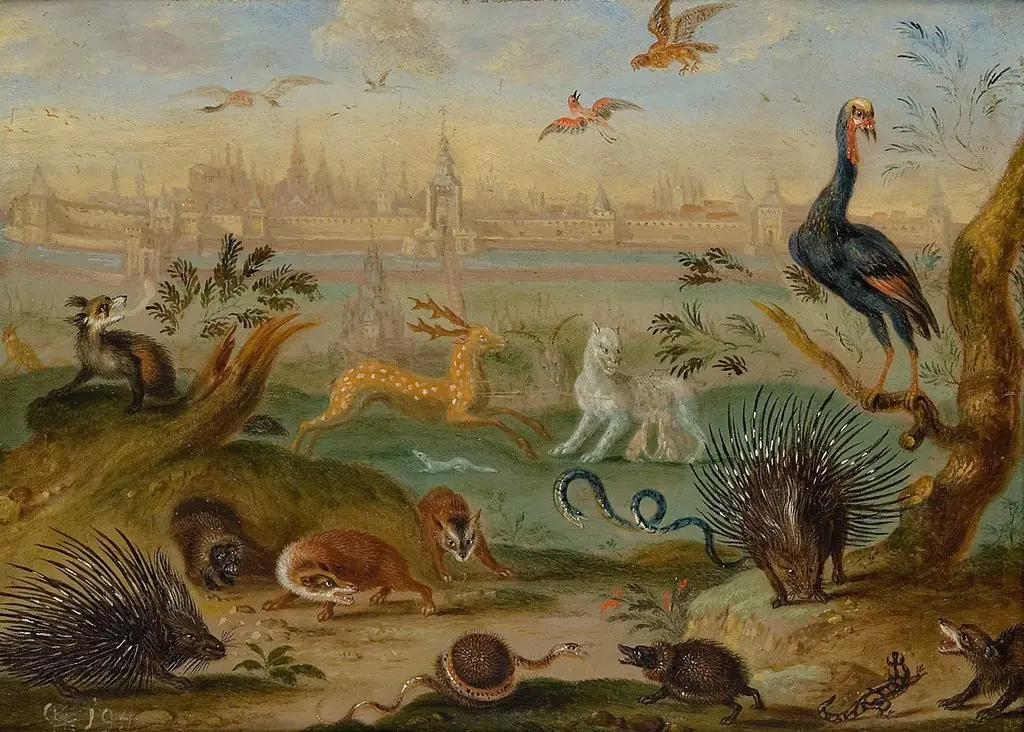 Ansichten aus den vier Weltteilen mit Szenen von Tieren: Moskau
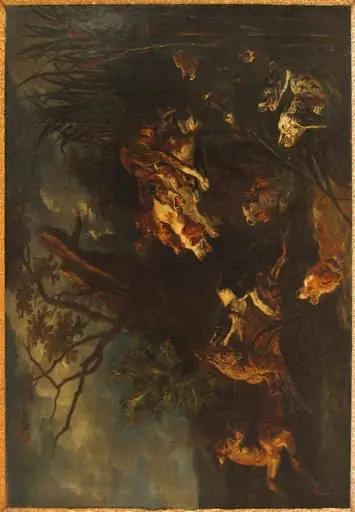 Vânătoare de căprioare
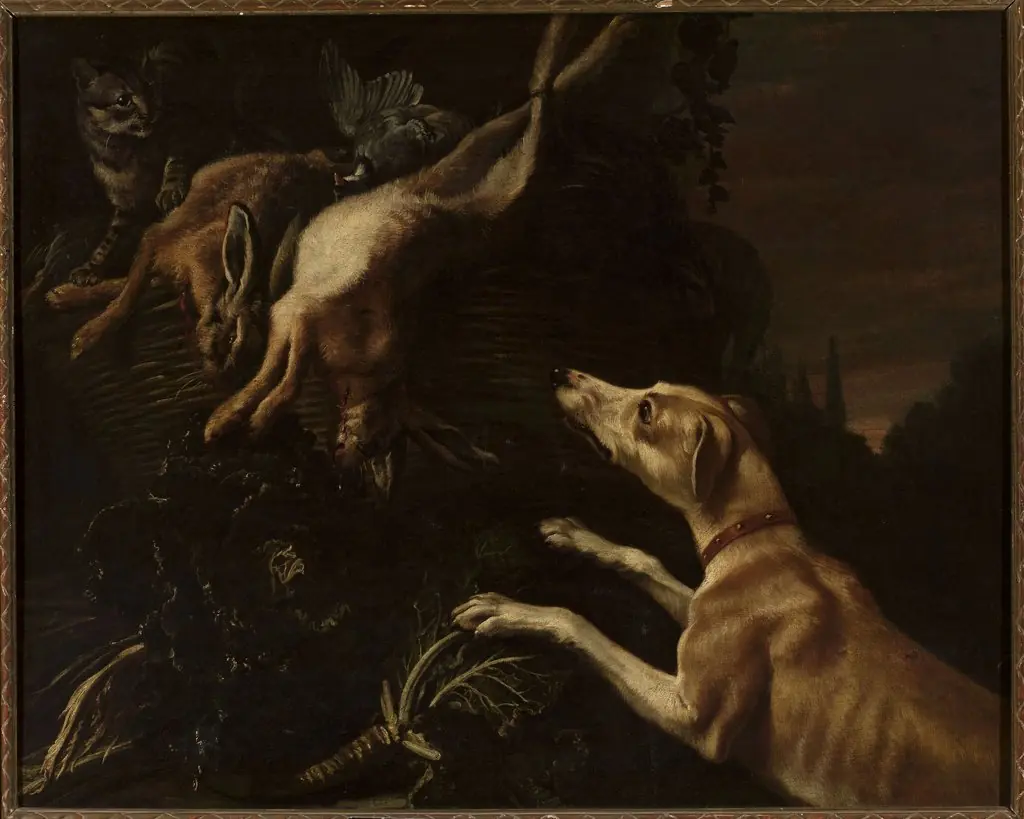 Dog attacking a cat
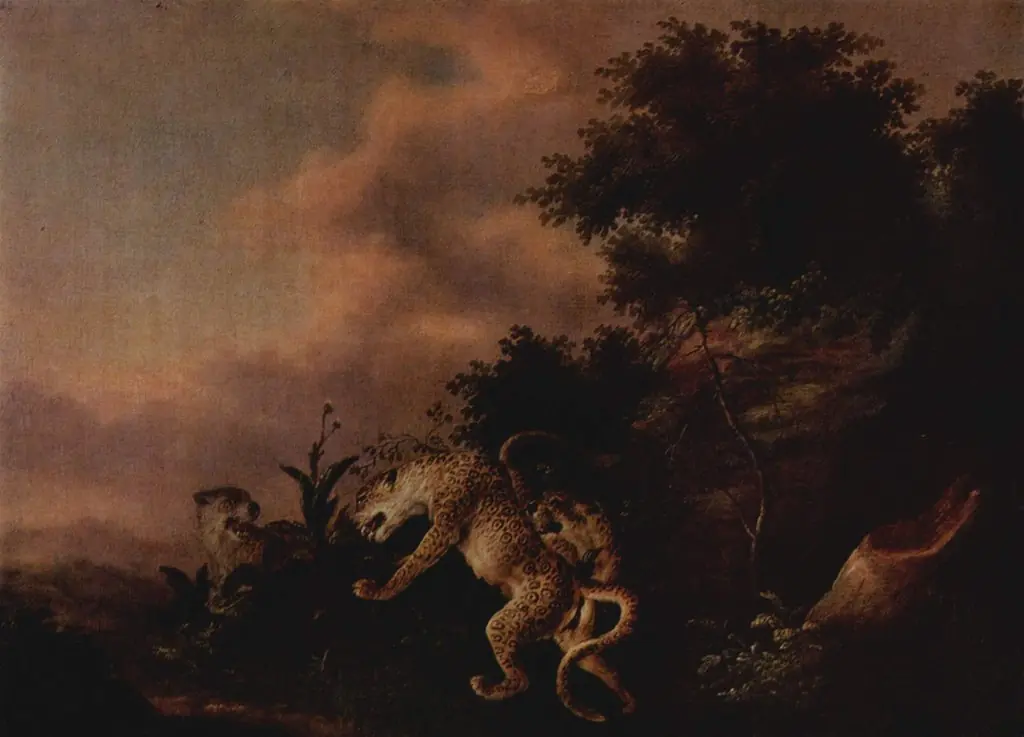 Leopards Attacking a Wild Boar
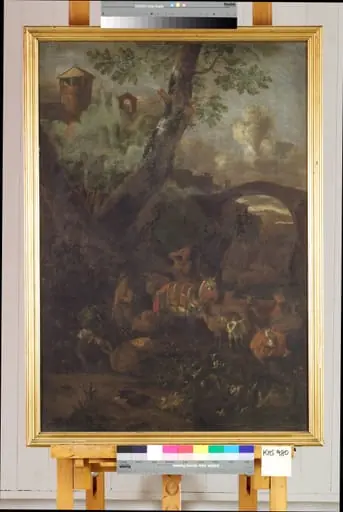 Landscape with Mules and Goats